

readwithpride.com
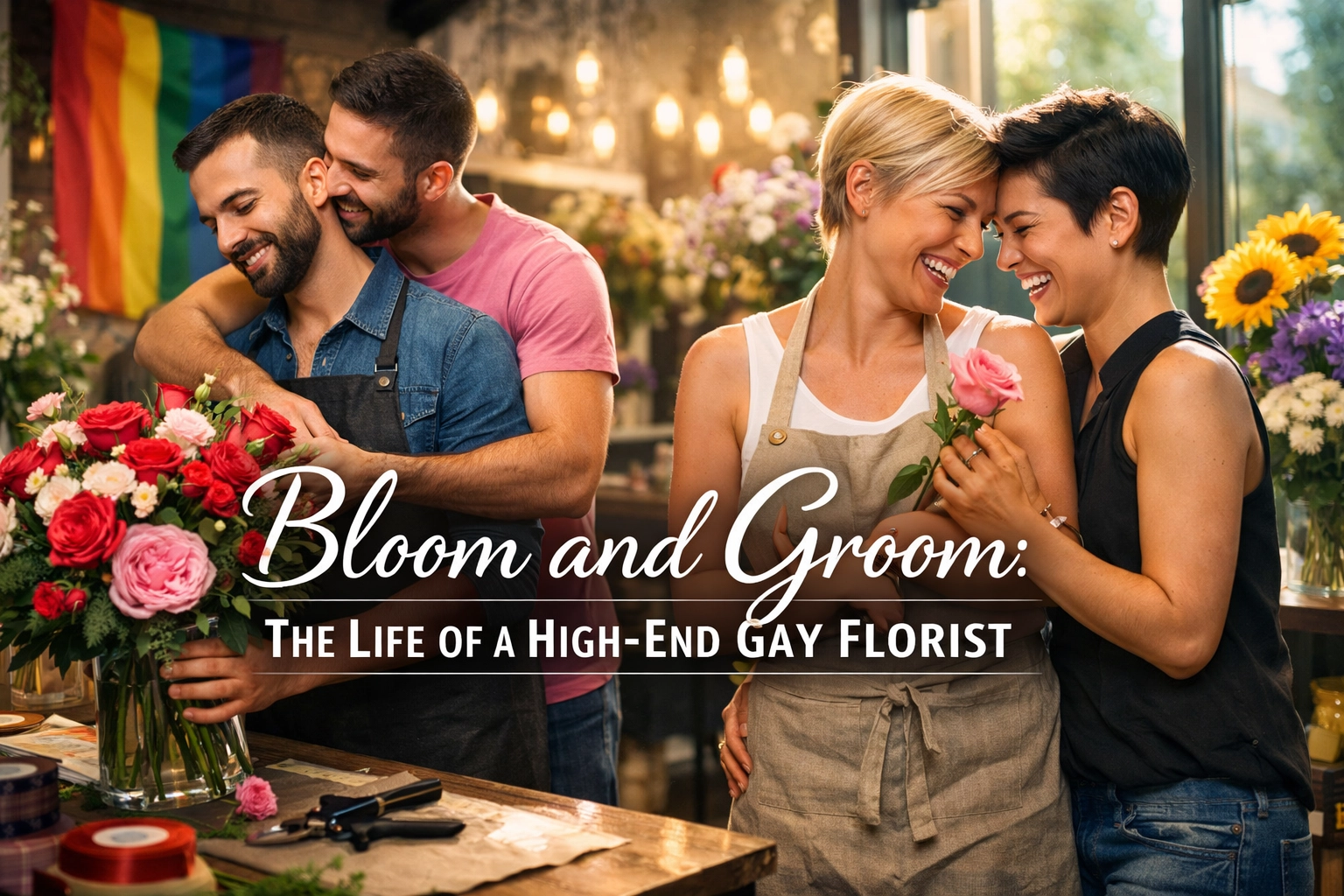
There's something deliciously ironic about spending your morning elbow-deep in compost and thorns, only to find yourself sipping champagne at a penthouse overlooking Central Park by afternoon. Welcome to the world of the high-end gay florist: where dirt under your nails meets Dior on your clients' backs, and every arrangement is part botanical artistry, part social performance.
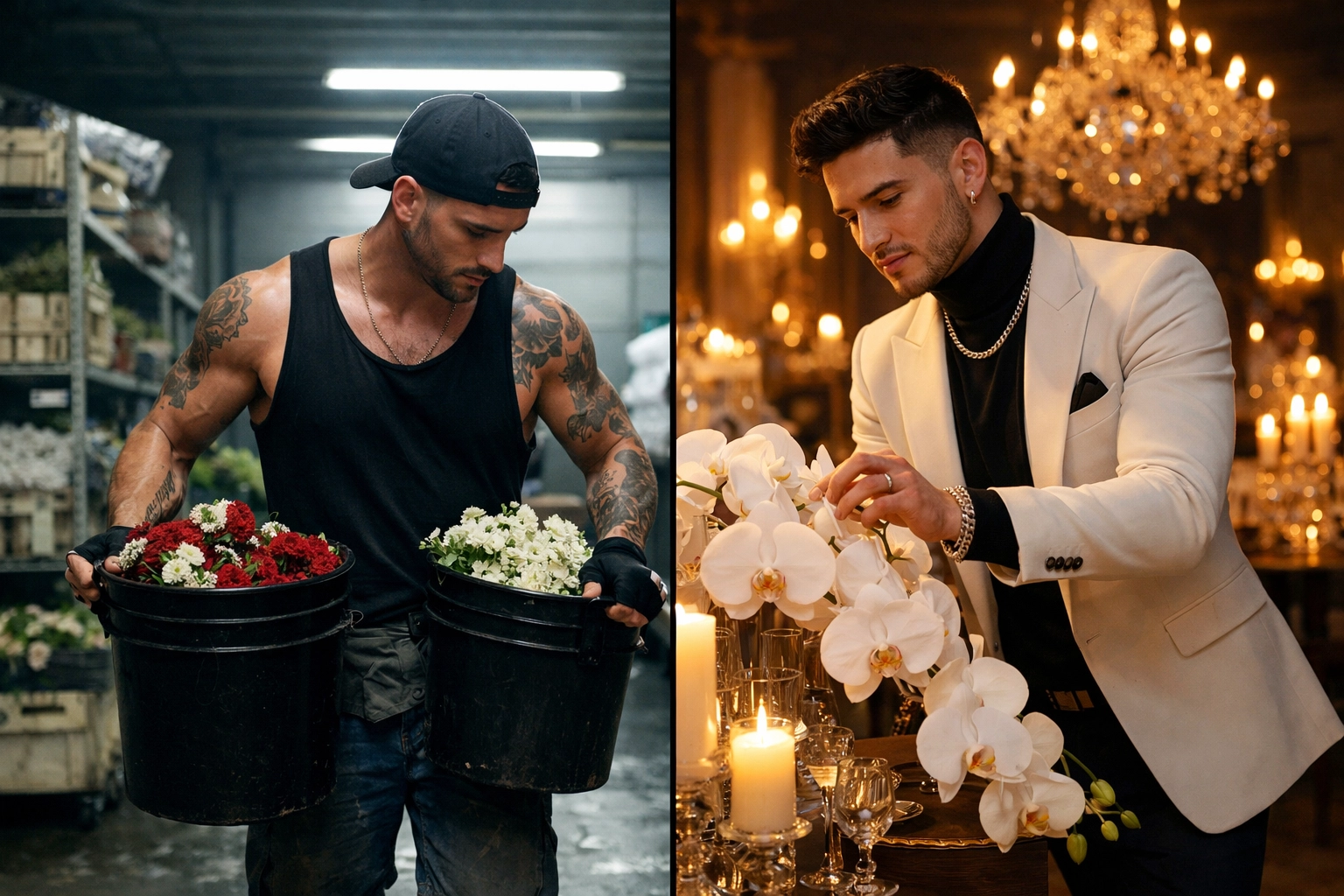
For decades, the connection between gay men and floristry has been both stereotype and reality, cliché and calling. But the world of luxury floral design? That's a different garden entirely. It's where raw labor meets refined taste, where truck deliveries at 4 AM transform into centerpieces worth more than most people's monthly rent, and where queer creativity blooms in the most rarefied spaces.
The Dirt and the Glamour
Let's be real: floristry is backbreaking work. Before you ever get to arrange those peonies into something Instagram-worthy, you're hauling forty-pound buckets of water, stripping thorns until your fingers bleed, and standing for twelve-hour stretches that would make a nurse wince. The romantic notion of artfully placing roses in crystal vases? That's about 10% of the job. The other 90% involves logistics, heavy lifting, early mornings, and the kind of physical stamina that gym memberships try to sell you.
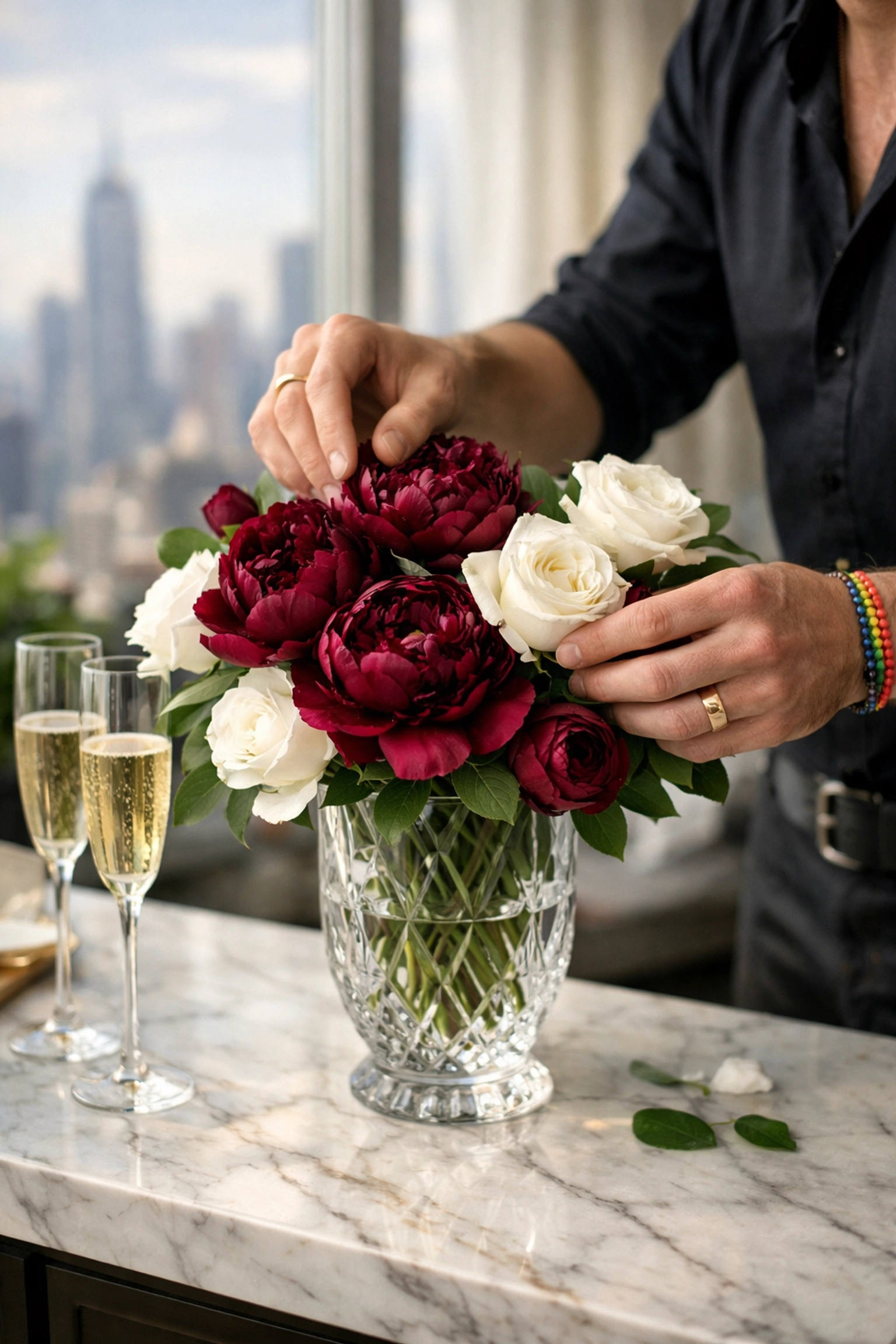
But here's where it gets interesting for gay florists in the luxury market: you're not just arranging flowers. You're curating experiences for people who have everything: or think they do. Your job is to surprise them, to create something they didn't even know they wanted. And historically, queer men have excelled at reading rooms, understanding unspoken desires, and delivering aesthetics that feel both effortless and extraordinary.
"I became the go-to florist not despite being gay, but because of it," one Melbourne-based designer noted. "Same-sex couples wanted someone who understood their vision without having to translate it through a heteronormative lens. Straight clients wanted someone who could bring that fashion-forward, editorial sensibility they'd seen in magazines."
The Language of Luxury Flowers
Working with wealthy clients is its own education. These aren't people picking up a bouquet at the grocery store. They're commissioning floral installations for charity galas, designing garden parties that'll end up in Architectural Digest, or creating wedding centerpieces that cost more than the average person's car.
The charm: and challenge: of serving this clientele lies in understanding that flowers aren't just decoration. They're currency. They're statements. A certain arrangement of orchids might signal old money taste. Hand-tied garden roses in unexpected colors demonstrate trend awareness. Knowing when to go maximalist and when to exercise restraint? That's the difference between being a vendor and being a trusted creative partner.
Gay florists often find themselves uniquely positioned in these social ecosystems. There's an unspoken understanding that you're there as both service provider and style authority. You're in the room but slightly outside it: close enough to understand the dynamics, distant enough to see them clearly. It's the same liminal space queer people have occupied throughout history, the perspective that comes from being insider and outsider simultaneously.
Breaking the Bouquet Binary
One of the most interesting shifts in luxury floral design has been the dissolution of gendered flower traditions, particularly around weddings. Forward-thinking gay florists have been at the forefront of this change, creating designs that challenge the assumption that flowers are "feminine" or that certain blooms belong exclusively in bridal bouquets.
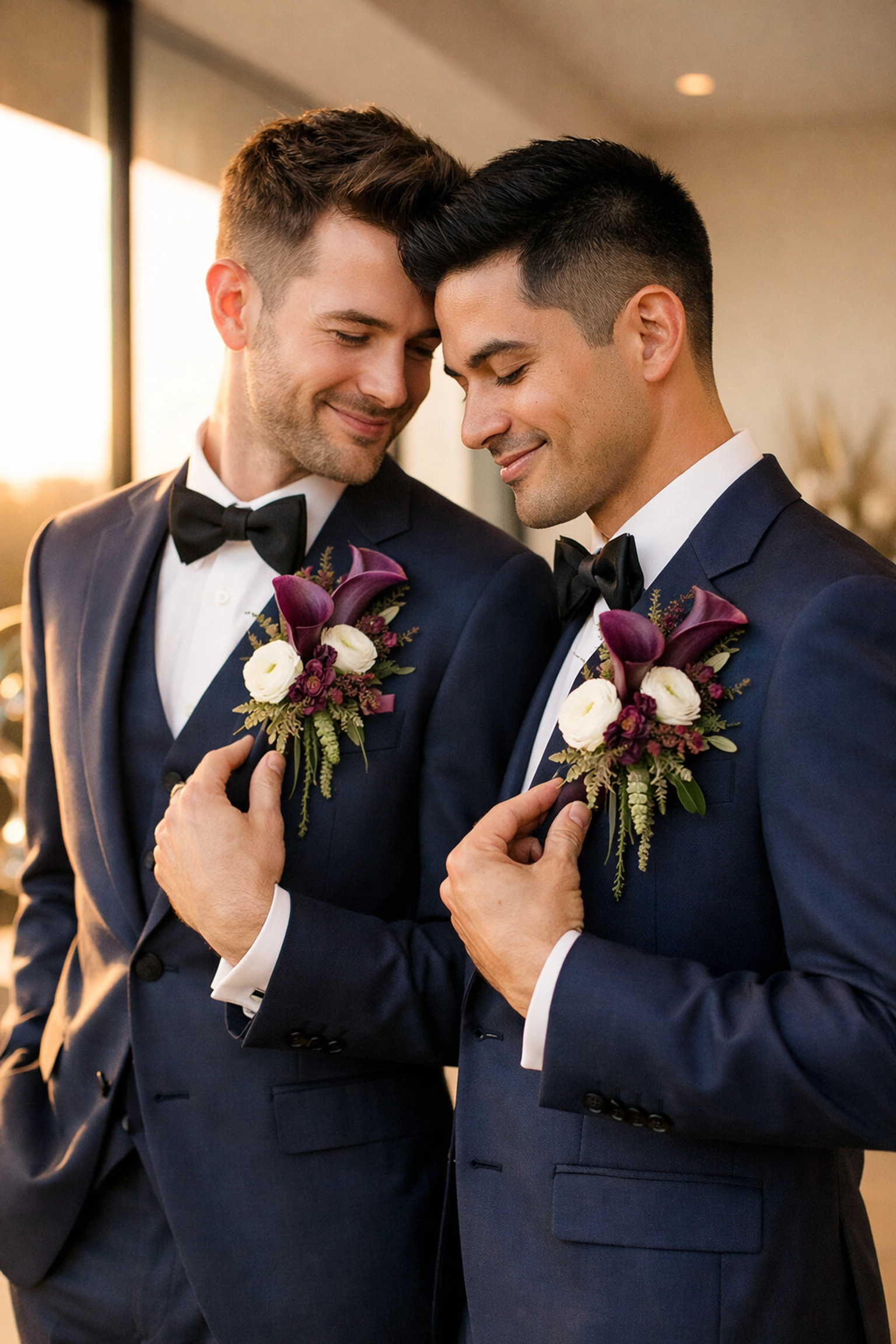
Studios like Bloom Boy in Melbourne and others across the U.S. have built their reputations on serving same-sex couples who want floral design that reflects their actual relationships: not some cookie-cutter heteronormative template. That means boutonnieres that are as elaborate as any bouquet, matching arrangements that don't assume one partner is "the bride," and designs that prioritize personal style over tradition.
This approach hasn't just served LGBTQ+ clients: it's changed the entire conversation around wedding flowers. When you remove gendered assumptions, you're left with pure design. What actually looks good? What tells this couple's story? What brings their vision to life?
The Social Architecture
Here's what they don't tell you in floral design school: success in the luxury market is as much about social intelligence as botanical knowledge. You're often working in private homes, seeing how wealthy people actually live. You're there for intimate celebrations and family milestones. You become, in a way, part of the household ecosystem: trusted, relied upon, but also carefully kept at arm's length.
For gay florists, this dynamic can be complex. You might be designing flowers for clients who donate to organizations that support LGBTQ+ rights, or you might be creating arrangements for people whose politics make your stomach turn. The question becomes: where do you draw lines? How do you navigate spaces where you're valued for your aesthetic sensibility but perhaps not fully seen as a complete person?
Many high-end gay florists describe developing a kind of professional persona: charming, creative, nonthreatening. It's a performance that feels both empowering (look at the beauty I can create, the access I've earned) and limiting (am I only welcome here because I'm safe, decorative, non-disruptive?).
The Creative Compensation
Despite the complications, there's real magic in the work. You're creating beauty that exists for a moment and then disappears. Unlike MM romance novels from Readwithpride.com that live forever on shelves and devices, flowers are ephemeral art. That impermanence can be liberating: every arrangement is a fresh start, a new conversation between color, texture, and space.
The charm of the profession lies partly in this temporality. You're not building monuments. You're creating moods, marking moments, making memories tangible through scent and sight. For queer artists who've often felt that their own experiences are dismissed as temporary or less-than, there's something powerful about choosing an art form that celebrates the fleeting.
Plus, let's be honest: the access is intoxicating. You're in spaces most people never see, working with materials that feel luxurious even before you've arranged them. There's genuine pleasure in handling French tulips, Ecuadorian roses, and orchids flown in from Thailand. The sensory experience alone: the fragrances, the textures, the colors: makes even the hardest days feel worthwhile.
Building Community in Bloom
The queer floral community has grown exponentially in recent years, with LGBTQ+ florists finding each other through social media, industry events, and word-of-mouth recommendations. This network serves multiple purposes: professional support, creative inspiration, and mutual protection in an industry that can still harbor outdated attitudes.
Many gay florists describe feeling isolated early in their careers, especially if they were working in traditional shops with older, more conservative ownership. But as visibility has increased: and as same-sex marriage has become legal across the U.S. and other countries: the community has strengthened. Florists share client referrals, collaborate on large events, and create safe spaces for creativity that doesn't have to constantly prove itself.
This community-building mirrors what's happening in other creative industries, including LGBTQ+ publishing. Just as Read with Pride creates space for gay romance books and MM fiction, queer florists are creating their own networks and platforms that center LGBTQ+ experiences and aesthetics.
The Future in Full Bloom
The landscape for high-end gay florists continues to evolve. Social media has democratized taste: and complicated it. Clients arrive with Pinterest boards and Instagram saves, sometimes understanding design better than ever before, sometimes completely lost in a sea of contradictory inspiration.
The physical demands remain real. This isn't work you can do forever without taking a toll on your body. Many successful luxury florists eventually transition into more consultative roles, designing but not executing, teaching but not lifting.
But the charm persists. There's something deeply satisfying about working with living things, about using your hands to create beauty, about being part of people's most important days. For gay men who've historically been told their contributions were frivolous or decorative, creating floral art that people pay thousands of dollars for and remember for decades feels like a particular kind of vindication.
The life of a high-end gay florist isn't just about arrangements: it's about arranging yourself within social spaces that both welcome and constrain you. It's about finding beauty in the tension between labor and luxury, between being seen and being looked past, between the thorns and the blooms.
And at the end of the day, when you're exhausted and covered in pollen and your back is screaming, there's still that moment when you step back and see what you've created. Something that wasn't there before. Something beautiful, temporary, and entirely your own.
Discover more LGBTQ+ stories and MM romance books at Readwithpride.com
Follow us:
- Facebook: Read With Pride
- Instagram: @read.withpride
- X/Twitter: @Read_With_Pride
#ReadWithPride #LGBTQStories #GayFlorists #QueerCreatives #HighEndFloralDesign #LuxuryFlorists #GayRomance #MMRomance #QueerFiction #LGBTQCommunity #GayLiterature #QueerArtists #GayBooks #MMRomanceBooks #LGBTQEbooks #PrideReading #GayFiction #ContemporaryGayRomance #2026GayBooks #QueerReading

Leave a Reply
You must be logged in to post a comment.