

readwithpride.com
There's something undeniably romantic about flowers. The way they bloom, the way they wilt, the way they communicate things we can't always say out loud. And for generations, gay men have found their calling among the petals and stems, creating beauty for the wealthy elite while cultivating their own secret gardens after hours.
The floristry world has always been a haven for queer creativity. While society demanded conformity in the boardroom and the factory, the flower shop offered something different: a space where sensitivity wasn't weakness, where an eye for beauty was currency, where "too much" was never quite enough.
The Charm of the Trade
Working as a florist for high-end clients isn't just about arranging roses in a vase. It's about understanding desire, reading between the lines of what people want versus what they need. A society wife ordering arrangements for her charity gala might say she wants "something elegant," but what she really means is "make me look better than Patricia Henderson." A tech mogul requesting flowers for his new penthouse wants to prove he has taste, even if he can't tell a peony from a pansy.
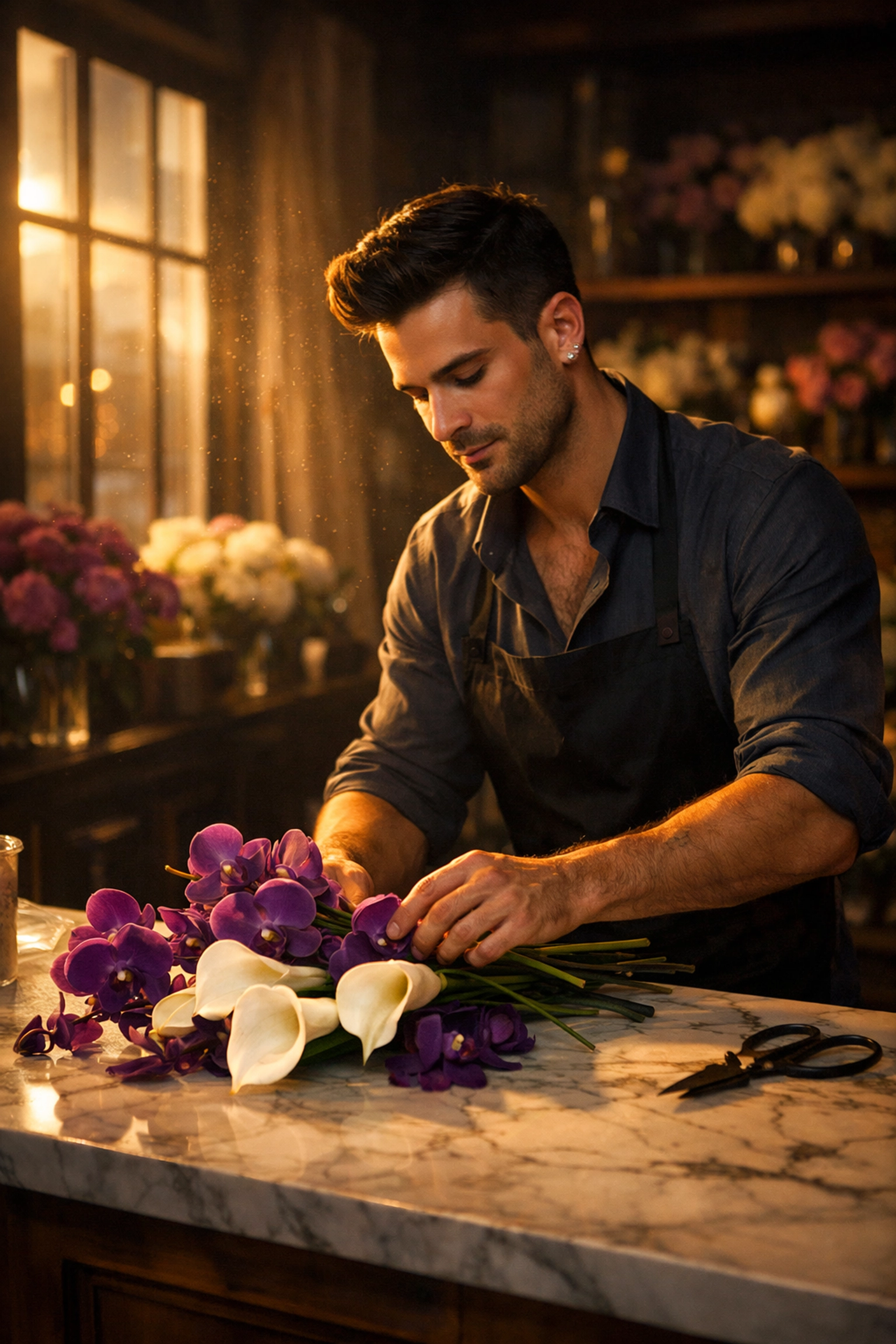
Gay florists became masters at this translation. They understood performance, presentation, and the power of unspoken communication. After all, who better to craft the perfect facade than someone who'd been doing it their whole lives?
The wealthy clients adored them. The florists were creative, attentive, discreet, and never threatened the established order. They could be trusted with keys to penthouses, with knowledge of affairs, with the delicate social ecosystem that governed high society. They were seen but not seen, present but not threatening: until the greenhouse doors closed and the real magic began.
The Greenhouse After Dark
Every serious florist working the luxury circuit had access to a greenhouse. Sometimes it belonged to the shop, sometimes to a particularly wealthy patron who needed someone to maintain their orchid collection. These glass sanctuaries became something more than workspaces: they became meeting grounds, refuge points, and temples of transformation.
After the last delivery was made and the shop closed, the greenhouse came alive in a different way. The humid air, thick with the scent of jasmine and soil, created an atmosphere that existed outside normal time and space. Street lamps filtered through glass walls, casting everything in an amber glow. Steam rose from heating vents, making the whole space feel like a fever dream.
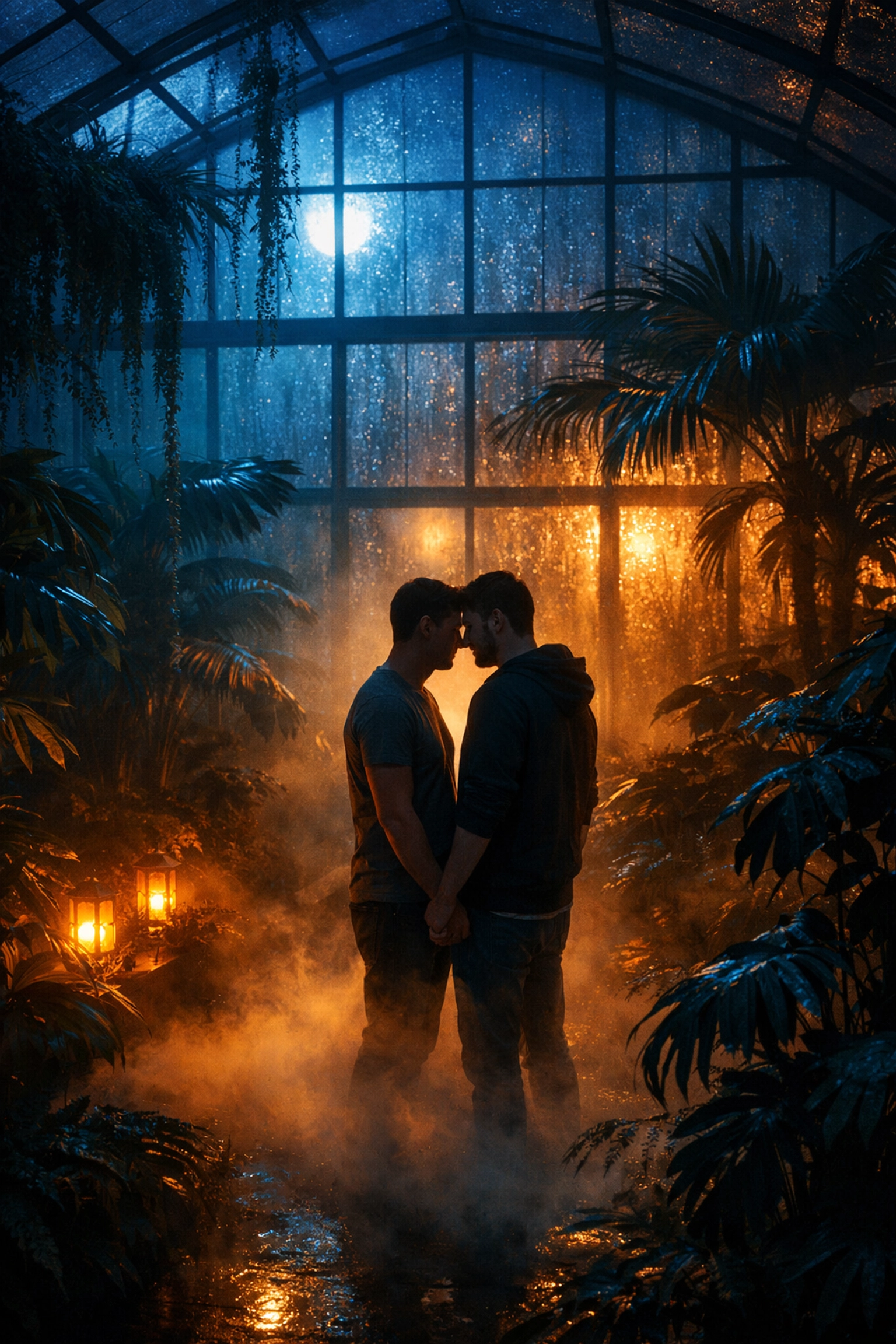
This was where connections bloomed. Other florists would stop by after finishing their own shifts. Artists and musicians who'd been hired for the same wealthy parties. Sometimes even the clients themselves: the ones who wore wedding rings but whose eyes lingered a moment too long during flower consultations.
The greenhouse offered something increasingly rare: true privacy combined with plausible deniability. You weren't at a known gay bar that could be raided. You weren't in a public park that could be patrolled. You were "working late on arrangements for the Thompson wedding." You were "checking on the humidity levels for the rare orchids." You were exactly where you should be, even at midnight.
The Language of Flowers
The Victorians believed in floriography: the language of flowers: where each bloom carried secret meaning. Gay florists took this concept and ran with it, creating their own coded communications within arrangements. A sprig of lavender tucked into a boutonniere. Purple iris positioned just so in a centerpiece. These weren't accidents; they were messages for those who knew how to read them.
Working for wealthy clients meant access to the rarest and most exotic specimens. While everyone else was arranging carnations and daisies, high-end florists worked with bird of paradise, anthurium, and protea. They could get their hands on flowers that cost more per stem than most people made in a week. This gave them status within the underground gay community: they were the ones who could make a small apartment look like a palace, who could transform a drab party into something spectacular.
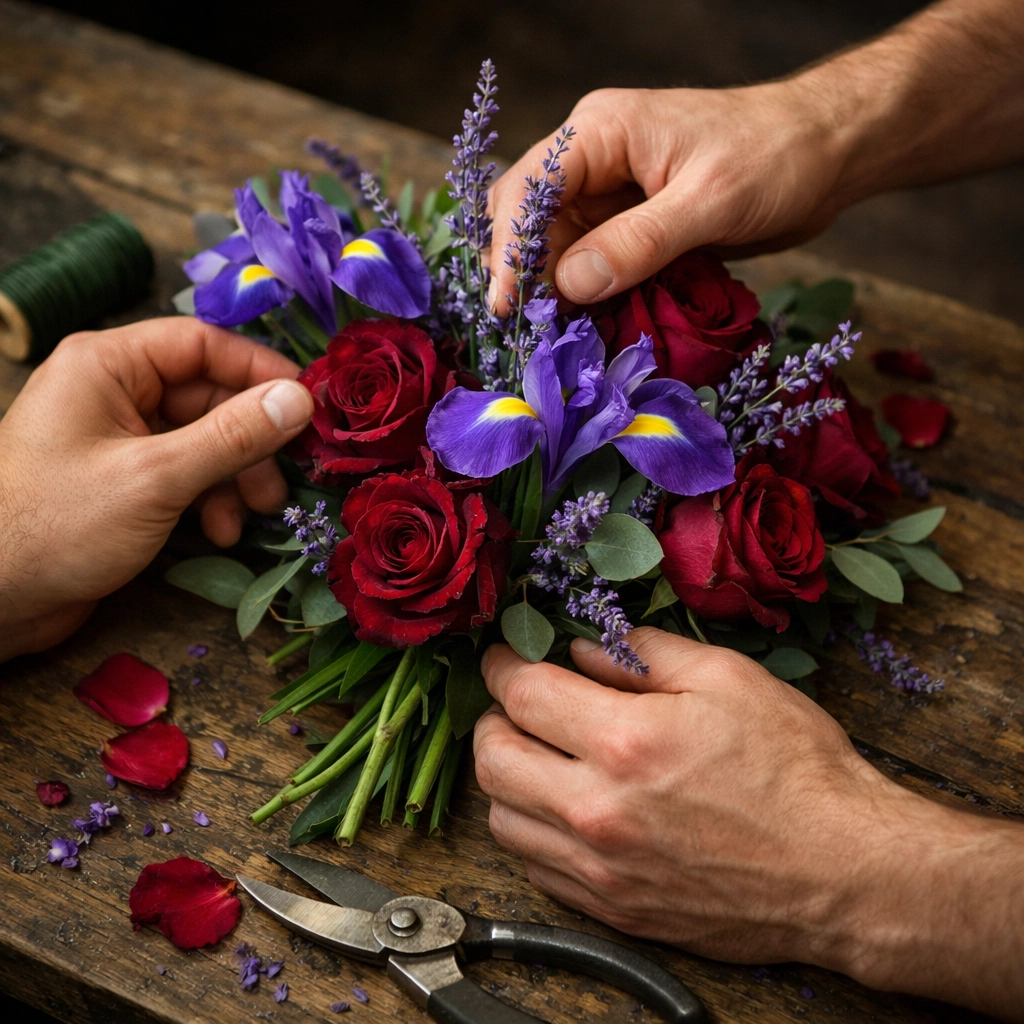
But more than that, the flowers themselves became a form of self-expression that mainstream society denied them. You couldn't openly declare your love for another man, but you could create the most breathtaking cascade of white roses and eucalyptus for a "friend's" birthday. You couldn't hold hands in public, but you could spend hours carefully wiring each bloom in a boutonniere meant for someone special.
The Class Divide
Working for wealthy clients created its own complicated dynamics. These florists moved between worlds: spending their days in mansions and their nights in cramped apartments, crafting beauty for people who would never invite them to dinner, creating romantic ambiance for straight couples while their own relationships remained hidden.
Some wealthy patrons were generous, slipping extra cash into payments, setting aside leftover flowers, even helping arrange green cards when immigration became an issue. Others treated their florists as invisible servants, snapping fingers and making impossible demands with zero appreciation for the artistry involved.
But the greenhouse remained neutral ground. When the doors closed and the mist rolled in, class distinctions blurred. Everyone was just seeking the same thing: connection, beauty, and a place where they could be themselves without explanation or apology.
Modern Blooms
Today's floristry world is different but somehow the same. Social media has changed the game: now gay florists can build massive followings showcasing their work, can be openly proud, can even become minor celebrities. The wealthy still want the best, and gay florists still deliver, but now they're more likely to be photographed for Architectural Digest than hidden in the background.
Yet greenhouses still hold that special magic. Even in an era of dating apps and legal marriage, there's something irreplaceable about physical spaces where queer people gather. The greenhouse: with its eternal spring, its living beauty, its humid embrace: remains a sanctuary. Some things don't need to change.
Growing Forward
The story of gay florists isn't just about flowers or wealthy clients or midnight meetings. It's about finding beauty and community in unexpected places. It's about taking a profession that society deemed "appropriate" for queer people and transforming it into something powerful and meaningful.
Every arrangement was an act of creation. Every greenhouse gathering was an act of resistance. Every coded message hidden in a bouquet was a reminder that love finds a way, even through thorns.
If you're interested in more stories about LGBTQ+ lives and loves throughout history, dive into our collection of gay romance novels and MM fiction at Read with Pride. We're building a library that celebrates every shade of queer experience, from historical romance to contemporary fiction, because every story deserves to be told: and read: with pride.
Connect with us:
- Website: readwithpride.com
- Facebook: Read With Pride
- Instagram: @read.withpride
- Twitter/X: @Read_With_Pride
#ReadWithPride #MMRomance #GayRomance #LGBTQFiction #QueerHistory #GayRomanceBooks #MMBooks #LGBTQEbooks #GayFiction #QueerLove #HistoricalGayRomance #GayLoveStories #MMRomanceBooks #PrideReads #LGBTQLiterature #QueerStories #GayNovels #LoveBlooms

Leave a Reply
You must be logged in to post a comment.