

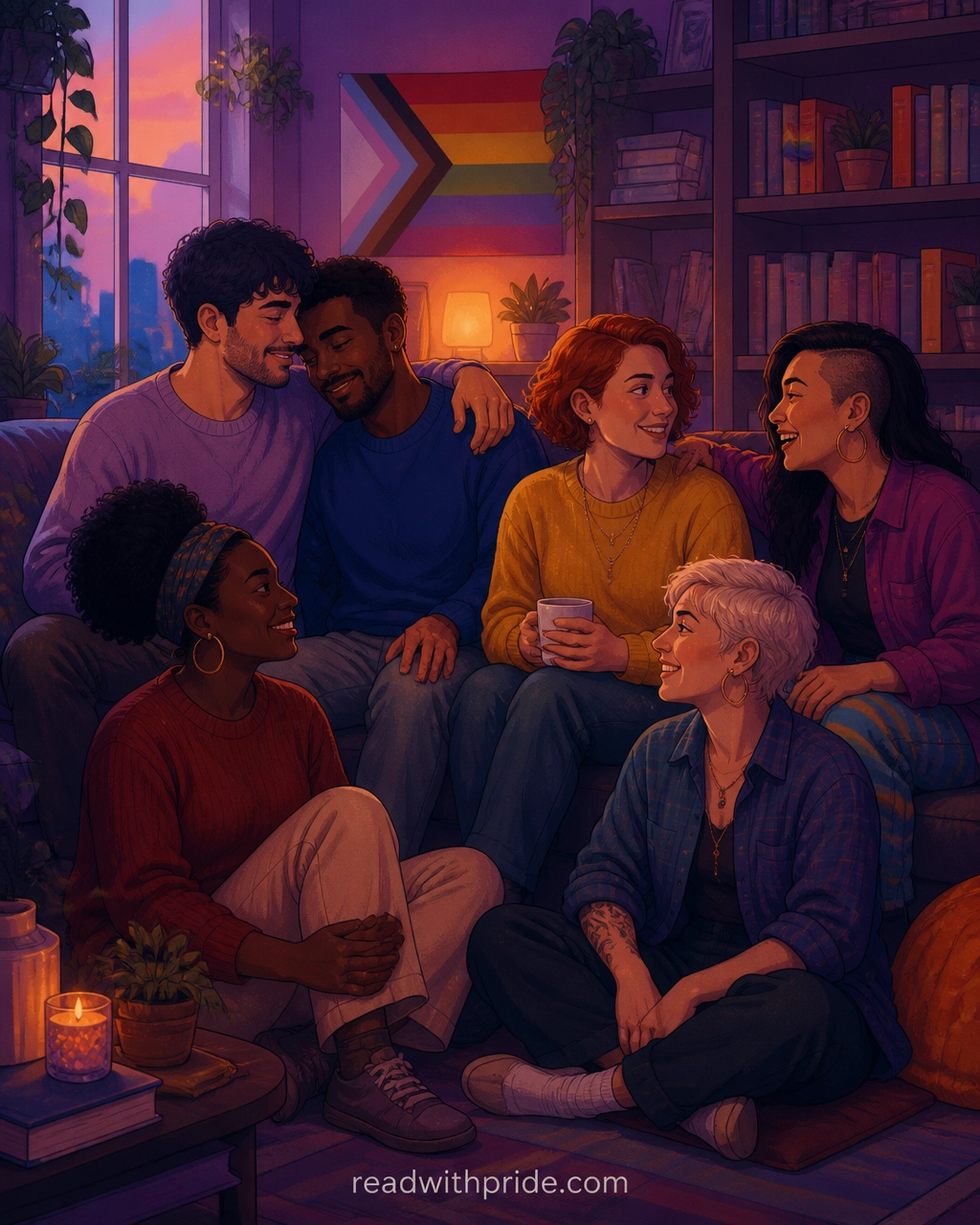
There is no single queer timeline, and honestly, that is one of the best things about it.
Some people come out in their teens. Others find the language for themselves in their thirties, sixties, or somewhere wonderfully in between. Some build a life around one devoted partner. Others create expansive networks of lovers, friends, co-parents, housemates, and community. Some milestones arrive with champagne. Others look like a quiet conversation, a changed emergency contact, or the first time you realise that your friends have become home.
These are the life milestones that shape us: personal, emotional, sometimes complicated, and rarely as tidy as the traditional “relationship escalator” suggests.
For queer people, relationships are often built with intention. We question the scripts we inherit, decide what actually works for us, and make space for love in forms that feel honest. Those choices appear throughout MM romance themes, lesbian romance, gay fiction, and wider LGBTQ+ fiction because stories give us room to imagine ourselves becoming, not just surviving, but belonging.
Coming Out Is a Series of Moments, Not One Big Announcement
Coming out is often described as a single milestone: the dramatic conversation, the carefully written message, the family dinner where everything changes.
Sometimes it is dramatic. Sometimes it is joyful. Sometimes it is frightening. Sometimes it is anticlimactic in the best possible way, “Yes, we know. Would you like more potatoes?”
But for many LGBTQ+ people, coming out is not one event. It is a series of decisions made across different parts of life.
You might first come out to yourself, perhaps by finally saying an identity aloud when no one else is in the room. Then you may tell a close friend, a sibling, a partner, or a chosen family member. Later, you might navigate coming out at work, with a doctor, in a new friendship, or in a relationship.
Each moment can carry a different kind of vulnerability.
Coming out is also not an obligation. No one owes the world a confession, explanation, or perfectly packaged identity. Safety, financial security, privacy, culture, faith, family circumstances, and personal readiness all matter. The milestone is not simply “telling everyone.” Sometimes the milestone is giving yourself permission to know who you are, even before you share that knowledge publicly.

That emotional journey is one reason coming-of-age narratives and gay love stories can feel so powerful. A character’s first honest conversation, first chosen name, or first relationship lived openly may echo something deeply familiar in the reader. In the best MM romance books and lesbian romance novels, identity is not treated as a problem to solve before the “real” love story begins. It is part of the person: and the person is already worthy of love.
For further support around coming out and LGBTQ+ identity, organisations such as GLAAD offer resources and guidance. Your journey remains yours, and you are allowed to move at your own pace.
Chosen Family Is Built Through Repeated Acts of Care
Chosen family is one of the most meaningful queer life milestones because it is rarely created in a single grand gesture. It grows through repetition.
It is the friend who checks that you got home safely. The person who learns your pronouns and corrects someone else without making you do the work. The group chat that becomes a 24-hour emotional support line. The friends who turn up with soup, chargers, and a questionable but deeply appreciated playlist.
Chosen family is family created through choice rather than biology or legal paperwork. It may complement a supportive family of origin, offer an alternative to one that is distant or unsafe, or become the primary network of love and care in someone’s life.
It can include friends, partners, ex-partners, neighbours, colleagues, mentors, community members, and children. It can be small and intimate or gloriously sprawling. There is no membership card, although there may be a shared calendar that nobody updates correctly.
Milestones within chosen family might include:
- Hosting your first holiday or “Friendsgiving” with people who feel like home.
- Asking someone to be your emergency contact or medical proxy.
- Creating a regular dinner, film night, or Sunday walk.
- Celebrating a name change, new job, sobriety anniversary, or personal breakthrough together.
- Moving into a shared home or building a mutual-aid network.
- Being able to say, without hesitation, “These are my people.”
Research and community resources often describe chosen family as a source of emotional, practical, and material support. Family Equality’s guide to forming chosen family explores how these relationships can be built intentionally, while GLAAD’s resources on found families highlight their importance for LGBTQ+ people who experience rejection or isolation.
In queer fiction, chosen family is often the emotional architecture around the romance. The best friend who sees through the love interest’s defences. The lesbian auntie who offers practical advice and snacks. The group of queer friends who provide both comic relief and a safe landing place after the third-act emotional crisis.
That found-family warmth is one reason readers return to gay romance novels, MM novels, and queer fiction again and again. We are not only reading about two people falling in love. We are reading about the world that makes their love possible.

Partnership Does Not Have One Correct Shape
Romance culture often presents one route as the default: meet, date, become exclusive, move in, marry, and merge every aspect of your life into one shared unit.
That route works beautifully for some people. For others, it is less a dream and more a compulsory group project they never agreed to join.
Queer relationships have long challenged the idea that partnership must follow one universal model. Some queer couples choose monogamy and find joy in a deeply committed two-person bond. Others explore open relationships, polyamory, relationship anarchy, or other forms of ethical non-monogamy. Some build co-parenting arrangements, live with friends, or create networks where romantic and platonic love are equally significant.
None of these structures is automatically more enlightened, more serious, or more loving than another. The important questions are about consent, honesty, communication, respect, and shared expectations.
A healthy relationship structure is not defined by how it looks from the outside. It is defined by whether the people involved can speak openly about their needs and boundaries: and whether those needs are taken seriously.
For monogamous couples, intentionality might mean discussing what commitment means beyond sexual exclusivity. For polyamorous people, it may involve negotiating time, safer sex, jealousy, privacy, hierarchy, and emotional reassurance. In every relationship, the work is ongoing. Love may be spontaneous, but good communication usually requires a calendar.
Useful partnership milestones can include:
- Having your first relationship where you feel fully seen.
- Introducing a partner to your chosen family.
- Discussing boundaries and expectations before a crisis forces the conversation.
- Moving in together: or deciding that separate homes suit you better.
- Creating a relationship agreement that reflects your values.
- Learning how to repair conflict rather than treating disagreement as failure.
- Making space for independence as well as intimacy.
The Read with Pride family and relationships collection offers a starting point for exploring stories about LGBTQ+ families, resilience, and belonging. For readers who want relationship-focused reflection, the Read with Pride LGBTQ+ blog collection continues the conversation across identity, connection, and queer life.
What MM Romance Themes Teach Us About Milestones
One reason MM romance themes resonate so strongly is that they turn emotional milestones into story events.
The first honest confession can feel as significant as a proposal. A forced-proximity setup can reflect the awkward intimacy of learning how to share space. A slow burn can mirror the gradual process of building trust after years of hiding, disappointment, or self-protection. Enemies-to-lovers stories often ask whether two people can revise the assumptions they have made about each other: and about themselves.
These familiar tropes become especially meaningful when they make room for queer realities:
- Coming out: The emotional risk of being known.
- Found family: The community that supports the couple beyond the romance.
- Slow burn: Trust developing through small, believable moments.
- Forced proximity: Two people learning each other’s habits, boundaries, and softer edges.
- Second chances: Love after heartbreak, shame, grief, or lost time.
- Chosen commitment: A future designed by the characters rather than inherited from social expectations.
- Polyamorous romance: Love expanded through communication, consent, and mutual care.
A strong gay romance novel does not need to include every milestone. Sometimes the most moving story is about a couple choosing a quiet life together. Sometimes it is about a character finally letting friends help. Sometimes it is about discovering that happily-ever-after is not a wedding: it is a home where nobody has to become smaller.
That is the pleasure of LGBTQ+ romance and MM fiction: the stories can be steamy, tender, dramatic, hilarious, or heartbreaking, but they make room for queer people to experience the full emotional range of romance. We deserve desire and domesticity, conflict and comfort, grand gestures and someone remembering our coffee order.
Your Milestones Do Not Need to Match Anyone Else’s
There is no deadline for coming out. No required number of partners. No universal definition of family. No prize for reaching a milestone in the expected order.
Your life may include a long-term monogamous partnership, a joyful polycule, a close-knit circle of friends, a supportive family of origin, or some combination that changes over time. You may want marriage, or you may want a shared mortgage with your best friend and a house full of plants. You may be single and completely surrounded by love.
All of it counts.
The milestones that shape queer lives are often the moments when we choose authenticity over performance, connection over isolation, and care over convention. They are the small promises we make to ourselves and one another: I see you. I believe you. You can come home here.
At Read with Pride, we celebrate stories that understand love in all its complexity: from heartfelt gay fiction and emotional MM romance books to lesbian romance, queer family narratives, and LGBTQ+ ebooks that let readers feel recognised.
Find more queer reading and join the conversation on Facebook and Instagram.
What has been one of the life milestones that shaped your queer journey?
Stay proud, stay curious, and keep reading.
#ReadWithPride #QueerRelationships #LifeMilestones #MMRomanceThemes #ChosenFamily #LGBTQPlusFiction #GayRomanceBooks #LesbianRomance #QueerFiction #LGBTQReading #MMRomance
{“@type”:”BlogPosting”,”image”:[“https://cdn.marblism.com/H_4VifPRdFi.webp”,”https://cdn.marblism.com/66s0lxDPjrE.webp”,”https://cdn.marblism.com/sFZ5LfR13oW.webp”,”https://cdn.marblism.com/HN2eyaprZPv.webp”],”author”:{“url”:”https://readwithpride.com”,”name”:”Read with Pride”,”@type”:”Organization”},”@context”:”https://schema.org”,”headline”:”Milestones That Shape Us: Coming Out, Chosen Family, and the Many Shapes of Love”,”keywords”:[“queer relationships”,”life milestones”,”MM romance themes”,”MM romance books”,”gay romance novels”,”chosen family”,”LGBTQ+ romance”,”lesbian romance”],”publisher”:{“url”:”https://readwithpride.com”,”logo”:{“url”:”https://cdn.marblism.com/3frC7pIx901.jpg”,”@type”:”ImageObject”},”name”:”Read with Pride”,”@type”:”Organization”},”description”:”An inclusive reflection on queer relationships and life milestones, including coming out, chosen family, monogamy, polyamory, and MM romance themes.”,”dateModified”:”2026-08-11″,”datePublished”:”2026-08-11″,”mainEntityOfPage”:{“url”:”https://readwithpride.com”,”@type”:”WebPage”}}

Leave a Reply
You must be logged in to post a comment.