

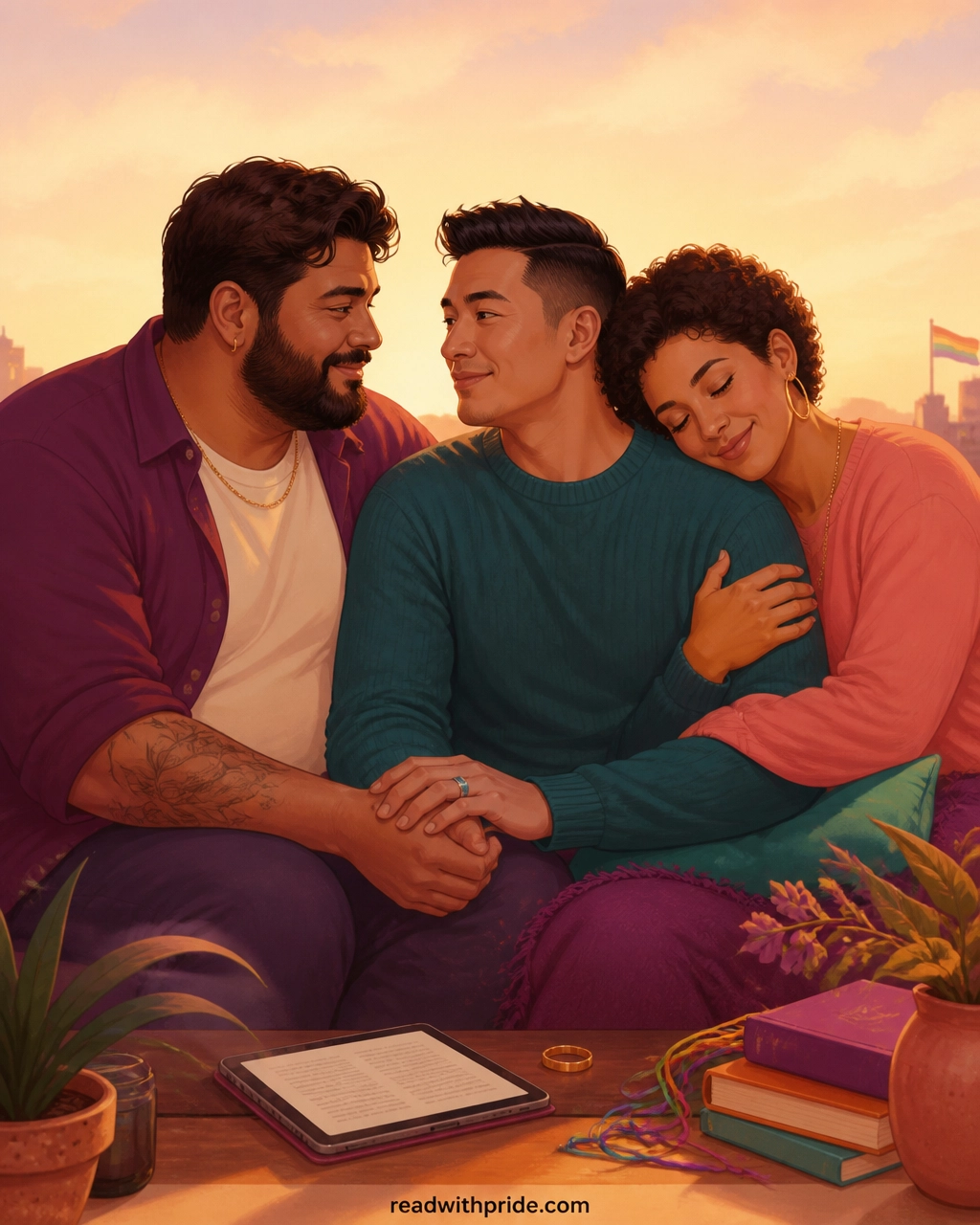
readwithpride.com
There is no single queer timeline.
Some people come out before they have their first relationship. Others fall in love first and find the language for themselves later. Some build a life around one devoted partner. Others create a wider network of lovers, friends, co-parents, exes, and community members who show up with soup, spare keys, and extremely strong opinions about relationship boundaries.
All of these lives are real.
When we talk about queer relationships and life milestones, it is tempting to reach for a familiar checklist: come out, meet someone, move in together, get engaged, marry, raise a family. But LGBTQ+ people have always found ways to question, adapt, and reinvent that script.
Sometimes the most important milestone is not a wedding. It is the first time you say your identity aloud. It might be creating a chosen family, agreeing on a relationship structure, or realising that love does not have to look like anyone else’s version to be meaningful.
In other words: once we choose partnership, we get to define it ourselves.
Coming out is a milestone, but it is not a deadline
Coming out can be joyful, frightening, exhausting, liberating, complicated, or all of those things before breakfast.
For some LGBTQ+ people, coming out happens in a dramatic conversation. For others, it unfolds gradually: telling one trusted friend, changing a dating profile, introducing a partner, using a new name, or simply allowing yourself to think, “This is who I am,” without immediately arguing with the thought.
There is no correct age, format, or audience.
You do not owe everyone your story at once. You do not have to come out before you are safe. You do not have to keep explaining yourself to people who treat your identity like a debate topic. And if you have already come out once, that does not mean you can never revisit the process. New workplaces, relationships, family situations, and communities may bring new choices about visibility.
The emotional arc of coming out often appears in MM romance themes, especially stories involving self-discovery, trust, and the slow burn of learning to be known. A character may spend years protecting himself before allowing another man close enough to see the truth. The romance is not simply about finding love. It is about discovering that honesty can be met with tenderness.

That kind of story can be deeply affirming because it reminds us that coming out is not the end of the journey. It is one chapter in a much larger life.
Chosen family is one of the most powerful queer milestones
Chosen family is not a consolation prize for people whose families of origin failed them. It is family: built through trust, care, shared history, and the decision to keep showing up.
A chosen family might include a partner, best friend, former partner, neighbour, colleague, mentor, sibling, or community elder. It may be a small circle or a glorious, chaotic network with multiple group chats and at least one person who always arrives late but brings snacks.
The milestones of chosen family can be wonderfully ordinary:
- The first holiday spent together.
- A spare key offered without ceremony.
- Being listed as an emergency contact.
- Creating a yearly tradition.
- Having someone know exactly what to bring when you are ill.
- Introducing a new partner to the people who matter most.
- Realising that “family” now means something you actively feel, not just something assigned at birth.
These moments appear throughout queer fiction because they show love as an action. A relationship becomes real not only through declarations, but through practical care: the lift home, the check-in message, the quiet presence during a difficult appointment.
Read with Pride’s LGBTQ+ blogs and articles explore identity, community, healing, and the many ways queer people build lives that feel like their own. You can also explore stories about family and relationships through the platform’s Alternative Family collection.

Monogamy can be intentional, not automatic
Monogamy is sometimes treated as the default setting for relationships. But queer couples often experience it as a conscious choice: something they discuss, shape, and define rather than inherit without question.
A monogamous partnership may involve sexual and romantic exclusivity, but the details still matter. What does fidelity mean to you? How do you handle flirtation, emotional intimacy, privacy, friendships with exes, or online connection? What information do you want to share, and what boundaries help both partners feel secure?
There is no universal answer.
The important part is that both people understand the agreement and can speak honestly when their needs change. Monogamy should not mean silence, assumption, or one person quietly accepting a relationship structure that does not work for them.
This is where MM romance books often excel. A thoughtful gay romance novel can show two men moving beyond the grand gesture and into the less glamorous, more intimate work of partnership: discussing fears, negotiating expectations, apologising properly, and learning how to stay present when the conversation gets uncomfortable.
Sometimes the most romantic line in a story is not “I’ll love you forever.” It is “Tell me what you need, and I’ll listen.”
Polyamory asks us to practise honesty with care
Polyamory and ethical non-monogamy are not simply monogamy with extra people added. They are relationship structures built around consent, communication, autonomy, and ongoing negotiation.
For some queer people, polyamory offers a way to create relationships that do not require one person to meet every emotional, romantic, social, and practical need. For others, monogamy feels grounding and joyful. Neither structure is automatically more progressive, more secure, or more loving.
The question is not, “Which relationship form is best?”
It is, “Which relationship form can we build honestly and ethically?”
Polyamorous milestones might include:
- Discussing the possibility of opening a relationship.
- Naming boundaries and safer-sex agreements.
- Developing a shared communication rhythm.
- Meeting a partner’s partner.
- Making room for jealousy without treating it as a moral failure.
- Deciding how relationships connect with chosen family.
- Revisiting agreements as people, needs, and circumstances change.

Good communication does not eliminate every difficult feeling. It creates somewhere safe to put those feelings. Jealousy, insecurity, excitement, fear, and desire can all be discussed without turning one partner into a villain.
That emotional honesty makes polyamorous relationships rich territory for queer storytelling. It also makes them a reminder that love is not proven by possession. It is built through respect.
Partnership milestones do not have to follow a traditional script
For one couple, the first major milestone might be a shared lease. For another, it might be introducing a partner to chosen family. For someone else, it might be deciding not to live together at all.
Queer relationships can include:
- Monogamous marriage.
- Long-term partnership without marriage.
- Polyamorous networks.
- Open relationships.
- Long-distance commitment.
- Relationship anarchy.
- Co-parenting partnerships.
- Deeply committed relationships that maintain separate homes.
- Lifelong friendships that function as family.
The point is not to collect milestones like badges. It is to notice what matters to you.
A first Pride together can matter more than an engagement. A medical power of attorney can feel more significant than a public announcement. A shared bookshelf can be a love letter. So can the first time someone remembers your difficult anniversary, respects your pronouns, or asks how your family gathering really went.
These are the quiet details that give gay love stories their emotional depth. They are also the reason readers return to slow-burn romances, forced-proximity plots, found-family narratives, and enemies-to-lovers stories. Beneath the banter and chemistry is a question many of us recognise:
Can I build a life where I am loved as I actually am?
MM romance themes give us room to imagine
The best MM romance themes are not limited to attraction. They explore vulnerability, domesticity, healing, friendship, community, and the awkward joy of creating a future together.
A slow burn can mirror the gradual process of trusting someone after years of self-protection. Forced proximity can place two men in the same emotional space until avoidance becomes impossible. Enemies-to-lovers can turn conflict into curiosity, then respect, then something much more dangerous to the heart.
And while MM romance is a beloved part of the Read with Pride collection, queer love stories are wonderfully expansive. Lesbian romance, bi romance, trans-led fiction, and wider LGBTQ+ fiction all offer different perspectives on desire, partnership, identity, and belonging.
Stories do not need to provide a blueprint. Sometimes they simply give us language. Sometimes they let us see a version of ourselves choosing joy. Sometimes they remind us that a happy ending can mean a wedding, a community, a renewed agreement, a safe home, or two people deciding to try again tomorrow.

Browse LGBTQ+ ebooks at Read with Pride for MM romance, gay fiction, lesbian romance, queer novels, and stories filled with emotional depth and raw desire. Whether you want heartfelt fiction, a steamy MM romance, or a tender contemporary love story, there is space here for the full range of queer feeling.
Once we choose, we define it ourselves
Queer life milestones are not lesser versions of traditional milestones. They are opportunities to ask better questions.
Who do we want beside us? What does commitment mean in practice? Which agreements make us feel safe and respected? How do we include chosen family? What kind of home, community, and future are we building?
Some people will choose monogamy. Some will choose polyamory. Some will change their minds. Some will choose partnership, solitude, friendship, or a combination that does not fit neatly on a form.
There is freedom in that uncertainty.
The most important relationship milestone may be the moment you stop measuring your life against someone else’s timeline. You are allowed to come out slowly. You are allowed to make family. You are allowed to love one person, several people, or yourself first. You are allowed to define commitment in a way that honours everyone involved.
There is no single queer way to build a life.
There is only the ongoing, courageous work of making one that feels honest, mutual, safe, and yours.
Follow Read with Pride for more conversations about queer relationships and identity, and connect with the community on Facebook and Instagram.
#ReadWithPride #QueerRelationships #LifeMilestones #MMRomanceThemes #MMRomance #GayRomanceBooks #LGBTQFiction #QueerFiction #ChosenFamily #Polyamory #Monogamy #LesbianRomance #LGBTQReading #GayLoveStories #QueerLove
{“@type”:”BlogPosting”,”image”:[“https://cdn.marblism.com/ZoaFxIpWUb4.webp”,”https://cdn.marblism.com/eE8SzcIhaJf.webp”,”https://cdn.marblism.com/Cc3FqYGWLew.webp”,”https://cdn.marblism.com/BG6CiWE2H5o.webp”,”https://cdn.marblism.com/DgtMxbd4zfT.webp”],”author”:{“url”:”https://readwithpride.com”,”name”:”Read with Pride”,”@type”:”Organization”},”@context”:”https://schema.org”,”headline”:”LGBTQ+ Relationships and Life Milestones: Monogamy, Polyamory, and the Partnership Once We Choose, We Define It Ourselves”,”keywords”:[“queer relationships”,”life milestones”,”MM romance themes”,”MM romance books”,”chosen family”,”polyamory”,”monogamy”,”LGBTQ+ fiction”,”lesbian romance”],”publisher”:{“url”:”https://readwithpride.com”,”logo”:{“url”:”https://cdn.marblism.com/3frC7pIx901.jpg”,”@type”:”ImageObject”},”name”:”Read with Pride”,”@type”:”Organization”},”description”:”An authentic, inclusive reflection on queer relationships, coming out, chosen family, monogamy, polyamory, partnership milestones, and MM romance themes.”,”mainEntityOfPage”:{“@id”:”https://readwithpride.com/”,”@type”:”WebPage”}}

Leave a Reply
You must be logged in to post a comment.