

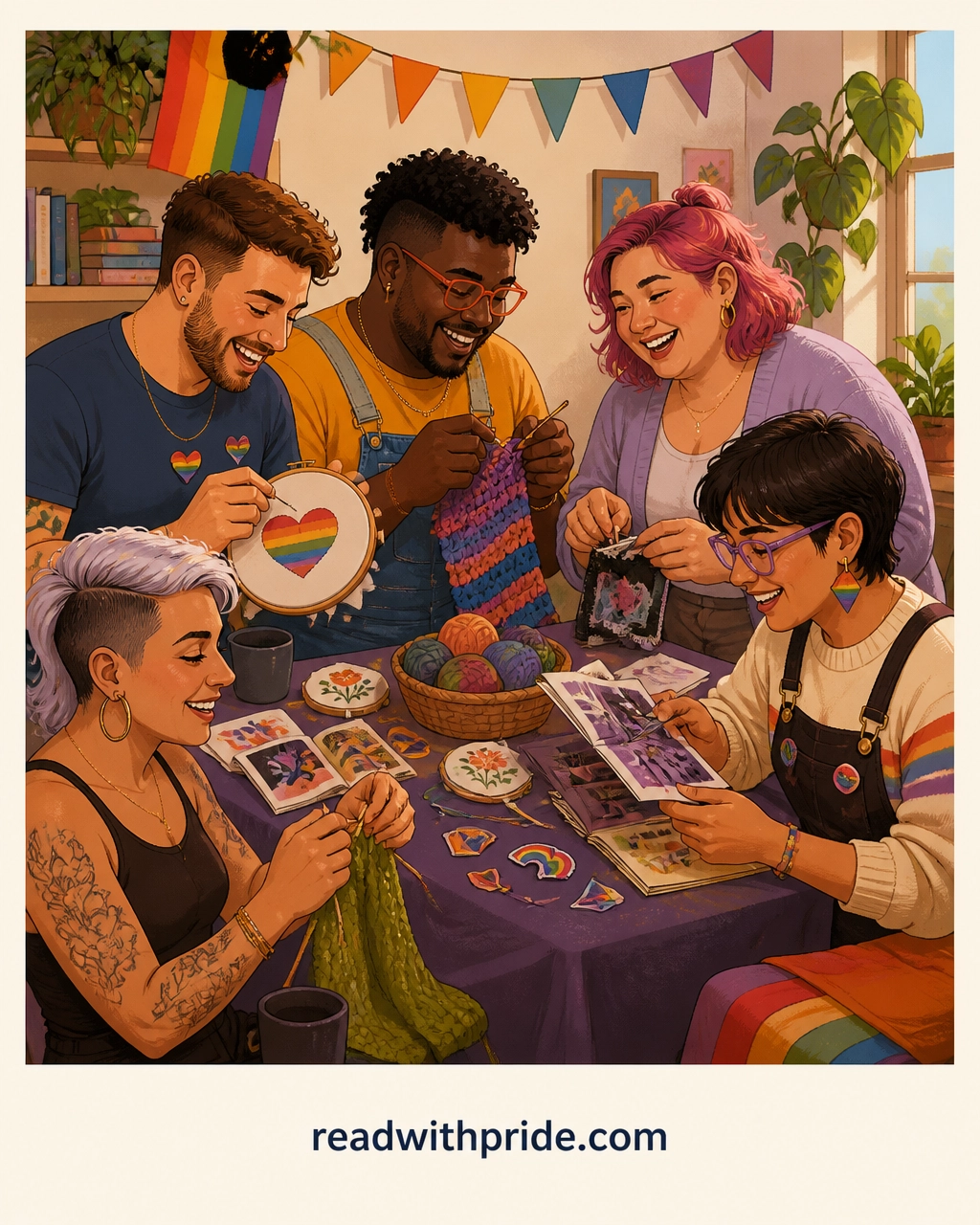
There is something quietly powerful about a queer craft circle.
The table may be covered in yarn, embroidery hoops, half-finished patches, coffee mugs, and one pair of scissors nobody is allowed to take home. Someone is crocheting a cardigan. Someone else is learning to embroider. A third person has arrived with absolutely no project but several important opinions about everyone else’s colour choices.
And somehow, between the tangled thread and the laughing, community happens.
That is the magic of queer hobbies. They give us somewhere to go, something to do, and a gentle reason to keep showing up.
A craft circle is more than a hobby group
A stitch-and-bitch gathering might sound casual: and it should be. No one needs to arrive as an expert. You do not need a perfect project, impressive technique, or an encyclopaedic knowledge of different knitting needles.
You simply need to bring yourself.
Research into LGBTQ+ craft groups highlights their role in reducing isolation, sharing practical skills, and creating affirming third spaces. Groups such as the Queer Needlework Circle show how textile work can become a foundation for friendship, conversation, and mutual support. In the UK, Notts LGBT+ Network’s queer crafts groups similarly make creativity accessible to people who may not feel at home in traditional social settings.
The craft is the invitation. The connection is the point.
Why the table feels a little like an altar
An altar is a place where we honour what matters. In a queer craft circle, the table becomes something similar: not necessarily religious, but deeply intentional.
We place our time there. Our stories. Our unfinished work. Our willingness to be seen trying.
For many queer people, especially those who have experienced rejection or loneliness, this kind of gathering can feel revolutionary in its ordinariness. Nobody is asking you to perform a version of queerness that is glamorous, witty, politically fluent, or permanently available for emotional labour.
You can simply be tired and make a wonky patch.
You can talk about your week, sit quietly, or explain: at length: why a particular shade of purple is emotionally correct. There is room for all of it.
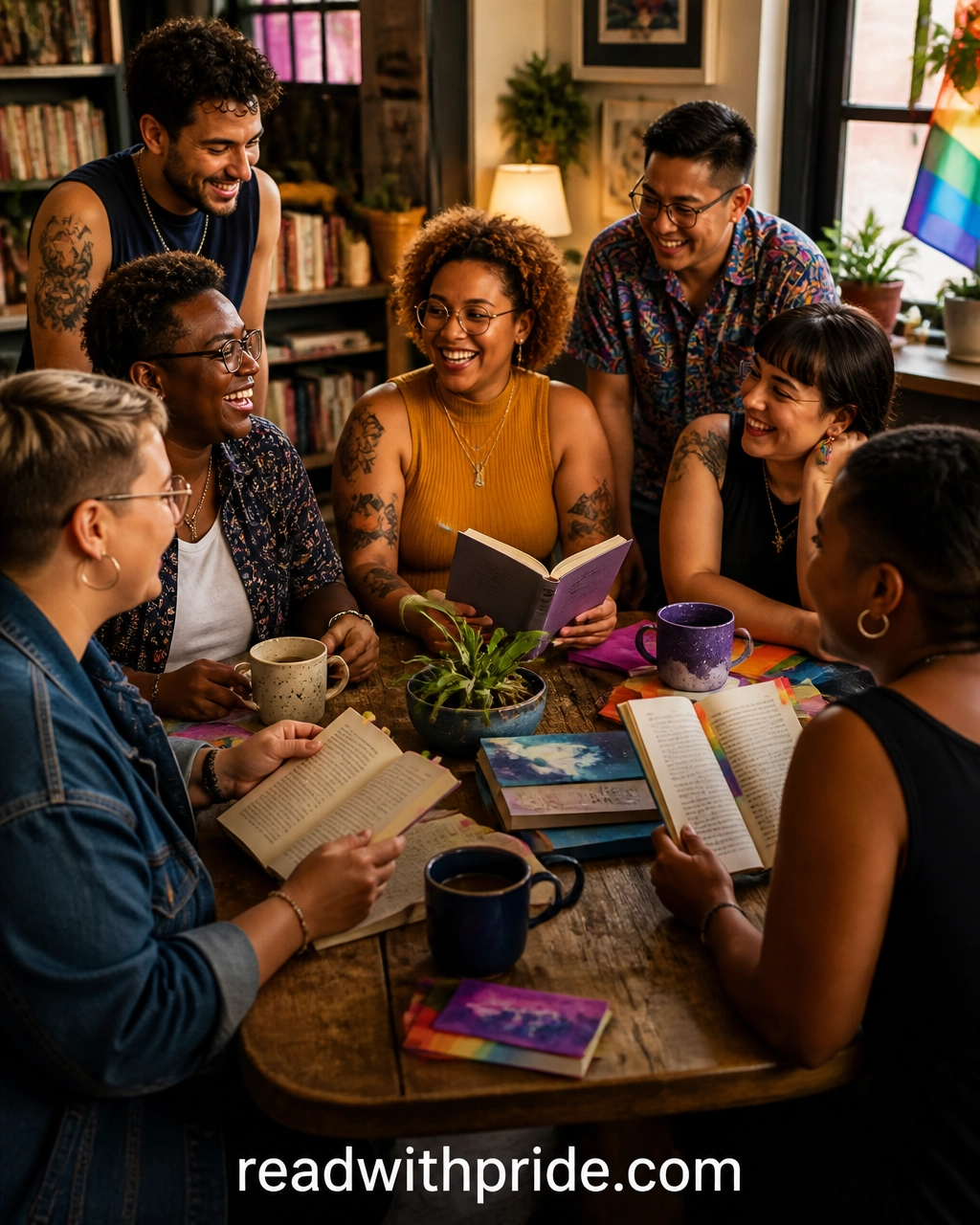
The MM romance tropes hiding in the craft circle
Let’s be honest: queer community gatherings also have excellent MM romance tropes.
There is the forced proximity of two people reaching for the same ball of green yarn.
There is the enemies-to-lovers energy between the person who insists on minimalist design and the person who believes every surface deserves more sequins.
There is the slow burn friendship that begins with “Do you need help with that?” and eventually becomes shared snacks, emergency pep talks, and a group chat with far too many memes.
There is even the classic “only one chair left” setup. A beloved staple of gay romance novels, now available beside the community-centre radiator.
Of course, real life is not a book. Community should never be treated as a dating marketplace, and not every spark needs to become a love story. Sometimes the happy ending is finding people who remember your pronouns, save you a seat, and notice when you have gone quiet.
That is romance of a different kind.
Crafting can be a form of queer care
Making things with our hands can help us slow down. Repetitive actions: stitching, folding, threading, painting, knotting: can create a little breathing room after a difficult day.
In a queer group, that calm is shared.
Someone may teach you how to repair a sleeve so it fits your body better. Someone else may help you customise a jacket, make a pride flag, or turn an old garment into something that feels affirming. Skill-sharing becomes practical care. Creativity becomes a way to reclaim choice.
And when materials are shared or donated, the circle can become a small form of community building in action: low-cost, welcoming, and open to beginners.

How to start your own queer craft circle
You do not need a grand venue or a perfect plan. Start small:
- Choose an accessible, welcoming space.
- Make the gathering free or pay-what-you-can if possible.
- Offer shared materials for beginners.
- Be clear about names, pronouns, accessibility, and community boundaries.
- Let people work on different projects.
- Include conversation, but never require personal disclosure.
- Keep snacks available. This is non-negotiable.
Most importantly, make the invitation specific. “Queer craft night for beginners, experts, and people who bought supplies six months ago and are still emotionally preparing” is much more appealing than “general social event.”

A craft table can be messy, imperfect, and full of loose ends. So can community. That does not make either one less beautiful.
If you are looking for more thoughtful queer stories, hobbies, and LGBTQ+ ebooks, explore Read with Pride and browse the LGBTQ+ blogs and articles. Then follow Read with Pride on Facebook and Instagram to keep the conversation going.
Bring your project. Bring your stories. Bring the friends who are still learning.
The table is ready.
#QueerHobbies #CommunityBuilding #LGBTQCommunity #QueerJoy #MMRomanceTropes #ReadWithPride #LGBTQFiction #QueerFiction #CraftCircle #ChosenFamily

Leave a Reply
You must be logged in to post a comment.