

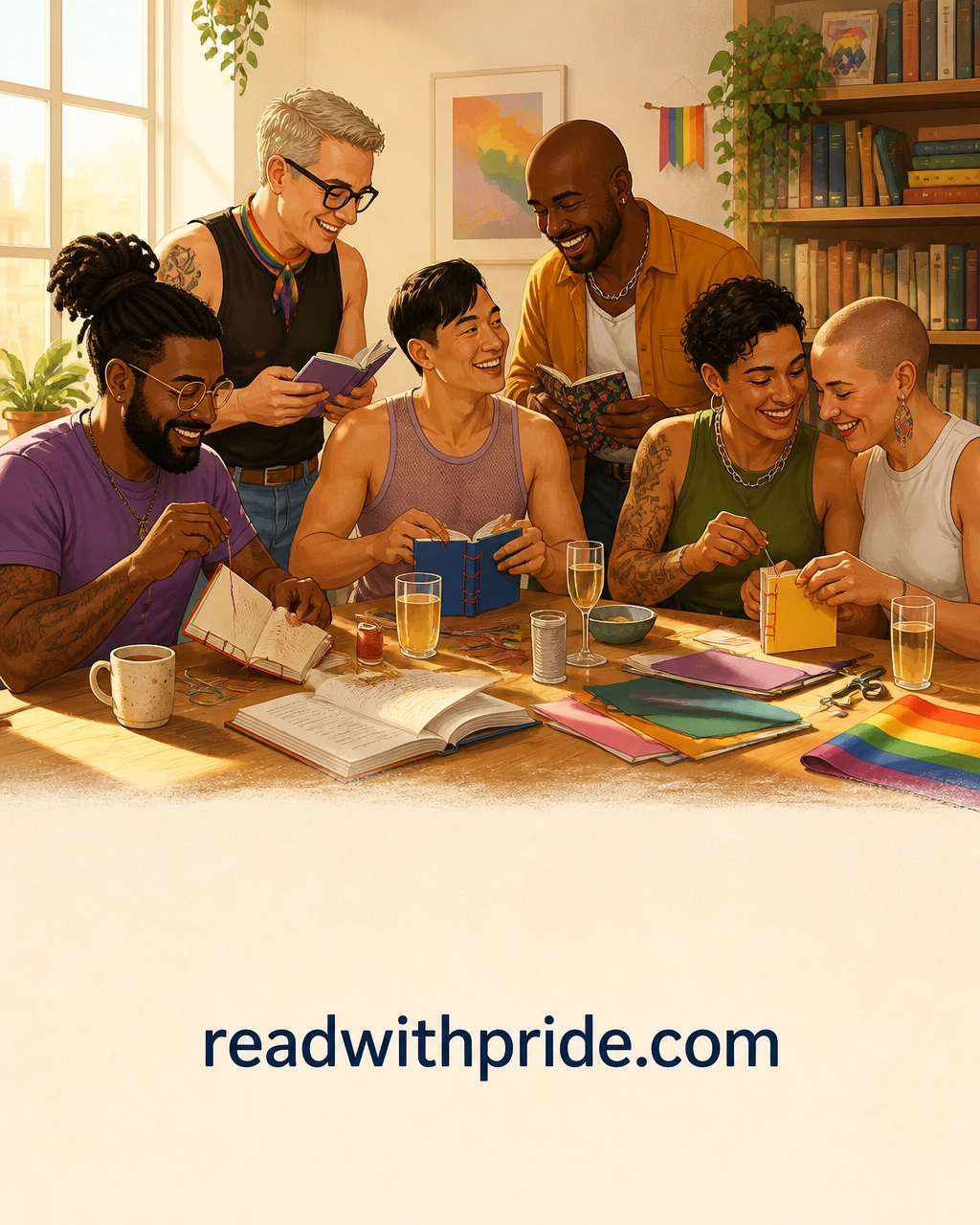
Welcome to the 12:00 Queer Hobbies & Community Connection series, where we celebrate the things that bring us together beyond the group chat: and occasionally give us an excuse to buy more stationery.
Today’s pairing is beautifully simple: bookbinding and starting a queer book club. One gives you something to do with your hands. The other gives you people to share it with. Together, they create a welcoming space for creativity, conversation and, naturally, strong opinions about MM romance tropes.
Bookbinding is a hobby with heart
Bookbinding sounds grand until you realise that a beginner project can be as simple as folded paper, a needle, thread and a little patience. You do not need a historic workshop, an artisan apron or the ability to pronounce every type of paper grain.
Start with a small pamphlet stitch or a simple handmade journal. Add a colourful cover. Make mistakes. Make more mistakes, but with confidence. The charm is in the process.
Bookbinding is one of those queer hobbies that creates natural conversation. While someone demonstrates how to punch holes or thread a needle, newcomers can settle in without the pressure of making instant small talk. Hands stay busy. People relax. Stories begin.
You might bind:
- A collection of favourite queer love stories
- A personal reading journal
- A mini zine about chosen family
- A list of the best MM romance books
- A handmade anthology of affirming quotes
- A scrapbook inspired by lesbian romance or gay fiction
The finished book matters, but so does the person sitting beside you saying, “That stitch looks complicated,” before immediately trying it anyway.

Build a queer book club around connection
A book club does not need to be a serious seminar where everyone arrives having highlighted 47 passages. It can be a monthly gathering in a café, library, living room or online space where people talk about stories and feel less alone.
Choose a clear focus, such as LGBTQ+ romance, lesbian romance, gay romance novels, queer fantasy or contemporary LGBTQ+ novels. Make the group trans-inclusive, accessible and welcoming to different reading speeds. Audiobooks, rereads and unfinished books should all be allowed. Nobody needs to defend themselves in court because chapter twelve got away from them.
A simple two-hour format works well:
- Arrive and settle in: tea, snacks, names and pronouns.
- Make something: bookbinding, journaling or a relaxed craft.
- Discuss the book: with a few prepared questions and plenty of room for feelings.
- Choose the next read: perhaps by vote, perhaps by enthusiastic shouting.
- Share community news: local events, resources, queer authors and recommendations.
That rhythm turns a gathering into genuine community building. People return, friendships grow and the group becomes a place where members can bring their full selves.
Let romance tropes do the organising
Romance tropes make brilliant book-club themes because they give everyone an easy starting point.
Try a month of forced proximity: two characters, one location and absolutely no emotional escape route. Follow it with a slow burn, where yearning does most of the heavy lifting. A found family theme can lead to conversations about chosen family in real life, while enemies to lovers invites debate about whether snark is flirting or simply a cry for help.
And then there is grumpy x sunshine: the literary equivalent of pairing black coffee with a rainbow cupcake.
Members can bind a small booklet inspired by each trope. Use fiery colours for enemies to lovers, soft textures for slow burn or a patchwork cover for found family. The craft becomes a playful extension of the reading conversation.

Make room for every queer story
Although MM romance may be the club’s starting point, the shelf should not have walls. Include lesbian romance, bisexual characters, trans love stories, coming out stories, queer historical fiction and joyful everyday representation.
A thoughtful discussion might move from LGBTQ+ fiction 2026 to heartfelt gay fiction, then into how different readers connect with identity, family and desire. If your group shares practical resources too, conversations may occasionally include specific research topics such as C Section 2026: because queer community spaces can hold both romance recommendations and real-life questions.
The key is consent. Set content notes, respect privacy and never ask someone to explain their identity or personal history for the benefit of the room.
Start small, make it welcoming
You do not need a perfect venue or a professional bookbinder. You need a clear invitation, a few supplies and a commitment to kindness.
Offer loaner materials. Explain that beginners are welcome. Include accessibility information. Allow quiet participation. Create community guidelines that cover pronouns, confidentiality, racism, ableism and respectful disagreement.
Then choose a first read from the curated collection at Read with Pride, explore more ideas in the Queer Life & Hobbies series, and invite your members to bring their favourite gay romance novels, queer authors and MM romance books.
A hobby can be the meet-cute. A book club can be the slow burn. The community you build together? That is the happily ever after.
Discover more LGBTQ+ ebooks at readwithpride.com, then follow Read with Pride on Facebook and Instagram. Start a queer book club, stitch a little joy into the day and tell us which romance trope your group would choose first.
#ReadWithPride #QueerHobbies #CommunityBuilding #QueerBookClub #MMRomanceBooks #GayRomanceNovels #QueerFiction #LGBTQFiction2026 #QueerJoy #LesbianRomance #GayFiction #QueerLoveStories


Leave a Reply
You must be logged in to post a comment.