

readwithpride.com
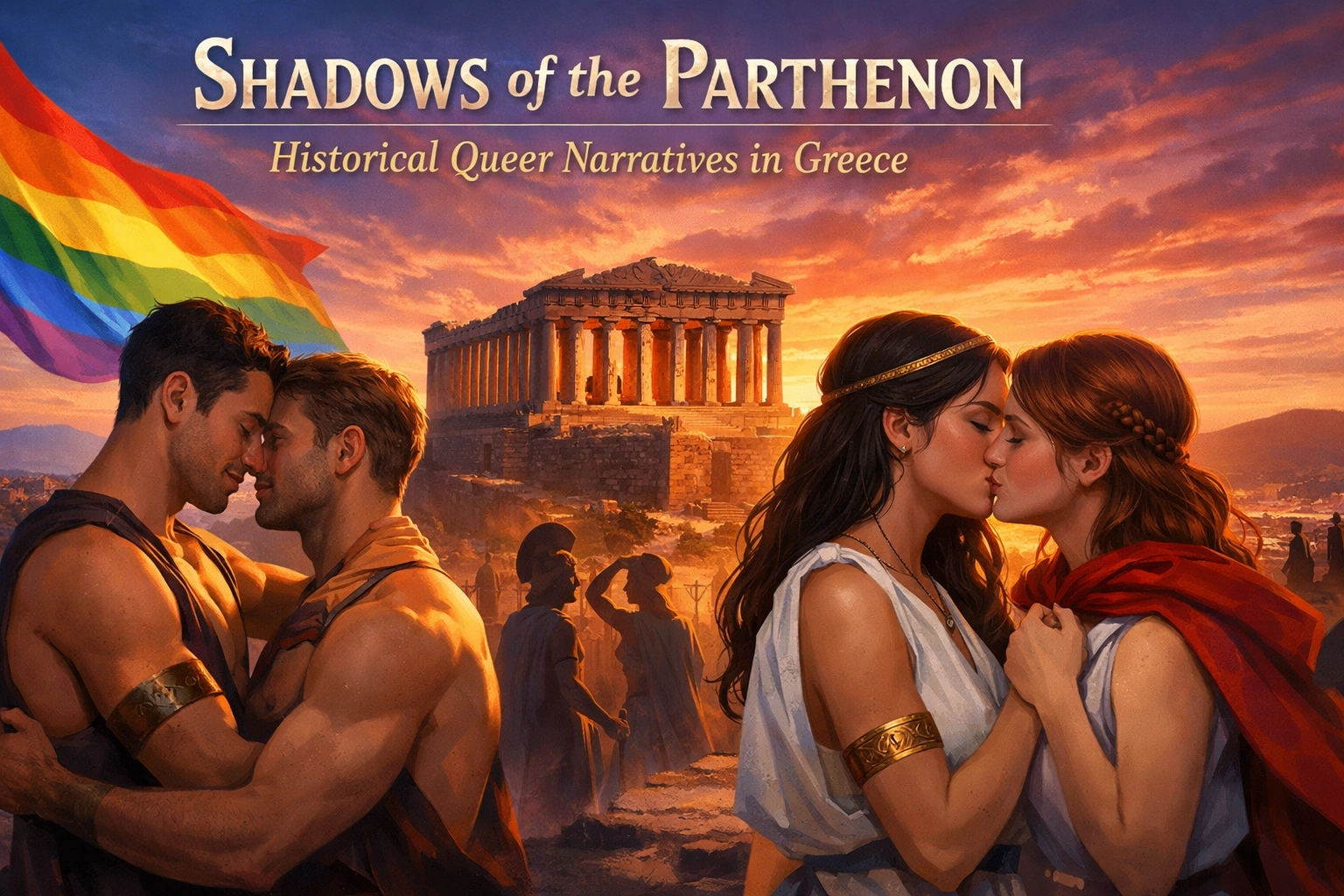
Let's talk about ancient Greece for a minute. You know, that civilization everyone romanticizes in history class, marble statues, philosophical debates, democracy, and all that jazz. But here's something they probably glossed over in your textbook: the Greeks had a completely different relationship with same-sex attraction than we do today. And honestly? It's way more complicated than the "ancient Greece was super gay-friendly!" narrative you might've heard.
As we dive into this series exploring Greek and Albanian gay experiences across time, we're starting with the ancient world, because you can't understand where queer life is today without knowing where it's been. So grab your metaphorical chiton, and let's journey back a few thousand years.
Not Gay or Straight, Just… Greek?
Here's the thing that'll bend your brain: the ancient Greeks didn't have words for "homosexual" or "heterosexual." Wild, right? Those categories simply didn't exist in their worldview. Instead, same-sex relationships were all about status, power, and social hierarchy.
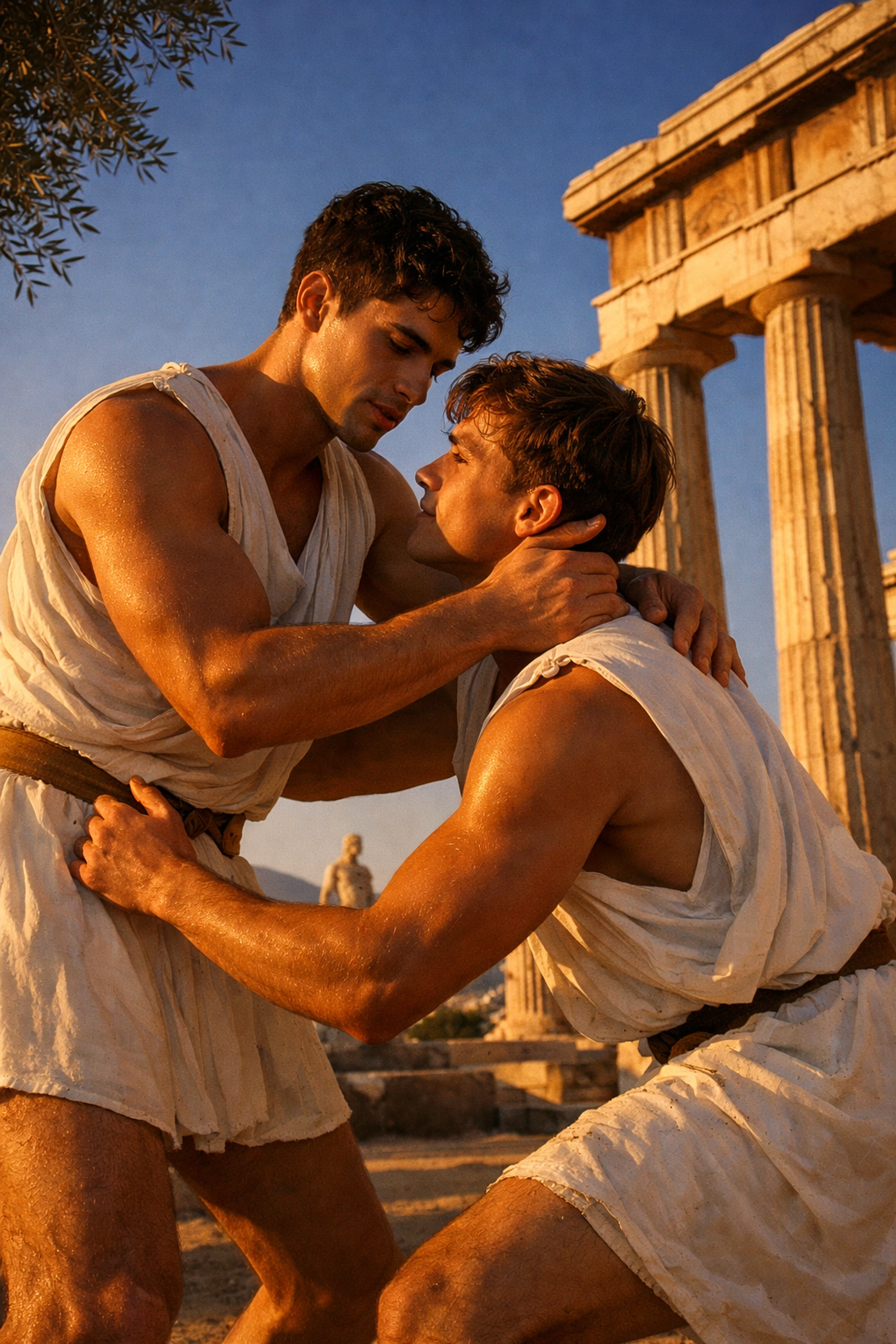
Wealthy men? They could engage in homoerotic affairs with younger men, specifically teenaged boys transitioning into adulthood. But this wasn't about identity or orientation the way we think of it today. It was a rite of passage, a mentorship wrapped in eroticism, and deeply tied to social class. Once these younger men matured, society expected them to "graduate" to heterosexual marriage and family life.
Women and lower-status individuals? They were largely excluded from these privileges. Same-sex desire wasn't celebrated equally across society, it was a perk of power, wealth, and maleness.
Athens and the Cult of Same-Sex Love
Athens experienced what we might call a "golden age" of homosexual eros around the end of the Peisiratid tyranny. During this period, celebrated same-sex couples were honored with state privileges, think of them as the celebrity power couples of their day, except the state was actively celebrating their relationships.
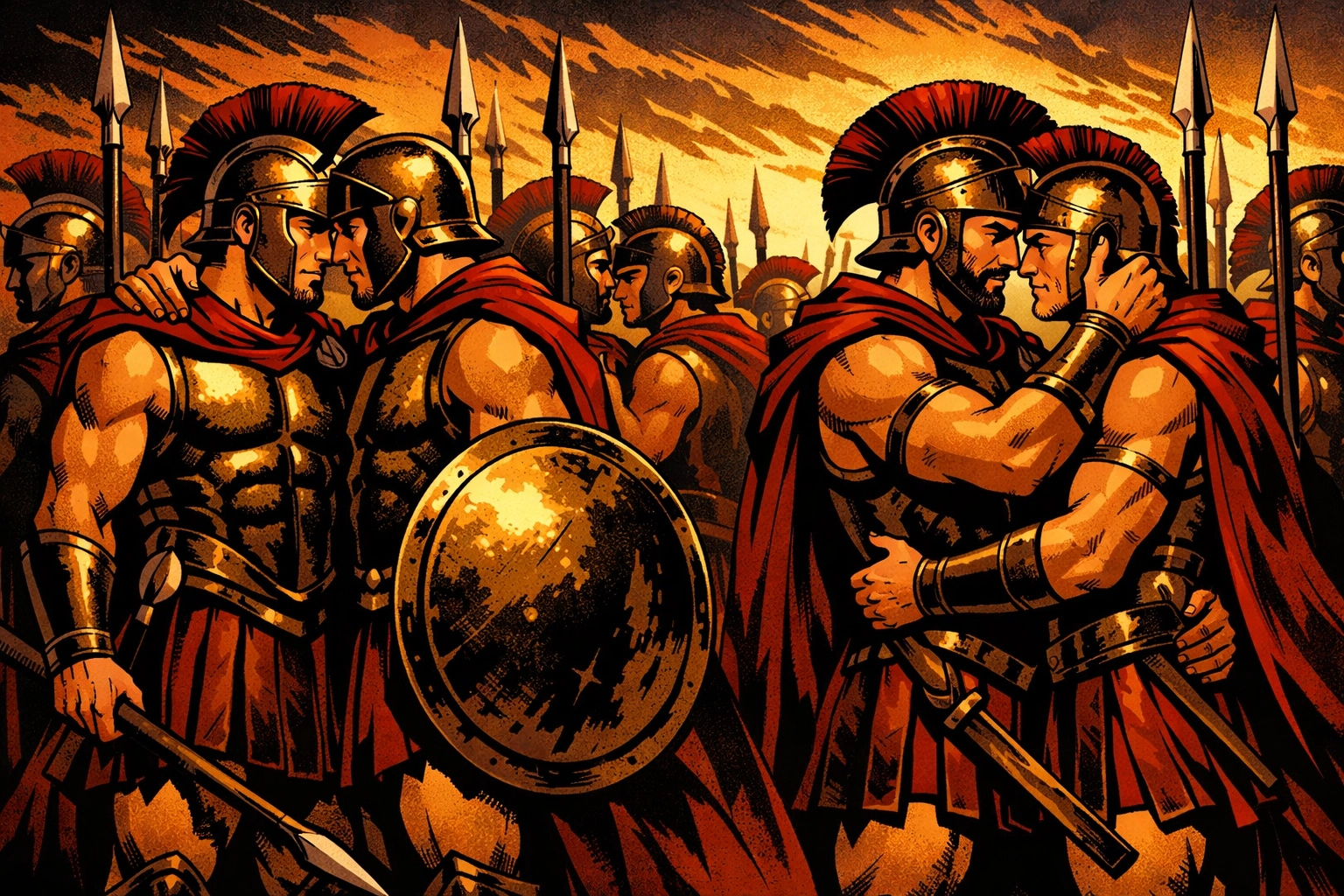
This cultural peak produced some extraordinary narratives. The Sacred Band of Thebes, formed in the 4th century BCE, was an elite military battalion composed entirely of male lovers. The philosophy? Men would fight harder to protect their beloved partners in battle. And honestly, the military records suggest they were right, the Sacred Band remained undefeated for decades.
Meanwhile, over in Sparta (yes, that Sparta, the hyper-militaristic one), young men were actively encouraged to take male lovers. Crete had its own ritualized practices involving older men essentially "abducting" younger ones in a ceremonial coming-of-age tradition.
Geography mattered. How same-sex relationships were practiced, celebrated, or constrained varied wildly depending on which Greek city-state you called home.
The Lovers We Remember
You've probably heard of Achilles and Patroclus, right? Their relationship in Homer's Iliad has been analyzed, debated, and reinterpreted for millennia. Later Greek writers explicitly recast their bond in sexual terms, though Homer himself kept it ambiguous. Were they lovers? Companions? Both? The text doesn't spell it out, but later generations certainly read between the lines.
Then there's the story of Iphis, a gender-fluid character from mythology who fell in love with another woman. Just as their love story was blossoming, the goddess Isis intervened and transformed Iphis into a man, forcing the relationship into a heterosexual mold. Talk about divine intervention ruining the plot.
This pattern shows up repeatedly in Greek mythology: same-sex love constrained by tragedy or overridden by heterosexual narratives. Even in a culture that permitted certain forms of male same-sex relationships, the stories still found ways to redirect, constrain, or complicate queer desire.
Plato's Symposium and Philosophical Eros
If you're into MM romance with a philosophical bent, Plato's Symposium is basically the OG text. This dialogue explores the nature of love (eros) through various speakers at a drinking party, and several of them discuss same-sex attraction explicitly.
What's fascinating is how Plato applies procreation terminology to homosexual love, not biological procreation, but the creation of ideas, wisdom, and virtue between male lovers. The Symposium became a "homosexual cultural touchstone" that influenced Western thought for centuries.
But here's the catch: even Plato's celebration of male same-sex love was deeply entwined with those same power dynamics we mentioned earlier. The "ideal" relationship involved an older man (the erastes) mentoring a younger one (the eromenos). Age, status, and social position still dictated who could love whom and how.
The Women Are (Mostly) Missing
Let's address the elephant in the ancient agora: we know frustratingly little about female same-sex relationships in ancient Greece. And that's not an accident.
Scholar Christine Downing argues that the male-centric lens of Greek mythology and historical records centered sexuality around penetration. Without that specific criterion, relationships between women may not have been interpreted as "sexual" by ancient male observers. Translation? If men didn't understand it, they didn't document it.
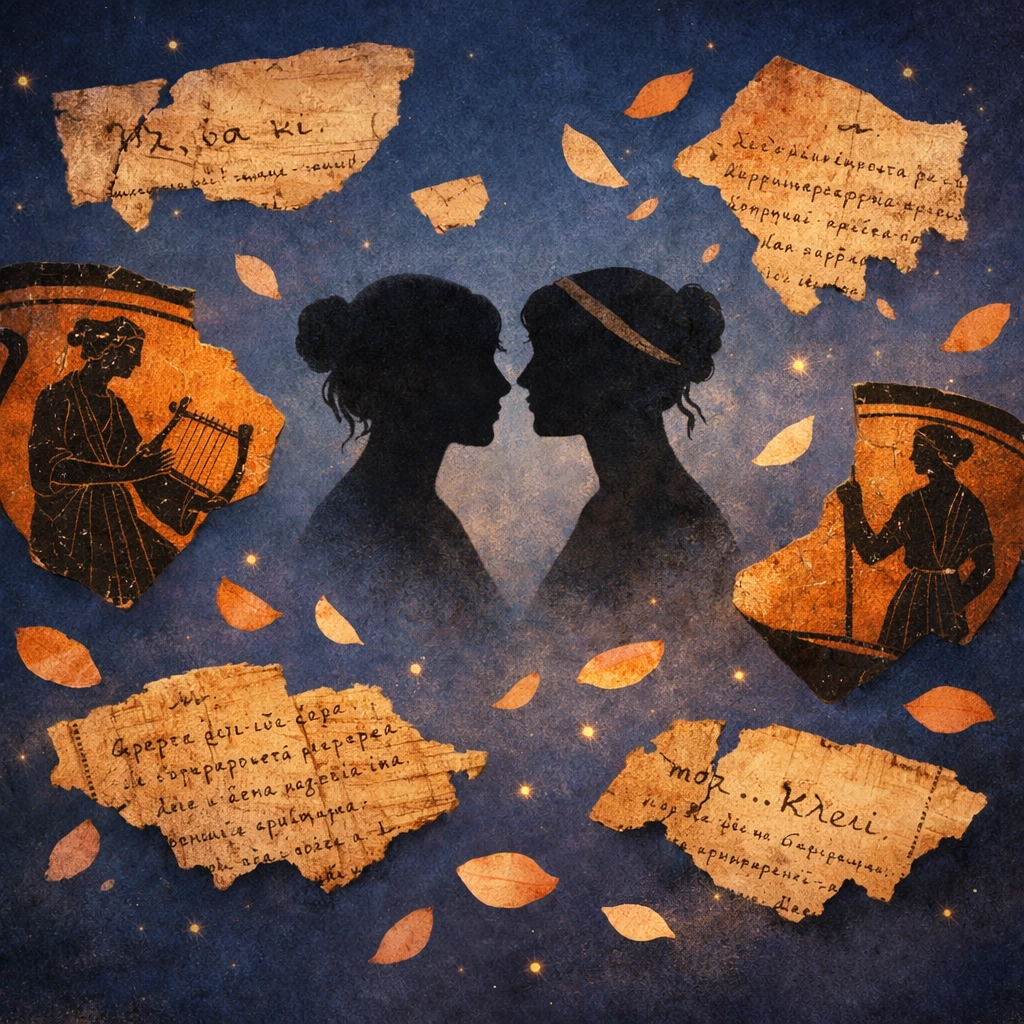
Sappho, the famous poet from Lesbos (yes, that's where the word "lesbian" comes from), gives us tantalizing glimpses of female same-sex desire. But most of her work survives only in fragments, literally torn pieces of papyrus. We've lost so much of women's voices from this period: both their stories and their loves.
What This Means for Modern LGBTQ+ Fiction
So why does any of this ancient history matter for contemporary gay romance books and queer fiction? Because understanding the past helps us write better futures.
When we explore gay historical romance set in ancient Greece, we're not just dropping modern gay men into togas. We're grappling with a completely different cultural framework: one where our current identity categories didn't exist, where power and status shaped desire, and where same-sex relationships looked nothing like contemporary partnerships.
This historical complexity makes for richer, more authentic storytelling. The best LGBTQ+ fiction set in ancient times doesn't just project modern values backward. It wrestles with the genuine tensions between ancient practices and contemporary understandings of identity, love, and equality.
Looking Forward (and Backward)
This is just the beginning of our journey through Greek queer history. In upcoming posts, we'll explore:
- How Byzantine Christianity transformed Greek attitudes toward same-sex love
- The underground queer scenes of modern Athens and Thessaloniki
- Rural versus urban experiences of LGBTQ+ Greeks today
- Cross-border romances between Greek and Albanian men
- The lasting impact of historical narratives on contemporary Greek queer identity
The shadows cast by the Parthenon are long ones. Ancient Greek attitudes toward same-sex desire: both the freedoms and the limitations: continue to shape how we understand queer history and identity today.
Want to explore more MM romance that thoughtfully engages with historical complexity? Check out the incredible selection of gay romance novels and LGBTQ+ ebooks at readwithpride.com. Because the best love stories: historical or contemporary: honor both the heart and the truth.
Follow Read with Pride:
Facebook | Instagram | X/Twitter
#ReadWithPride #MMRomance #GayRomance #LGBTQBooks #QueerFiction #GayHistoricalRomance #GreekHistory #AncientGreece #MMBooks #GayLiterature #QueerHistory #LGBTQHistory #GayFiction #MMHistoricalRomance #2026GayBooks #LGBTQReading #GayBookClub #QueerAuthors #GayNovels #MMNovels

Leave a Reply
You must be logged in to post a comment.