

readwithpride.com
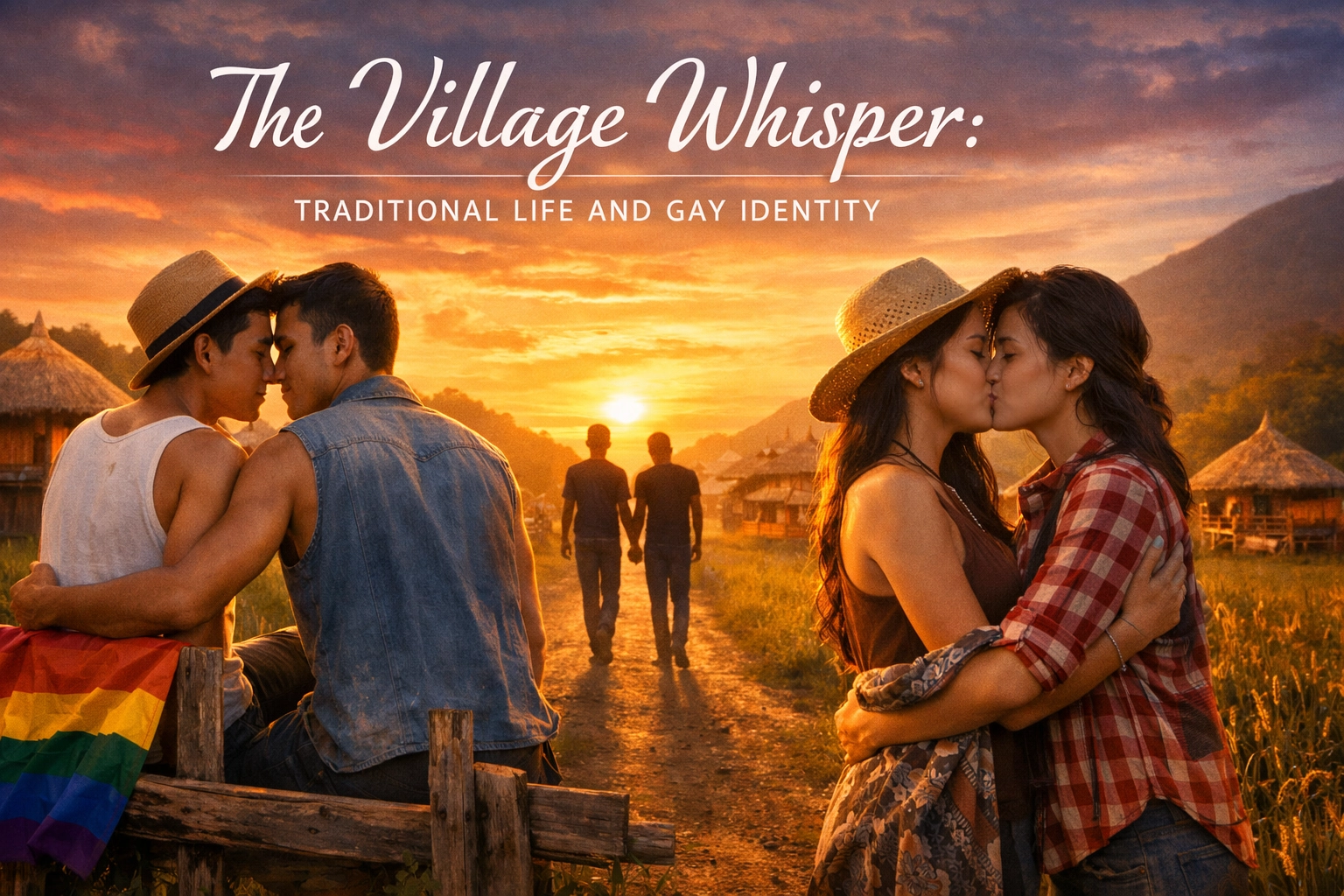
There's something about village life in Greece and Albania that exists in a different time zone altogether. Not literally: though the pace certainly suggests it: but culturally. While Athens and Tirana host Pride parades and openly gay couples stroll hand-in-hand through city squares, a few hours' drive into the mountains brings you to places where everyone knows everyone, family honor is everything, and silence speaks louder than words.
This is where the "village whisper" lives: that unspoken understanding, that coded language, that careful dance between being yourself and protecting the fragile peace of traditional community life.
The Weight of Tradition
In both Greek and Albanian villages, tradition isn't just nostalgia or folklore. It's a living, breathing force that shapes everything from wedding ceremonies to coffee shop conversations. The Orthodox Church in Greece and the complex religious tapestry of Albania (Muslim, Orthodox, and Catholic communities often coexisting in the same region) create powerful frameworks for how life "should" be lived.
For LGBTQ+ individuals growing up in these environments, the message is clear without ever being stated directly: marriage is between a man and woman, families need grandchildren, and deviation from this path brings shame: not just to you, but to your entire family line.
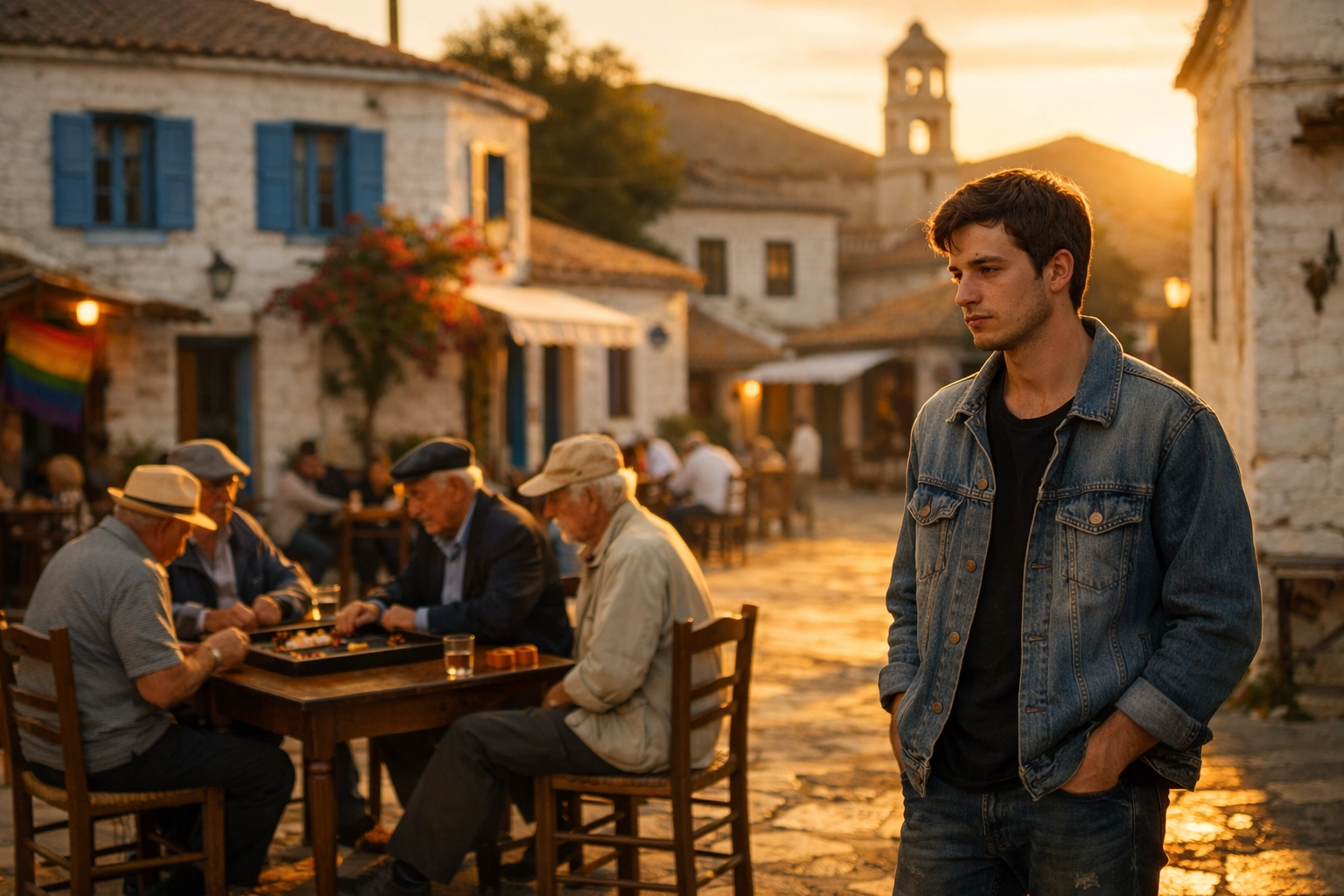
The paradox? These same communities often harbor deep, unspoken acceptance of certain realities. The bachelor uncle who never married but is beloved by all the nieces and nephews. The two women who've lived together for decades as "best friends." The man who moved to Athens "for work" twenty years ago and only returns for major holidays.
Everyone knows. Nobody speaks it.
Historical Shadows and Hidden Lives
Looking back through history, both Greece and Albania have complex relationships with same-sex attraction and identity. Ancient Greece is famous for its male-male relationships, though our modern understanding of gay identity doesn't map neatly onto those ancient practices. Still, there's a cultural memory: however distant and distorted: of a time when male intimacy wasn't taboo.
Albania's Ottoman period and subsequent communist era created different layers of repression and survival. Under communism, homosexuality was criminalized, forcing LGBTQ+ Albanians into absolute secrecy. In villages, where privacy was nearly impossible, this meant lifelong performances of heterosexuality or complete isolation.
The stories from these eras are emerging now, decades later. Men who married women to maintain cover. Women who remained spinsters rather than enter false marriages. Secret meetings in olive groves and abandoned shepherd huts. Love letters hidden in false-bottom drawers and eventually burned for safety.
These weren't the grand romantic narratives we see in MM romance books today. They were survival stories, marked by loss and longing, brief moments of connection punctuated by years of careful distance.
The Modern Divide: City Lights vs. Village Nights
Fast forward to 2026, and the contrast between urban and rural LGBTQ+ life in Greece and Albania is stark: yet perhaps not as absolute as it first appears.
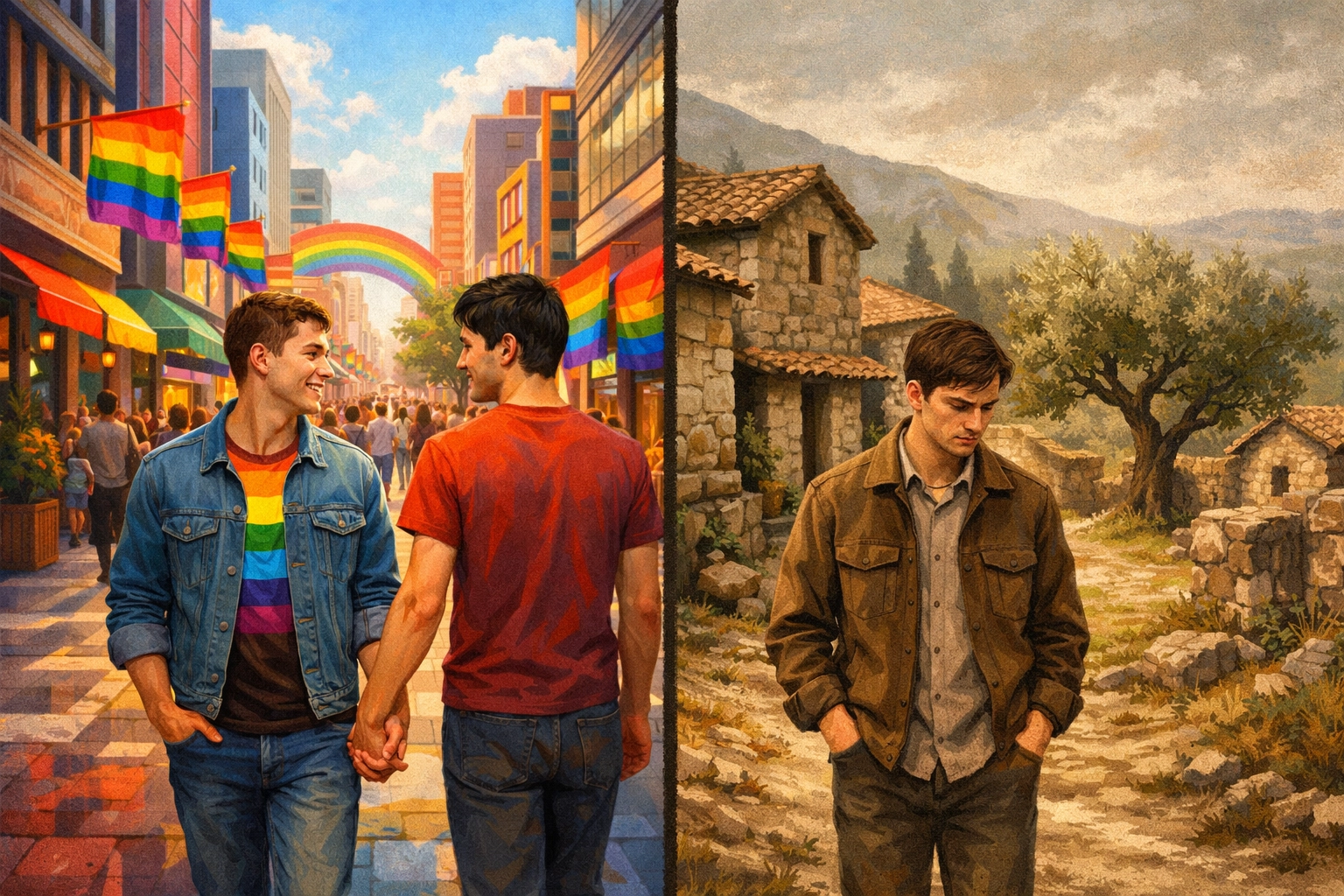
Athens has a thriving gay scene. The Gazi district pulses with rainbow flags and inclusive nightlife. Same-sex couples can hold hands in Syntagma Square without much more than curious glances. Apps connect people instantly. The community is visible, vocal, and increasingly integrated into mainstream Greek culture.
Tirana's evolution has been even more dramatic. Albania legalized homosexuality in 1995 (making it one of the first Balkan countries to do so), and the capital now hosts annual Pride events. Younger generations in cities increasingly reject the conservative social values of their parents.
But in the villages? Change moves at a geological pace.
A young man from a mountain village in Albania might spend his weeks living authentically in Tirana, dating openly, exploring the local queer fiction scene at bookshops and cafés. Then Friday comes, and he makes the journey back to his village for the weekend. The transformation is almost physical: the way he walks changes, his voice modulates differently, his eyes become more guarded.
In the village, he's the dutiful son. He attends church (or mosque). He helps his father with the olive harvest. He deflects his mother's questions about marriage with practiced vagueness. He exists in two worlds, fluent in both languages, exhausted by the translation.
Cross-Border Romance: When Two Worlds Collide
One of the most fascinating dynamics in this region is cross-border romance between Greek and Albanian LGBTQ+ individuals. These relationships carry extra layers of complexity: not just the typical challenges of maintaining a relationship across borders, but the weight of historical tensions between the two nations.
Greek and Albanian relations have been complicated for generations, marked by wars, disputed territories, and mutual stereotypes. In cities, these prejudices are fading among younger, educated populations. But introduce these relationships to village families? The reaction can be explosive.
"My parents would rather I brought home a woman than a man," one Greek man from Ioannina told a local support group. "But they'd rather I brought home a man than an Albanian. My boyfriend's family feels exactly the same way in reverse."
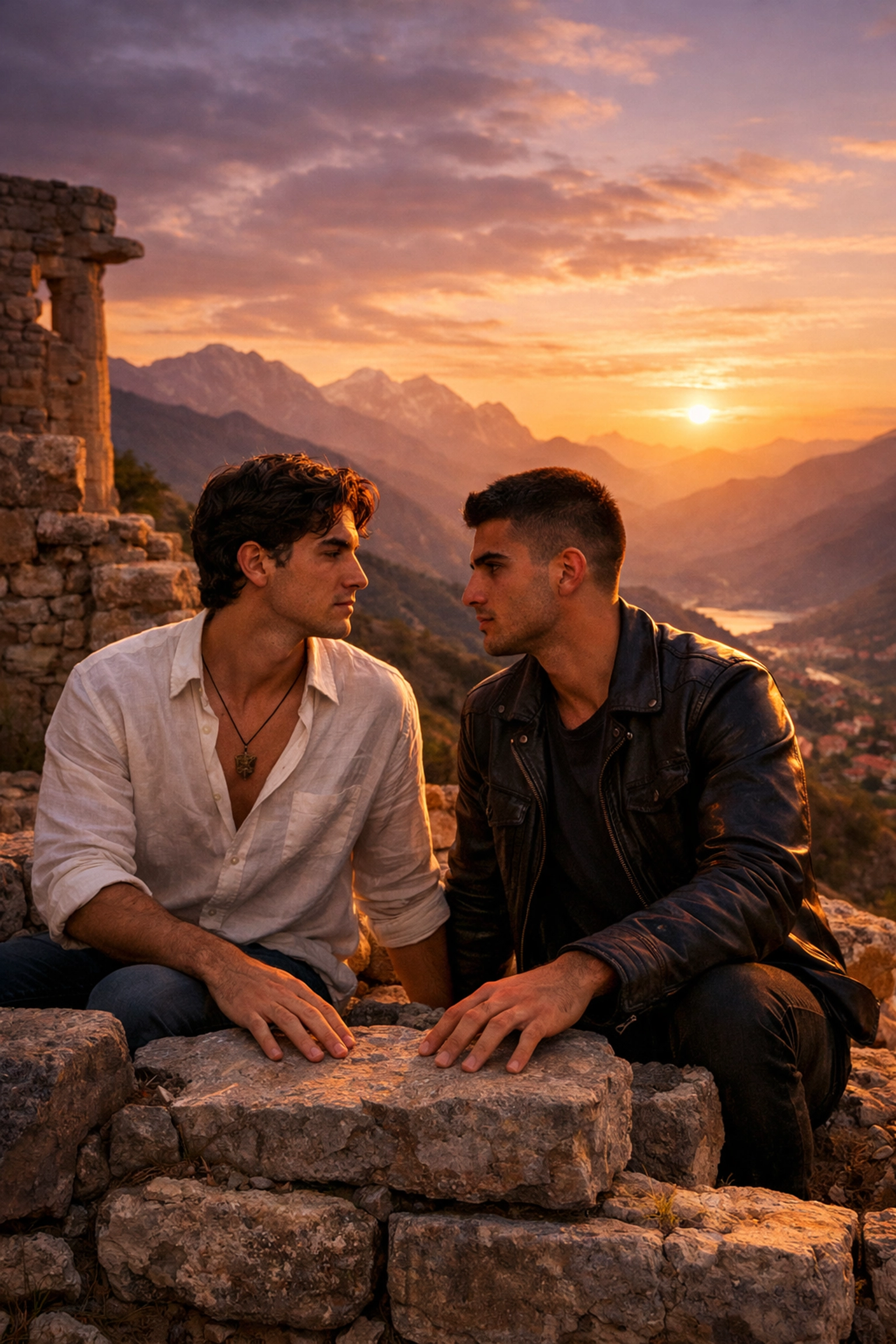
Yet these forbidden romances persist, perhaps made sweeter by their transgressive nature. There's something powerful about two people finding each other across borders, literally and figuratively: and building something authentic despite everyone telling them it's impossible.
These stories could be ripped straight from gay romance novels: the secret meetings at border towns, the coded phone calls, the elaborate plans to spend time together without arousing family suspicion. Except these aren't fiction. They're happening right now, to real people navigating real consequences.
The Role of Women: Invisible but Resilient
While much attention focuses on gay men in traditional communities, lesbian and bisexual women face their own unique challenges in Greek and Albanian villages. The pressure to marry and produce children falls even more heavily on women. Their movements are often more restricted, their choices more scrutinized.
But women have also developed sophisticated networks of support and coded communication. The tradition of women gathering separately from men: for coffee, for church activities, for communal work: creates spaces where certain things can be acknowledged, if never spoken aloud.
There are stories of women who've maintained "Boston marriages" in Greek villages for decades, their relationship accepted as a practical arrangement between unmarried women. In Albania, where family structures are intensely patriarchal, some women have found freedom in the "sworn virgins" tradition: biological women who take male social roles, including the right to remain unmarried.
The Digital Revolution: Connection and Exposure
Social media and dating apps have revolutionized life for LGBTQ+ people in traditional communities, but the impact is double-edged.
On one hand, a young person in a remote Greek or Albanian village can now access LGBTQ+ ebooks, connect with others who share their experiences, and realize they're not alone. They can follow Read With Pride on social media, discover MM romance stories that reflect different possibilities for their lives, and participate in online communities that affirm their identities.
On the other hand, digital footprints are dangerous in small communities. A liked post, a tagged photo, a visible app on a phone screen: any of these can trigger gossip that spreads faster than wildfire. In villages where privacy is already scarce, the digital world creates new vulnerabilities.
Some have found creative solutions: secondary accounts, VPNs, carefully curated online personas that exist separately from their "village selves." It's exhausting, maintaining these parallel lives, but for many, it's the only way to access community and information while protecting themselves in their physical environments.
Hope in the Next Generation
The most encouraging trend? Younger people in both countries are increasingly unwilling to live double lives. They're finding ways to be authentic, even in traditional settings, even when it's difficult.
This doesn't mean coming out is suddenly safe or easy in Greek and Albanian villages. But there's a growing sense that change is inevitable, that the old ways of silence and shame are unsustainable.
Some return to their villages after years in cities, bringing their partners with them and quietly insisting on acceptance. Others advocate for change from within, working to shift attitudes one conversation at a time. Still others create new models entirely: forming chosen families, building communities that blend traditional values with inclusive acceptance.
The village whisper is getting louder. And eventually, whispers turn into conversations.
Explore more stories about LGBTQ+ experiences around the world at readwithpride.com. From contemporary tales to historical fiction, we celebrate authentic voices and diverse experiences in the gay romance and MM romance community.
Follow us: Facebook | Instagram | X/Twitter
#ReadWithPride #MMRomance #GayRomance #LGBTQBooks #QueerFiction #GayFiction #GreekLGBTQ #AlbanianLGBTQ #VillageLife #TraditionalCulture #ComingOut #CrossBorderRomance #BalkanPride #LGBTQHistory #AuthenticVoices #QueerStories #GayLoveStories #MMBooks #ContemporaryRomance #LGBTQCommunity

Leave a Reply
You must be logged in to post a comment.