

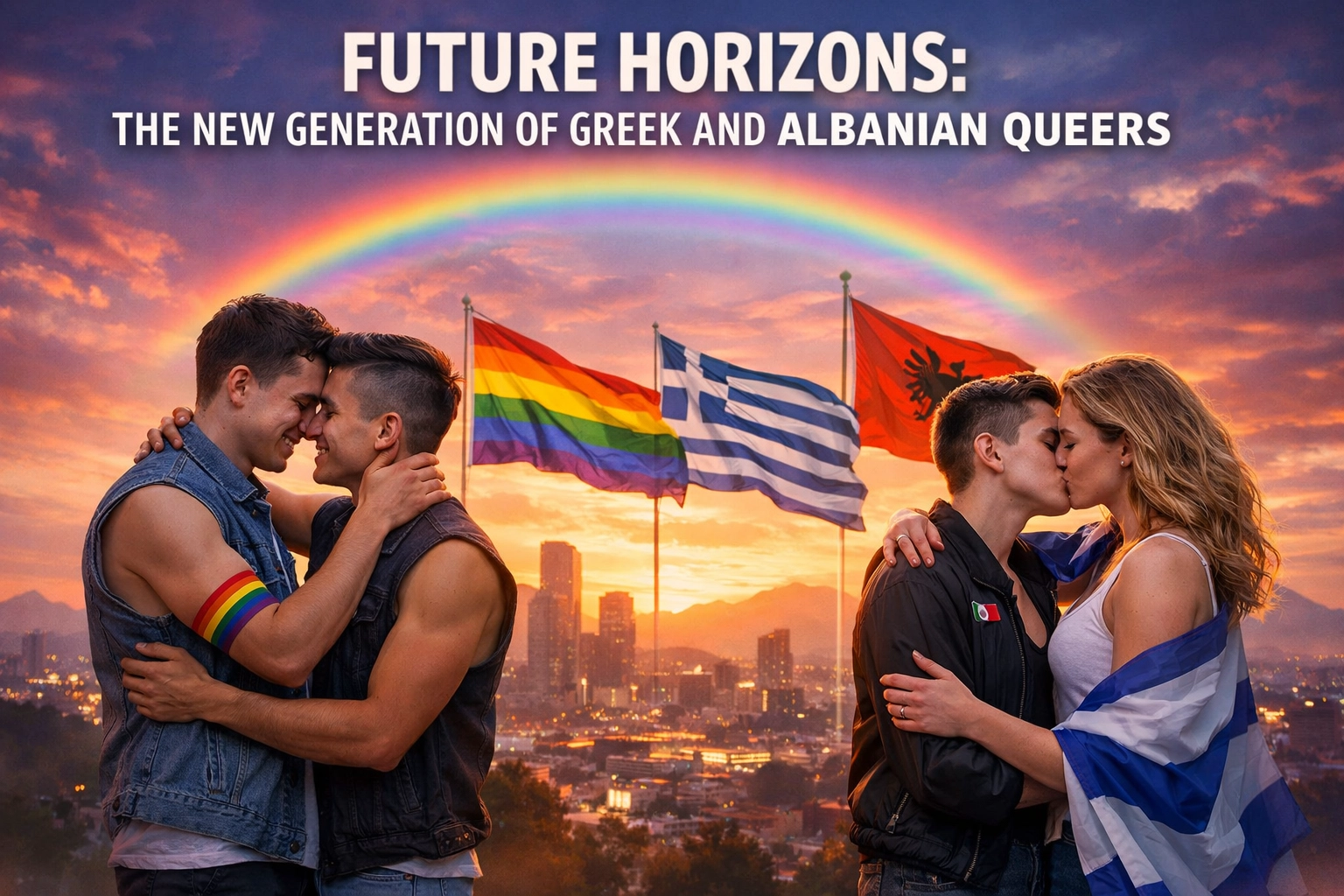
readwithpride.com
When Borders Can't Contain Love
There's something electric happening across the Balkans right now. In Athens' Gazi district, queer clubs pulse with techno until dawn. In Tirana's Blloku neighborhood, young LGBTQ+ Albanians sip espresso at sidewalk cafés, openly holding hands for the first time in their country's history. And somewhere along the winding roads between these cities, two worlds are colliding in the best possible way.
The Greek and Albanian queer experience has always been about navigation: through ancient traditions, Orthodox Christianity, communist legacies, and family expectations that could crush mountains. But today's generation? They're rewriting the map entirely.
The Weight of History
Let's get real about where we're coming from. Greece, with its philosophical heritage and mythology full of same-sex desire (looking at you, Zeus and Ganymede), still struggled with modern acceptance. Homosexuality was decriminalized in 1951, but legal recognition? That came painfully slowly. Albania's story is even more complex: decades of communist isolation under Enver Hoxha created a society where being gay was quite literally invisible, unspoken, denied.
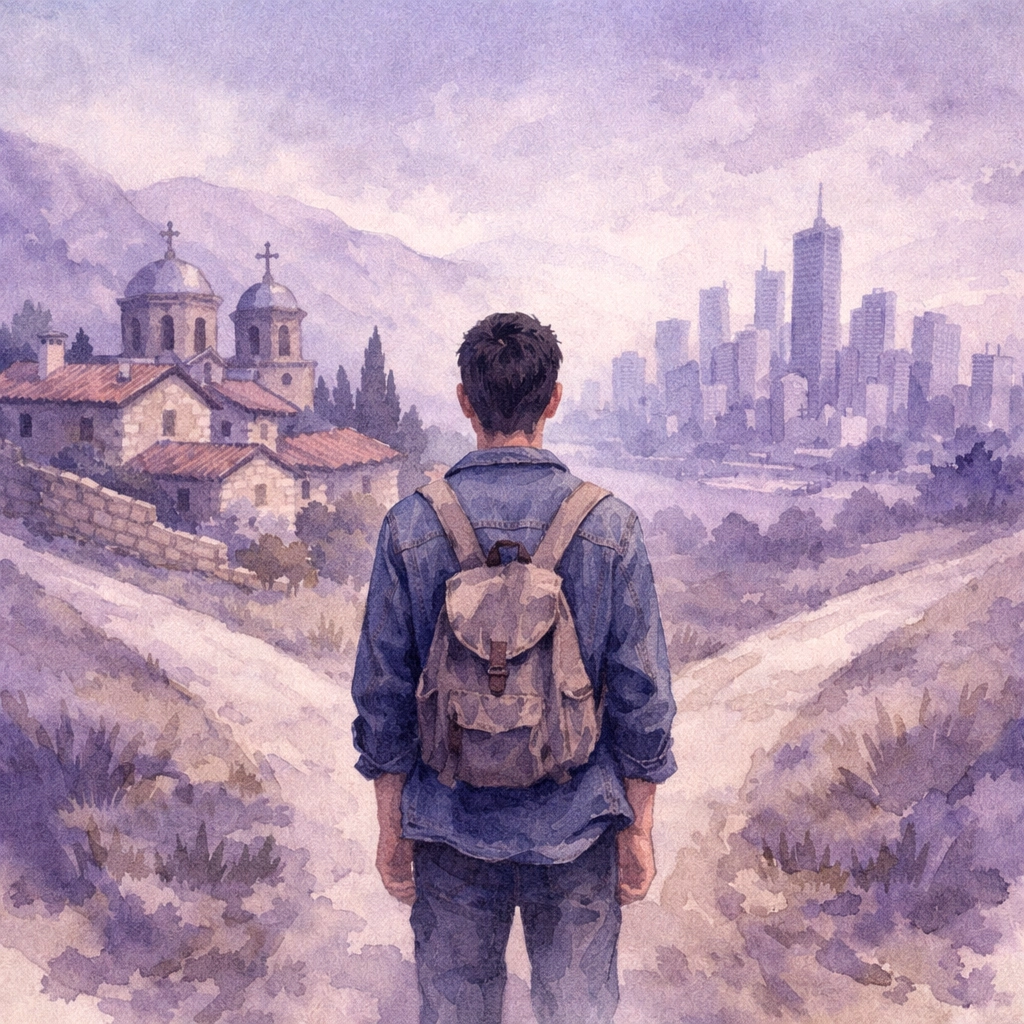
For generations, queer Greeks and Albanians lived double lives. The village boy who moved to Athens or Thessaloniki, reinventing himself far from prying eyes. The Albanian who crossed borders, literally and figuratively: to find freedom. These stories form the backbone of countless gay romance novels where the stakes aren't just emotional, they're existential.
But here's where it gets interesting: the new generation isn't just surviving. They're thriving. And they're doing it with one foot in tradition and one foot in a future that would've seemed impossible to their parents.
Urban Awakening: Athens and Tirana
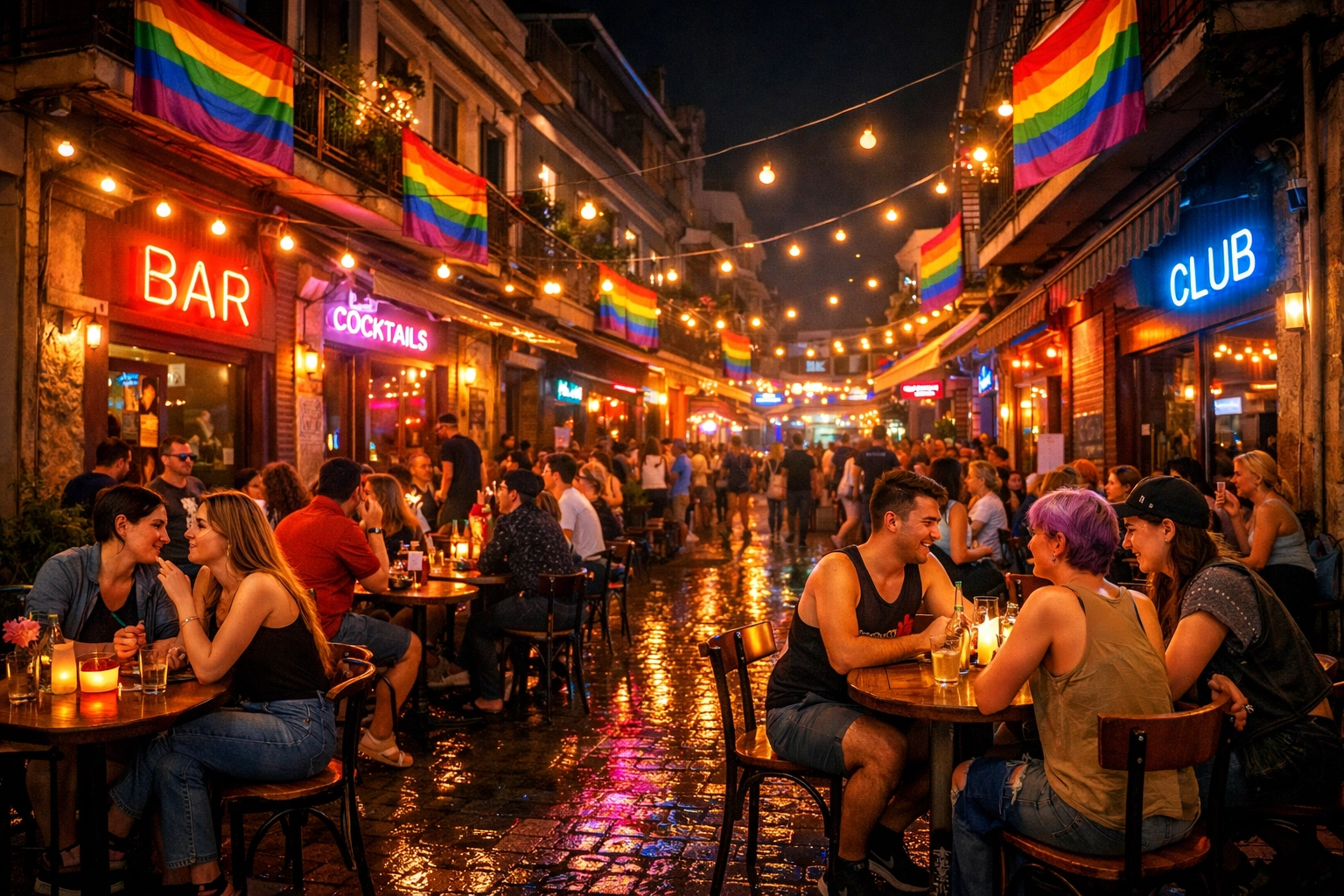
Walk through Athens today, and you'll find a queer scene that's unapologetically visible. Gazi, the former gasworks district, transformed into the heart of LGBTQ+ nightlife. Mykonos has been a gay haven for decades, but now you'll find queer-friendly spaces scattered throughout the capital: from bookshops to art galleries to those tiny, perfect tavernas where everyone knows your name (and your boyfriend's name too).
The MM romance stories set in these streets practically write themselves: the Greek student who falls for his Albanian neighbor, navigating language barriers and family expectations. The cafe owner whose Albanian employee becomes something more during late-night inventory sessions. The cross-border love story that starts on a ferry to the islands.
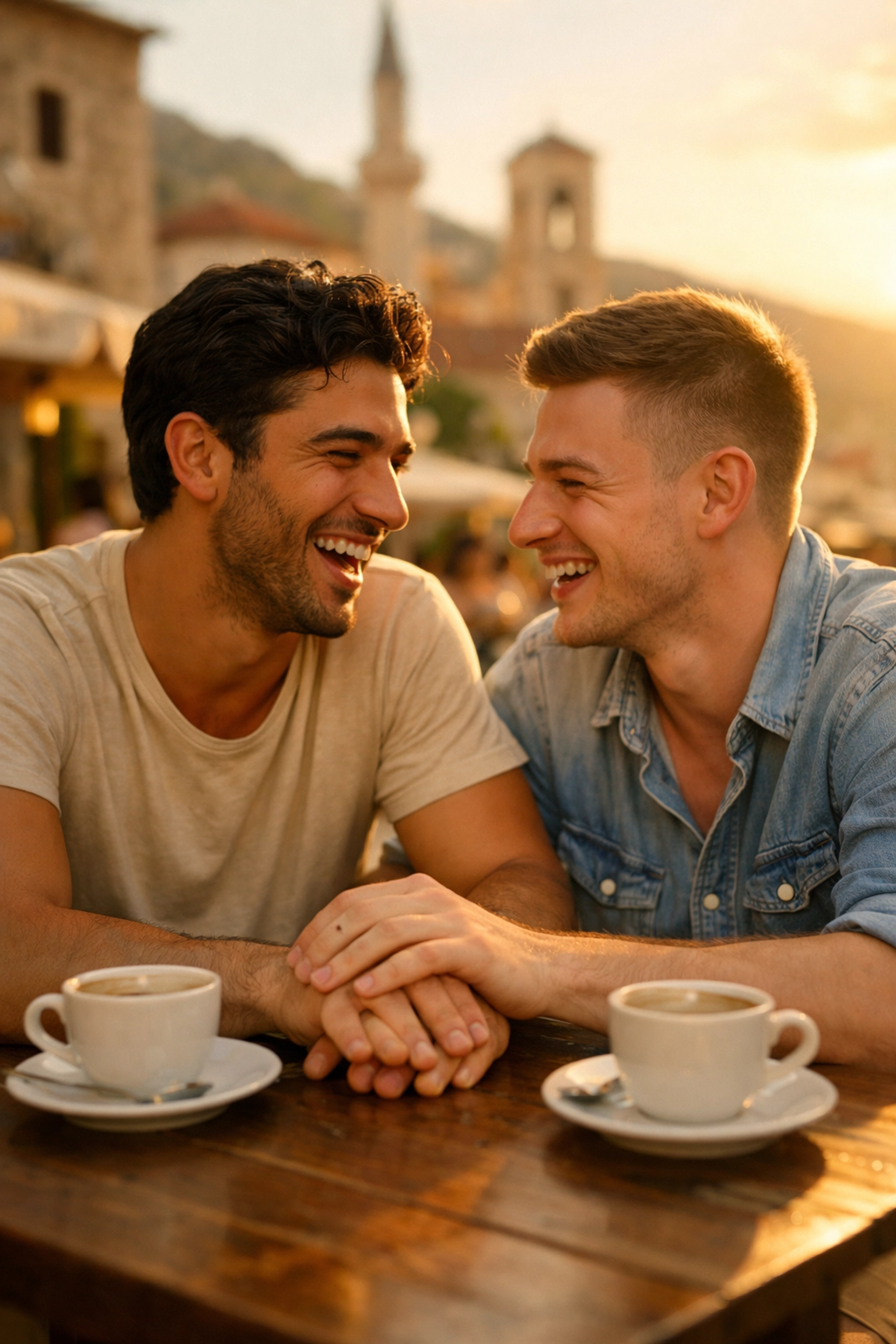
Tirana's transformation has been even more dramatic. Just fifteen years ago, Albania had virtually no visible LGBTQ+ presence. Today? There are Pride events, though small and sometimes controversial. Queer activists organize openly. Young people: especially those who've returned from studying abroad: are refusing to hide.
The Albanian capital buzzes with a particular kind of energy: defiant, hopeful, exhausted, and electric all at once. It's the energy of people who know they're making history just by existing authentically.
The Rural Divide: When Home Isn't Safe
But let's not romanticize everything. For every Athens success story, there's a kid in rural Epirus or the Albanian countryside who can't imagine coming out. The divide between urban and rural experiences in both countries remains stark.
In Greek villages, tradition still holds powerful sway. Family honor, Orthodox values, and "what will the neighbors think?" create invisible cages. Many young queer Greeks make the choice their predecessors made: leave. Move to Athens, to Thessaloniki, to Berlin, to anywhere that feels safer than home.
Albania's rural areas face similar challenges, compounded by economic hardship and more conservative social structures. The besa (code of honor) and fis (clan loyalty) that define Albanian culture can be beautiful: until they're weaponized against anyone who doesn't fit the mold.
These tensions create the perfect setup for gay fiction that explores the push-pull of identity: the man who returns to his island village with his boyfriend, testing whether love and home can coexist. The Albanian son who must choose between his inheritance and his truth.
Cross-Border Hearts
Here's where the Greek-Albanian story gets really fascinating. These countries share a border, a complicated history, and increasingly, love stories that transcend both.
The Greek-Albanian relationship historically involved waves of Albanian migration to Greece, often fraught with economic inequality and discrimination. But the younger generation? They're dating each other. Falling in love across borders. Creating families that blend raki and ouzo, Albanian folk songs and Greek rebetiko.
These cross-border romances carry extra weight. There's the thrill of the forbidden, yes: but also real barriers. Language differences. Economic disparities. Family prejudices that run deep. The Albanian partner who faces discrimination in Greece, not just for being queer but for their nationality. The Greek partner whose family can't accept their Albanian boyfriend, even before they learn he's a boyfriend and not just a friend.
But love, as any good MM romance books reader knows, finds a way. And these couples are writing new narratives about what's possible when you refuse to let borders: national or sexual: define you.
The Digital Revolution
We can't talk about the new generation without acknowledging how technology changed everything. Social media gave isolated queer youth in both countries something their predecessors never had: proof they weren't alone.
Instagram became a lifeline. Grindr (controversial as it is) created connection possibilities unimaginable a decade ago. YouTube videos by Greek and Albanian LGBTQ+ creators showed young people that visible, proud, happy queer lives were possible: in their own languages, with faces that looked like theirs.
The internet also connected Greek and Albanian queers with global LGBTQ+ romance culture. Suddenly, rural kids were reading gay love stories that reflected their experiences. Online communities formed. Dating across borders became possible before physically crossing them.
What's Next: The Future Horizon
So where does this leave us in 2026? Greece now has marriage equality and adoption rights: achievements that seemed impossible just years ago. Albania? Still fighting for basic protections, but the momentum is building.
The new generation of Greek and Albanian queers isn't waiting for permission anymore. They're creating art, starting businesses, building families, and refusing to be invisible. They're the protagonists of their own MM novels, and the happy endings aren't guaranteed: but they're possible in ways they never were before.
At Read with Pride, we're committed to amplifying these voices and stories. Whether you're looking for contemporary MM romance set in the Mediterranean sun or historical fiction exploring hidden queer lives, these narratives matter. They remind us that progress isn't linear, that love is revolutionary, and that the best stories are the ones where people refuse to accept the limitations others place on them.
The future horizon for Greek and Albanian queers is still being written. But if the new generation has anything to say about it: and they do: it's going to be bold, beautiful, and unapologetically authentic.
Discover more LGBTQ+ stories and MM romance books at readwithpride.com
Follow us:
- Facebook: Read With Pride
- Instagram: @read.withpride
- Twitter/X: @Read_With_Pride
#MMRomance #GayRomanceBooks #LGBTQFiction #ReadWithPride #GreekLGBTQ #AlbanianQueer #CrossBorderLove #QueerFiction #GayLoveStories #MMBooks #ContemporaryRomance #LGBTQEbooks #QueerLit #GayBooks #MediterraneanRomance #BalkanPride #2026LGBTQ #MMRomanceBooks #GayFiction #AuthenticQueerStories

Leave a Reply
You must be logged in to post a comment.