

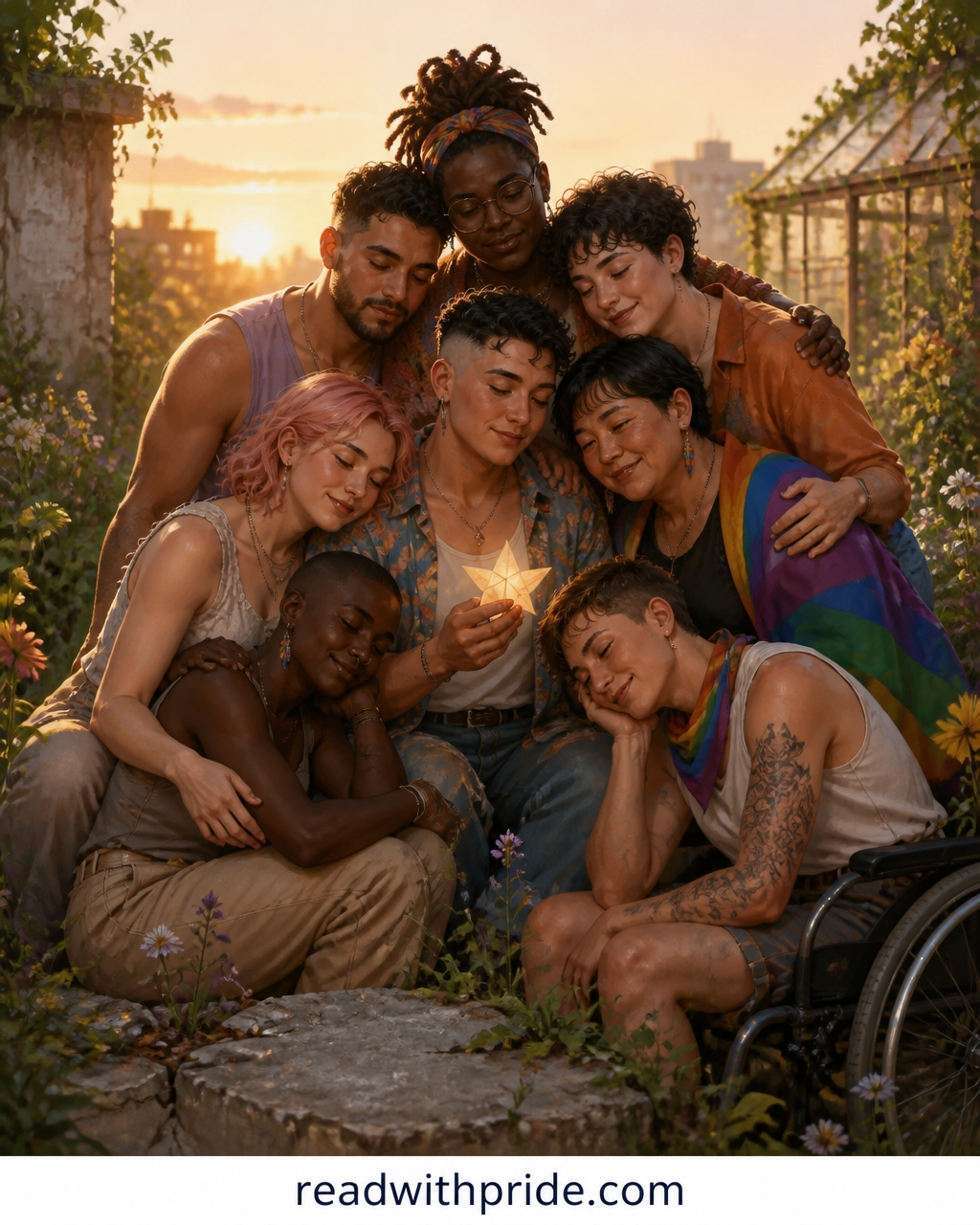
Queer healing is not about pretending the difficult things never happened. It is about learning how to carry grief without letting it define the whole story. It is about finding our way back to connection, pleasure, safety and possibility: sometimes slowly, sometimes sideways, and occasionally with an impressive amount of snacks.
For LGBTQ+ communities, healing can hold many kinds of loss. There may be grief connected to family rejection, lost time, discrimination, violence, illness or the exhaustion of constantly having to explain ourselves. There is also collective grief: the memories carried through queer histories, the ongoing impact of HIV/AIDS, the pain of anti-LGBTQ+ legislation and the ache of seeing our communities targeted again and again.
And yet, alongside grief, there is something equally real: LGBTQ+ resilience.
Resilience does not mean being unaffected. It does not require us to be endlessly brave, cheerful or “strong.” Queer resilience can look like resting. Asking for help. Setting a boundary. Telling the truth. Finding one person who understands. Choosing joy when joy becomes available.
It can also look like imagining a future that has not been handed to us yet: and then building it together.
Healing is personal, but it is never only individual
Many mainstream ideas about healing place the entire responsibility on one person. Meditate more. Sleep better. Become your most productive self. Make a vision board and somehow solve structural inequality before breakfast.
Queer healing asks a wider question: what would become possible if care were shared?
Our wellbeing is shaped by our relationships, our communities and the systems around us. A queer person may be doing all the “right” things and still feel overwhelmed if they are navigating rejection, financial pressure, racism, ableism, transphobia, isolation or unsafe healthcare. Healing cannot be separated from the conditions in which we are expected to live.
That is why affirming spaces matter. A queer-affirming therapist, support group, community centre, online gathering or queer book club can offer more than conversation. These spaces can reduce the burden of translating our experiences for people who do not understand them. They can remind us that our identities are not problems to solve.
Resources such as The Trevor Project’s LGBTQ+ support information and New York City’s LGBTQ+ mental health resources can also help people find practical support. If you are in immediate danger or crisis, contact emergency services or a crisis service available where you live.

Grief deserves room: and gentleness
There is no correct timetable for queer grief.
Some losses are obvious. Others are harder to explain. You might grieve the family relationship you hoped you would have, the teenage years spent hiding, or the version of yourself who did not yet know they were allowed to want a happy life. You might grieve a community, a relationship, a home or a future you once expected to inhabit.
Sometimes grief arrives long after the event itself. Coming out stories often include relief and joy, but they can also contain fear, loneliness and complicated feelings about what changed afterward. Naming those feelings does not make the joyful parts less real. Two truths can share the same room.
Queer healing makes space for that complexity. We can be grateful to be here and still be angry about what happened. We can love our chosen family and miss our biological family. We can celebrate progress and remain exhausted by the work still ahead.
Creative expression can help make these complicated emotions more visible. Journalling, poetry, music, movement, painting and reading can offer a gentle route into feelings that are difficult to speak aloud. A fictional character’s heartbreak may give us language for our own. A gay love story may remind us that tenderness is not naïve. A hopeful ending can feel less like escapism and more like a small door opening.
Stories help us practise better futures
This is one reason LGBTQ+ fiction matters so much.
When we read gay fiction, lesbian romance, trans narratives, bisexual coming-of-age stories and other LGBTQ+ novels, we are not simply consuming entertainment. We are encountering possibilities. Stories allow us to ask: What if queer people got to be ordinary and extraordinary? What if we were allowed messy friendships, deep intimacy, second chances and futures that did not end at survival?
That possibility is at the heart of future visions.
In MM romance books and gay romance novels, readers may find emotional honesty, desire, humour and the relief of seeing queer characters pursue love on their own terms. Some stories offer soft landings. Others explore complicated relationships, family wounds or the courage it takes to trust someone. Lesbian and sapphic romance can do the same, creating space for women and gender-diverse characters to be fully themselves: not symbols, side characters or lessons for someone else.
At Read with Pride, our collection celebrates queer love stories across moods and genres. Whether you are looking for a comforting escape, an emotionally intense romance or heartfelt gay fiction that stays with you after the final page, reading can become part of a wider practice of care.
There is no shame in wanting a book that makes your nervous system unclench. There is no shame in wanting something steamy, funny, dramatic or gloriously unrealistic. Pleasure is part of healing too.
The future is made from small acts of care
Optimistic queer futures do not have to look like perfect cities floating in the clouds. They can begin with very practical things:
- Checking in on a friend after a difficult appointment.
- Sharing a meal, a lift or useful information.
- Making sure a community event is accessible.
- Supporting queer and trans people of colour in leadership.
- Creating spaces where disabled, neurodivergent and working-class LGBTQ+ people are not treated as an afterthought.
- Buying from queer creators and queer authors when we can.
- Making room for young people to ask questions without shame.
- Building relationships that are based on consent, accountability and mutual respect.

These actions may look small, but small does not mean insignificant. A message can interrupt isolation. A book can change someone’s understanding of what love might feel like. A reliable friend can become a lifeline. A welcoming queer book club can turn solitary reading into belonging.
The future is not built only through grand declarations. It is built through repeated choices about who gets included, who gets believed and who gets to rest.
From survival to shared possibility
LGBTQ+ resilience is often celebrated as though it is an individual superpower. But queer communities have never survived through individual effort alone. We have survived through chosen family, friendship, creativity, protest, mutual aid, humour and the stubborn refusal to disappear.
We can honour that history without romanticising hardship. Our goal should not be to become better at enduring mistreatment. Our goal is to create conditions in which fewer people have to endure it in the first place.
That means imagining futures where queer and trans people have secure homes, affirming healthcare, meaningful work, creative freedom and relationships rooted in dignity. It means making space for older LGBTQ+ people, supporting young people and listening to communities most affected by racism, poverty, ableism and transphobia.
It also means letting hope be practical. Hope is not a promise that everything will be easy. It is a reason to keep making connections, telling stories and investing in one another.
Even the internet’s search habits can be wonderfully chaotic. People looking for LGBTQ+ fiction 2026, LGBTQ+ novels and queer healing resources may also encounter unrelated searches such as “C Section 2026.” The important thing is that behind every search is a person looking for information, comfort, representation or a way forward. Good resources should meet people with clarity and care.

A gentle invitation for today
You do not have to design the entire future this afternoon.
Perhaps today’s version of queer healing is reading one chapter. Perhaps it is texting someone you trust. Perhaps it is crying, laughing, taking a walk, attending a support group or turning off the news for an hour. Perhaps it is imagining what safety would look like and writing down one small step toward it.
The futures we are building together begin with those steps.
Find your next story through Read with Pride, explore a book that reflects the tenderness and complexity of queer life, and share it with someone who might need the reminder that they are not alone. You can also connect with Read with Pride on Facebook and Instagram for more LGBTQ+ reading inspiration.
Here’s to queer healing that makes room for grief, future visions that make room for everyone, and LGBTQ+ resilience that grows through connection rather than isolation.
#ReadWithPride #QueerHealing #FutureVisions #LGBTQResilience #MMRomanceBooks #GayRomanceNovels #ComingOutStories #QueerBookClub #LGBTQFiction2026 #CSection2026 #GayFiction #LGBTQNovels #QueerLoveStories #LGBTQReading #QueerFiction

Leave a Reply
You must be logged in to post a comment.