

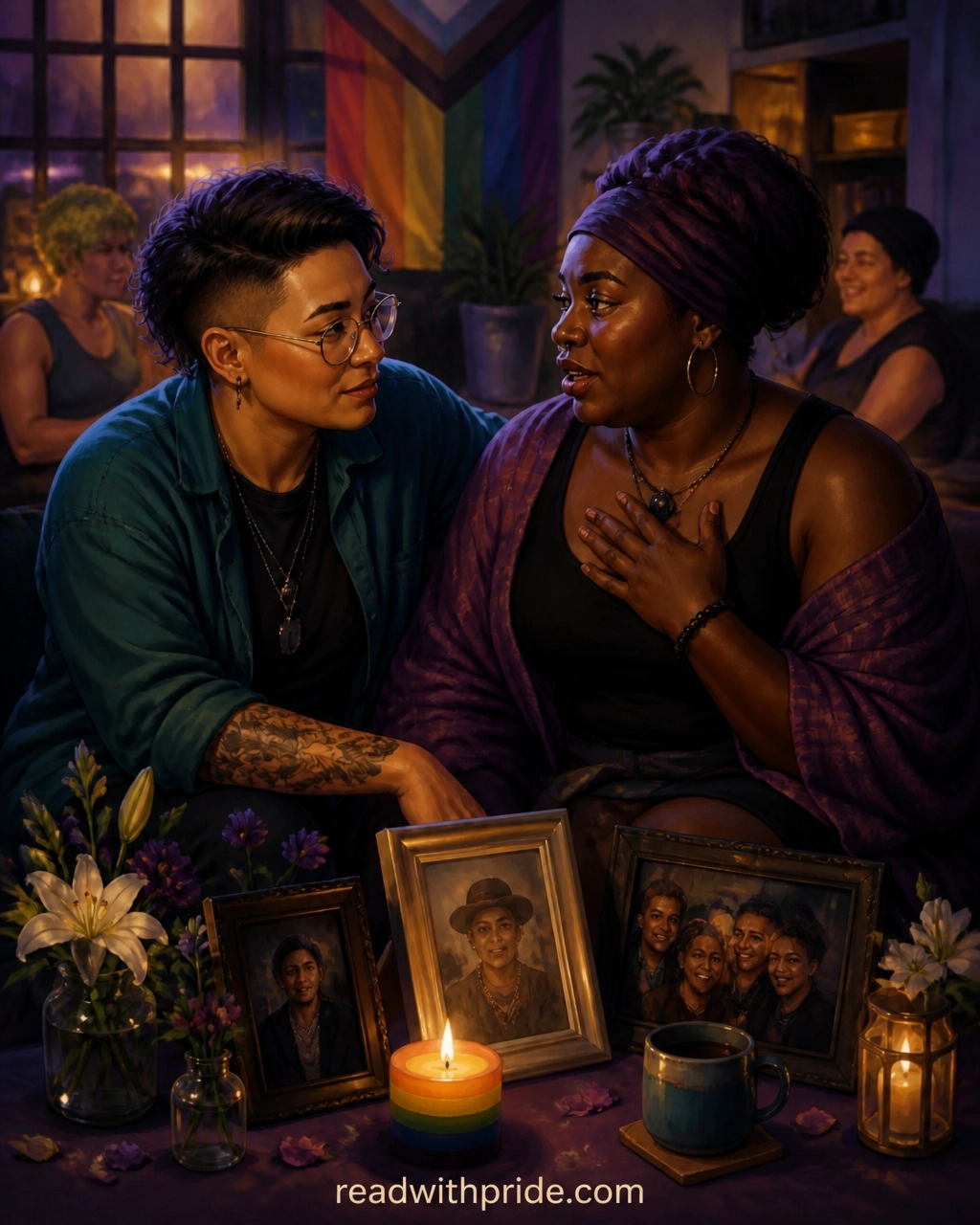
Grief does not move in a straight line. It circles back, changes shape, arrives unexpectedly, and occasionally appears while you are trying to decide whether you have enough energy to answer a text.
For LGBTQ+ people, grief can also contain several losses at once. We may mourn a partner, friend, relative, mentor, or chosen-family member. We may grieve a relationship that was never recognised by relatives or institutions. We may carry the pain of leaving an unsafe home, losing a community, surviving discrimination, or saying goodbye to a version of ourselves that had to stay hidden.
This is why queer healing is not about “moving on” as quickly as possible. It is about learning how to carry what happened while making room for what might still be possible.
And yes, that can include hope.
Queer grief is often layered
Some losses are easy for society to understand. Others require explanation, and having to explain your grief can make it feel even lonelier.
You might be grieving:
- A chosen-family member whose presence made life safer.
- A relationship dismissed as “just a friendship”.
- Years spent hiding, masking, or trying to become acceptable to others.
- A friendship lost after coming out or setting a necessary boundary.
- A queer space that closed or no longer feels safe.
- A future you imagined with someone you loved.
- The childhood or adolescence you might have had in a kinder world.
- The confidence, health, housing, or security taken from you by discrimination.
None of these losses are less real because they do not fit a traditional grief narrative.
This is sometimes called disenfranchised grief: grief that is not fully recognised or supported by the people and systems around us. LGBTQ+ people may face this when a partner is not acknowledged, when a trans person’s identity is erased, or when chosen family is treated as less important than biological relatives.
You should not have to prove that your relationship mattered before you are allowed to mourn it.
A helpful first step in queer healing can be naming the loss honestly: This mattered to me. This changed me. I am allowed to feel what I feel.
Healing does not mean feeling positive all the time
There is a particular kind of pressure to turn every difficult experience into an inspirational lesson. LGBTQ+ people are often praised for being strong when what we actually need is a nap, a meal, a quiet room, or someone who knows how to listen without trying to fix everything.
Healing is not a performance.
You do not need to be cheerful on schedule. You do not need to share your grief publicly. You do not need to make your pain useful for someone else.
Healing might mean talking with a trusted friend. It might mean choosing silence. It might mean correcting the language used to describe someone you lost. It might mean keeping a photograph, cooking a favourite meal, lighting a candle, or creating a playlist you only listen to once a year.
It might also mean laughing.
Joy and grief can exist together. You can miss someone and enjoy dinner. You can feel devastated in the morning and laugh at a ridiculous video later. You can fall in love again without betraying the person or future you lost.
Queer communities have always understood this complicated dance. We make room for sorrow at the same table as music, food, flirting, storytelling, and very strong opinions about the correct way to organise a bookshelf.

Chosen family is part of the care system
Chosen family is not a consolation prize for people who do not have “real” family. Chosen family is family.
It is built through trust, shared history, mutual support, and the everyday decision to show up. It may include partners, friends, former partners, neighbours, queer elders, younger community members, colleagues, or the person who knows you need food before you have worked out how to ask for it.
During grief, chosen family can provide something essential: recognition.
They know who mattered. They remember the nickname, the favourite song, the difficult anniversary, and the tiny domestic habit nobody else noticed. They can help with practical tasks when emotional language becomes exhausting.
If you are supporting someone who is grieving, try asking:
- Who was important to you and the person you lost?
- Which relationship words feel right?
- Who should be included in decisions or rituals?
- Would company, practical help, or quiet space feel best?
- Are there traditions that feel comforting, and others that feel unsafe?
Sometimes the most healing sentence is simple: “I know this relationship was real, and I am here to remember it with you.”
For further reading about LGBTQ+ family life, Raising Rainbow Kids: Love, Challenges, and Joy in LGBTQ+ Families Across the Globe offers a Read with Pride perspective on queer families, connection, and resilience.
Small rituals can hold big feelings
Rituals give grief somewhere to go. They do not force closure, and they do not make pain disappear. They simply create a container for memory.
Your ritual might be private or communal. It might include:
- Lighting a candle on an anniversary.
- Planting flowers, herbs, or a tree.
- Writing a letter you never send.
- Visiting a meaningful place.
- Sharing stories in a group chat.
- Making a meal connected to someone you miss.
- Reading a piece of gay fiction or queer memoir that gives language to your feelings.
- Starting a queer book club where complicated emotions are welcome.
Books can be especially powerful during grief because they allow us to feel accompanied without demanding conversation. A tender queer novel will not replace therapy, friendship, or practical support. But a story can remind us that our experiences are not strange, isolated, or impossible to describe.
A gay love story, lesbian romance, or other work of LGBTQ+ fiction can offer recognition when everyday life feels full of assumptions. Stories can hold the complicated truth that love may include longing, loss, anger, laughter, and the decision to keep going.

LGBTQ+ resilience is not the same as coping alone
The word “resilience” can be useful, but it can also become another expectation placed on people who have already endured too much.
LGBTQ+ resilience does not mean being endlessly strong. It does not mean recovering quickly, staying positive, or turning trauma into a polished success story.
Resilience may look like:
- Asking for help.
- Resting before you reach breaking point.
- Finding an LGBTQ+-affirming therapist.
- Refusing to minimise your loss.
- Joining a peer-support group.
- Accepting practical care from your chosen family.
- Setting boundaries with people who make grief harder.
- Letting happiness exist beside sorrow.
It is also collective. Queer people have survived by sharing homes, food, information, art, healthcare resources, protection, humour, and stories. We have built community spaces where people can be fully known.
That kind of care is not sentimental. It is infrastructure.
If you are struggling with grief, anxiety, or feeling unsafe, please consider contacting an LGBTQ+-affirming mental health professional, bereavement service, trusted person, or local crisis support. The Eluna Network’s LGBTQ+ grief support resources may offer a useful starting point.
Future visions can begin with one small image
When you are grieving, the future may feel unavailable. Even ordinary plans can seem too demanding. You do not need to design an entire new life today.
Start with one small image.
Maybe it is a safer home. A chosen-family dinner. A community garden. An annual memorial tradition. A relationship where nobody has to audition for belonging. A morning when getting out of bed feels possible. A bookshelf filled with LGBTQ+ novels that reflect the many ways queer people love, survive, and grow.
These are future visions: not perfect fantasies, but practical directions.

Imagine grief care where every form includes chosen family. Imagine support workers who do not assume a partner is heterosexual or that biological relatives are automatically the closest people. Imagine queer elders sharing stories with younger people. Imagine accessible community spaces designed for connection, not only crisis.
These futures are not unrealistic. They are built through small decisions made repeatedly: who we invite in, whose name we remember, whose relationship we recognise, and what kind of care we make ordinary.
Readers may find this article through all sorts of searches, from coming out stories and LGBTQ+ fiction 2026 to very specific phrases such as C Section 2026. Whatever brought you here, the heart of the conversation remains the same: people deserve stories and support that recognise the full complexity of their lives.
Carrying grief into a hopeful tomorrow
Healing does not require forgetting.
You can keep a recipe, wear the jacket, tell the story, speak the name, return to the place, or carry forward a value someone gave you. The future does not ask you to leave the past behind. It asks what you will do with what the past has taught you.
Maybe you become more willing to ask for help. Maybe you create the support group you once needed. Maybe you make space for someone else at the table. Maybe you stop treating rest as failure. Maybe you build a relationship where tenderness is not something anyone has to earn.
That is the quiet power of queer healing. We can honour what is gone without allowing loss to become the only story available to us.
At Read with Pride, we believe books can hold grief and hope in the same hands. Explore our collection of LGBTQ+ ebooks, MM romance books, gay romance novels, lesbian romance, queer love stories, and heartfelt gay fiction. Whether you are looking for emotional MM fiction, romantic gay novels, coming out stories, or affirming LGBTQ+ novels, you deserve a story that helps you feel seen.
Visit Readwithpride at readwithpride.com, follow Read with Pride on Instagram, and connect with us on Facebook.
#QueerHealing #FutureVisions #LGBTQResilience #ReadWithPride #QueerLoveStories #LGBTQFiction2026 #GayFiction #MMRomance #GayRomanceNovels #ComingOutStories #QueerBookClub #LGBTQNovels

Leave a Reply
You must be logged in to post a comment.