

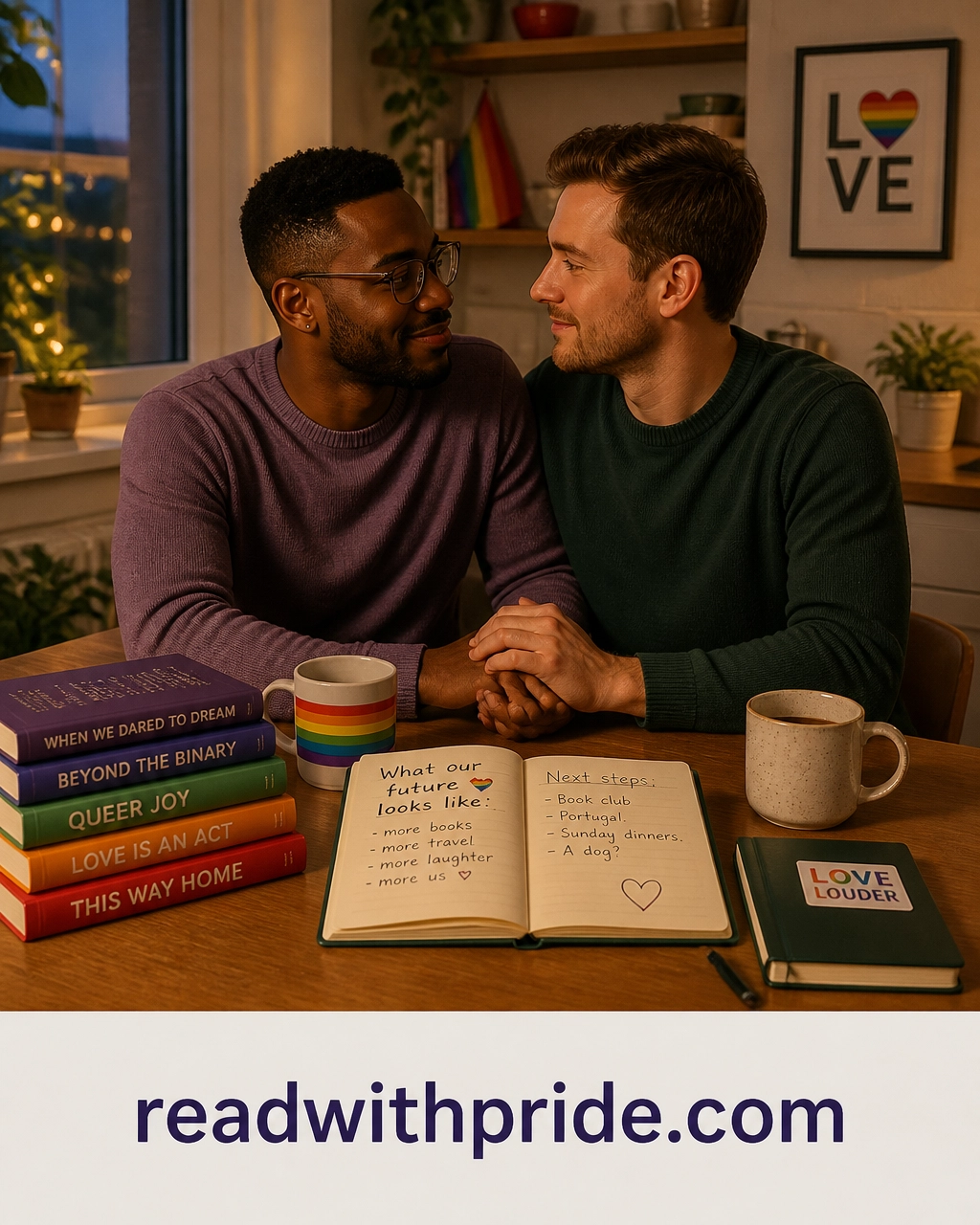
The first “I love you” is a big moment. There may be nerves, tears, a suspicious amount of staring into the middle distance, and at least one person wondering whether they said it too soon.
But what happens afterwards?
For many LGBTQ+ people, the next stage of love is not simply about bigger declarations. It is about the promises we make through everyday choices: how we show up, how we communicate, how we build family, and how we imagine a future that actually fits.
Queer relationships do not come with one universal timeline. The life milestones that matter to one couple may feel irrelevant to another. A lesbian couple might celebrate the day they became co-parents. Two men in an MM romance might mark the first time one partner was introduced by name and relationship at a family gathering. A bisexual or trans person may define commitment through honesty, autonomy, and the freedom to keep becoming themselves.
There is no single correct way to love. There are only relationships built with care, consent, trust, and enough shared humour to survive assembling flat-pack furniture together.
The promise to keep learning each other
Early romance often focuses on discovery: favourite foods, childhood stories, embarrassing music choices, and whether “I’m fine” means fine or requires snacks and a follow-up conversation.
After the first “I love you,” discovery continues, but the questions become more layered:
- What helps you feel safe when life is stressful?
- How do you want to be supported when you are overwhelmed?
- What does privacy mean to you?
- How do you prefer to repair conflict?
- Which parts of your identity need affirmation from a partner?
- What kind of life would feel meaningful, even if nobody else understood it?
These are not interview questions for a relationship application. They are invitations to stay curious.
Strong MM romance themes often explore this shift beautifully. The characters may begin with chemistry, tension, or a dramatic first kiss, but the emotional heart of the story lies in what they learn afterwards. Love becomes less about being perfectly understood and more about being willing to understand again and again.
The same is true in lesbian relationships, bisexual partnerships, trans relationships, queerplatonic partnerships, and every other form of LGBTQ+ connection. The promise is not “I will never misunderstand you.” It is “I will not stop listening.”
Coming out within a relationship
Coming out is often discussed as something that happens before a relationship begins. In reality, identity can unfold at any stage.
Someone may come out as bisexual after years of identifying as gay or lesbian. A partner may realise they are trans, non-binary, or questioning their gender. Someone who was open with friends may not be ready to be open at work or with extended family. A person may also begin exploring a different relationship structure and need to discuss what that means.
These moments can be tender, complicated, and deeply personal.
A partner’s role is not to demand certainty on a schedule. It is to listen, respect boundaries, and avoid turning someone else’s identity into a test of loyalty. Support may mean attending an appointment, learning new language, correcting a relative, or simply making tea while the other person works out what they want to say.
The best coming out stories understand that disclosure is not always one dramatic scene. It can be a series of small acts: changing a name in a phone, choosing different pronouns, introducing a partner, wearing something affirming, or finally saying, “This is who I am,” without immediately apologising.
For readers exploring identity through gay fiction, lesbian romance, and wider LGBTQ+ novels, these stories can offer language, reassurance, and the comforting reminder that becoming yourself does not have to happen all at once.
The promise to make family practical
Chosen family is often described poetically, but it is also wonderfully practical.
Chosen family is the person who drives you home after surgery, remembers your difficult anniversary, checks that you got back safely, or appears at your door with groceries when you insist you are “absolutely managing.” It is built through repetition. People become family because they keep showing up.

For couples, a major milestone may be introducing a partner to the people who already form that support network. It may be hosting a first holiday together, creating an emergency-contact list, or deciding who should be included in important medical and family conversations.
For queer parents, family milestones can include adoption, co-parenting, fertility treatment, supporting a child through a transition, or navigating a C Section 2026 parenting journey. The details will differ, but the central question remains: who is trusted to care, protect, celebrate, and tell the truth?
Read with Pride’s LGBTQ+ blogs and articles explore many forms of connection, identity, and belonging. You can also browse readwithpride.com for queer stories that make space for family in all its glorious, occasionally chaotic forms.
The promise to define the relationship honestly
Monogamy is not the only way to build a lasting partnership, but it can be a deeply meaningful choice for many LGBTQ+ couples. The important part is that it is chosen rather than assumed.
Partners may need to discuss what monogamy means to them. Does it involve sexual exclusivity, emotional exclusivity, or both? Are friendships with exes comfortable? What counts as flirting? How much privacy does each person need?
There is no universal answer. There is only the answer two people create together.
Polyamory and ethical non-monogamy also require clarity, communication, and consent. A polyamorous relationship is not automatically more adventurous, less serious, or more chaotic than a monogamous one. It is a relationship structure that asks people to be explicit about time, safer sex, emotional needs, disclosure, jealousy, and boundaries.

The promise in any relationship structure is not “I will never feel insecure.” It is “We will talk about difficult feelings without using them as weapons.” Jealousy can carry information about fear, uncertainty, or unmet needs. It deserves attention, not shame.
Queer relationships have long challenged the idea that love must follow one approved script. That does not make every choice automatically healthy. It means the standard should be consent, respect, honesty, and care rather than conformity.
The promise to create rituals that belong to you
Many relationship milestones arrive without a greeting card.
There is the first time you save someone’s favourite snack without being asked. The first shared playlist. The first holiday where nobody has to pretend. The first time your partner meets the friend who knows every version of you. The first ordinary Sunday that feels like home.
These rituals matter because they turn affection into a pattern.
Some couples celebrate the anniversary of their first date. Others mark the day they adopted a pet, moved cities, survived a difficult year, or decided to remain friends after changing the shape of their relationship. A commitment ceremony may be more meaningful than a legal wedding. A yearly dinner may matter more than an expensive holiday.

A shared ritual does not need to be impressive. It might be:
- A monthly relationship check-in.
- Cooking the same meal on an important anniversary.
- Writing letters to open in five years.
- Inviting chosen family to celebrate a new home.
- Taking an annual photograph in the same place.
- Reading together before bed.
- Making space for each partner to have a separate life.
The best rituals are not performances for social media. They are small promises repeated often enough to become part of the relationship’s language.
The promise to imagine a future without copying someone else’s
Long-term partnership does not have to mean marriage, home ownership, children, or a matching set of bicycles. It may mean living together, living apart, co-parenting with friends, sharing finances, travelling between cities, or building an interdependent network that includes romantic and platonic bonds.
For some people, the dream is a traditional wedding with queer joy at its centre. For others, the dream is a commitment ceremony with no legal paperwork. Some want children. Some do not. Some want a quiet home. Others want a busy household full of friends, pets, aunties, lovers, cousins, and one person who keeps leaving a mysterious spoon in the bathroom.
The promise is not to want the same future as everyone else. It is to ask whether the future you are building reflects your actual values.
That is one reason queer love stories, gay romance novels, lesbian romance, and MM romance books matter. They give us possibilities. They show that happily ever after can be domestic, adventurous, unconventional, sensual, political, quiet, or still unfolding.
On Read with Pride, readers can discover LGBTQ+ fiction 2026, gay fiction, queer romance, and stories that make room for complicated identities and hopeful futures. A good queer book club can take that exploration further, turning private reading into shared conversation.
Love is a promise, not a performance
After the first “I love you,” relationships do not become perfect. They become more real.
There will be changing identities, difficult conversations, family complications, unexpected responsibilities, and days when one person has emotional capacity while the other has only enough energy to locate the remote control.
The promises that sustain love are usually quieter than the first declaration:
- I will respect your identity.
- I will tell you the truth kindly.
- I will not assume your needs have stayed the same.
- I will make room for your chosen family.
- I will ask before making decisions that affect us both.
- I will support your autonomy as well as our connection.
- I will keep choosing honesty over performance.
- I will let our relationship become what it genuinely is.
There is no single roadmap for queer relationships or life milestones. That is not a gap in the story. It is the freedom to write a better one.
For more MM romance books, gay romance novels, coming out stories, queer fiction, and heartfelt LGBTQ+ reading, visit Read with Pride. Follow Read with Pride on Instagram and connect with us on Facebook.
After the first “I love you,” there is still so much to say. More importantly, there is a whole life to build: on terms that belong to you.
#ReadWithPride #Readwithpride #QueerRelationships #LifeMilestones #MMRomanceThemes #MMRomanceBooks #GayRomanceNovels #ComingOutStories #QueerBookClub #LGBTQFiction2026 #CSection2026 #GayFiction #LGBTQNovels #QueerLoveStories #LGBTQReading #LesbianRomance #MMFiction #ChosenFamily #Polyamory #QueerFiction

Leave a Reply
You must be logged in to post a comment.