

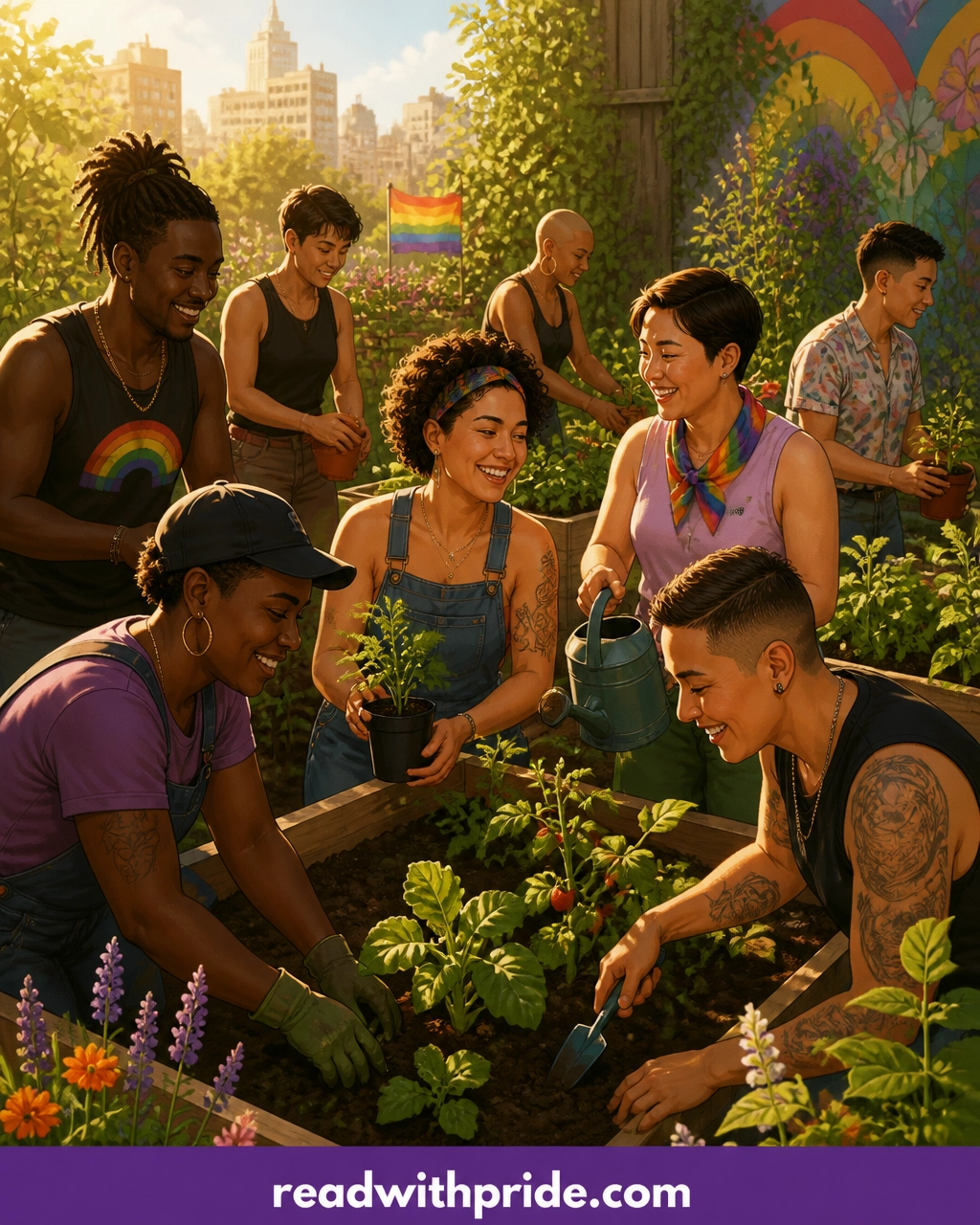
There is something gloriously queer about growing things together. You arrive with a packet of seeds, leave with muddy knees, three new group-chat contacts, and strong opinions about whether tomatoes count as a personality.
Community gardening is one of those queer hobbies that quietly becomes much more than a hobby. It is hands-on, low-pressure, practical, creative, and brilliant for community building. You can chat while watering, focus silently while weeding, or turn up purely to admire someone’s courgettes. No forced small talk required.
And when the garden is intentionally LGBTQ+-friendly, it can become a place to show up as your full self: gay, lesbian, bi, trans, non-binary, questioning, or proudly allied.
Why community gardening grows connection
Community gardens create natural opportunities for people to meet without the intensity of a formal networking event or the noise of a crowded bar. You have a shared task, a common goal, and plenty of tiny moments for connection.
Someone lends you a trowel. Someone else remembers your pronouns. A neighbour takes home surplus herbs. A regular planting session becomes the reliable part of your week.
That consistency matters. Queer community is not built only through grand gestures. It grows through repetition: seeing familiar faces, checking in, swapping skills, sharing snacks, and noticing when somebody has not made it along for a while.
Gardens can also support mutual aid. Harvests might go to a community fridge, local food project, LGBTQ+ support group, or anyone who needs a little extra nourishment. A plot can become a practical expression of care: and a welcome alternative to another event involving name tags and lukewarm prosecco.
For more on queer gardening and collective connection, explore this Read with Pride feature.

MM romance tropes, but make it gardening
Naturally, community gardening has an entire plotline waiting to happen. Here are a few MM romance tropes hiding between the compost bins.
Forced proximity
There is only one working hose. The raised bed needs watering. Two handsome gardeners must cooperate.
Will they resolve the hose situation? Will one of them admit they secretly enjoy the other’s terrible plant jokes? Stay tuned.
Slow burn
At first, you simply share gardening shifts. Then you start saving the best seedlings for each other. Then you know exactly how the other person takes their tea during Saturday work parties.
That is not just horticulture. That is a slow burn with excellent soil health.
Enemies to lovers
Perhaps you disagree about planting layouts. Perhaps one of you believes everything should be arranged by colour while the other insists on “letting nature do its thing.” Maybe there is a heated debate about slug prevention.
Honestly, nothing says romantic tension like a disagreement over companion planting.
Found family
The most convincing trope of all is found family. It is the person who brings extra gloves, the neighbour who celebrates your first successful harvest, and the group that makes room for you at the shared table.
That is how queer love stories often feel in real life: not always dramatic, but deeply rooted.

How to start an inclusive community garden
Want to turn your own patch of ground into a queer-friendly gathering place? Start small and make the welcome obvious.
- Find a location. Contact a local community garden, allotment group, LGBTQ+ centre, school, housing association, or environmental organisation.
- Set a regular time. A predictable monthly or fortnightly session makes it easier for people to join.
- Make access part of the plan. Include raised beds, seating, shade, accessible paths, and tasks that do not require heavy lifting.
- Create clear community guidelines. State that transphobia, homophobia, racism, ableism, and harassment are not welcome.
- Offer different ways to participate. Gardening, organising, cooking, photography, social media, seed saving, and simply keeping someone company all count.
- Share the harvest. Decide together how food, flowers, and supplies will be distributed.
- Add a little joy. Try a seed swap, picnic, queer ecology workshop, plant-name competition, or reading session.

You do not need expert gardening knowledge. You only need curiosity, patience, and a willingness to learn alongside other people. Plants are forgiving. Community can be, too.
Grow your reading community with Read with Pride
After a day in the garden, settle in with MM romance books, gay romance novels, coming out stories, and heartfelt gay fiction from Read with Pride. Our catalogue celebrates LGBTQ+ novels, queer love stories, and romantic adventures for every mood: from gentle comfort reads to steamy, emotional page-turners.
Planning a queer book club? Browse the Read with Pride store and explore more conversation-starting recommendations in our LGBTQ+ blog archive.
Whether you are searching for LGBTQ+ fiction 2026, a new favourite from our catalogue, or something for your C Section 2026 reading list, there is always another story: and another community: to discover.
Follow Read with Pride on Instagram and Facebook, then share your own queer hobby. Gardening, reading, crocheting, gaming, baking, organising: or dramatically repotting a houseplant at midnight: all are welcome.
Dig in. Find your people. Grow something brilliant together.
#ReadWithPride #QueerHobbies #CommunityBuilding #MMRomanceBooks #GayRomanceNovels #QueerFiction #LGBTQReading #QueerBookClub #QueerJoy

Leave a Reply
You must be logged in to post a comment.