

readwithpride.com
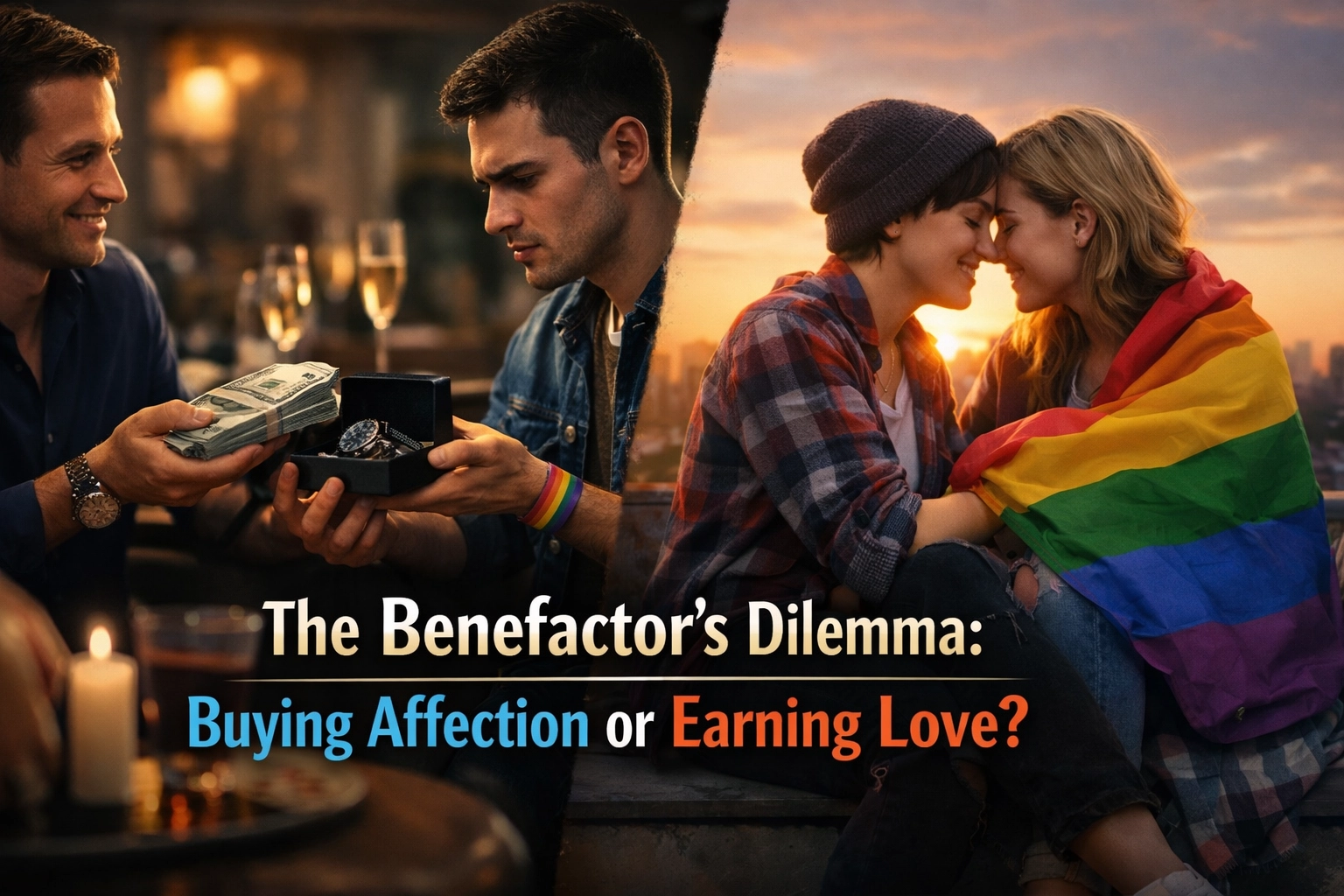
Let's talk about one of the most deliciously complicated tropes in MM romance: the rich guy falling for the broke guy (or vice versa). You know the setup, penthouse meets studio apartment, designer suits meet thrift store finds, black AmEx meets maxed-out credit card. But here's where it gets interesting: when does generosity cross the line into control? When does "let me take care of you" become "let me buy your affection"?
The Rich & Poor trope in gay romance books isn't just about the fantasy of being swept off your feet by someone with unlimited resources. It's about navigating the minefield of pride, power dynamics, and that uncomfortable question: are they with me for me, or for what I can provide?
The Allure of the Trope
There's something undeniably compelling about watching two men from completely different worlds collide. Maybe it's the CEO who's tired of people wanting him only for his money, meeting the artist who couldn't care less about his net worth. Or the struggling grad student who catches the eye of an old money heir at a coffee shop where he works three shifts a week just to make rent.
The appeal isn't just the fairy tale aspect, though let's be honest, we all enjoy a good Cinderella moment. It's the vulnerability that wealth inequality forces both characters to confront. The wealthy character has to grapple with whether he's using his resources as a shortcut to intimacy. The less wealthy character has to wrestle with accepting help without losing his sense of self.

The Gift-Giving Minefield
Picture this: Your boyfriend just casually bought you a car because "yours was making a weird noise and I was worried about you." Sweet, right? Or is it?
In MM romance novels, this scenario plays out in countless variations, and it's never simple. Because when there's a massive financial gap in a relationship, every gift becomes loaded with potential meaning. Is this generosity or control? Caring or condescension? Love or leverage?
The best gay romance books exploring this trope don't shy away from these uncomfortable questions. They dig into the psychological complexity of both accepting and giving when the playing field isn't level. The wealthy character might genuinely just want to see his partner happy, to remove obstacles from his life. But there's often a subtle power play happening, even if it's unconscious, the ability to swoop in and "fix" problems creates a dynamic where one person is perpetually the savior and the other perpetually in debt.
Pride vs. Practicality
One of the richest veins of conflict in Rich & Poor MM romance books is the clash between pride and practical need. Your boyfriend wants to pay off your student loans? Pride says hell no. Your bank account says… maybe listen to your boyfriend.
This tension creates beautifully messy scenes where characters have to examine what pride is actually protecting. Is it their sense of independence? Their fear of being seen as a "kept man"? Or is it deeper: a fear that accepting help means accepting a permanent position of owing, of being less-than?

The protagonists who resonate most are the ones who find ways to maintain their dignity while acknowledging they could use some help. They set boundaries. They insist on contributing in their own ways. They make it clear that while they might not have money, they bring other equally valuable things to the relationship: emotional intelligence, creativity, loyalty, humor, or simply the ability to see their wealthy partner as a person rather than a walking ATM.
When Money Becomes a Wall
Here's where the trope gets really interesting: when wealth disparity becomes the primary obstacle to the relationship. Not family disapproval, not external homophobia, but the simple fact that two people live in completely different economic realities.
The wealthy character might not even realize how his privilege creates distance. Suggesting a weekend trip to Paris like it's grabbing coffee. Buying a piece of art "on impulse" that costs more than his boyfriend makes in six months. Living in a world where money solves most problems, unable to understand what it's like when money creates most problems.
Meanwhile, the character with less wealth is constantly doing the math: can I afford to go to that restaurant? Should I pretend I can keep up? Will he think less of me if I suggest somewhere cheaper? It's exhausting, and it creates an emotional barrier that no amount of money can simply purchase away.
The Power Dynamic Question
Let's address the elephant in the penthouse: power dynamics. When one person in a relationship can make the other's financial stress disappear with a signature, that's power. And power in relationships: even when wielded with the best intentions: complicates everything.

The most compelling gay romance novels in this genre explore how both characters navigate this imbalance. The wealthy character learning that he can't solve everything with money, that sometimes his partner needs to struggle and succeed on his own terms. The less wealthy character learning to accept help without feeling diminished, to recognize that letting someone care for you practically is also an act of intimacy and trust.
Why We Love This Trope
So why does the Rich & Poor trope remain one of the most popular in LGBTQ+ romance? Because it forces both characters to be vulnerable in ways that cut to the core of who they are.
The wealthy character can't hide behind his resources. When you can literally buy someone anything, you have to figure out what you can offer that money can't purchase: emotional availability, genuine understanding, vulnerability. The fantasy of wealth loses its power when someone isn't impressed by it, when they want you, not your lifestyle.
For the character with less money, the challenge is accepting that needing help doesn't make you weak, that you can be loved for who you are even when you can't "keep up" financially. There's something deeply validating about a storyline where someone is chosen despite: or regardless of: their bank balance.
The Evolution of the Trope
Modern MM romance books are taking this trope in more nuanced directions. We're seeing more stories where both characters bring different types of wealth to the relationship: one has money, the other has emotional wisdom or creative talent or street smarts. The focus shifts from "poor guy gets rescued" to "two people with different resources learn to value what each brings to the partnership."

We're also seeing more diverse settings for these stories. Not just the Manhattan billionaire and his struggling artist boyfriend, but stories set in small towns, in different countries, across various industries and backgrounds. The economic disparity might be relative: someone who's middle class versus someone living paycheck to paycheck: making the dynamics more relatable to readers' actual experiences.
Finding the Balance
The most satisfying Rich & Poor gay romance stories are the ones where both characters grow. The wealthy character learns humility, learns that money isn't the answer to everything, learns to let his partner have agency even when he could easily "fix" things. The less wealthy character learns to accept help gracefully, to recognize his own worth beyond his bank balance, to understand that being loved sometimes means letting someone care for you.
They find creative solutions: maybe the less wealthy partner contributes by handling things the wealthy partner doesn't have time for, or by bringing him into a world of experiences that money can't buy. The relationship becomes a genuine partnership where different types of value are recognized and respected.
The Heart of the Matter
At the end of the day, the Benefactor's Dilemma in MM romance isn't really about money at all. It's about whether love can exist when the power dynamic is uneven. It's about learning to give without controlling and receive without losing yourself. It's about discovering that genuine affection can't be purchased, that the most valuable gifts are the ones that don't come with a price tag: trust, vulnerability, seeing and being seen.
The best stories in this trope remind us that everyone: regardless of their tax bracket: wants the same thing: to be loved for who they are, not what they can provide. Whether you're reading about a billionaire CEO or a trust fund heir, a barista or a grad student, the fundamental question remains the same: in this relationship, am I buying affection or earning love?
And honestly? That's a question worth exploring over and over again, which is why we can't get enough of this beautifully complicated trope.
Craving more MM romance that digs into the messy, beautiful complications of love across class lines? Explore our collection at readwithpride.com where every story celebrates authentic LGBTQ+ love in all its forms.
Follow us for more MM romance content:
📘 Facebook
🐦 Twitter/X
📸 Instagram
#MMRomance #GayRomance #RichAndPoorTrope #LGBTQRomance #ReadWithPride #GayRomanceBooks #MMRomanceBooks #QueerFiction #GayLoveStories #ContemporaryMMRomance #MMFiction #GayBooks #LGBTQBooks #2026GayBooks #BestMMRomance #RomanticGayNovels #MMRomance2026 #GayContemporaryRomance #HeartfeltGayFiction

Leave a Reply
You must be logged in to post a comment.