

There are relationship milestones that arrive with flowers, photographs and somebody crying into a celebratory napkin.
Then there are the quiet ones.
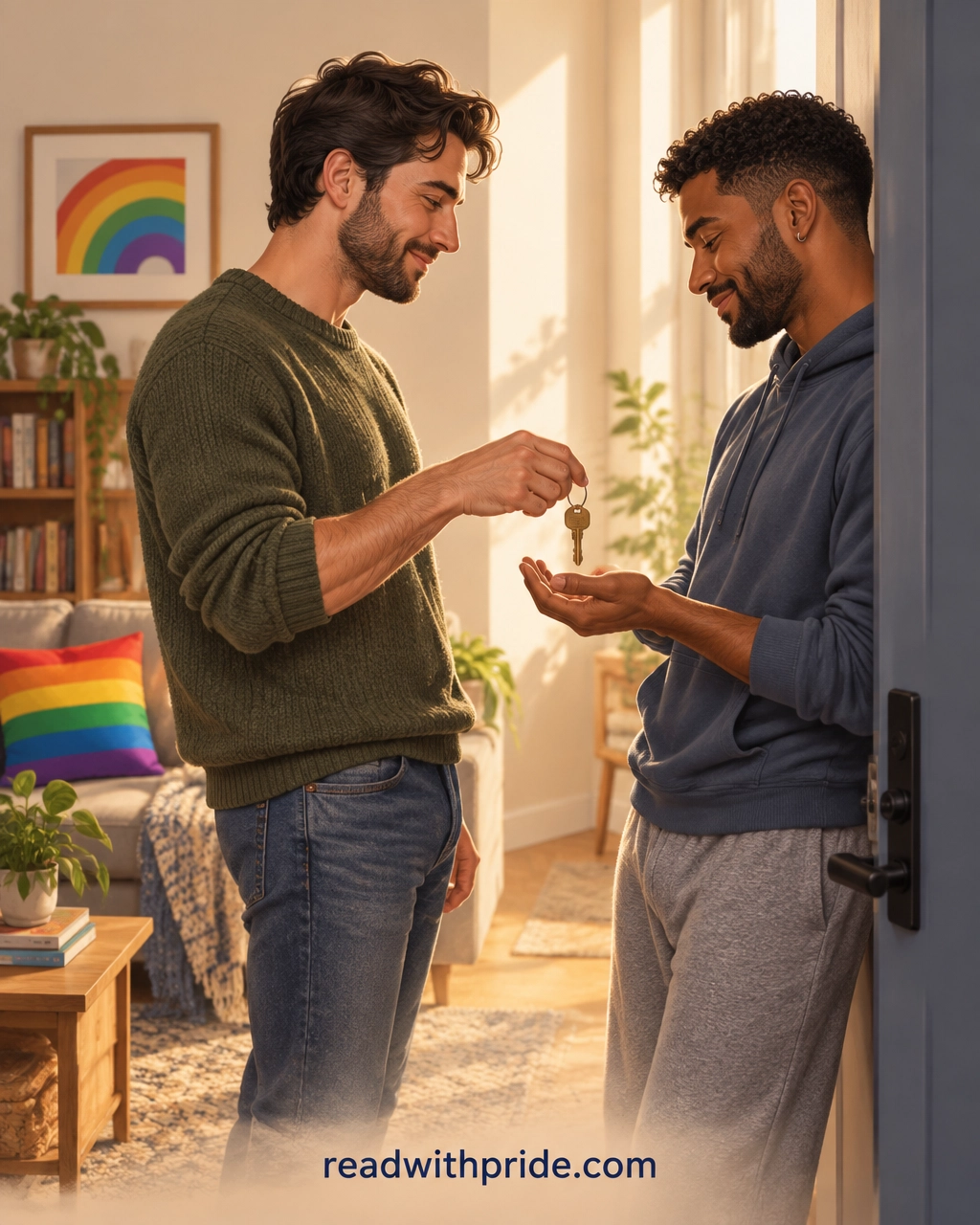
The first time someone gives you a spare key. The first time you introduce them as “my partner” without pausing to decide whether the room is safe. The first shared grocery list. The first ordinary Sunday that feels less like a visit and more like a life.
For many LGBTQ+ people, these small moments can carry enormous emotional weight. They are not always visible from the outside, but they tell a story: I trust you here. I am making space for you. I am choosing this relationship, not just once, but again and again.
Welcome to the September 15 edition of our LGBTQ+ Relationships and Life Milestones series. Today, we are talking about the quiet firsts that make queer relationships feel real, rooted and wonderfully ours.
The spare key: a small object with a big meaning
A key is practical. It opens a door. It may also open a whole new chapter.
Giving someone a spare key can mean they are welcome when you are home, when you are busy, when the washing machine is making a concerning noise, and when they have arrived before you because they know where the mugs are. It is an everyday gesture, but it quietly changes the relationship.
The key says: “You belong in my space.”
In queer relationships, that can feel especially significant. Many LGBTQ+ people have spent parts of their lives carefully managing visibility, privacy and belonging. A shared key may represent trust after years of keeping certain parts of life locked away.
It does not have to mean moving in together. It does not have to come with a five-year plan or matching towels. It can simply mean that someone has become part of the rhythm of your home.
And yes, it may also mean they now have opinions about your thermostat settings. Love is complicated.

The first “my partner”
There is a particular kind of courage in saying “my partner” for the first time.
Sometimes the words come easily. Sometimes they get stuck behind the teeth, especially when you are unsure how people will respond. You may have used “friend” for protection, “roommate” for convenience, or a characteristically vague “someone I know” because the situation did not feel safe enough for more.
Then one day, you say it.
“My partner and I went away for the weekend.”
“This is my partner.”
“My partner will be joining us later.”
The sentence itself may be completely ordinary. Internally, it can feel like a door opening.
For some couples, this first introduction is public and joyful. For others, it happens privately, with trusted friends or chosen family. There is no correct version. A person’s safety and comfort come first.
This is one reason coming out stories remain so powerful in queer fiction. They show the emotional complexity behind words that can look simple from the outside. Coming out is not always one dramatic announcement. It can be a series of small, carefully chosen moments, each one shaped by context, trust and personal readiness.
The same applies to saying “my girlfriend,” “my wife,” “my boyfriend,” “my husband,” “my person” or any other name that feels right. Language is personal. The milestone is not using the most conventional label. The milestone is finding a word that feels like yours.
The first domestic routine
Romance is often sold to us as candlelit dinners and spontaneous trips to beautiful places. Those things are lovely. So is knowing exactly how someone takes their tea.
Domestic routines are some of the clearest signs that a relationship has become part of everyday life.
Maybe you cook while your partner washes up. Maybe one of you leaves the kitchen cupboards open while the other follows behind, closing them with the patient despair of someone who has mentioned this before. Maybe Tuesday evenings mean takeaway, laundry and one episode of a show that somehow turns into four.
These routines may not look dramatic, but they create emotional safety. They help transform a relationship from an event into a shared environment.

This is where many MM romance themes become especially satisfying. The best MM romance books do not only give us chemistry and desire. They show what happens after the charged first meeting, after the confession, after the kiss.
Who remembers the appointment?
Who buys the oat milk?
Who knows where the spare batteries are?
Who notices that the other person has gone quiet and asks, gently, whether they need company or space?
Domestic intimacy is not limited to relationships between men. Lesbian romance, bisexual romance, trans love stories and nonbinary relationships all offer their own versions of shared routine and mutual care. Queer love stories become richer when they show people building lives rather than treating romance as something that exists separately from work, health, friendship, family and community.
The first anniversary that belongs only to you
An anniversary does not have to mark a wedding or a legal milestone.
It could be the day you met. The day you decided to become exclusive. The day you first said “I love you.” The day you chose to begin again after a difficult period. It could even be a date that means nothing to anyone else but has become sacred to you both.
Queer relationships often involve creating traditions rather than inheriting them. That may mean celebrating the first Pride you attended together, the day you moved into a shared home, or the anniversary of a private commitment ceremony.
The details do not have to be expensive. A favourite meal, a walk, a handwritten note or a rewatch of the film you saw on your first date can be enough.
The point is not performance. It is recognition.
You are saying: “I remember this. I know what it took to get here. I am glad we are still here.”

The first repaired disagreement
It is easy to celebrate the first kiss. It is more revealing to celebrate the first disagreement that ends in repair.
Every relationship has awkward conversations, mismatched expectations and moments when one person says, “That is not what I meant,” while the other replies, “I know, but it still hurt.”
The milestone is not never arguing. That is not a realistic relationship goal unless you are both unusually committed to communicating exclusively through polite nods.
The milestone is learning how to return to one another.
A repaired disagreement might involve an apology, a boundary, a change in behaviour or simply the willingness to listen without preparing a defence. It can show that the relationship has room for honesty as well as affection.
This is one of the most meaningful forms of commitment. You are not promising that nothing will go wrong. You are learning how to face difficult moments without treating the relationship itself as disposable.
Choosing each other again
Long-term love is not one giant decision made at the beginning. It is made up of hundreds of small choices.
You choose each other when you check in after a stressful day. When you make room for a partner’s changing identity. When you support a career change, a health need, a family boundary or a new dream. When you listen to the story they have told you before because it still matters to them.
You choose each other when the relationship changes shape.
That might mean moving in together, living separately, opening the relationship, returning to monogamy, building a blended family, caring for an ageing relative or deciding that marriage is not part of your future. Commitment is not proven by following one particular script.
For some LGBTQ+ couples, the life milestone is creating a relationship structure that reflects their actual needs rather than social expectation. For others, it is finding safety after rejection or beginning a new relationship later in life. For some, it is choosing a partner while also protecting the friendships and chosen family that make them whole.
There is no single queer timeline, and there is no single definition of forever.

Quiet firsts in queer fiction
Readers often turn to gay romance novels, gay fiction and LGBTQ+ novels for the grand emotional experiences they offer: yearning, second chances, slow burn, enemies to lovers, forced proximity and happily-ever-afters.
But the quieter moments can stay with us longest.
A character handing over a key.
A man saying “my boyfriend” in front of his family.
Two women building a home together after years of believing love was not available to them.
A partner being named as an emergency contact.
A couple creating a tradition that did not exist until they invented it.
These details make representation feel lived-in. They remind readers that queer people deserve stories about ordinary happiness, domestic chaos, ageing, commitment, friendship and joy.
That is the heart of Read with Pride. Our collection of LGBTQ+ ebooks celebrates emotional depth, raw desire, complicated families, tenderness, humour and the many ways queer people find one another and build a life.
Explore Read with Pride for MM romance books, gay romance novels, lesbian romance, queer fiction and new LGBTQ+ reading inspiration. You can also revisit our article on queer timelines and life milestones or browse the LGBTQ+ blog for more reflections on identity, relationships and community.
If you are searching for LGBTQ+ fiction 2026, queer love stories, coming out stories or books for a queer book club, let this be your reminder: not every milestone needs a crowd, a certificate or a photograph.
Sometimes forever sounds like:
“Text me when you get home.”
“I picked up your favourite snack.”
“Do you want the left side of the sofa?”
“I saved you the last one.”
“I am still here.”
And sometimes, that is more than enough.
Follow Read with Pride on Facebook and Instagram for more queer reading, relationship reflections and LGBTQ+ ebooks.
#ReadWithPride #MMRomanceBooks #GayRomanceNovels #QueerRelationships #LifeMilestones #MMRomanceThemes #ComingOutStories #QueerBookClub #LGBTQFiction2026 #GayFiction #LGBTQNovels #QueerLoveStories #LGBTQReading #GayBooks #QueerFiction #CSection2026

Leave a Reply
You must be logged in to post a comment.