

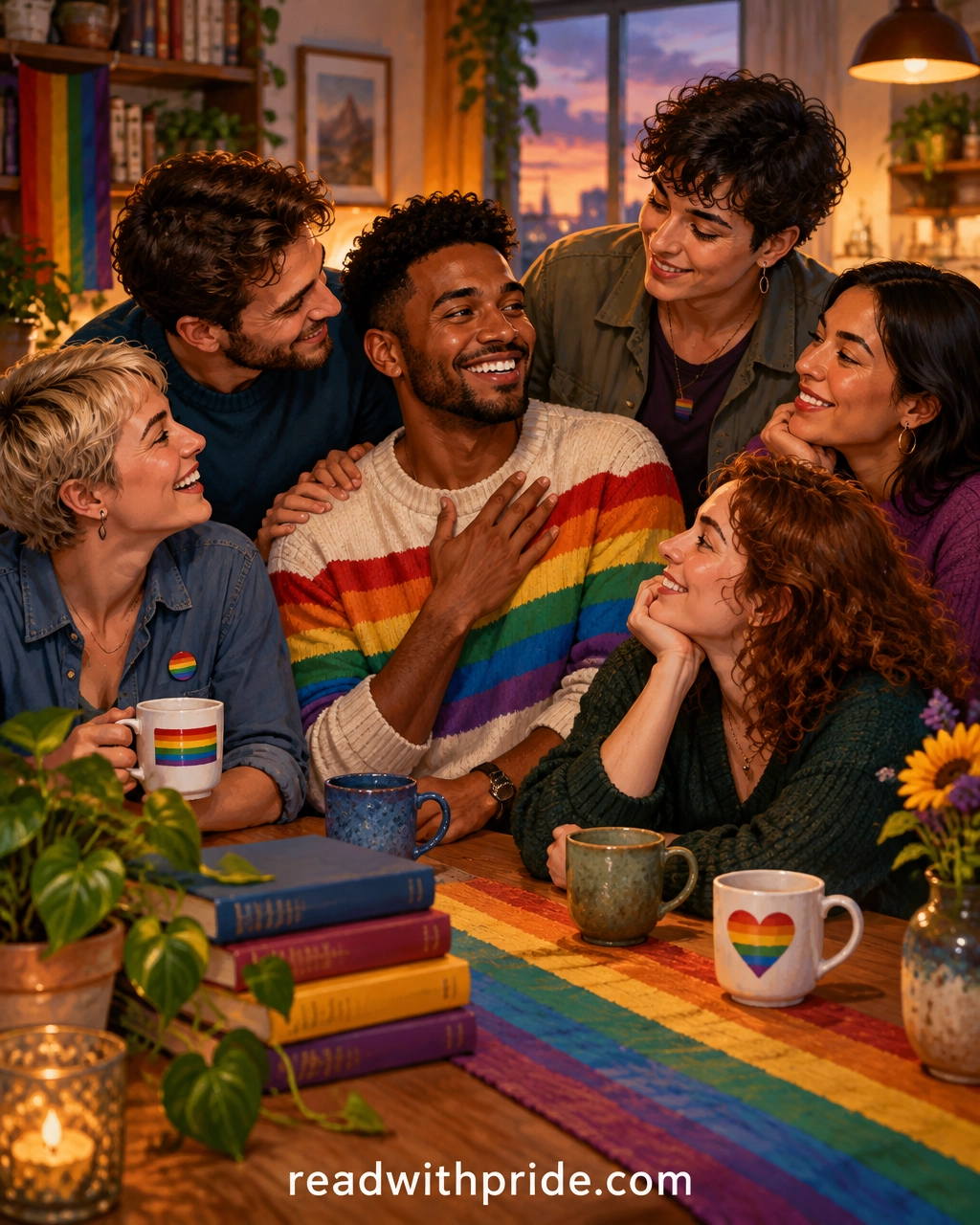
There is a particular kind of pressure attached to life milestones. We are often handed a neat little checklist: realise who you are, come out, meet “the one,” move in, get married, buy a home, adopt a dog with excellent emotional support skills, and live happily ever after.
Lovely in theory. Slightly suspicious in practice.
For many LGBTQ+ people, life milestones arrive in different orders, at different ages, and sometimes more than once. Coming out may happen first to yourself, then to one trusted friend, then to a sibling, then to a partner. Chosen family may become your safest home before your family of origin understands you. A relationship may be monogamous, open, polyamorous, deeply committed without marriage, or something beautifully specific that does not fit neatly into a dating-app dropdown.
That is the joy and the work of queer relationships: we get to ask what actually suits us.
In this daily series on LGBTQ+ relationships and life milestones, we are looking at the arc after coming out , from the first brave disclosure to building chosen family, and then navigating partnership on your own terms. Along the way, we will explore how familiar MM romance themes such as found family, slow burn, second chances, and coming-out stories mirror real emotional journeys.
Coming out is a moment , and also a process
Coming out is often described as one dramatic scene. Someone sits at the kitchen table, takes a breath, says the words, and the soundtrack swells.
Sometimes it is dramatic. Sometimes it is a text sent at 2:13 a.m. Sometimes it is a casual “This is my girlfriend” at a barbecue, followed by an intense desire to hide behind the potato salad.
There is no single correct way to come out. Some people come out young; others do so in midlife or later. Some come out once and feel settled. Others revisit the conversation as their relationships, gender, sexuality, workplaces, families, or communities change.
Research on LGBTQ+ identity development often describes coming out as nonlinear. A person may understand their identity privately long before sharing it publicly. They may come out to friends but not relatives, or to colleagues but not everyone in their personal life. Safety, housing, finances, culture, faith, health, and family dynamics all matter.
That means coming out is not a performance of bravery for other people’s benefit. It is a personal decision, and nobody owes the world a disclosure before they are ready.
The milestone is not simply saying, “This is who I am.” It can also be the quieter moment when you stop treating yourself like a problem to solve.
That emotional shift appears frequently in coming out stories and gay fiction. The most affecting stories do not treat coming out as the end of the journey. Instead, it becomes the beginning of a more honest life , one where the protagonist still has awkward conversations, bad dates, family complications, and the occasional spectacularly ill-advised haircut.
Chosen family: the people who help you exhale
Coming out can change your relationship with family of origin, but it can also reveal the people who become family by choice.
Chosen family may include friends, partners, ex-partners, neighbours, colleagues, mentors, community members, and the person who always remembers exactly how you take your coffee. It can be a large, joyful group or one trusted person who makes the world feel less hostile.
For many queer people, chosen family is built through repeated acts of care:
- checking in after a difficult family conversation;
- offering a sofa, spare key, or emergency lift;
- celebrating a first Pride together;
- showing up for birthdays, break-ups, illnesses, and new jobs;
- respecting names, pronouns, boundaries, partners, and privacy;
- making room at the table without asking anyone to earn their place.

This is where the found-family theme in MM romance books feels so recognisable. A romance may centre on two men falling in love, but the emotional architecture around them often matters just as much. Who knows their history? Who notices when they are pretending to be fine? Who brings soup? Who tells them, lovingly and firmly, that replying “k” to a heartfelt message is not conflict resolution?
In The Majority Rule: Love in 2150, available through Read with Pride, Kai and Dash’s relationship grows within a wider story of family, adoption, political pressure, and intergenerational care. Their love story is not only about attraction. It is also about building a future in which other people can belong.
That is one reason gay romance novels and broader LGBTQ+ novels can be so powerful. They give language to the people who stand beside the couple , the friends, children, elders, siblings, and community members who turn romance into a life.
Partnership does not have one approved setting
Once someone has come out and established a stronger sense of self, another question may arrive: what kind of relationship do I actually want?
The answer is not automatically monogamy. Nor is it automatically polyamory or an open relationship. Queer relationships are not required to prove their queerness by rejecting familiar structures, and they are not required to imitate heterosexual ones to be valid.
Some people want a monogamous partnership with shared finances, a home, marriage, children, or a long-term domestic life. Others prefer an open relationship with clearly discussed boundaries. Some practise polyamory, creating multiple consensual romantic relationships. Others choose relationship anarchy, separate homes, intimate friendships, co-parenting arrangements, or commitments that do not centre romantic partnership at all.
The important questions are wonderfully unglamorous:
- What does commitment mean to each person?
- What information needs to be shared?
- How will everyone discuss safer sex and sexual health?
- What are the boundaries around emotional intimacy?
- How will time, money, care, and holidays be negotiated?
- What happens when someone’s needs change?
- How do we repair trust after conflict?
A relationship agreement is not a sign that love has been drained of spontaneity. It can be a sign that everyone involved takes one another seriously.
Healthy non-monogamy is not “having no rules.” Healthy monogamy is not “never having difficult conversations.” Both require honesty, consent, curiosity, and the ability to say, “I need to revisit what we agreed,” without treating that sentence like a declaration of war.
Why slow burn and second chances feel so true
Some of the most beloved MM romance themes reflect the pace of real life. Slow burn is not only about yearning across a room. It is about trust developing through repetition. It is about learning someone’s boundaries, seeing how they respond under pressure, and discovering that tenderness can be more persuasive than grand gestures.
Second-chance romance speaks to another queer reality: not everyone gets to begin on the expected timeline. A person may come out after a marriage, divorce, long relationship, religious upbringing, career change, or years of putting everyone else first. They may meet a former love again after becoming more honest with themselves.
The Unspoken Chapter: A Second Chance MM Romance explores that emotional territory through Alex and Liam, who were once a secret and meet again decades later. Its appeal is not simply the promise of a happy ending. It is the question of whether two people can return to the past without being trapped by it.
That question appears across queer love stories: Can we love differently now? Can we apologise without demanding instant forgiveness? Can we build something new rather than trying to recreate what was lost?
Sometimes the answer is yes. Sometimes the most loving choice is closure. Both can be life milestones.

Stories for every kind of queer milestone
A good queer reading list should make room for many lives, not just one romantic template. That might mean seeking MM romance books about found family and slow burn, gay romance novels about second chances, lesbian romance with emotional depth, bisexual characters, trans love stories, or LGBTQ+ fiction 2026 that challenges the idea of what a relationship is supposed to look like.
It also means paying attention to genre. Read with Pride curates LGBTQ+ ebooks across romance, fiction, fantasy, thrillers, coming-of-age stories, and more. For a darker queer read, THE MAKEDA PROTOCOL combines LGBTQ+ representation with psychological thriller elements and sapphic relationships. It is very much a story about power, loyalty, trauma, and complicated choices rather than a conventional romance : and it comes with a content warning for violence.
For younger readers and fans of adventurous sapphic stories, Imago Nine: The Popstar Apocalypse is a sapphic or bisexual female-led YA adventure about Amaya Reed, a teenager with changing powers who goes undercover on a pop competition to stop a deadly threat. It is not an MM romance, and it should not be framed that way. Its coming-of-age arc belongs in the wider conversation about identity, courage, friendship, and finding your place.
And if your search brief contains a phrase as oddly specific as “C Section 2026,” remember that real readers are not keywords in a spreadsheet. They are people looking for stories that help them feel seen, entertained, comforted, challenged, or pleasantly unable to put the book down at bedtime.
Your milestones belong to you
Coming out, finding chosen family, entering a partnership, changing a relationship structure, leaving a relationship, falling in love again : none of these milestones has to happen by a certain age or in a particular order.
You do not have to come out everywhere at once. You do not have to want marriage. You do not have to want children. You do not have to choose between being independent and being deeply connected. You do not have to call your relationship anything before you are ready.
The life that comes after coming out is not a tidy sequel. It is a collection of chapters: some tender, some chaotic, some unexpectedly funny. The best ones are often written with other people : partners, friends, lovers, exes, children, elders, and the chosen family who keep a light on for you.
That is the heart of Read with Pride: making space for gay fiction, LGBTQ+ novels, queer love stories, and the many ways people create belonging.
Join the conversation with a queer book club, browse the latest LGBTQ+ ebooks, or follow Read with Pride on Instagram and Facebook.
Read widely. Love honestly. Build the family that feels like home.
#ReadWithPride #QueerRelationships #LifeMilestones #MMRomanceBooks #GayRomanceNovels #ComingOutStories #ChosenFamily #QueerLoveStories #LGBTQFiction2026 #GayFiction #LGBTQNovels #QueerBookClub #LGBTQReading #CSection2026

Leave a Reply
You must be logged in to post a comment.