

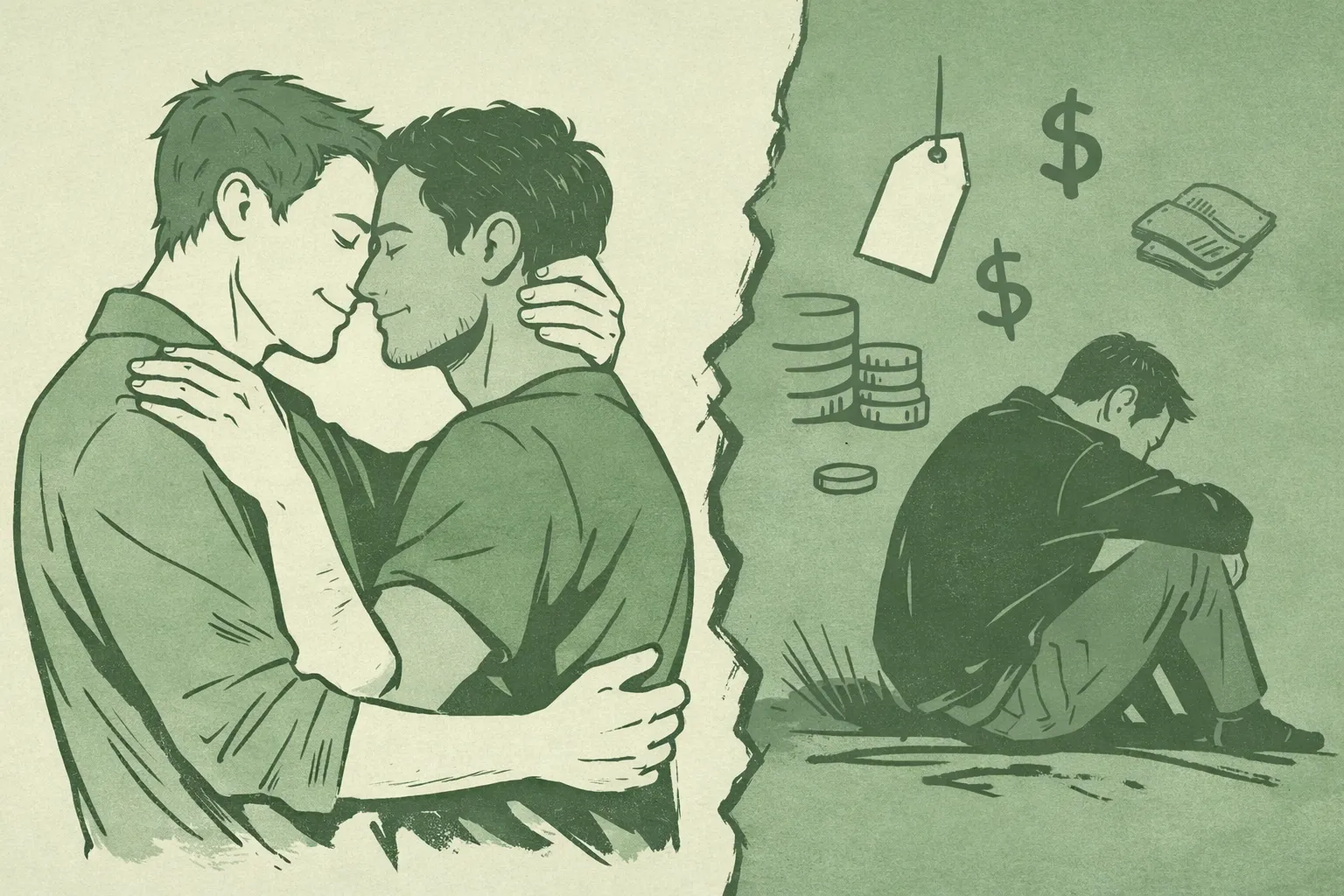
Julian Croft has everything. The corner office with panoramic views. The elegant wife who knows exactly how to work a room. Two bright children who carry his surname like a crown. He moves through London, New York, Tokyo with the fluid confidence of a man who has mastered every negotiation life has thrown at him.
Except one.
Beneath the bespoke suits and the practiced smile lives a man in a psychological prison of his own construction. Julian doesn't live his life: he rents it out in carefully metered fragments. His identity has become a series of line items on an invisible balance sheet, each piece allocated, budgeted, controlled. And the price? His soul.
The Transaction of Self is Dick Ferguson's devastating exploration of what happens when a man treats his own heart like a commodity.
The Architecture of Separation
Julian's system is meticulous. In Manhattan, he's Client #4472. In Tokyo, he's a face without a history, paying for an hour of touch that asks no questions. These aren't romantic encounters: they're transactions. Clean. Controlled. Concluded.

The beauty of paid intimacy, Julian has learned, is its containment. There are no expectations beyond the agreed terms. No vulnerability required. The men he meets in hotel rooms across three continents don't want to know about Eleanor or the children. They don't want to hear about the suffocating weight of legacy or the stranglehold of reputation. They want what he's paying them for: a fragment of Julian Croft that exists nowhere else.
In these rented hours, Julian isn't a husband or a father. He isn't the son of a man who built an empire on the assumption of heterosexual succession. He's just a body. Just desire. Just this.
It should feel like freedom.
It feels like drowning in slow motion.
The Exhaustion of Compartments
The research is clear: transactional connections are taxing on the mind, body, and spirit. They require constant vigilance, endless performance. When you're renting fragments of yourself: your time, your energy, your authenticity: in exchange for conditional acceptance, you create a life built on fault lines.
For Julian, the cost isn't just financial, though that ledger grows longer each year. The real price is spiritual fatigue. Every paid encounter requires him to compartmentalize another piece of his heart, to build another wall between who he is and who the world sees.
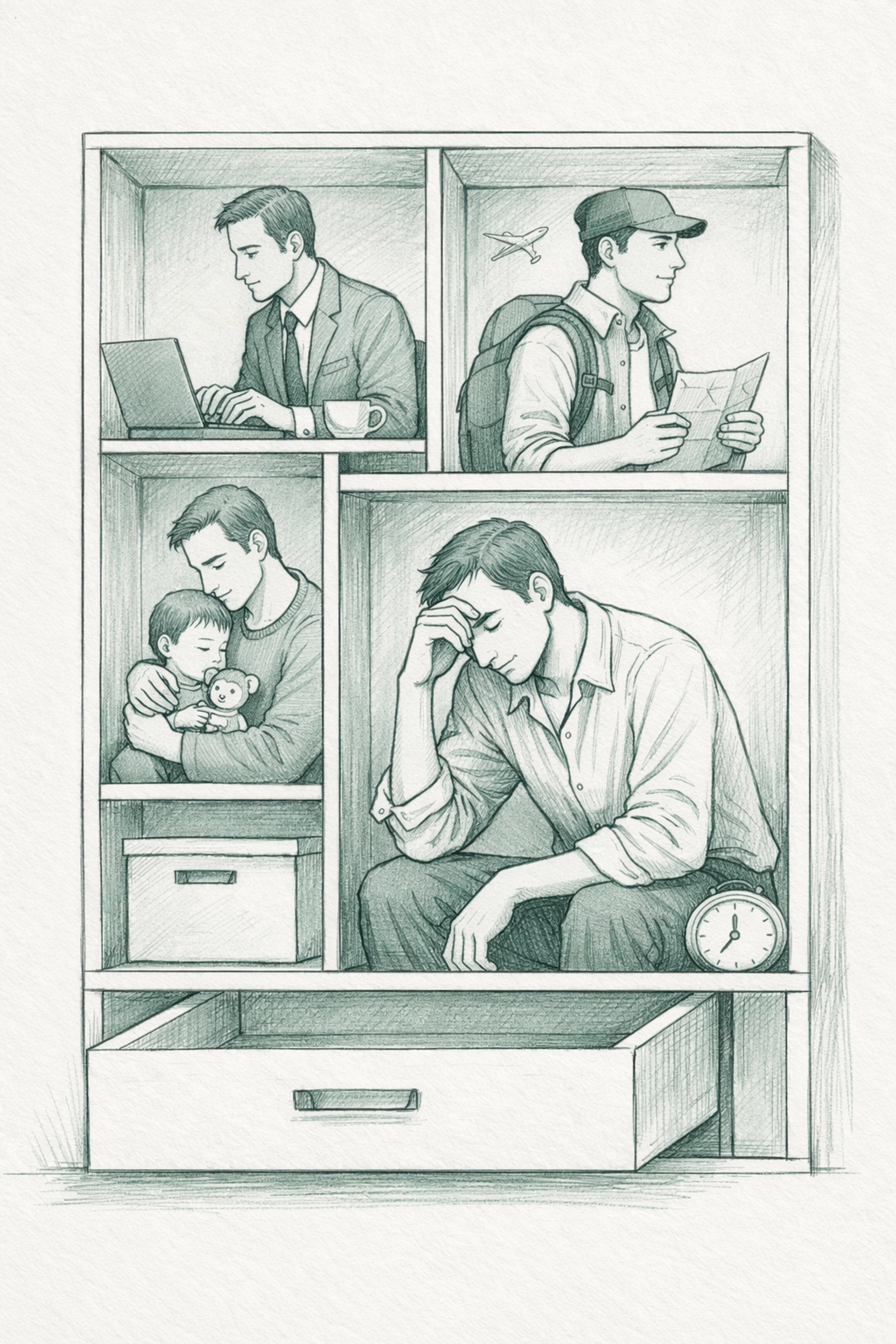
People-pleasers operate from a similar transactional logic: If I'm good enough, I won't be punished. If I perform correctly, I will be loved. Julian's version is darker still: If I keep these worlds separate, I can have both. If I'm careful enough, no one gets hurt.
Except Julian himself, who bleeds a little more each time he zips up his suitcase and boards another plane to another city where he can pretend to be whole.
The architecture of secrets is exhausting. Every phone call becomes a minefield. Every business trip requires a shadow itinerary. He monitors his behavior with the precision of a spy, always aware of which version of himself he's supposed to be inhabiting in any given moment.
This isn't living. It's an endurance test disguised as a life.
The Unpurchased Connection
And then there's Kai.
Kai, the London artist who works in light and shadow, who sees Julian not as a client but as a canvas. Their meeting isn't transactional: it's accidental, organic, terrifyingly real. Kai doesn't want Julian's money. He wants something far more dangerous: he wants to see Julian.

The difference between Julian's paid encounters and what happens with Kai is the difference between renting and owning. In hotel rooms around the world, Julian purchases temporary relief from loneliness. With Kai, he experiences genuine connection: raw, reciprocal, and rooted in mutual recognition rather than mutual transaction.
Kai asks questions. He remembers details. He calls Julian by his first name like it's something sacred rather than something printed on a credit card. When they're together, Julian doesn't have to perform. He can simply exist, fully present in a way he hasn't allowed himself in decades.
This is what relational connection looks like: messy, demanding, vulnerable, and utterly transformative. It's built on honesty rather than exchange, on seeing and being seen rather than purchasing and performing.
And it terrifies Julian more than anything else in his carefully controlled life.
Because unlike his transactional encounters, this connection has the power to burn his gilded cage to the ground.
When the Walls Crumble
Eleanor isn't stupid. Twenty years of marriage have taught her to read the silences, to notice the absences hidden inside the presence. When she delivers her ultimatum, it's with the calm precision of someone who has been preparing for this conversation for longer than either of them wants to admit.

The walls between Julian's worlds are crumbling. The transaction is no longer enough to save him: if it ever was. He's spent decades treating his identity like a business arrangement, carefully allocating different pieces of himself to different stakeholders. But identities aren't portfolios. Hearts aren't balance sheets. And eventually, the math stops working.
The question The Transaction of Self poses is brutal in its simplicity: What happens when you've been renting your soul for so long that you're not sure you remember how to claim it for free?
The Price of Pretending
Julian's story is a mirror held up to a particular kind of gay experience: one rooted in survival strategies that become prisons. When you grow up learning that your authentic self is dangerous, you develop systems of compartmentalization. You become fluent in the language of transaction because relational connection feels impossibly risky.
But transactional relationships, by their nature, are unstable. They depend on continued performance and reciprocal self-interest. When either party stops getting what they need, the connection dissolves. More crucially, they require you to hide your authentic self, creating a psychological and emotional exhaustion that compounds over years.
Dick Ferguson writes about this exhaustion with devastating clarity. Julian's journey isn't a romance: it's a forensic examination of what it costs to live in pieces, to treat intimacy as a commodity, to mistake transaction for connection.
Reclaiming What Was Never Really Lost
There's a moment in recovery literature when people talk about "coming home to yourself." For men like Julian who have spent lifetimes in exile from their own hearts, this homecoming feels simultaneously necessary and impossible.
The path forward isn't simple. It requires recognizing the patterns learned in survival mode and consciously choosing relational approaches instead: even when they feel terrifyingly vulnerable. It means learning to show up as yourself with safe people, starting with small gestures of authenticity that don't demand immediate reciprocation.
Most of all, it means understanding that you never needed to rent your soul in the first place. It was always yours. It's always been whole.
The Transaction of Self is available now at Read with Pride and dickfergusonwriter.com. Dive into Julian's emotionally devastating journey and discover why sometimes the hardest transaction of all is the one where you finally claim yourself for free.
Explore more MM romance and gay literary fiction at Read with Pride and discover our complete collection at dickfergusonwriter.com/collections/all.
Follow us on social media:
- Instagram: @dickfergusonwriter
- X/Twitter: @DickFergus94902
- Facebook: Dick Ferguson Writer
#ReadWithPride #MMRomance #GayLiteraryFiction #LGBTQFiction #TheTransactionOfSelf #DickFerguson #GayFiction #QueerFiction #MMBooks #GayRomance #LGBTQEbooks #GayNovels #MMNovels #PsychologicalDrama #GayLiterature #ReadingWithPride #GayBookClub #2026GayBooks

Leave a Reply
You must be logged in to post a comment.