

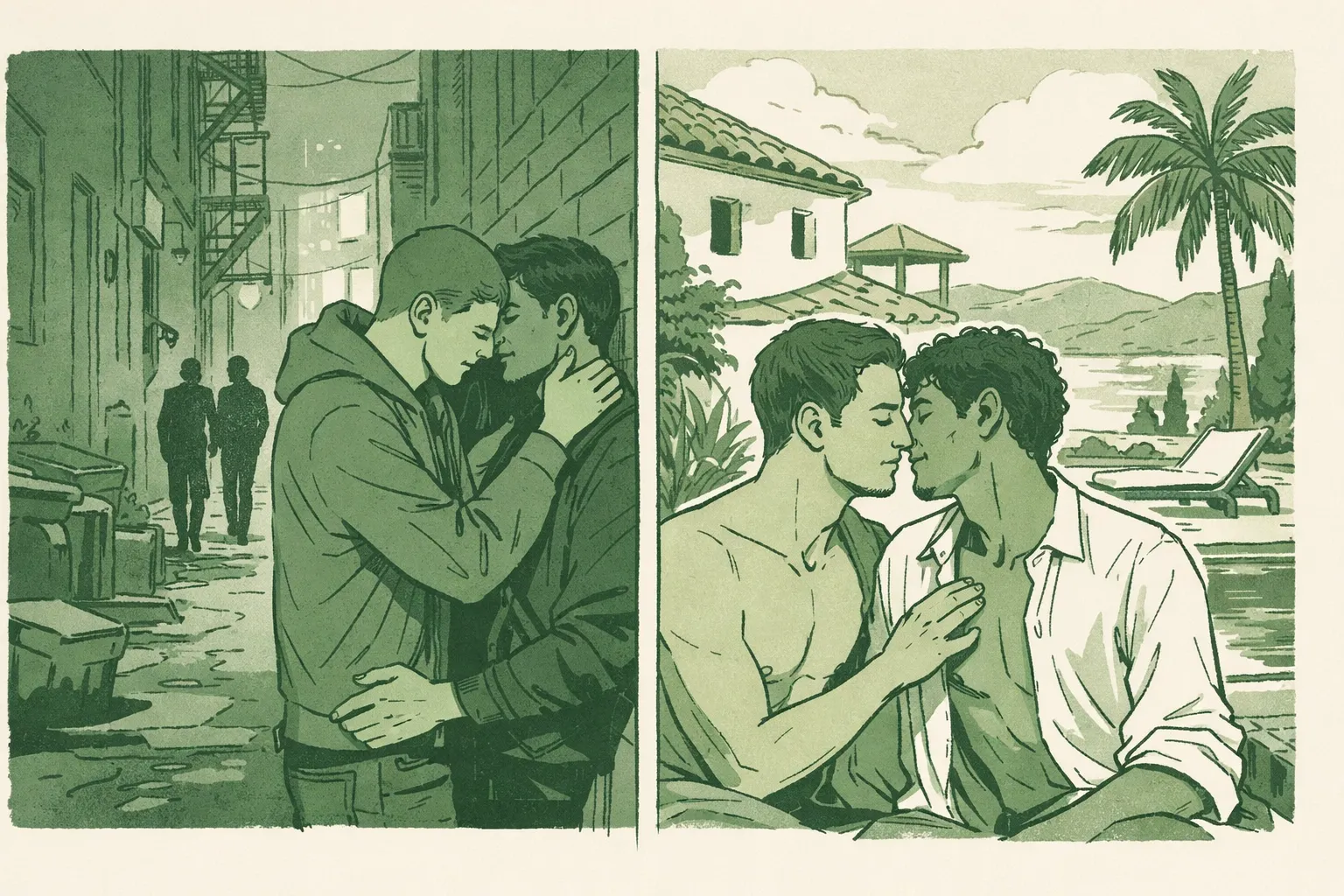
A setting is never just a backdrop. It's a mirror, a co-conspirator, a silent character that shapes the very texture of desire. When I write about two men falling into each other's orbit: whether in the sun-bleached courtyards of Andalucía or the shadow-soaked alleys of a restless city: the where is just as crucial as the who.
In MM romance and queer fiction, the landscapes we choose aren't decorative. They're emotional architecture. They reflect our characters' internal struggles, amplify their yearning, and sometimes trap them in cycles they can't escape. Let me take you through the geography of desire: from the heated south to the urban grit: and show you how place becomes character.
The Heat of the South: Desire Under the Andalusian Sun
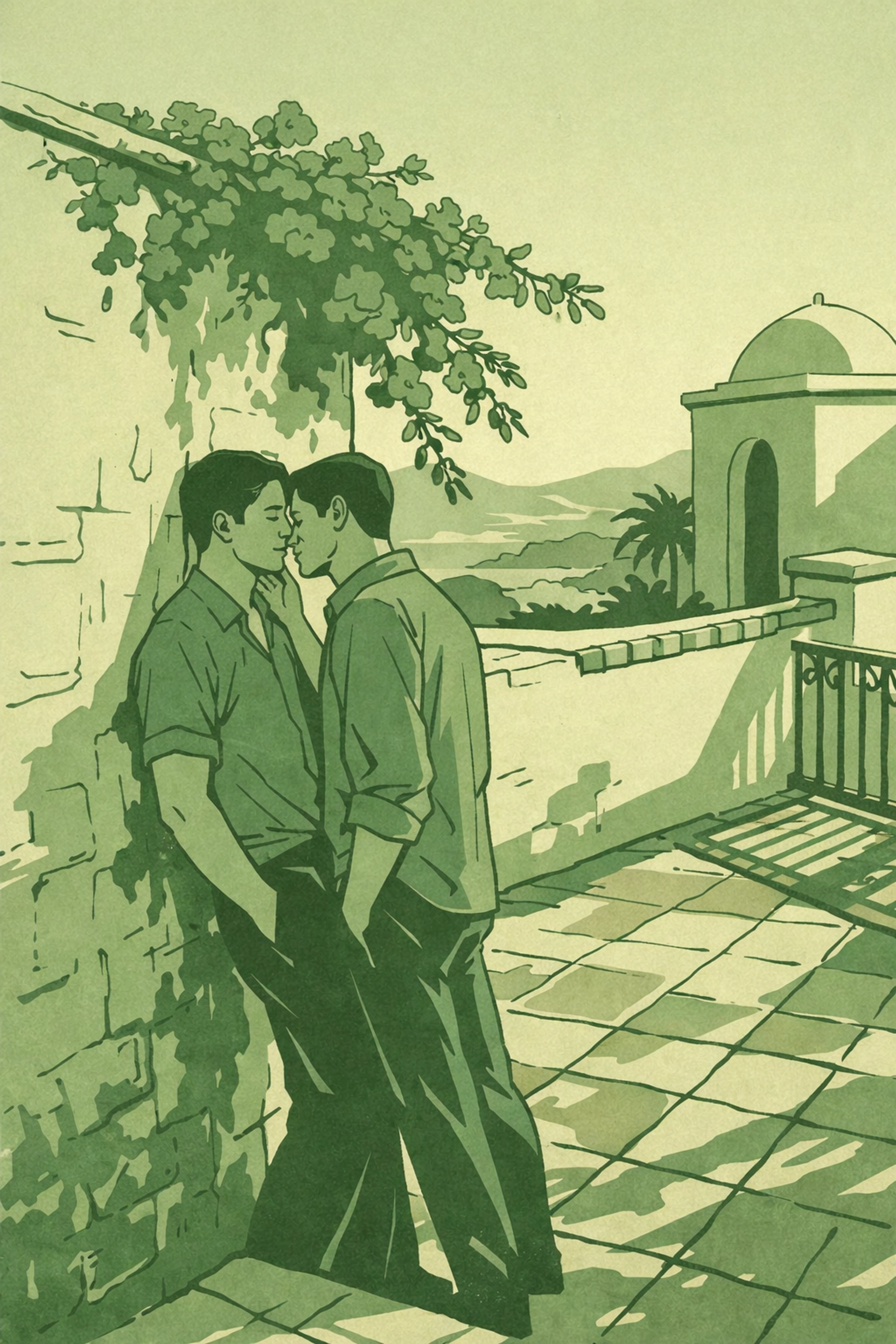
There's something about the Mediterranean light that strips away pretense. In the sun-drenched hills of Andalucía, where heat shimmers off terracotta tiles and the scent of jasmine hangs heavy in the evening air, desire doesn't just simmer: it burns.
When I set scenes in places like Seville, I'm drawing on more than just aesthetics. The south carries weight: history, tradition, Catholic ghosts, and a sensuality that contradicts its conservative reputation. A character walking through those narrow, winding streets is walking through centuries of unspoken longing. The heat becomes a metaphor for everything they're holding back.
In gay romance, particularly MM historical romance or MM contemporary stories rooted in Southern Europe, the sun-drenched villa isn't just beautiful: it's dangerous. It's the place where secrets can't hide. Where sweat-slick skin, stolen glances across a fountain courtyard, and the oppressive weight of midday sun force honesty. There's nowhere to retreat when the light exposes everything.
The landscape reflects pressure: the pressure to conform, the pressure of family expectations, the pressure of desire that can't be denied. And when that pressure finally breaks? When two men finally give in to what they've been circling around? The release feels earned. The setting has made them work for it.
Urban Grittiness: Shadows, Anonymity, and the City's Secrets
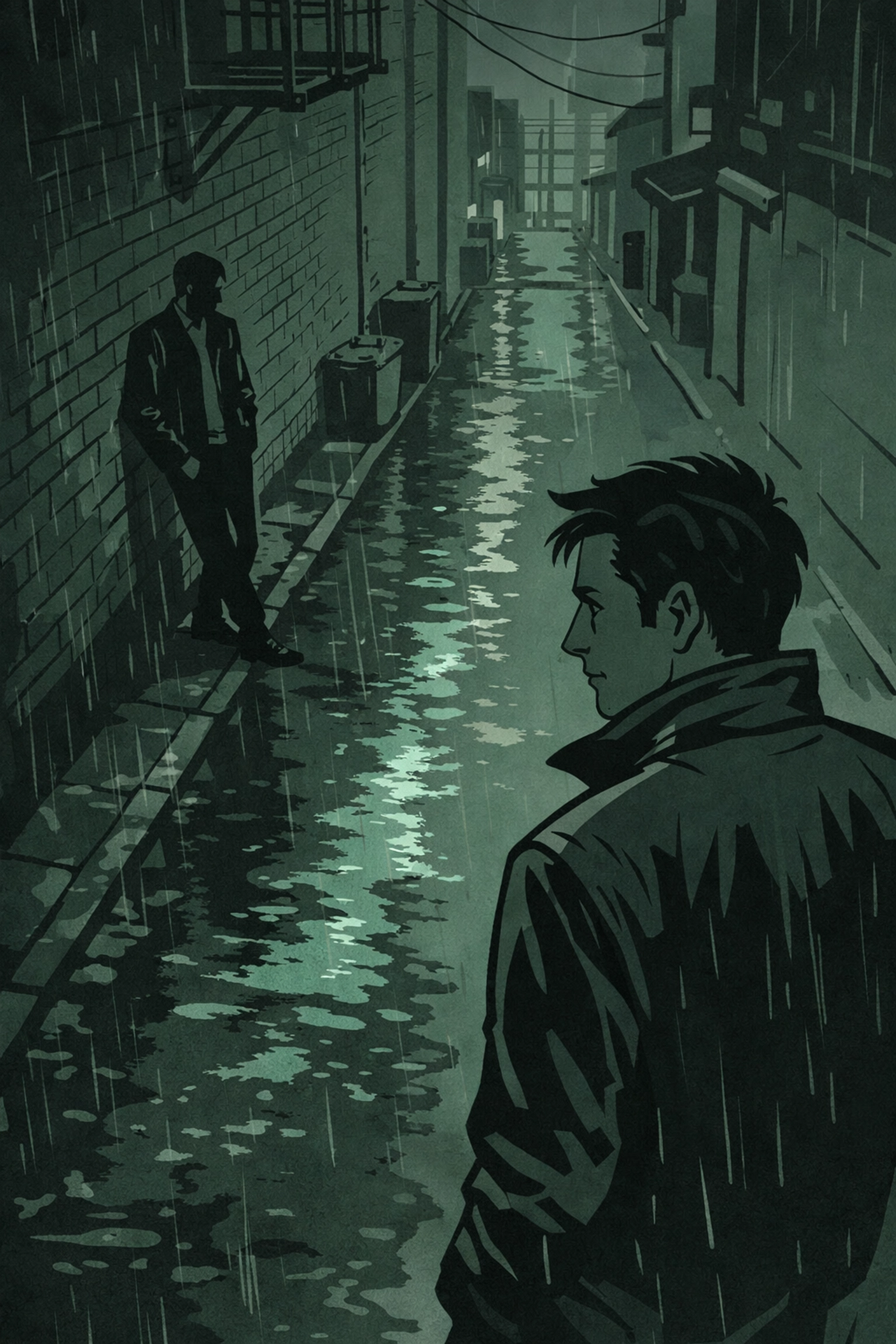
Now contrast that with the city. The gritty alleys, the anonymous hookup spots, the dive bars where no one asks your name. Urban landscapes in queer fiction: especially in gay thrillers or MM psychological romance: operate on a completely different frequency.
Cities offer what small towns and sunlit villas can't: anonymity. But that anonymity comes with a cost. The urban setting in gay novels often reflects isolation, even in a crowd. A character can be surrounded by thousands of people and still feel utterly alone. The city becomes a maze: both liberating and suffocating.
In my own work, when I write urban scenes, I lean into the texture of those spaces. The slick brick walls of an alley after rain. The neon bleed of bar signs onto wet pavement. The mechanical hum of a city that never stops moving. These aren't just atmospheric details: they're mirrors of what's happening inside the character.
The transactional nature of some city encounters: quick, wordless, necessary: isn't romantic in the traditional sense, but it's real. It reflects a kind of survival, a way of existing when you can't always bring your full self into the light. Urban grittiness in LGBTQ+ fiction acknowledges that not every love story begins with poetry. Sometimes it begins with need, with hunger, with the desperate search for connection in a world that moves too fast.
Sensory Immersion: Writing Place Through the Body
Here's where craft meets emotion. If you want your setting to truly shape desire, you can't just describe it: you have to embody it. This is where sensory immersion becomes essential in atmospheric writing.
I don't just tell you a character is in Seville. I make you feel the heat on your shoulders. I make you smell the orange blossoms mixed with diesel fumes from passing motorbikes. I make you taste the salt on another man's skin after a day in the relentless sun. The setting enters through the senses, and the senses blur into desire.
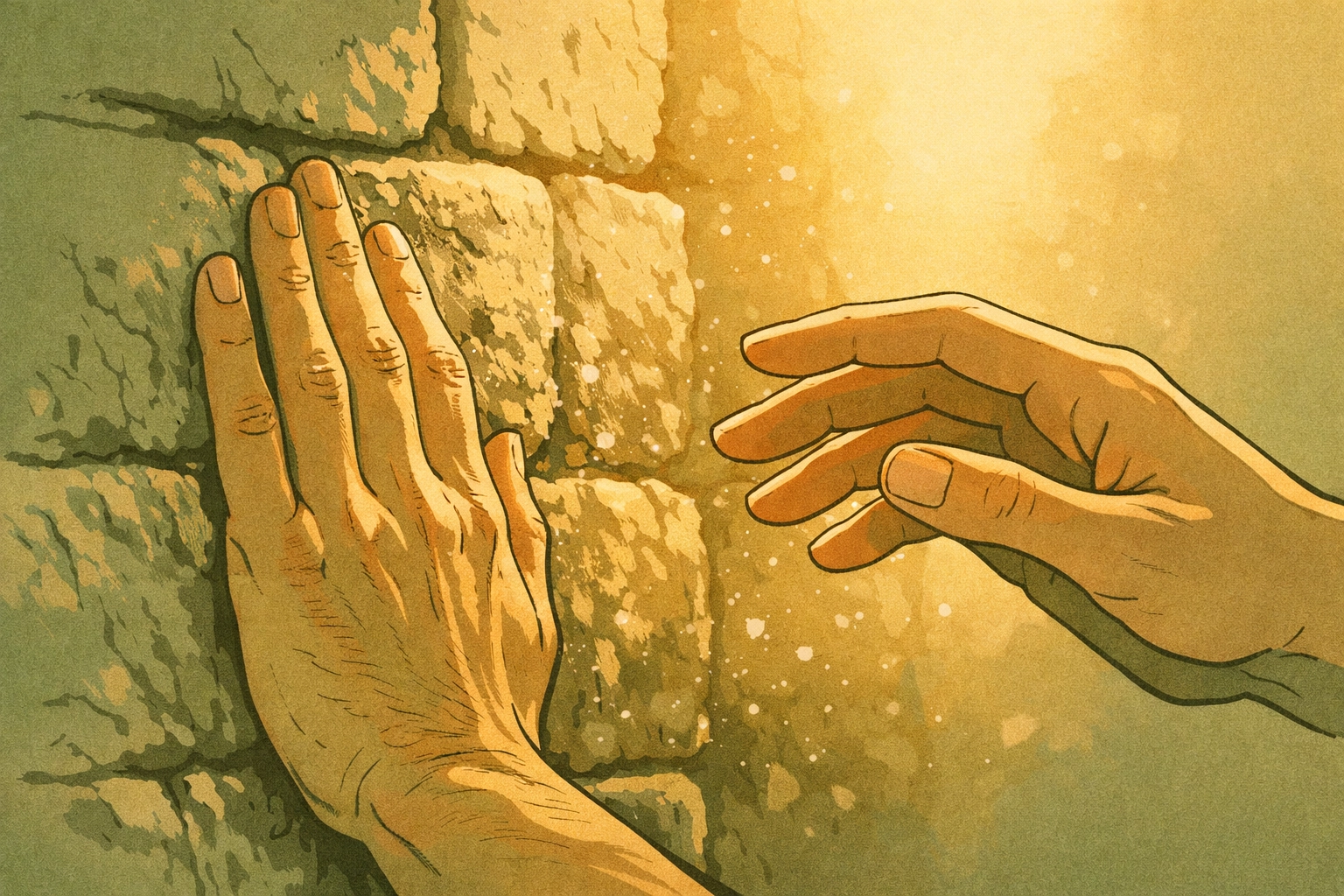
In MM romance books: especially literary MM romance: this approach pulls readers deeper. You're not watching the story unfold; you're inside it. When a character runs his hand along a crumbling stone wall in an ancient city, the reader feels that texture. When he steps into a club where the bass is so loud it replaces his heartbeat, the reader feels that too.
The quality of light matters. Golden hour in Andalucía feels like redemption. Fluorescent bar light at 2 a.m. feels like purgatory. Moonlight through shutters feels like stolen time. Each type of light carries emotional weight, and when I'm writing gay love stories, I'm always asking: What does this light reveal? What does it hide?
This is what separates good queer fiction from transcendent queer fiction. The world isn't separate from the romance: it's part of it.
The Emotional Geography We Carry
Here's the truth: we all carry our environments with us, long after we've left them. A character who grew up in rural conservatism brings that landscape into every city apartment. A man who found himself in the anonymity of London will always remember what that freedom tasted like, even if he moves to the countryside.
Setting shapes queer desire because it shapes us. It teaches us when to hide and when to reveal. It gives us permission: or denies it. And in MM fiction, exploring those geographies means exploring the internal landscapes our characters navigate every day.
When you read The Midnight Compass or any of my other gay romance series, you'll notice how place works on my characters. Sometimes it's a sanctuary. Sometimes it's a cage. Often, it's both at once.
I want readers to feel lost in these settings: in the best possible way. Lost in the heat. Lost in the shadows. Lost in the moment when two men finally stop running from what they want and surrender to where they are.
So here's my question for you: Which settings in MM novels have made you feel most immersed? Where have you gotten lost? Was it a sun-drenched Mediterranean coast, a rain-soaked city street, or somewhere else entirely? I'd love to hear about the places in gay literature that have stayed with you.
Drop a comment or reach out: I'm always curious about how setting shapes your reading experience. After all, we're all searching for stories that transport us, that make us feel something real in the places between the words.
Explore more MM romance and LGBTQ+ fiction at dickfergusonwriter.com and discover a world where every location tells a story.
Follow us on social media:
Instagram: @dickfergusonwriter
X/Twitter: @DickFergus94902
Facebook: Dick Ferguson Writer
Discover more LGBTQ+ ebooks and join the community at www.readwithpride.com
#MMRomance #GayRomance #QueerFiction #LGBTQBooks #ReadWithPride #AtmosphericWriting #GayLiterature #MMFiction #GayBooks #LiteraryRomance #QueerAuthors

Leave a Reply
You must be logged in to post a comment.