


Coming out is a brave solo act, but surviving the aftermath? That takes a village. Often, that village isn't the one you were born into, but the one you chose along the way.
When you're stepping into your first MM relationship, you need more than tolerance. You need celebration. You need the found family trope, not just as a romantic concept in gay fiction, but as a real, protective force that makes your first gay love possible.
Explore Dick Ferguson's collection of MM romance and LGBTQ+ fiction at dickfergusonwriter.com, stories where found family and first love intersect beautifully.
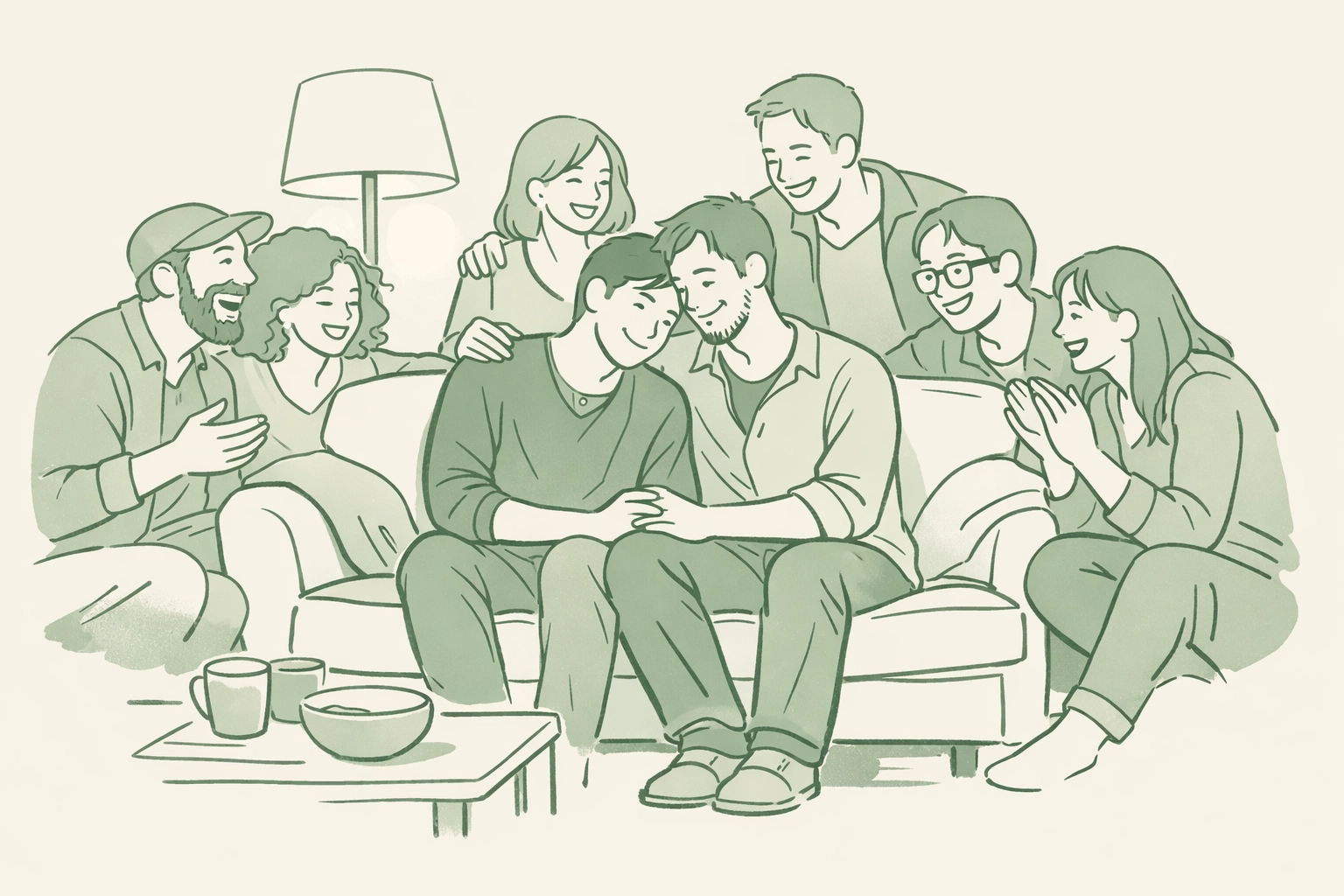
The Safety Net: Protection During Vulnerability
Your first male/male relationship is vulnerable territory. You're navigating new emotions, physical intimacy, and the external world's reaction, all at once. This is where found family becomes essential.
These are the people who don't just "tolerate" your relationship. They actively celebrate it. They ask about your boyfriend. They include him in plans. They defend you when others don't understand. This safety net of LGBTQ+ community support creates space for your first love to breathe and grow without constant defense or explanation.
Research shows that found family members provide consistent care, emotional availability, and mutual respect, creating spaces where people can be vulnerable without judgment. When you're experiencing your first gay love story, this unconditional acceptance isn't just nice to have. It's survival.
Dick Ferguson's characters consistently find this refuge. In The Campaign for Us, Zak and Cris build their relationship within a tight circle of allies who make their love possible despite external pressures. That's not fiction, that's reality for countless gay men navigating first relationships.
Validation is Everything
Biological families often withhold the validation that first loves desperately need. "Are you sure?" "Is this a phase?" "Don't tell your grandmother." These responses chip away at something that should be celebrated.
Found family fills that gap. They validate your experience. They confirm that yes, what you're feeling is real, important, and worth protecting. They don't question whether your boyfriend is actually your partner, they simply accept him as part of the circle.
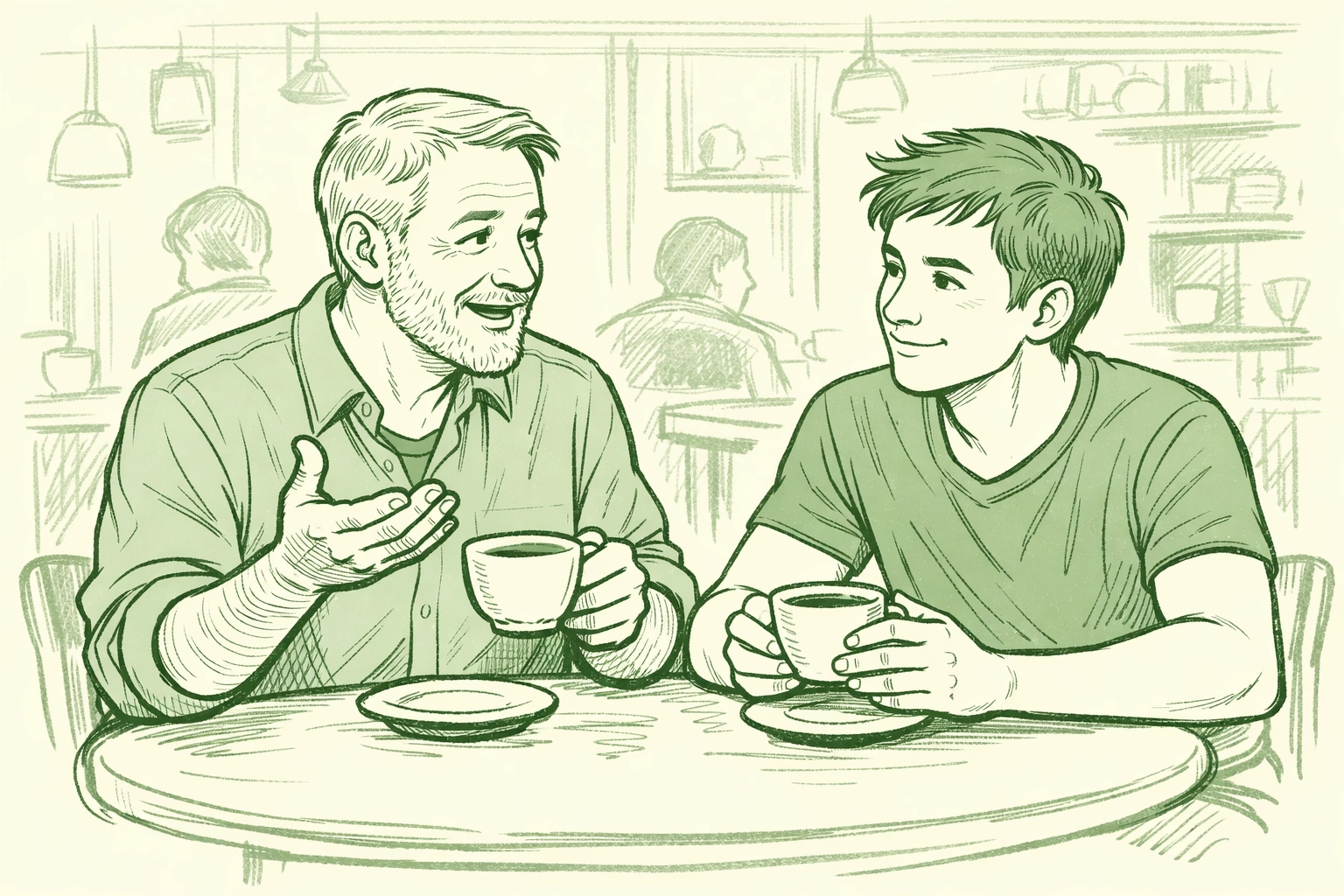
This validation teaches you that your worth is not conditional. You don't have to earn affection through compliance or self-abandonment. Your first love doesn't need to be hidden or diminished to make others comfortable. Found family shows you that healthy relationships, romantic and platonic, honor boundaries while celebrating authentic connection.
For readers exploring these themes, Beyond the Closet Door: A Gay Man's Coming Out Plan offers practical insights into building this support network during the coming out process.
The "Gay Uncle" or the "Best Friend": Mentors and Protectors
Within found family structures, people play specific roles, and these roles become crucial during first love experiences.
The Gay Uncle: The older gay man who's been through it. He gives you advice your parents couldn't. He tells you about his first boyfriend, his mistakes, his triumphs. He models what long-term MM relationships can look like. He's living proof that first love isn't the end, it's the beginning.
The Best Friend: The one who was there before the boyfriend and will be there after (hopefully not, but realistically, first loves don't always last). They provide continuity. They remind you that your identity isn't solely defined by your romantic relationship. They give you permission to prioritize yourself while still being in love.
The Fierce Advocate: The straight ally or fellow queer person who will shut down homophobia in your presence without hesitation. They create physical and emotional safety when you're out with your boyfriend. Their presence says: "You belong here. Your love belongs here."
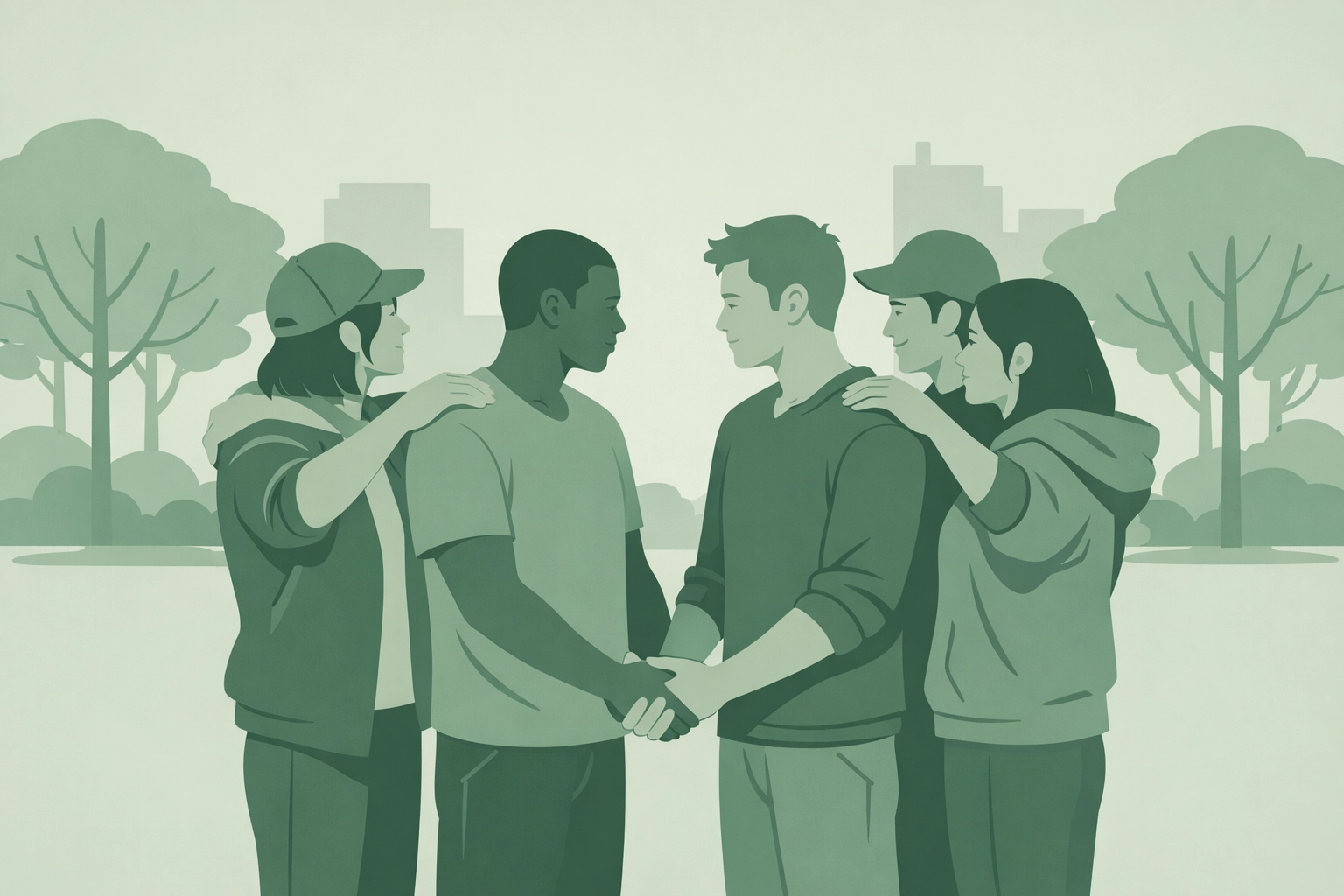
These roles demonstrate that conflict doesn't have to end in rupture. Found family teaches that relationships strengthen through communication and tenderness, skills directly applicable to your first romantic relationship. When your boyfriend frustrates you, your found family shows you how to navigate disagreement without abandoning connection.
Dick Ferguson's MM novels and gay literature consistently feature these archetypal figures. In The Phoenix of Ludgate, characters find sanctuary in small groups that act as both refuge and training ground for healthier relationship patterns.
Dick Ferguson's Themes: Found Family as Literary Anchor
Dick Ferguson's LGBTQ+ ebooks repeatedly return to this theme: love requires infrastructure. His characters don't just fall in love, they build ecosystems that allow love to survive.
In The Berlin Companions, the tight-knit group doesn't just witness the central romance, they actively protect it. They provide cover stories, safe spaces, and emotional support that makes the relationship possible in hostile circumstances.
This isn't melodrama. This is the reality of gay romance books that honor actual queer experience. First gay love rarely happens in isolation. It happens within networks of chosen connection that make vulnerability safe.
For readers interested in how found family intersects with other relationship dynamics, explore The Private Self: A Guide to Honoring Your Truth in Your Own Time, a resource about navigating identity and relationships on your own timeline.
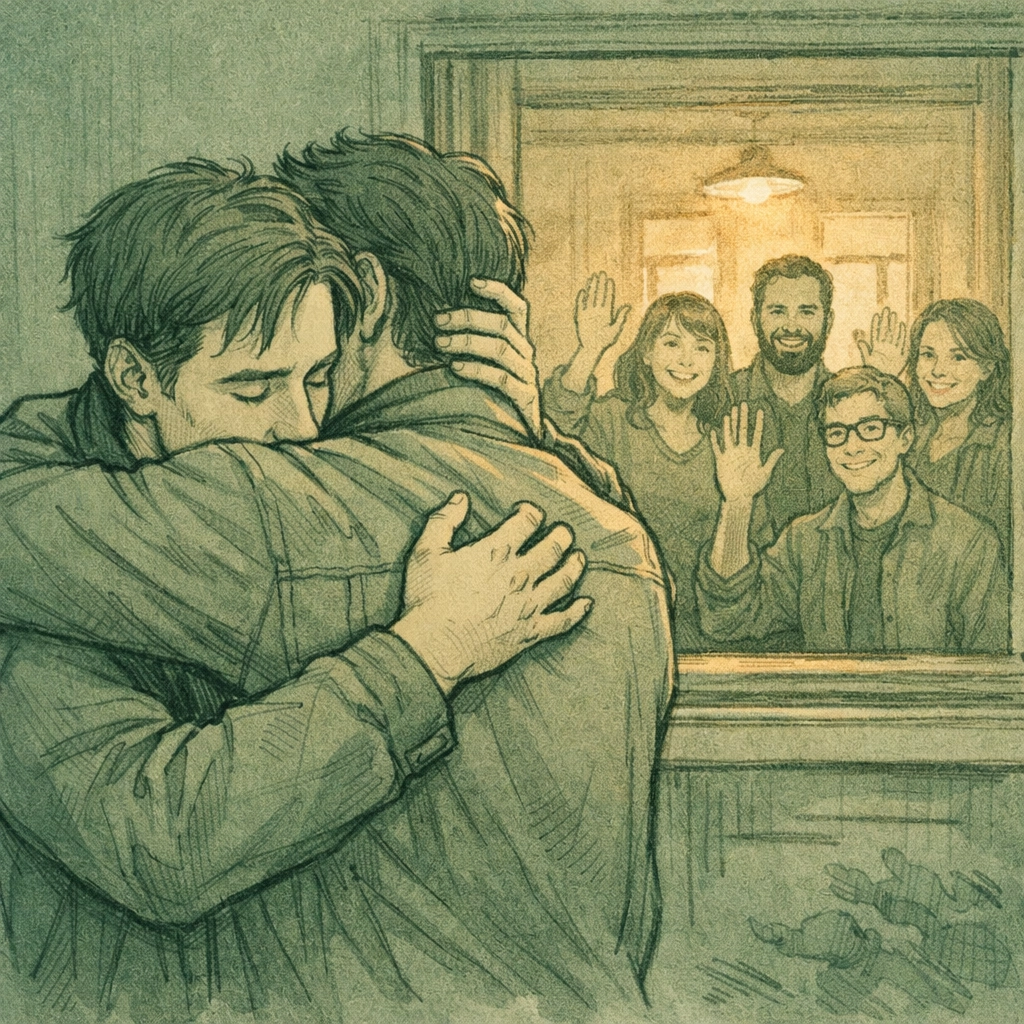
The found family trope in MM fiction reflects this truth: coming out support isn't a one-time event. It's an ongoing practice. Your first relationship tests your support network repeatedly. Found family rises to that test.
Real-World Application: Building Your Own Found Family
If you're navigating your first MM relationship right now, actively cultivate your found family:
Identify Your People: Who celebrates your relationship without reservation? Who makes space for both you and your boyfriend? These are your core circle.
Set Boundaries: Found family teaches that boundaries strengthen relationships. Don't sacrifice yourself to make your first love work. Your chosen family will remind you that healthy relationships honor individual identity.
Accept Imperfection: Found family isn't perfect. They'll make mistakes. They'll occasionally say the wrong thing. But they learn. They adjust. They stay.
Reciprocate: Found family is mutual. Support the relationships and growth of those who support yours. This reciprocity creates sustainable, long-term networks.
For those building these networks while exploring their sexuality, 11 Diverse Erotic and Emotional Virginity Stories offers varied perspectives on first experiences within supportive contexts.
Conclusion: First Love Needs a Home
A first love is a beautiful thing. But beauty needs protection. It needs nurturing. It needs witnesses who say: "Yes, this matters. Yes, this is real. Yes, we're here for both of you."
That's what found family provides. They give your first gay love story a place to grow: not in isolation, but in community. They model the relationship skills you're still learning. They celebrate your milestones when biological family can't or won't.
Dick Ferguson's gay romantic fiction consistently honors this truth: love is stronger when surrounded by love. Your first boyfriend isn't just joining your life: he's joining your chosen ecosystem. That ecosystem makes everything possible.
Explore more stories of found family and first love at dickfergusonwriter.com and discover why readers keep returning to these MM romance books and LGBTQ+ fiction collections.
Visit Read with Pride for curated gay books, MM novels, and queer fiction that celebrate authentic love and chosen family.
Follow us on social media:
Instagram: @dickfergusonwriter
X/Twitter: @DickFergus94902
Facebook: Dick Ferguson Writer
Connect with Read with Pride: www.readwithpride.com
#FoundFamily #MMRomance #GayLoveStories #LGBTQBooks #FirstLove #ReadWithPride #GayFiction #QueerLiterature #MMNovels #ComingOutSupport #GayRomanceBooks #DickFerguson #ReadingWithPride #LGBTQCommunity #ChosenFamily #GayBooks

Leave a Reply
You must be logged in to post a comment.