

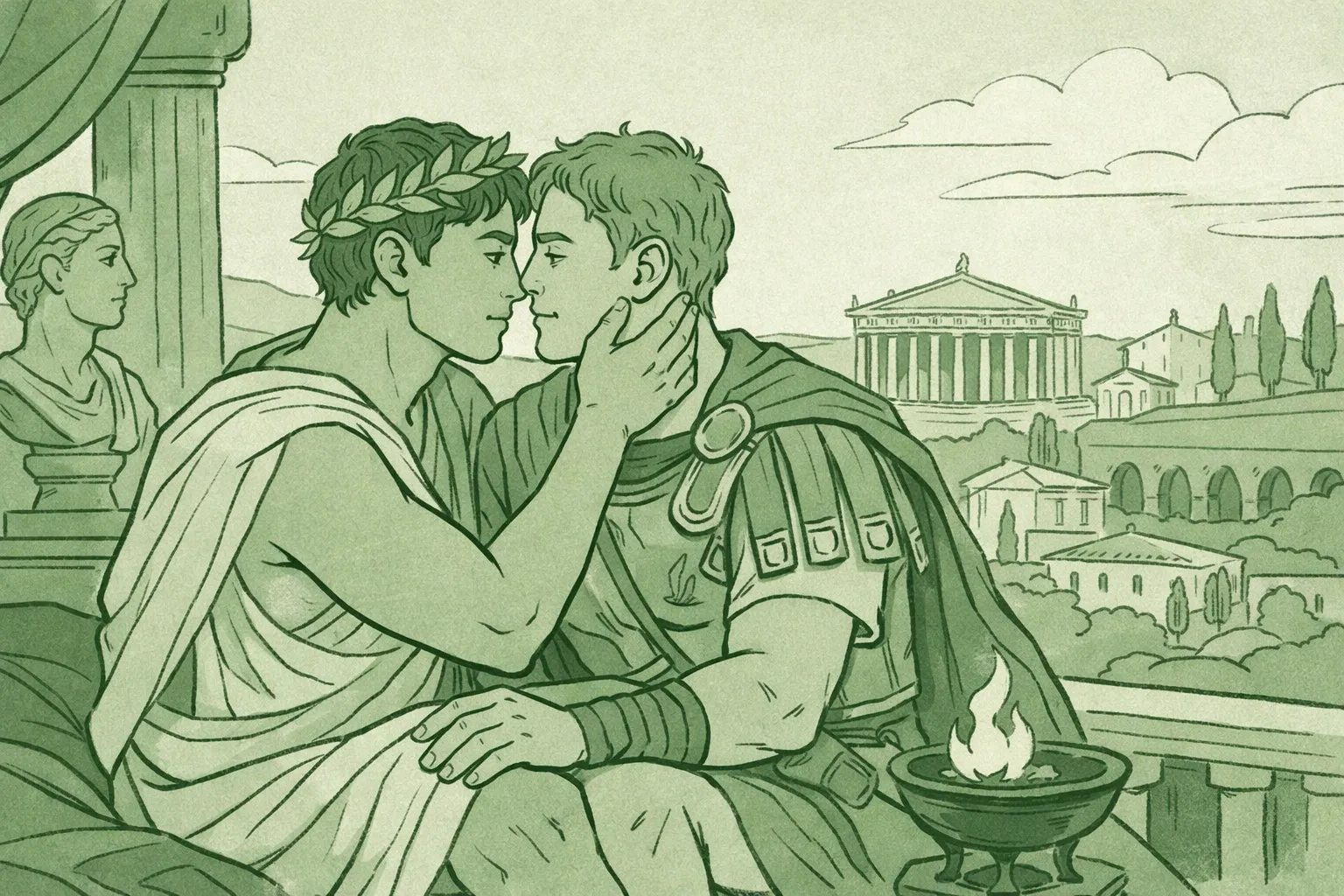
When we think of Ancient Rome, our minds conjure marble columns reaching toward the heavens, legions marching across continents, emperors draped in purple. We picture power, conquest, the steady march of civilization. But between those towering columns, within those marble corridors of power, there existed another world: one of breathtaking complexity, passionate devotion, and male love that would reshape empires.
This wasn't love whispered in shadows. This was love carved into stone, proclaimed in poetry, honored with temples and entire cities. The Romans understood what Dick Ferguson captures so beautifully in his work: that the most profound human connections transcend the boundaries society tries to impose upon them.
Beyond Labels: Understanding Roman Desire
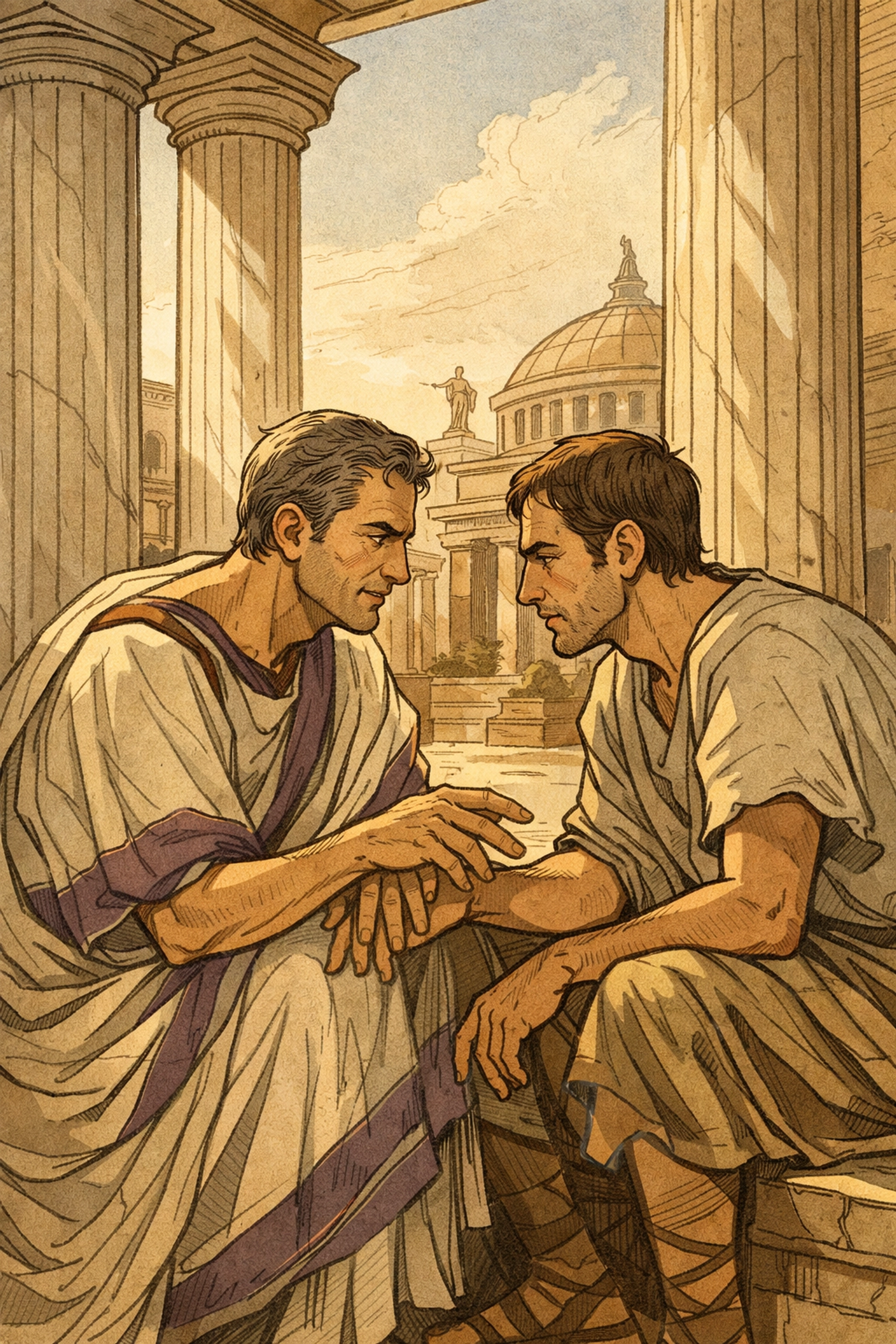
The Romans had no word for "homosexuality." To them, such a label would have seemed absurdly reductive. Love and desire weren't sorted into neat categories; they were forces as natural and inevitable as the Tiber's flow through the heart of the city.
What mattered to Romans wasn't the gender of one's beloved: it was power, status, and passion. A Roman citizen might love his wife, desire a handsome slave, and maintain an intense emotional and physical bond with a fellow soldier, all without experiencing the cognitive dissonance that would trouble modern minds. This created a landscape rich with what we might call "authentic internal struggles": the same emotional complexity that makes MM romance so compelling today, and that Dick Ferguson explores with such nuance in novels like The Berlin Companions.
The Roman approach was both liberating and constraining. While male-male desire wasn't stigmatized per se, it existed within rigid hierarchies. The penetrator maintained his masculine status; the penetrated risked theirs: unless they were young, enslaved, or foreign. These power dynamics created stories of genuine passion navigating treacherous social terrain, not unlike the emotional minefields modern queer fiction explores.
The Emperor's Grief: Hadrian and Antinous
No story from Imperial Rome resonates more powerfully across the centuries than that of Emperor Hadrian and his beloved Antinous.
Hadrian: bearded philosopher-king, military strategist, builder of walls and defender of borders: was Rome's most cultured emperor. And he was utterly, devastatingly in love with a young man from Bithynia named Antinous.
Contemporary sources describe Antinous as breathtakingly beautiful, but he was clearly more than merely decorative. For years, he traveled with Hadrian across the empire, from the moors of Britain to the deserts of Egypt. The Emperor, who could have had anyone, chose this young man as his constant companion.
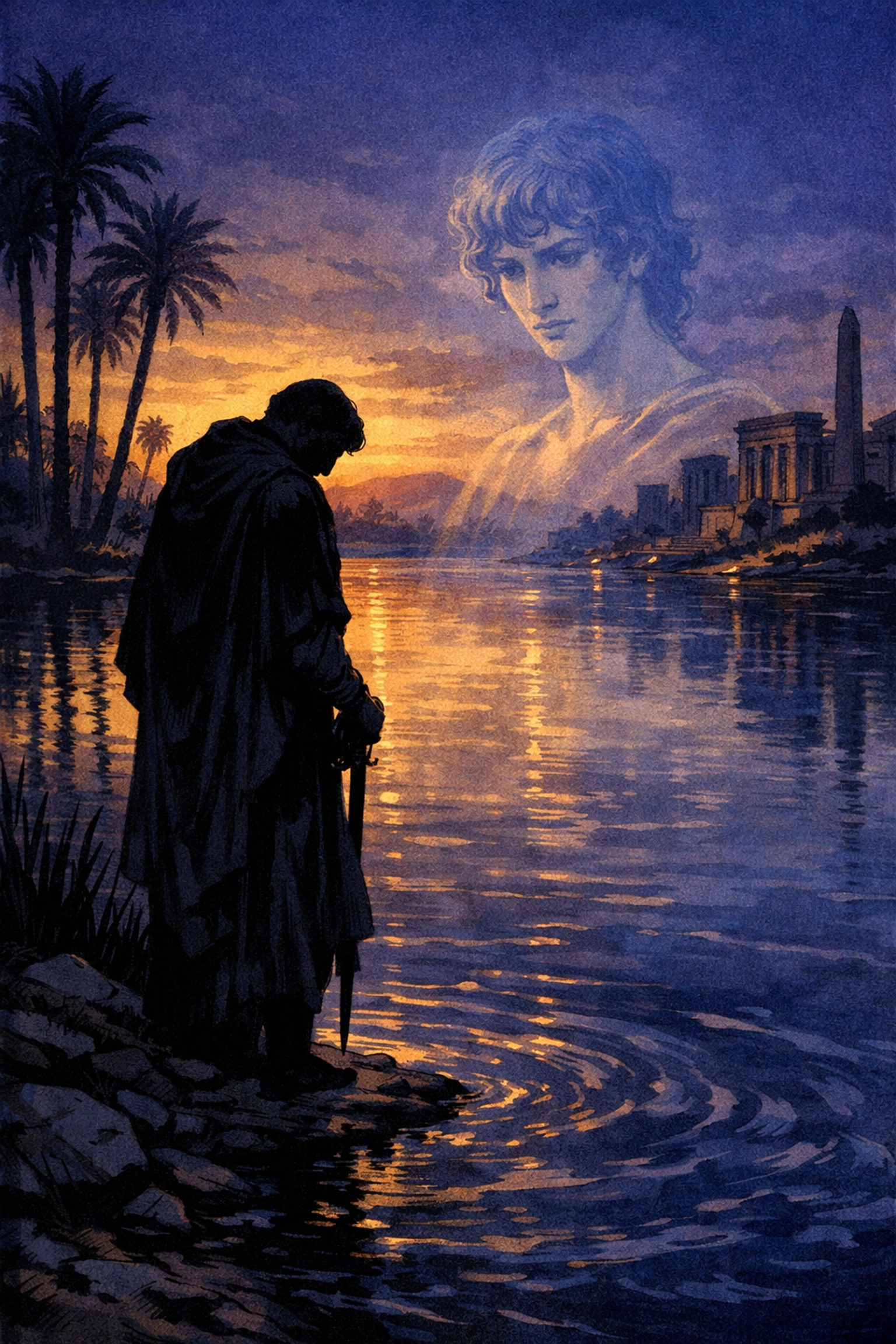
Then, in 130 CE, tragedy struck. While sailing the Nile, Antinous drowned under circumstances that remain mysterious. Accident? Sacrifice? The historical record offers no clear answers, only the certainty of what followed.
Hadrian didn't just mourn. He shattered.
The Emperor: the most powerful man in the world: wept openly. And then he did something unprecedented: he declared Antinous a god. Not metaphorically. Officially. Temples were erected. Priests appointed. Cities founded and named in his honor. Across the empire, statues appeared: hundreds of them: each capturing Antinous's idealized beauty, each a monument to imperial grief.
This was the ultimate "emotionally charged" story of loss and devotion. Hadrian used the full machinery of Roman power not to conquer another province, but to ensure his beloved would be remembered forever. It's a gesture that would feel perfectly at home in a Dick Ferguson novel: that refusal to let love be diminished by death, that insistence on honoring what the heart knows is sacred, regardless of what society deems appropriate.
Today, more images of Antinous survive than of almost any other figure from the ancient world. Hadrian succeeded. Two thousand years later, we still speak his lover's name.
The Legionnaire's Bond: Love in the Legion
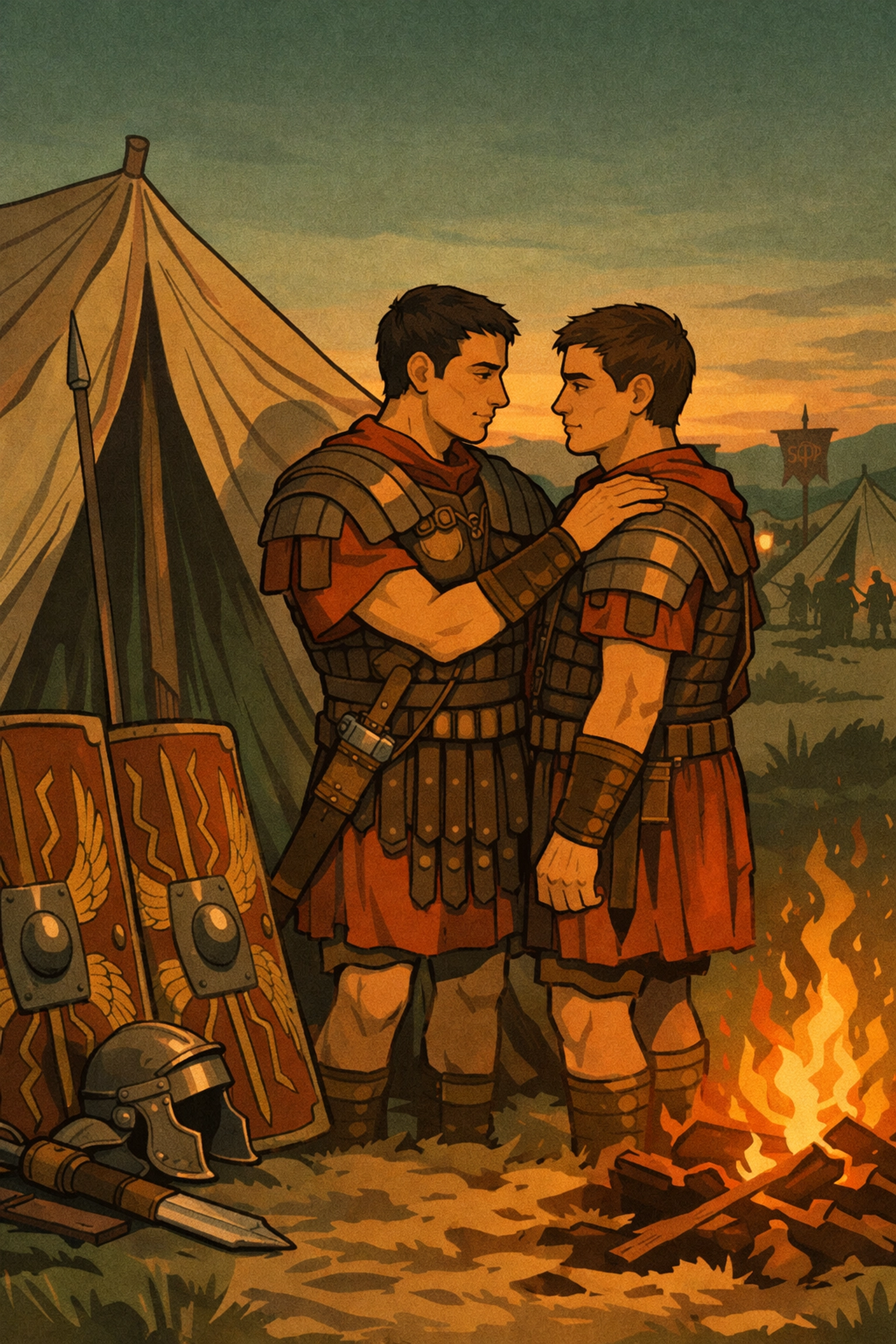
Beyond imperial palaces, male love flourished in Rome's most masculine institution: the legions.
Roman military culture celebrated intense bonds between soldiers. These weren't just friendships: they were passionate attachments, life-or-death partnerships forged in blood and battle. The Latin term contubernales referred to tent-mates who shared everything: rations, watch duties, dreams, and often their bodies.
Roman commanders recognized these bonds as a tactical advantage. Soldiers fought harder to protect their lovers. They held the line when the man they loved stood beside them. The Sacred Band of Thebes: an elite unit composed entirely of male lovers: was legendary for never retreating, never surrendering, dying together to the last man.
Roman military culture didn't see these relationships as contradicting martial masculinity. If anything, they embodied it. These were men who loved fiercely and fought savagely, who wrote tender poetry in camp and showed no mercy in battle.
This paradox: the warrior who loves: appears throughout queer historical fiction, including in Ferguson's work, where characters navigate being both gentle with those they love and fierce in protecting them.
The Ferguson Connection: Vivid Imagery and Emotional Nuance
The Romans were obsessed with capturing reality in art. Their sculptors didn't idealize: they portrayed. Every muscle, every vein, every imperfection was rendered with startling accuracy. Walk through any museum with Roman statuary, and you'll see this: bodies captured with such detail that they seem about to breathe.
This same attention to detail, this same commitment to vivid imagery, characterizes Dick Ferguson's prose. Just as a Roman sculptor studied every contour of the human form, Dick captures every emotional nuance: the hesitation before a first touch, the weight of unspoken words, the way grief and desire can coexist in a single moment.
In The Phoenix of Ludgate or Velvet Nights and Broken Dreams, you'll find that same Roman commitment to rendering the truth of human experience with unflinching honesty. The Romans understood that love: especially love that exists outside conventional boundaries: requires courage. So does writing about it authentically.
Carved in Stone: The Legacy of Roman Love
Rome fell. The Western Empire collapsed into fragments. Barbarians swept through Italy. Languages changed, religions transformed, entire civilizations rose and vanished.
But the stories endured.
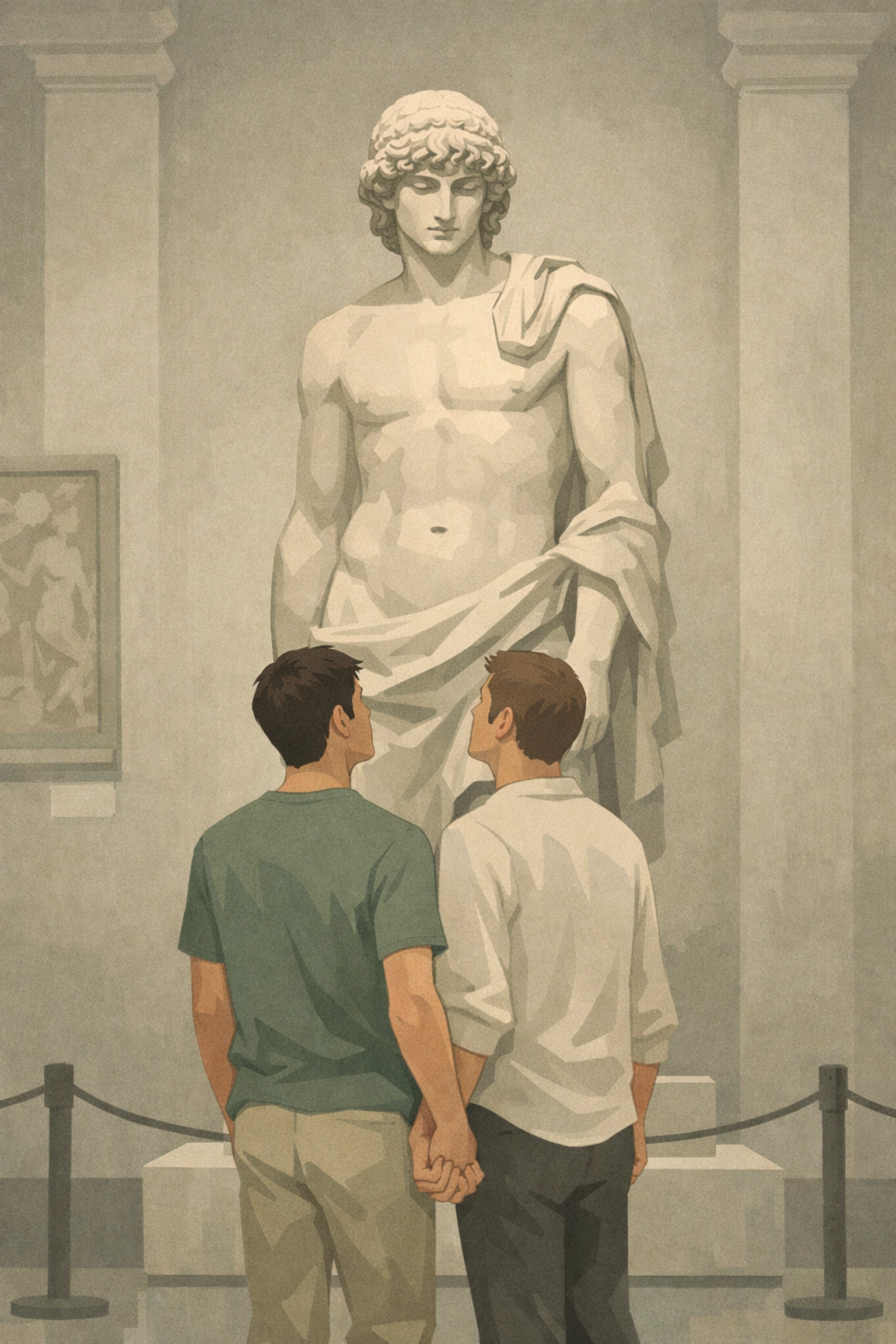
They're still there: etched into marble, scrawled in graffiti on Pompeii's walls, preserved in poetry and historical accounts. Walk through Rome today, and you're walking through a city built by people who loved across the boundaries we still struggle with. Hadrian's wall still stands in Britain. Antinous's statues still gaze from museum alcoves. The words of Roman poets who celebrated male beauty still echo.
These weren't just footnotes in history. These were central stories: of emperors and soldiers, poets and philosophers, ordinary people finding extraordinary love in a world that was both more accepting and more complicated than our own.
That's the power of queer historical fiction, whether it's set in Ancient Rome or 1920s Berlin: it reminds us that our stories have always existed. We've always been here. We've always loved. And that love has always been worth remembering.
Explore More Imperial Stories
If Imperial Rome's passionate tales speak to you, discover more historical MM romance at Read with Pride: your destination for LGBTQ+ ebooks and gay romance that spans centuries. From ancient emperors to modern love stories, explore Dick Ferguson's complete collection of emotionally resonant gay fiction and MM novels.
For readers who crave historical depth with contemporary emotional honesty, start with The Berlin Companions, where love navigates another era's complex social landscape with the same courage Hadrian showed two millennia ago.
Follow us on social media:
- Instagram: @dickfergusonwriter
- X/Twitter: @DickFergus94902
- Facebook: Dick Ferguson Writer
Read more at: Read with Pride | dickfergusonwriter.com
#ReadWithPride #MMRomance #GayRomance #LGBTQBooks #AncientRome #HistoricalRomance #GayFiction #QueerHistory #HadrianAndAntinous #ImperialRome #GayHistoricalRomance #MMHistoricalRomance #LGBTQFiction #GayLiterature #QueerFiction #MaleMLove #GayBooks #LGBTQEbooks #GayNovels #ReadingWithPride

Leave a Reply
You must be logged in to post a comment.