

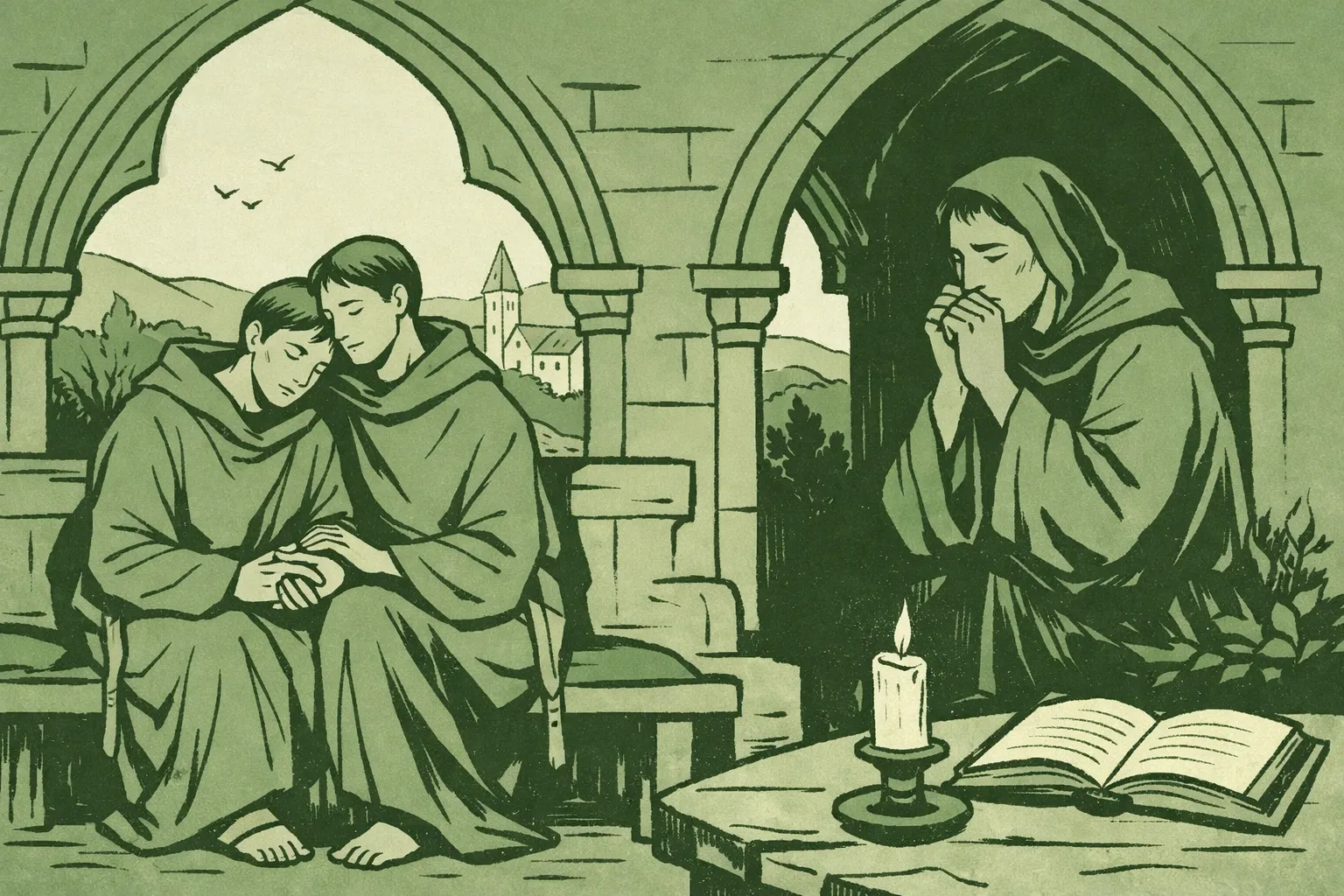
The Middle Ages weren't just grey stone walls and silent prayer. Behind those monastery doors, something extraordinary was happening, a world of intense devotion, passionate letters, and bonds between men that blurred the line between spiritual and romantic love. The 12th century, in particular, was a time when the human heart found ways to express what society wouldn't quite allow it to say out loud.
The 12th Century Renaissance: When Feeling Became Philosophy
We often think of the Renaissance as a 15th-century Italian affair, but historians know better. The 12th century experienced its own renaissance, a flowering of intellectual life, emotional expression, and surprisingly personal writing. Monasteries weren't just places of silent contemplation; they were centres of learning where monks challenged not just their minds but their hearts and senses.
This was the era when scholars began writing in deeply emotional terms about friendship, loss, and longing. The cloistered life, rather than suppressing emotion, seemed to intensify it. When you live in close quarters with the same men for years, studying together, praying together, sharing the rhythm of monastic hours, well, connections deepen. Some of those connections went far beyond what the Church officially sanctioned.
The Cloistered Heart: Love Letters in Latin
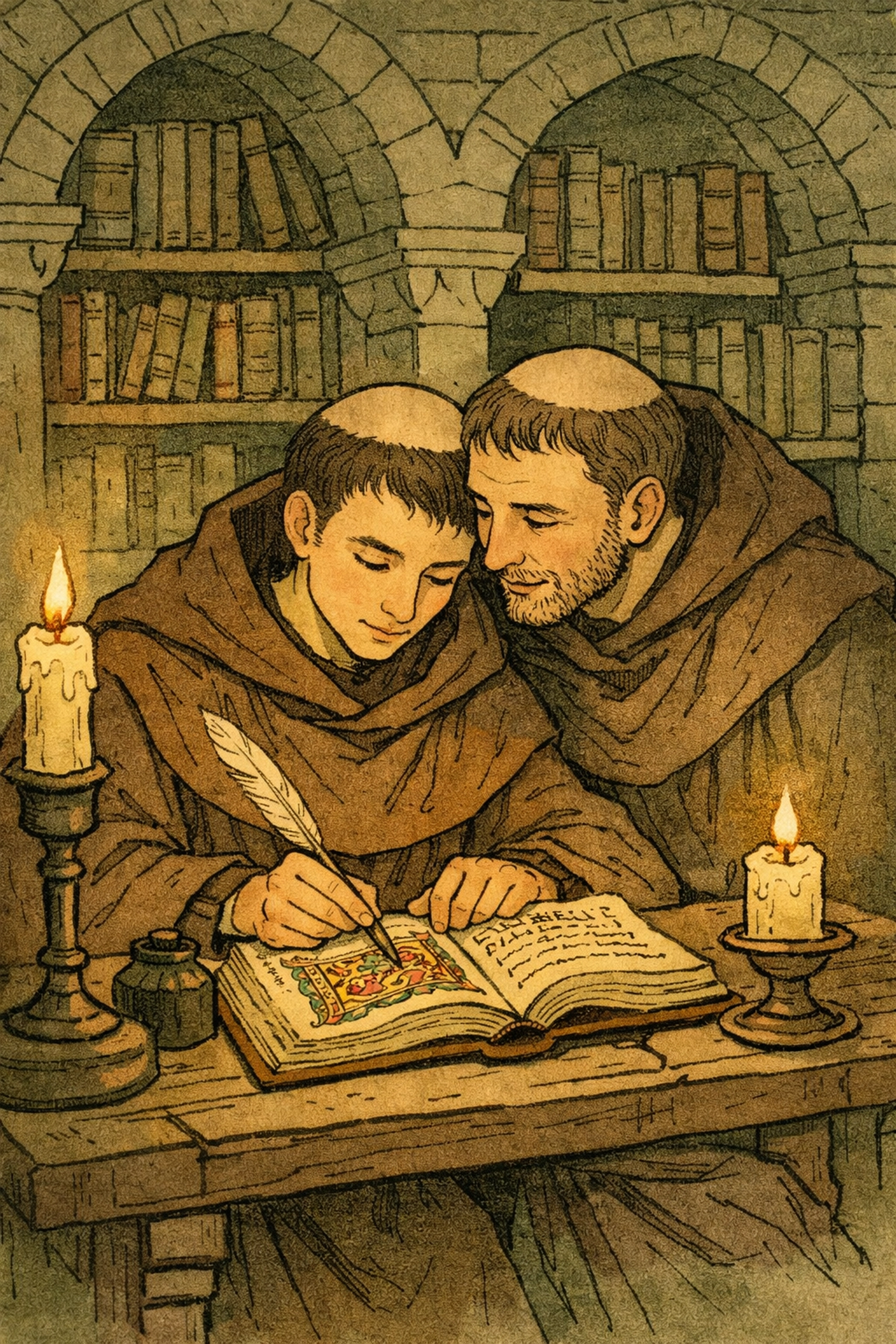
The correspondence between monks and scholars reveals an extraordinary emotional landscape. These weren't just dry theological debates. They were love letters, thinly veiled in religious language. Men wrote to each other about their aching hearts, their longing for reunion, their devastation at separation.
Medieval monks understood that emotional suffering blended spiritual and physical dimensions. They didn't separate the two the way we might today. When a monk mourned the loss of a dear friend, or perhaps more than a friend, it was both a spiritual crisis and a deeply personal heartbreak.
The research shows that grief in this period occupied a unique cultural position. Rather than suppressing emotion, monastic culture recognized it as integral to spiritual development. The very act of studying in a 12th-century cloister "challenged the student's heart and senses even more than his stamina and brains."
These men wrote poetry to each other. They used coded language that their contemporaries would have understood but that gave them plausible deniability. Phrases about "spiritual brotherhood" and "divine friendship" could mean exactly that, or they could mean something more intimate, more physical, more human.
Aelred of Rievaulx: The Patron Saint of Heart Culture
If anyone embodied this moment in history, it was Aelred of Rievaulx, a Cistercian monk who became Abbot of Rievaulx Abbey in Yorkshire. His work "On Spiritual Friendship" (De Spirituali Amicitia) is nothing short of revolutionary. Written around 1160, it's essentially a theological defence of love between men.

Aelred championed the radical idea that love between men was a path to the divine. Not just tolerated, actively holy. He argued that friendship, at its deepest level, was a form of spiritual union that brought men closer to God. And the language he used? It's the language of romance. It's tender. It's passionate. It's everything that "Heart Culture" represents.
When one of Aelred's beloved friends, Simon, died, Aelred wrote a lamentation so raw and honest it shocked some of his contemporaries. He mounted what historians call "an apology for mourning", a defence of his right to grieve openly and intensely. This suggests that even in this relatively open emotional climate, there was pressure to maintain composure, to not feel too much, to not love too deeply.
But Aelred refused. He wrote about his heartache. He claimed his grief. He insisted that this kind of love, this devastating, all-consuming attachment to another man, was not only acceptable but divine.
The Hidden Language: Reading Between the Lines
Part of what makes this era so fascinating is the coded nature of the communication. These men had to be careful. The Church officially condemned "sodomy," even as it created environments where intense same-sex bonds naturally formed. So monks developed a vocabulary.
"Spiritual friendship" could mean many things. "Divine love" was wonderfully ambiguous. "Union of souls" suggested something transcendent, and also something rather more earthly. The genius was that this language worked on multiple levels. A sympathetic reader could see the romantic and physical longing. A suspicious authority could be assured it was all perfectly orthodox theology.
Medieval culture viewed emotional states as operating on two levels: as natural feelings and as spiritual conditions requiring attention. This allowed monks to discuss their intense feelings for each other while also framing them in religiously acceptable terms. It was a survival strategy, yes: but it was also genuine. For many of these men, the spiritual and the romantic truly were intertwined.
The Ferguson Lens: Then and Now
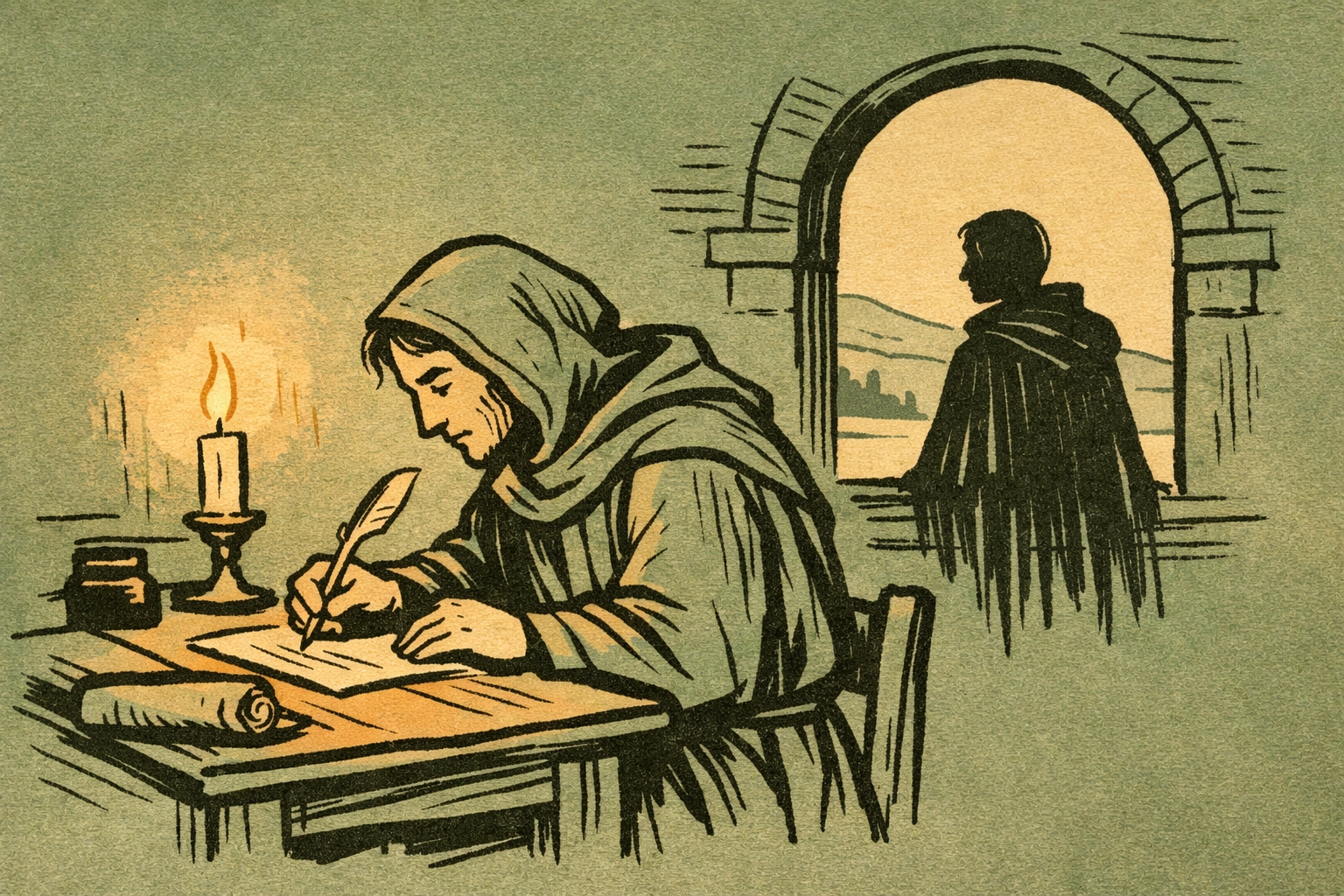
This history matters because it shows us something essential: human hearts will always find a way to connect, even in the most restrictive environments. A 12th-century monastery and a modern urban landscape might seem worlds apart, but the internal struggle is remarkably similar.
Dick Ferguson's work explores this territory beautifully. In novels like The Phoenix of Ludgate and The Silent Heartbeat, characters navigate worlds that don't quite make space for their love. They develop their own languages, their own codes, their own ways of being authentic in environments that demand conformity.
The monks of the 12th century would recognize this struggle immediately. They'd understand the need to express genuine feeling while protecting yourself. They'd relate to the experience of finding someone who sees you fully, even when society insists you remain invisible.
This is why reading historical queer fiction and MM romance isn't escapism: it's recognition. It's seeing that your "authentic internal struggles" aren't modern problems; they're human problems that span centuries. The specific contexts change, but the heart remains constant.
When Restriction Breeds Creativity
There's something almost beautiful about how restriction breeds creative expression. Because these monks couldn't speak plainly, they wrote poetry that still moves us 900 years later. Because they couldn't love openly, they developed a theology of friendship so profound it influenced Christian thought for centuries.
The letters they exchanged, the manuscripts they copied for each other, the hours spent in intense theological discussion that was also flirtation: all of it created a rich emotional and intellectual world. They turned their longing into literature. They transformed their heartache into philosophy.
Contemporary gay romance and LGBTQ+ fiction continues this tradition. Authors create worlds where characters find ways to be themselves, to love openly, to build lives together despite obstacles. Whether it's historical fiction set in medieval monasteries or contemporary stories about modern men navigating complex emotional landscapes, the through-line is clear: love endures. The heart persists.
The Mystery Worth Solving
Love has always been a mystery worth solving. These 12th-century monks prove that the search for connection, for authentic intimacy, for someone who understands you completely: that search is timeless. They didn't have dating apps. They didn't have pride parades. They didn't have the language we have now.
But they had something powerful: the certainty that what they felt mattered. That their bonds with each other were sacred. That love between men could be holy.
In a way, they were braver than we are. They claimed their feelings in a world far more dangerous than ours. They insisted on the validity of their emotional lives even when Church authorities viewed them with suspicion. They wrote it all down, preserved it, passed it on: as if they knew that someday, centuries later, we'd need to know we weren't alone.
So the next time you're reading MM fiction or gay romance novels that explore the tension between authentic feeling and social expectation, remember: you're part of an ancient tradition. Men have been finding ways to love each other, to express that love, and to defend its validity for at least a thousand years.
And they're not stopping now.
Discover stories of love across the centuries at Read with Pride and explore Dick Ferguson's complete collection at dickfergusonwriter.com.
Follow us on social media:
- Instagram: @dickfergusonwriter
- X/Twitter: @DickFergus94902
- Facebook: Dick Ferguson Writer
#ReadWithPride #ReadingWithPride #MedievalHistory #QueerMedieval #AelredOfRievaulx #MonasticLove #MMRomance #GayRomance #GayFiction #LGBTQBooks #HistoricalRomance #GayHistoricalRomance #QueerHistory #MMBooks #GayLiterature #GayBooks #LGBTQFiction #GayNovels #HeartCulture #DickFerguson #AuthenticLove #QueerFiction #GayRomanceBooks #LGBTQRomance

Leave a Reply
You must be logged in to post a comment.