

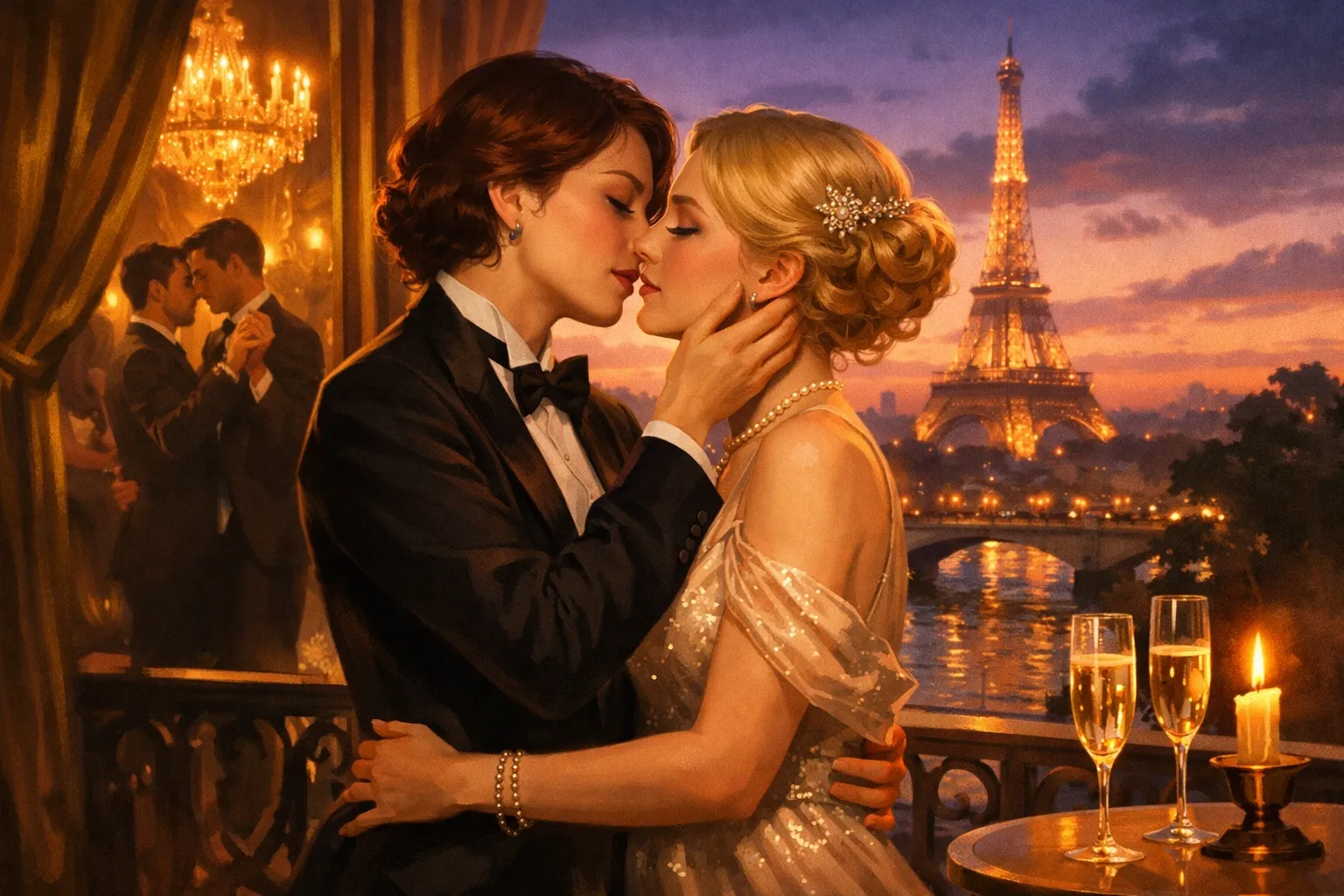
Picture this: Paris, 1895. The streets shimmer with gaslight, champagne flows like water, and the world believes itself to be living in the most beautiful era ever conceived. The Belle Époque, the "Beautiful Age", was all gilt and glamour on the surface. But beneath the silk waistcoats and top hats, behind the velvet curtains of private salons, another story was unfolding. A story of love that dared not speak its name.
Welcome to the first stop on our journey through Parisian Whispers, where we're diving deep into the world of historical MM romance set against one of the most fascinating, and heartbreaking, backdrops in history.
The Beautiful Age… for Some
The Belle Époque (roughly 1871-1914) was a time of unprecedented artistic and cultural flourishing in Paris. Impressionist paintings, Art Nouveau architecture, the Moulin Rouge, and the Eiffel Tower rising into the sky, Paris was the place to be. Wealth flowed through the city, and with it came a certain… looseness in social mores. At least, if you knew where to look.
For queer men during this era, Paris offered something other European capitals couldn't quite match: possibility. Not freedom, exactly. The law was still cruel, society still judgmental, and families still disowned their sons. But in the shadows of this glittering city, there were spaces, hidden, fragile, and achingly beautiful, where love could exist.
The Hidden World of the Salons
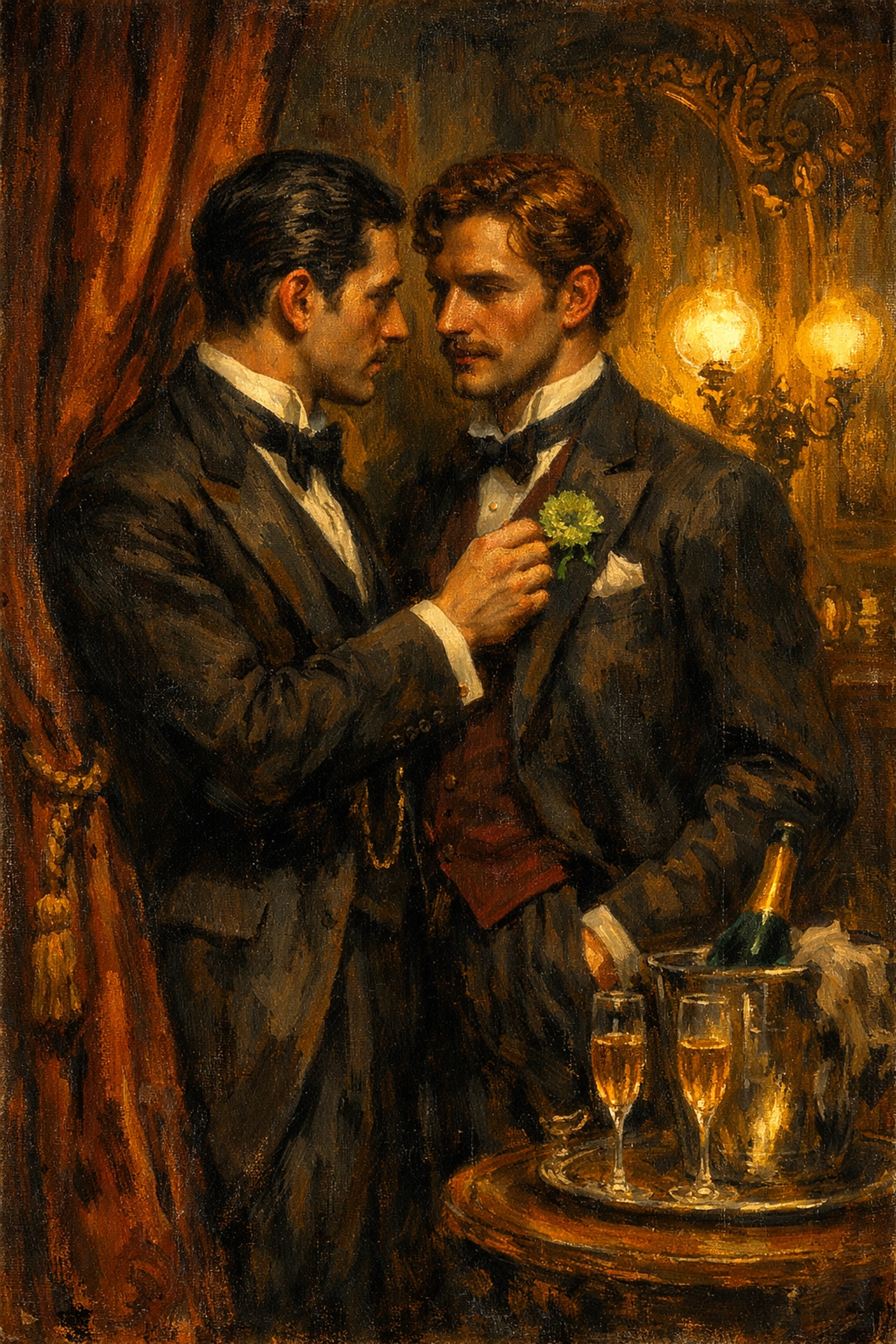
The gay romance novels that capture this period best understand one crucial truth: everything happened behind closed doors. Private salons hosted by wealthy patrons became the lifeline for queer artists, writers, and their lovers. These weren't just parties, they were sanctuaries.
Oscar Wilde famously held court in Parisian salons during his exile, and he wasn't alone. Poets, painters, musicians, and their paramours gathered in candlelit drawing rooms where the champagne was expensive and the conversation was dangerous. These men spoke in codes, used subtle gestures, and built entire relationships on stolen glances across crowded rooms.
The tragedy? These spaces existed because they had to. There was no other choice. The gilded cage was beautiful, yes, but it was still a cage.
Love in the Language of Flowers
One of the most fascinating aspects of Belle Époque queer culture was the elaborate system of signals and symbols. Men couldn't exactly hold hands on the Champs-Élysées, so they developed their own language.
A green carnation in a buttonhole. A certain way of wearing a scarf. Meeting "accidentally" at specific galleries or theatres at precise times. MM romance set in this era captures the exquisite tension of this hidden communication, the brush of fingers when passing a glass of absinthe, the meaningful pause in a conversation about "a friend."
Modern readers might find this frustrating at first. Why can't they just be together? But that's exactly what makes these stories so powerful. Every touch is earned. Every declaration of love is an act of bravery. Every kiss could cost everything.
The Artists and the Outcasts
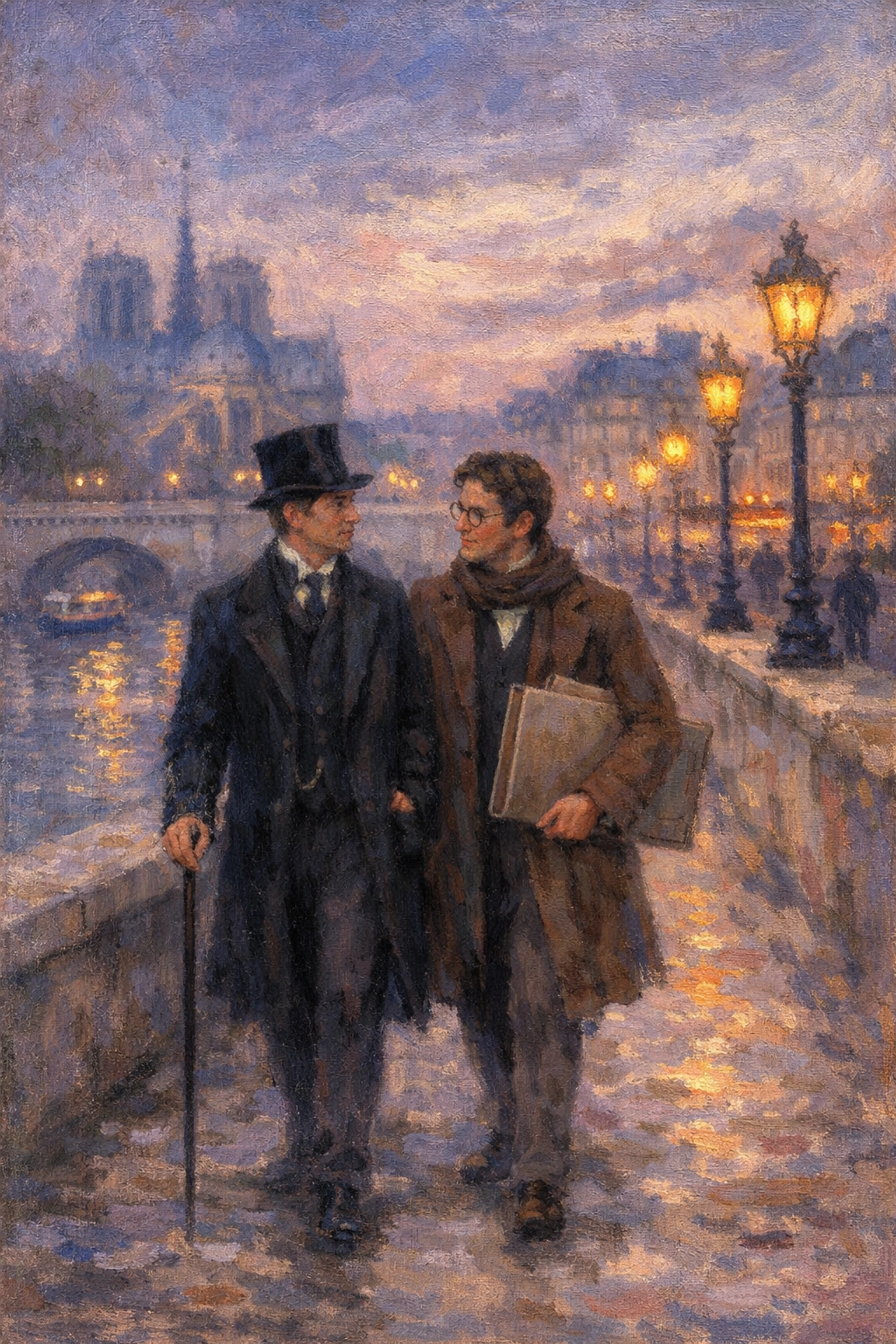
Belle Époque Paris was a magnet for artists from around the world, and many of them were fleeing repressive societies where their sexuality would have seen them imprisoned or worse. The bohemian quarters of Montmartre and Montparnasse became refuges for those who didn't fit the mold.
Gay romance books set in this period often feature protagonists who exist in this liminal space, successful enough to have some protection, bohemian enough to have some freedom, but never quite safe. A wealthy patron and a struggling painter. An aristocrat and a theatre performer. A diplomat and a poet. The power dynamics, the class differences, the constant threat of exposure, it all creates this delicious, heartbreaking tension.
And let's be honest: there's something deeply romantic about the aesthetic of the era. The fashion alone is enough to make you swoon. Men in perfectly tailored three-piece suits, pocket watches, walking canes, and those little round spectacles. The attention to detail, the elegance of it all, makes every interaction feel heightened, significant.
The Melancholy Beneath the Glamour
Here's where the slightly melancholic part comes in. Because for every story of lovers who found each other in the shadows of the Seine, there are dozens of stories that ended badly. Blackmail was rampant. Careers were destroyed. Men were sent to prison or psychiatric institutions. Families were torn apart.
The best historical MM romance novels don't shy away from this darkness. They acknowledge that loving another man in Belle Époque Paris was an act of defiance. It required courage, discretion, and often, a willingness to sacrifice everything else.
But here's the thing, and this is what keeps us coming back to these stories, love persisted anyway. In the face of laws designed to crush it, social conventions meant to shame it, and families determined to deny it, love found a way. Maybe not always happily ever after in the traditional sense, but connection, passion, and moments of genuine joy stolen from an unforgiving world.
Why We're Obsessed with This Era
So why do we at Read with Pride keep returning to Belle Époque Paris in gay romance novels? Why does this particular time and place capture our imagination?
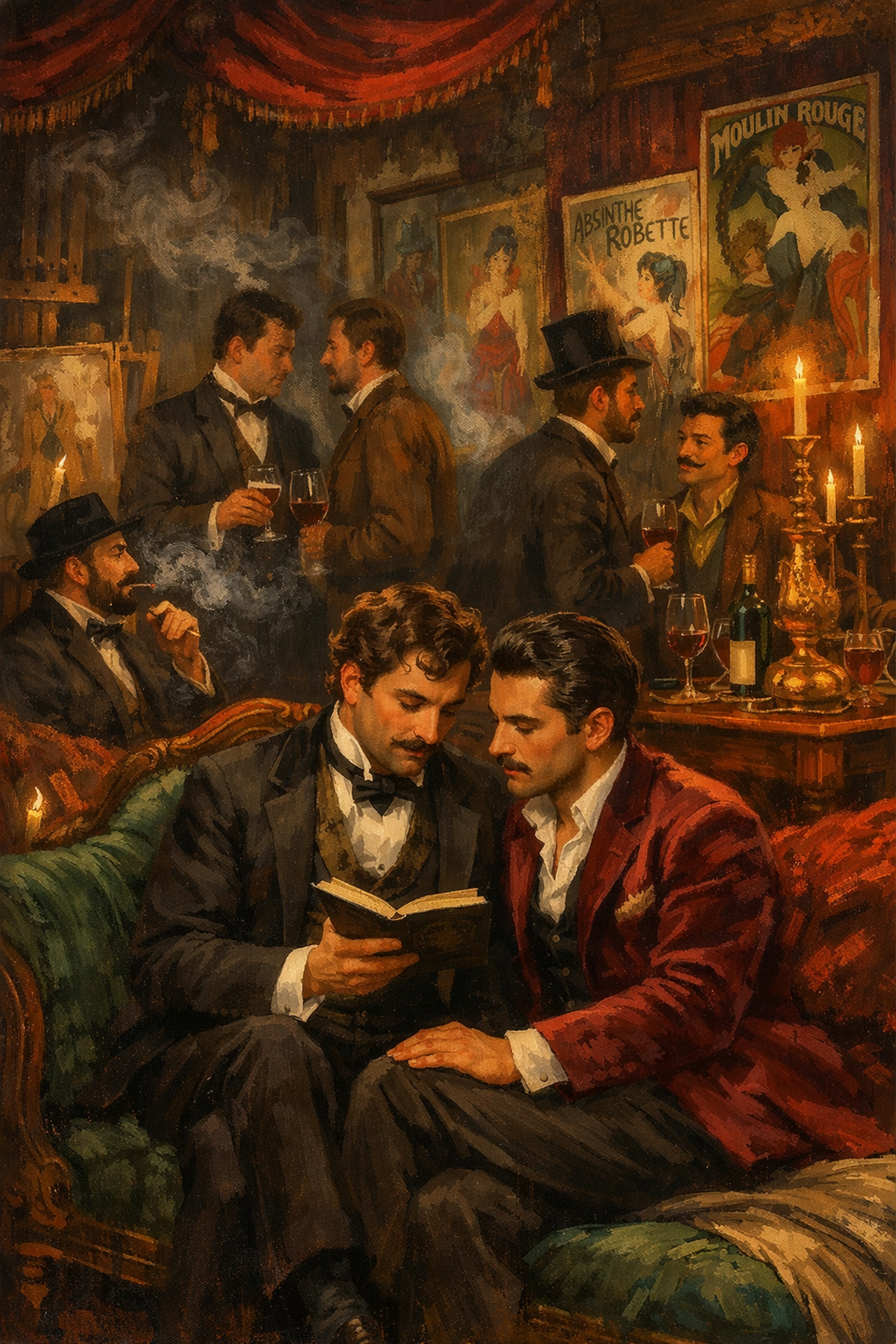
First, there's the visual richness. Paris at the turn of the century is simply stunning, and authors can paint word-pictures that transport us directly to rain-slicked cobblestones and gas-lit cafés.
Second, there's the emotional intensity. When love has to be hidden, every moment together becomes precious. The stakes are higher, the emotions more concentrated. It's catnip for romance readers.
Third, and maybe most importantly, it reminds us of how far we've come while acknowledging how much hasn't changed. Reading about men who had to hide their love makes us grateful for the freedoms many of us have today. But it also connects us to a long history of queer resilience. We're not the first generation to love boldly in the face of opposition. We're part of a continuum.
Finding Your Belle Époque Romance
If you're craving MM romance books that capture this era's atmosphere, you're in luck. The genre has exploded with talented authors exploring this period. Look for stories that balance historical accuracy with emotional truth, books that don't sugarcoat the challenges but also don't make the entire experience misery.
The best ones will make you feel the Paris fog on your skin, taste the bitter absinthe, and hear the distant sound of a violin from a nearby salon. They'll break your heart and then piece it back together with hope.
At Read with Pride, we celebrate these stories because they honor our history while giving us the romance and happy endings our predecessors rarely got to experience. They're acts of imagination and reclamation. They say, "Yes, you existed. Yes, you loved. Yes, you mattered."
The Cage Unlocked
The gilded cage of Belle Époque Paris was beautiful and brutal in equal measure. It offered glimpses of acceptance while maintaining walls of oppression. It allowed art to flourish while forcing artists into shadows.
But here's what those hidden salons and secret lovers gave us: a legacy of courage. A tradition of finding each other despite everything. A reminder that love, even when forbidden, has always been worth the risk.
As we continue this journey through Parisian Whispers, we'll explore different eras and different stories, but we're starting here: in the gaslit shadows of the Belle Époque: because this is where so many of our modern gay romance tropes were born. The secret relationship. The forbidden love. The chosen family. The defiant happy ending.
Paris has always been a city of light, but for queer men of the Belle Époque, it was also a city of shadows. And in those shadows, love bloomed anyway.
Stay tuned for our next post in the Parisian Whispers series, where we'll leap forward to modern-day Paris and explore contemporary love against this timeless backdrop.
#MMRomance #GayRomanceBooks #HistoricalRomance #BelleÉpoque #ParisLove #LGBTQBooks #ReadWithPride #QueerFiction #GayLiterature #HistoricalMMRomance #QueerHistory #GayRomanceNovels #MMBooks #LGBTQReading

Leave a Reply
You must be logged in to post a comment.