

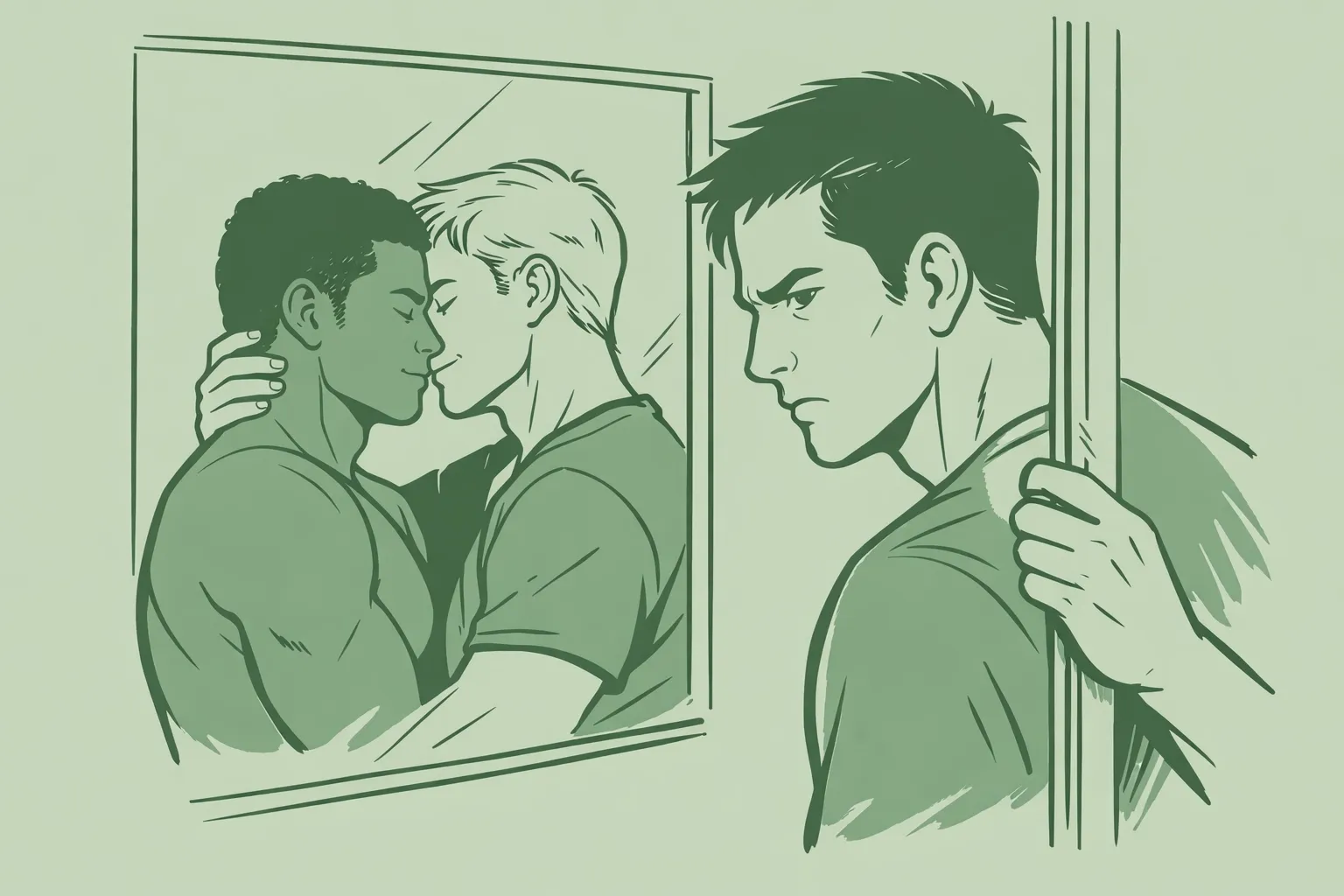
Jealousy gets a bad reputation. We're told it's toxic, immature, a red flag waving frantically in the relationship breeze. But here's the truth: jealousy isn't the villain: it's the mirror. It reflects our deepest insecurities, our attachment wounds, and our fear of not being enough. When we feel that green-eyed monster stirring, we're not experiencing some character flaw. We're experiencing a deeply human response to the perceived threat of losing someone who matters.
And in MM relationships, where societal pressure, heteronormative expectations, and our own complicated histories already create additional layers of vulnerability, jealousy can hit even harder.
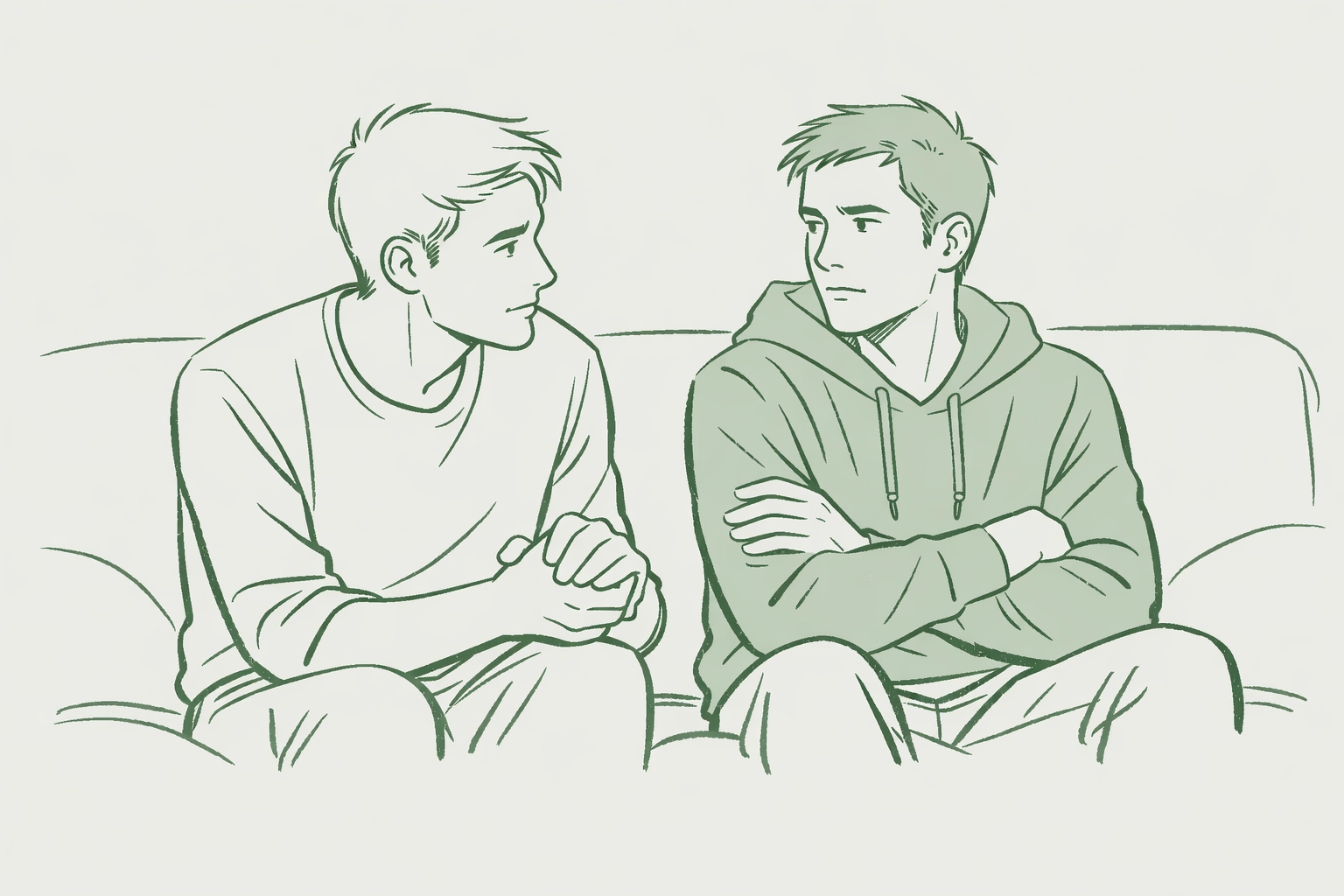
The Roots of Possession: Why We Cling
Why do we feel the need to "own" a partner's time, attention, or even their romantic history? Research shows that jealousy evolved as a protective mechanism: a way our nervous system attempts to maintain pair bonds and preserve relationships that matter to our survival and wellbeing. When something disrupts the predictability of your connection: a new person entering your partner's life, a shift in attention, even an innocent late-night text: your internal alarm system flares up.
But possession isn't about love. It's about fear of loss.
For men in MM relationships, this fear can be amplified by experiences unique to queer life. Perhaps you struggled to come out. Perhaps you've internalized messages that your love is "less than" or temporary. Perhaps you've been cheated on, left, or ghosted before, and those wounds haven't healed. When attachment anxiety runs high: when you constantly worry you're not "enough": jealousy becomes a constant companion, whispering that your worst fears are about to come true.
The irony? The tighter you grip, the more suffocated your partner feels. Control masquerading as care is still control.
The Thin Line: Protection vs. Possession
There's a difference between healthy protection and toxic possession, though that line can blur when emotions run high.
Healthy protection looks like:
- Expressing vulnerability: "I felt insecure when you spent the evening with your ex. Can we talk about it?"
- Honoring autonomy: Your partner has friends, interests, and a life outside of you: and that's good.
- Building trust through communication, not surveillance.
Toxic possession looks like:
- Monitoring your partner's phone, social media, or whereabouts obsessively
- Accusations without evidence
- Isolating your partner from friends or support systems
- Using jealousy as emotional manipulation: "If you loved me, you wouldn't…"
The distinction comes down to intent and impact. Are you seeking reassurance and connection, or are you demanding control? One strengthens the relationship. The other erodes it.

Dick Ferguson's Mastery: Love, Jealousy, and Raw Human Struggle
Dick Ferguson doesn't shy away from these darker emotions in his work. His characters grapple with possessive jealousy, searing hate, and the messy, complicated feelings that arise when love and fear collide. What makes his storytelling so powerful is that he refuses to portray jealousy as simple villainy. Instead, he shows it as a raw, human struggle for connection.
In The Price of Desire, characters navigate the minefield of jealousy within complex relationship dynamics. In Velvet Nights and Broken Dreams, emotional turmoil and possessive feelings threaten to unravel hard-won bonds. These aren't cardboard villains twirling mustaches: they're men struggling with their own insecurities, histories, and desperate need to hold onto something beautiful.
Ferguson's work reminds us that feeling jealousy doesn't make you bad. Acting on it destructively does.
Explore Dick Ferguson's complete collection of MM romance and psychological fiction at dickfergusonwriter.com.
Attachment Styles: Understanding Your Jealousy Pattern
How you experience and express jealousy often traces back to your attachment style: the blueprint for relationships formed in childhood and reinforced through adult experiences.
Anxious attachment produces intense jealousy responses: panic, hypervigilance, mental replays of worst-case scenarios. If you have anxious attachment, you might engage in "protest behaviors": picking fights over unrelated issues, monitoring your partner's movements, or making passive-aggressive comments. These aren't malicious acts; they're desperate attempts to restore a sense of safety and control when you feel the ground shifting beneath you.
Avoidant attachment manifests differently. You might suppress jealous feelings, rationalize them away, or emotionally distance yourself from the relationship when threats arise. Outwardly, you appear cool and confident. Underneath? Quiet panic about losing autonomy and emotional control.
Understanding your attachment pattern isn't about excusing harmful behavior: it's about expanding self-awareness so you can respond differently next time.

Turning Fear into Growth: How to Talk About Jealousy
The worst thing you can do with jealousy is let it fester silently. The second-worst thing? Weaponizing it as an accusation.
Here's how to talk about jealousy without it becoming a relationship grenade:
-
Own your feelings. Use "I" statements. "I felt insecure when…" not "You made me jealous because…"
-
Get curious about the root. Is this really about your partner's behavior, or about your fear of abandonment? Your sense of self-worth? An old wound that just got poked?
-
Ask for what you need: specifically. "Can we establish a ritual of checking in before bed?" is actionable. "Stop making me feel this way" is not.
-
Build rituals of safety. Regular connection points, reassurance routines, and open communication create a foundation of trust that makes jealousy less likely to spiral.
-
Seek support if needed. Therapy, support groups, or resources like The Private Self: A Guide to Honoring Your Truth in Your Own Time can help you work through attachment wounds.
The goal isn't to eliminate jealousy: it's to transform it from a destructive force into an opportunity for deeper intimacy.
Where Self-Worth Meets Partnership
One of the most challenging truths about jealousy: it often reveals where we've made our self-worth dependent on external validation. When your sense of being "enough" hinges entirely on your partner's attention, desire, or fidelity, jealousy will run rampant. Because your very identity feels threatened when that validation shifts or wavers.
Healthy relationships require each person to maintain a strong sense of self. This doesn't mean emotional independence to the point of detachment: it means you know who you are, with or without your partner's approval.
For LGBTQ+ individuals, particularly gay and bisexual men who have survived rejection, discrimination, or years of hiding their authentic selves, building that internal foundation can be especially challenging. Society already told you that you weren't enough. Don't let jealousy echo that lie.
Resources like Beyond the Closet Door offer practical guidance for strengthening your sense of self within the context of coming out and living authentically.
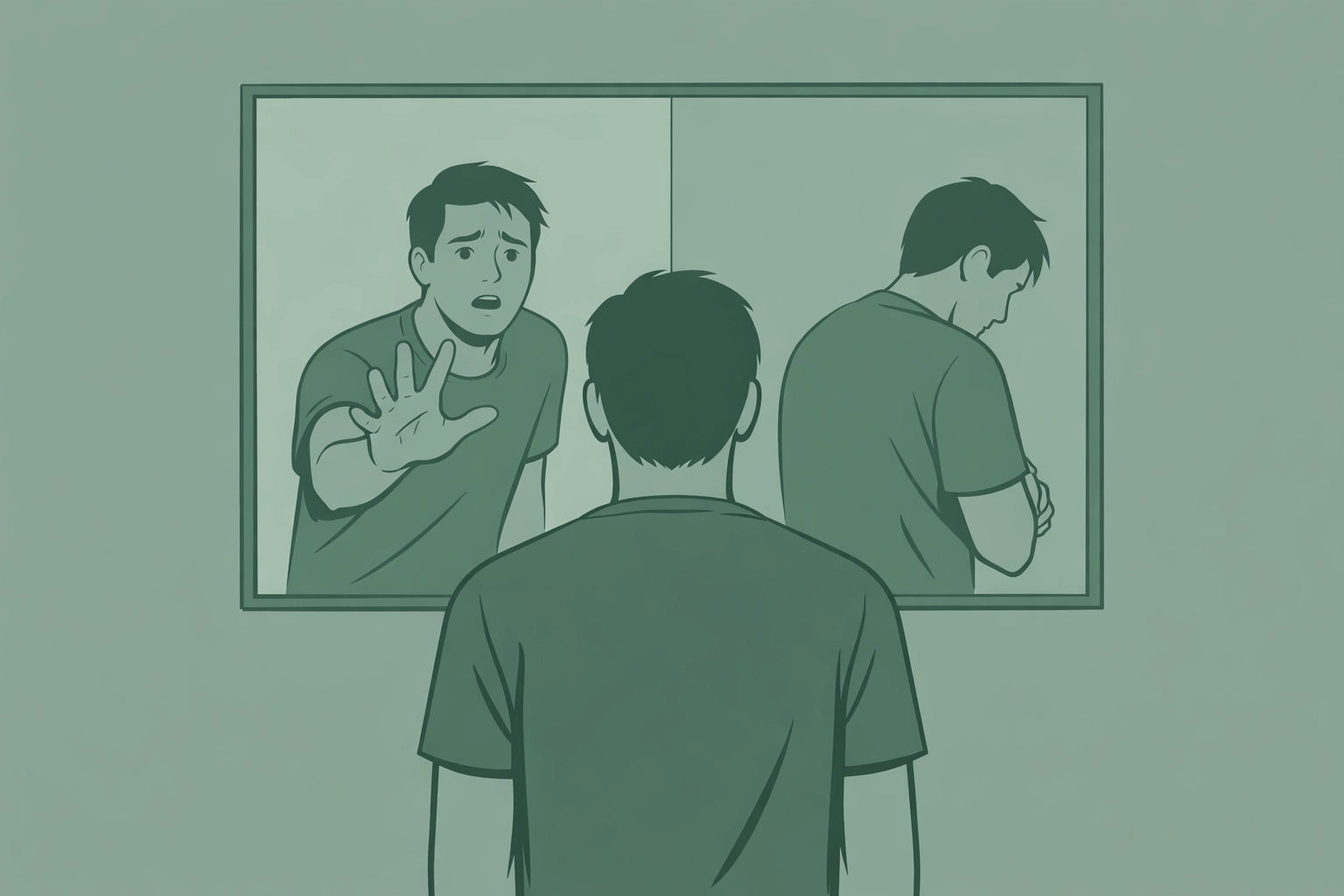
Love Is a Choice, Not a Cage
Here's the bottom line: Love isn't about holding someone tight enough that they can't leave. It's about being someone they choose to stay with.
Possession creates resentment. Trust creates freedom. And paradoxically, when you give your partner the freedom to leave, they're more likely to want to stay: because they're choosing you freely, not staying out of obligation or fear.
Dick Ferguson's characters learn this lesson the hard way, through heartbreak and growth. His stories at Read with Pride show us that love and jealousy can coexist: but only if we're willing to do the inner work of examining our fears, healing our wounds, and choosing vulnerability over control.
Explore More at Read with Pride
Discover emotionally intelligent MM romance and LGBTQ+ fiction that doesn't shy away from the hard stuff. Visit dickfergusonwriter.com/collections/all to browse the complete catalog, or start with these titles that explore jealousy, possession, and emotional complexity:
Follow us on social media:
- Instagram: instagram.com/dickfergusonwriter
- X/Twitter: x.com/DickFergus94902
- Facebook: facebook.com/profile.php?id=61572869844598
- Website: readwithpride.com
#ReadWithPride #MMRomance #GayRomance #LGBTQBooks #GayFiction #QueerFiction #RelationshipAdvice #EmotionalIntelligence #AttachmentTheory #JealousyInLove #MaleRomance #GayLoveStories #DickFerguson #ReadingWithPride #MMBooks #GayNovels

Leave a Reply
You must be logged in to post a comment.