


Imagine living in a country where the rest of Europe is literally burning, but your streets remain untouched. Where you can hear about concentration camps on one side and bombing raids on the other, but your biggest concern is whether the coffee ration will last the month. That was Sweden during World War II, a strange pocket of "peace" that was anything but peaceful.
Sweden's neutrality during WWII wasn't some noble stance. It was a survival strategy wrapped in diplomatic double-speak, and for gay men living through it, the experience was layered with even more complexity. While the world fought openly, they fought their own battles in silence.
The Myth of Neutrality
Let's get one thing straight (pun intended): Sweden wasn't exactly Switzerland when it came to neutrality. Sure, they stayed out of the fighting, but they were playing both sides like a chess grandmaster with commitment issues.
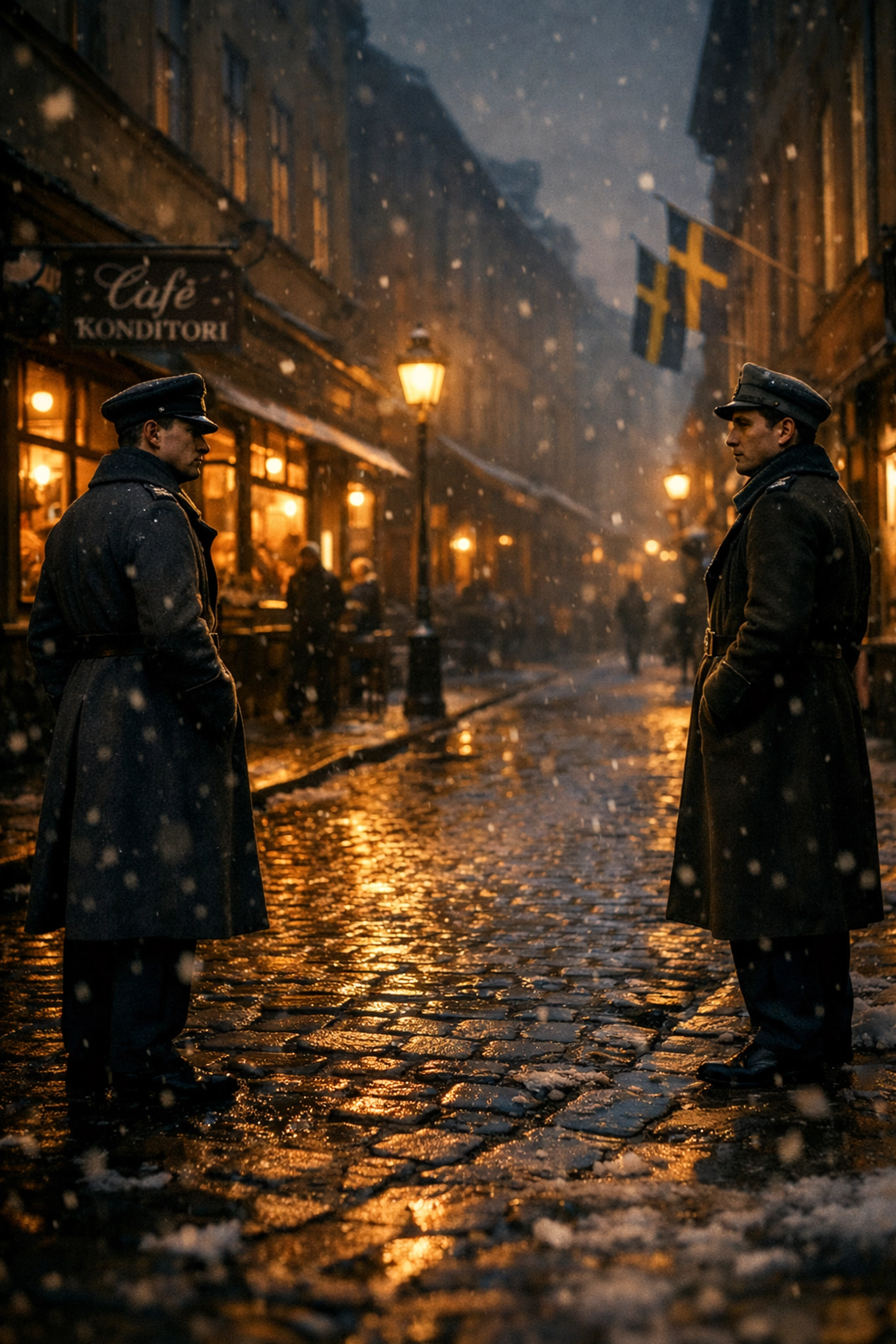
When Germany occupied Norway and Denmark in April 1940, Sweden suddenly found itself surrounded. The Swedish government made a deal with the devil, or rather, with Nazi Germany. They allowed German troops to pass through Swedish territory, transported iron ore to German factories, and even escorted German convoys in the Baltic Sea. By August 1943, roughly 250,000 German soldiers had rotated through Swedish land.
But here's where it gets interesting: Sweden was also slipping intelligence to the Allies, providing safe haven for refugees (including thousands of Danish Jews in 1943), and in the war's final years, even allowed Allied planes to use Swedish airbases. Talk about walking a tightrope.
For the average Swede, this meant living in constant tension. You could be sitting in a Stockholm café watching German soldiers on leave walk past, knowing that somewhere across the border, people were dying. The cognitive dissonance was real.
Living in the Gray Zone
For gay men in Sweden during this period, life existed in its own kind of neutral zone, one that had nothing to do with international politics and everything to do with personal survival.
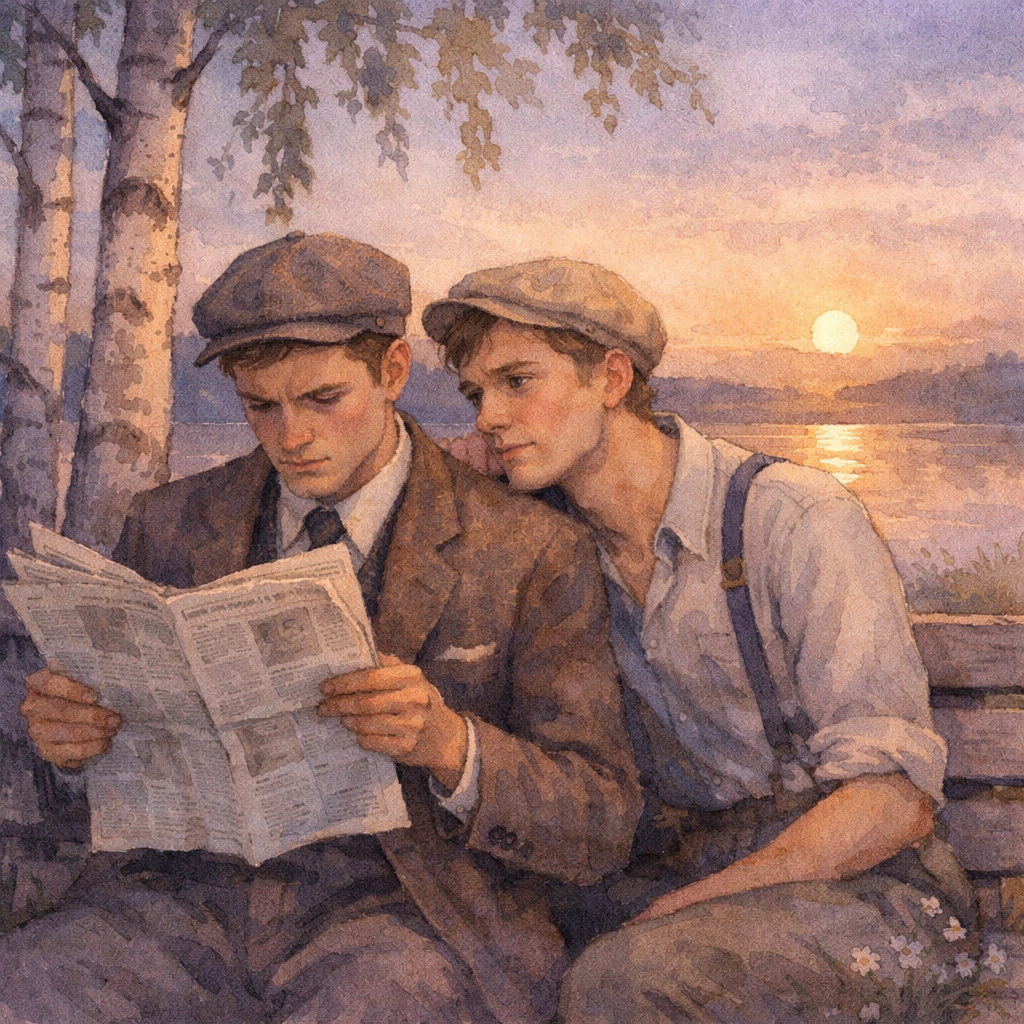
Sweden had decriminalized homosexual acts in 1944 (yes, during the war), but let's not get ahead of ourselves. Decriminalization didn't mean acceptance. It meant you wouldn't necessarily go to prison, but you'd still lose your job, your family, and your social standing if anyone found out. The law changed; society didn't.
Gay men in wartime Sweden lived double lives within a country that was itself living a double life. There's something almost poetic about that, if it weren't so exhausting. They worked in factories producing materials that would go to Germany, served in the Swedish military preparing for an invasion that never came, and navigated coded glances in public spaces where discretion wasn't just preferred: it was survival.
The cities: Stockholm, Gothenburg, Malmö: offered some anonymity. Public parks, certain bathhouses, and specific cafés became known meeting places, though always with the risk that someone might be watching. The war actually provided some cover; with so many people displaced, refugees passing through, and general chaos even in neutral territory, it was easier to blend in, to be invisible when you needed to be.
The Quiet Resistance
What's fascinating about gay life in neutral Sweden is how it mirrors the country's political position. Just as Sweden resisted full alignment with either side of the war, gay men resisted the binary of complete openness or total repression.
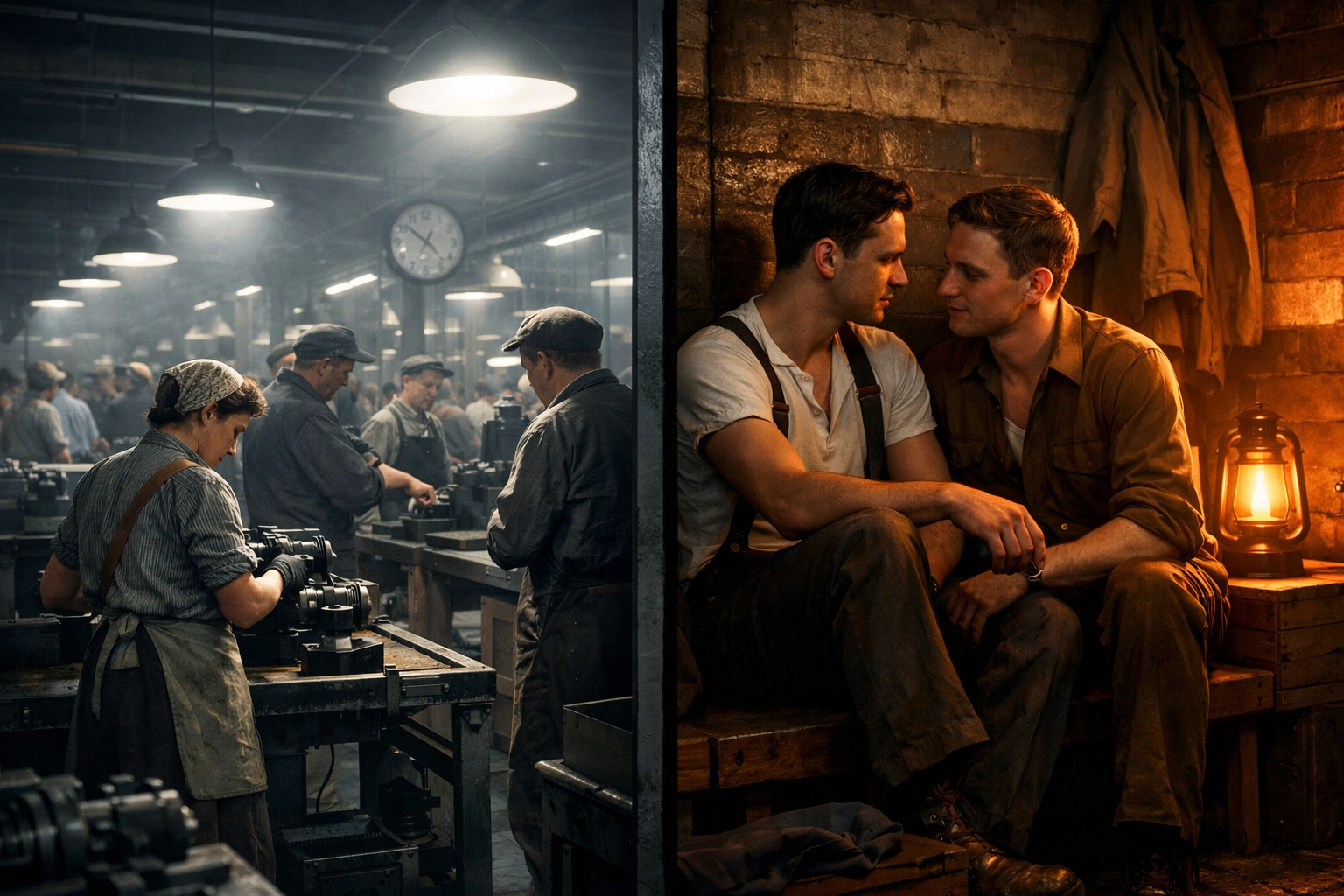
They formed networks, not unlike resistance cells. Information traveled through trusted circles about safe spaces, sympathetic doctors (because homosexuality was still considered a mental illness by many), and employers who wouldn't ask too many questions. These networks were lifelines.
Some gay men found work in industries considered essential, which provided both economic security and a legitimate reason to avoid military conscription questions. Others joined the military willingly, finding in all-male environments a kind of bittersweet proximity to what they couldn't openly have.
The tension of living in a neutral country at war created its own psychological pressure. You couldn't fight the external enemy because your country refused to choose sides. For gay men, that feeling of enforced passivity, of having to remain hidden while the world changed around them, must have been suffocating.
Love in the Margins
Here's where the MM romance writer in me gets excited. Because despite everything: or maybe because of everything: people still fell in love.
Imagine meeting someone in a Stockholm park in 1942. The midnight sun barely sets, giving you a few precious hours of twilight to be together. You're both hyperaware of everyone around you, but also acutely aware of how fragile life is, even in neutral Sweden. The war could change direction tomorrow. The political winds could shift. Nothing is guaranteed.
That tension: between the desire for connection and the necessity of discretion, between hope and fear: that's the heart of great historical MM romance. It's why stories set in this period resonate so deeply. The stakes were always high, not just from external threats but from internal conflicts about identity, duty, and survival.
Gay men in wartime Sweden didn't have the language we have now. They didn't have "coming out" or "pride" or "queer community" as concepts. What they had were stolen moments, unspoken understandings, and relationships that existed in the margins of official history.
Why These Stories Matter
At Read with Pride, we're committed to bringing these hidden histories to light through MM romance and gay historical fiction. Stories set in places like wartime Sweden remind us that LGBTQ+ people have always existed, always loved, always found ways to be together even in the most impossible circumstances.
The beauty of historical MM romance is that it doesn't just entertain: it reclaims. It takes periods where gay men were supposed to be invisible and puts them center stage. It asks: What were their lives like? Who did they love? What did they dream about?
Sweden's "cold peace" during WWII offers a unique backdrop for these stories. Unlike tales set in occupied territories or on battlefields, Swedish stories can explore the psychological warfare of neutrality, the guilt of comfort when others suffer, and the strange privilege of safety that still couldn't protect you from society's prejudices.
Our collection of gay historical romance and MM novels includes stories that explore these nuanced experiences: relationships that developed in the shadow of war, love that bloomed despite impossible odds, and the quiet acts of courage it took to simply be yourself.
Finding Your Next Read
If you're drawn to stories of love during wartime, of men who found each other despite: or because of: extraordinary circumstances, dive into the historical MM romance collection at readwithpride.com. Whether you're looking for slow-burn gay romance novels, emotional MM books, or sweeping gay love stories set against the backdrop of history, we've got something that'll hit you right in the feels.
The men who lived through Sweden's cold peace deserve to have their stories told. Even if we don't know their names, we can honor their experiences through fiction that imagines what might have been, what surely was, and what love looked like when the world was falling apart everywhere except in one small, neutral corner of Europe.
Follow us for more LGBTQ+ content:
- Facebook: Read With Pride
- Instagram: @read.withpride
- X/Twitter: @Read_With_Pride
Explore our collection: www.readwithpride.com
#MMRomance #GayHistoricalRomance #ReadWithPride #LGBTQBooks #GayRomanceBooks #HistoricalMMRomance #QueerFiction #WWIIHistory #GayLoveStories #MMNovels #LGBTQFiction #GayBooks #SwedenHistory #HistoricalRomance #MMBooks #GayFiction #QueerHistory #LGBTQReading #2026GayBooks

Leave a Reply
You must be logged in to post a comment.