
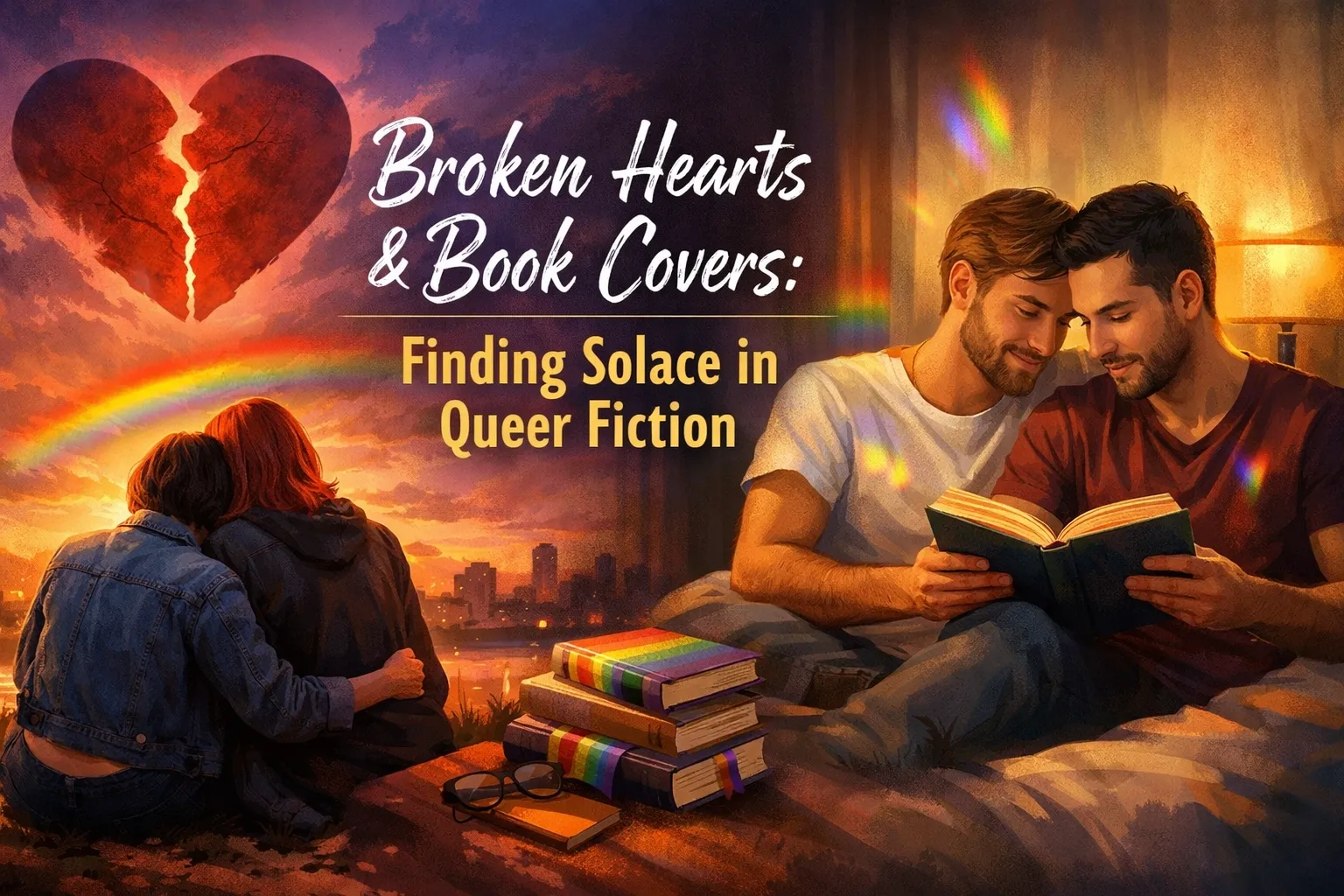
There's a particular kind of quiet that settles over a bedroom at 2 AM when you're scrolling through their Instagram, wondering if they're thinking about you too. (Spoiler: they're probably not, and that's okay.) Valentine's Day isn't exactly kind to the recently heartbroken, especially when every rom-com seems to promise that love is just around the corner: except your corner apparently leads to a dead-end alley and a dumpster fire.
But here's what I've learned: sometimes the best way through a broken heart isn't avoiding love stories altogether. Sometimes, it's diving headfirst into them: just not your own.
The Unlikely Medicine of Happy Endings
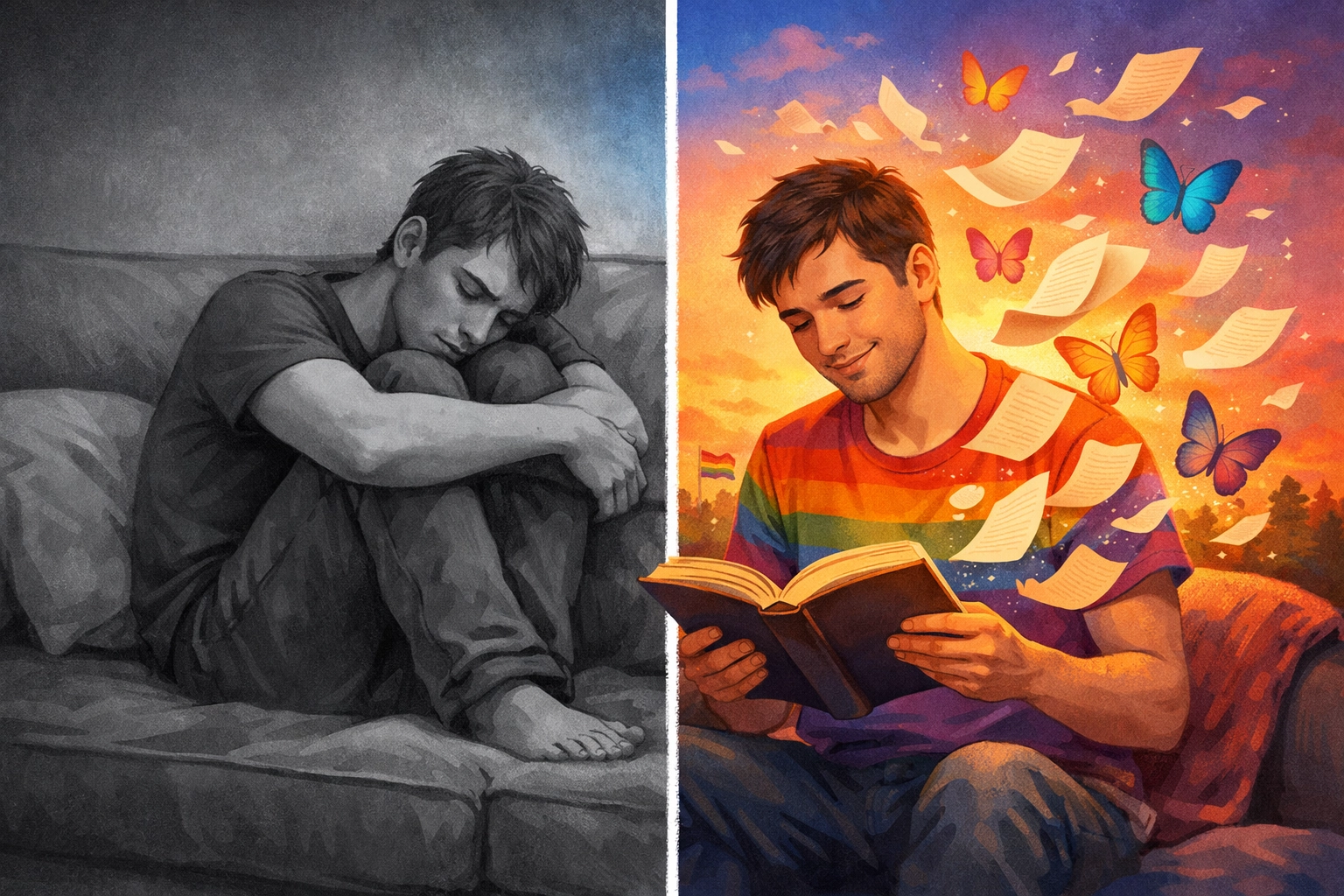
When my last relationship imploded (theatrically, as these things often do), well-meaning friends offered the usual prescriptions: hit the gym, delete the apps, "focus on yourself." All solid advice. But what actually got me through those first brutal weeks? MM romance books. Specifically, stories where characters who felt utterly broken somehow stitched themselves back together: not because of another person, but through the messy, complicated, beautiful process of letting themselves be seen again.
There's actual science behind this, by the way. Bibliotherapy for breakups isn't just a fancy term English majors invented: it's a real therapeutic approach. Reading about others' emotional journeys creates what psychologists call "narrative transportation," where your brain temporarily inhabits someone else's struggles and triumphs. When you're too close to your own pain, living in someone else's story for a few hours offers the kind of perspective that no amount of journaling can match.
Why Queer Fiction Hits Different
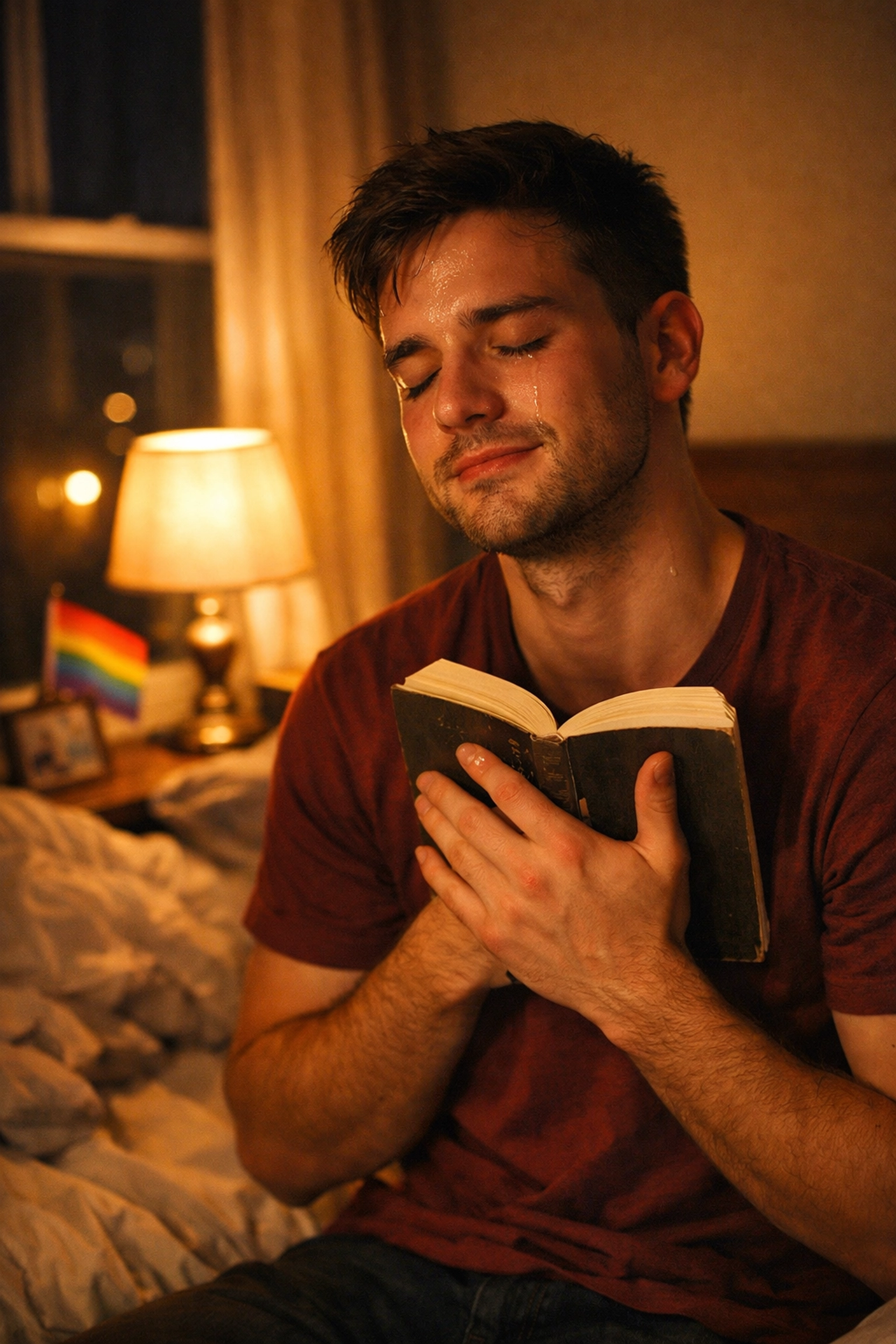
Here's the thing about mainstream romance novels: they're often lovely, but they weren't written for us. When you're navigating heartbreak as a queer person, you're not just processing the loss of a relationship: you're dealing with layers of identity, family acceptance issues, community dynamics, and the particular exhaustion of dating in spaces where everyone already knows everyone (and probably dated everyone).
Gay romance novels and gay fiction understand this inherently. Books like Cursed Boys and Broken Hearts by Adam Sass don't just show you a breakup: they show you the depression spiral, the isolation, the way heartbreak compounds when you're already dealing with family rejection or internalized homophobia. One reader described Grant's journey through depression as "so incredibly relatable," not because misery loves company, but because being seen in your specific pain is the first step toward healing.
When you pick up queer fiction, you're not just reading about love: you're reading about people who've had to fight for the right to love openly, who've rebuilt themselves after family rejection, who've learned to create chosen families when biological ones failed them. These aren't obstacles grafted onto romance plots for drama; they're authentic experiences that make the eventual happiness feel earned, real, and possible.
The Stories That Stitch You Back Together
Not all MM romance books will work for every broken heart. Here's what I've found helps during different stages of the healing process:
Early Days (The Ugly Cry Phase): You need books that acknowledge how much this sucks. Stories with characters experiencing real depression, messy emotions, and unglamorous grief. Don't reach for the fluff yet: you need to feel witnessed first. Books that depict "a messy, real-life queer fairy tale" give you permission to be a disaster while showing you there's a path forward.
Mid-Recovery (The Angry Phase): This is when enemies-to-lovers or second-chance romances can be surprisingly therapeutic. There's something cathartic about watching characters work through resentment, betrayal, or old wounds. It validates your anger while demonstrating that healing doesn't mean pretending you were never hurt.
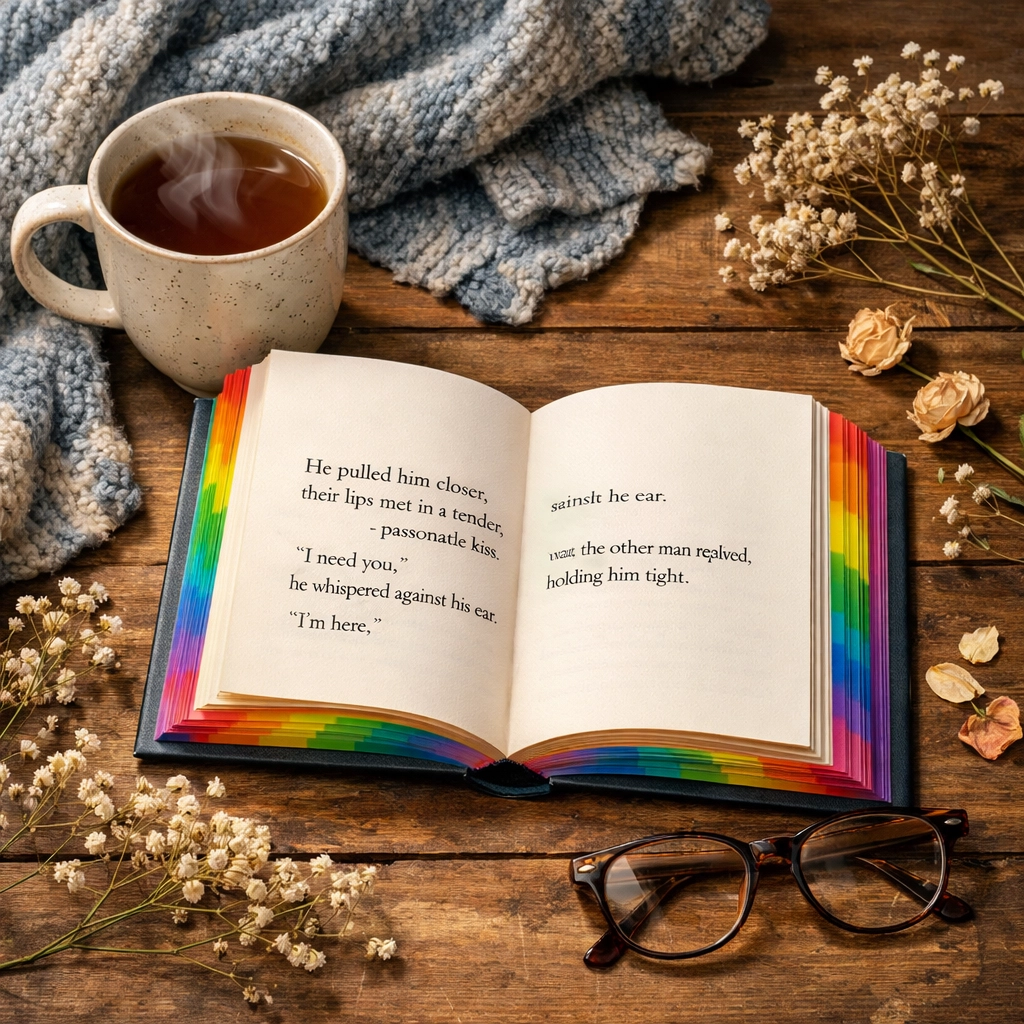
Later Stages (The Maybe-I'm-Ready Phase): Now's the time for those sweet, slow-burn gay love stories where characters learn to trust again. Stories about found family, rebuilding after loss, or discovering unexpected connections remind you that your capacity for love wasn't destroyed: it was just temporarily unavailable for maintenance.
The Transformation Through Pages
What makes LGBTQ+ fiction particularly powerful for heartbreak recovery is its emphasis on transformation. These stories often reimagine fairy tales through queer lenses, positioning us as the protagonists of our own narratives rather than supporting characters in someone else's happy ending.
Take the concept behind books that blend magical realism with queer heartbreak: using metaphors of curses or spells to explore how we sometimes trap ourselves in patterns of unworthiness. One reviewer described watching a character finally allow himself happiness after pages of self-sabotage: "I spent the last twenty or so minutes of the book silently crying." That's the power of seeing someone break through their self-imposed barriers. It plants a seed: If they can do it, maybe I can too.
This isn't about reading to escape your feelings. It's about reading to expand them, to see them from angles that help you understand what you're moving through. The best gay romance books don't minimize pain: they honor it while insisting it isn't the end of your story.
Building Your Healing Library
If you're navigating Valentine's solo this year with a heart that's still mending, consider creating a deliberate reading journey. The best MM romance books 2026 offer everything from achingly tender contemporary stories to escapist fantasy where love quite literally conquers dark magic.
Here's your prescription from Read with Pride:
Start with something that validates where you are. Pick up stories that don't rush toward happy endings but instead sit with characters in their grief. Then gradually migrate toward narratives about rebuilding, rediscovery, and opening up again. By the time you reach those gloriously hopeful MM novels where love feels possible and sustainable, you'll probably notice something: you're not just reading about someone else's transformation anymore.
The beautiful thing about gay literature is its diversity of voices and experiences. Whether you need a historical romance showing queer love surviving impossible odds, a contemporary story about found family after loss, or a thriller where the romance develops amid external chaos (sometimes it helps to remember your internal chaos isn't the only thing happening in the world), there's something here for every stage of healing.
The Unexpected Gift
Valentine's Day when you're single and heartbroken can feel like the universe rubbing your face in failure. But here's what I wish I'd known sooner: this is actually the perfect time to fall in love with love again: on your own terms, through stories that reflect your actual life back to you.
Those hours spent reading MM romance weren't time wasted or escapism. They were active healing. Every page that made you cry or laugh or catch your breath was teaching your heart that it could still feel deeply, that your capacity for connection survived the ending.
The therapeutic power of gay romance healing lies not in the fantasy of perfect love, but in the recognition that imperfect people with complicated pasts find ways forward. Characters in these stories don't heal because someone else completes them: they heal by allowing themselves to be vulnerable again, by building communities of support, by believing they deserve tenderness even after they've been hurt.
Your broken heart isn't a problem to be fixed by your next relationship. It's evidence that you loved fully, and that you will again: when you're ready, on your terms. Until then, let the stories hold you. Let the happy endings remind you what's possible. Let the messy middles assure you it's okay to still be there.
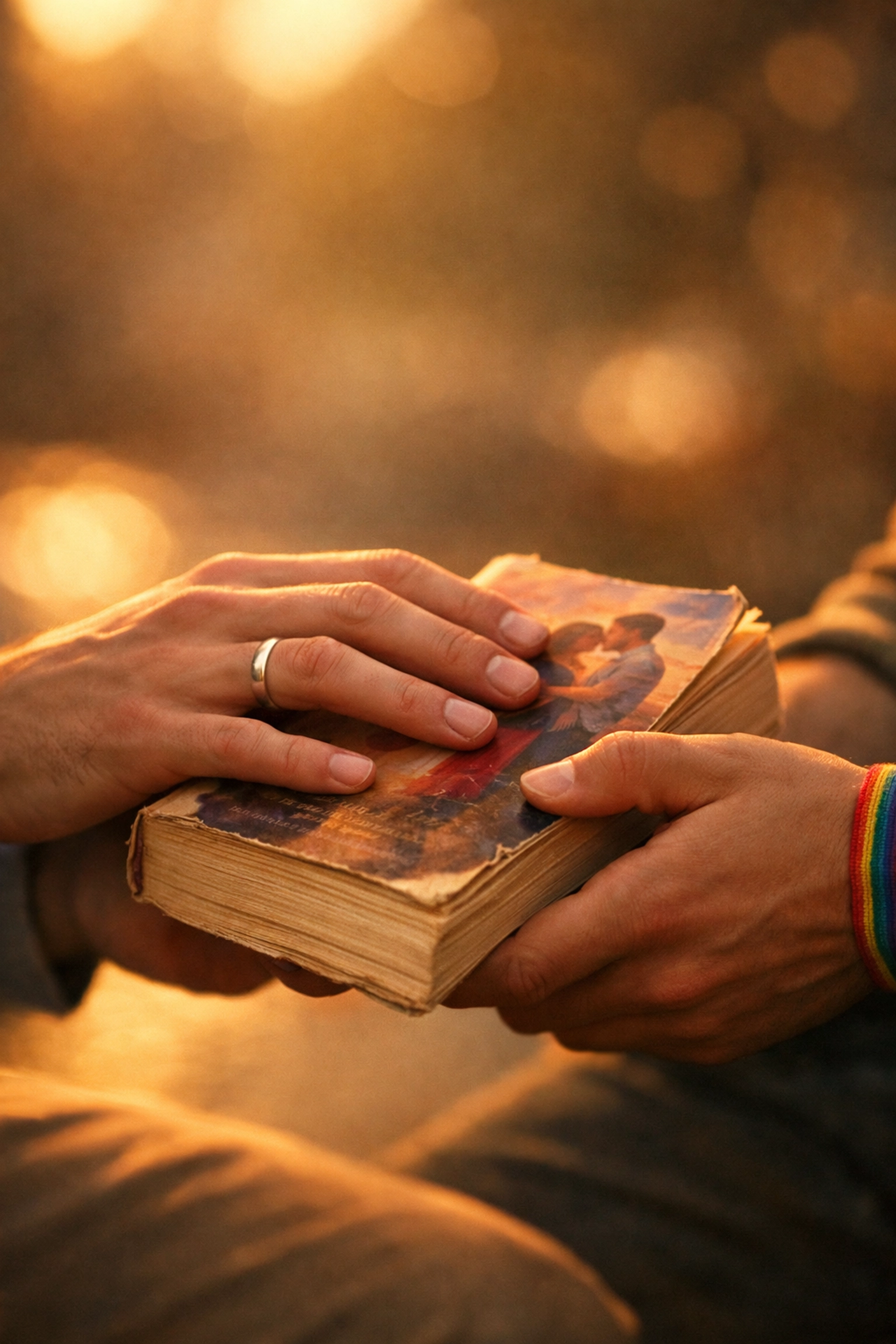
After all, the best love story you'll ever read might just be the one you're living right now: the one about a person who kept going, who found solace in pages and pride in their identity, who learned that being alone doesn't mean being lonely when you've got an entire world of queer fiction keeping you company.
The books are waiting. So is your next chapter. And I promise you, it's going to be beautiful: plot twists, tear-stained pages, and all.
Find your next healing read at readwithpride.com where every story celebrates authentic queer love and resilience.
Connect with our community:
📘 Facebook
🐦 X/Twitter
📸 Instagram
#MMRomance #GayRomanceBooks #LGBTQFiction #QueerFiction #BibliotherapyForBreakups #GayRomanceHealing #BestMMRomance2026 #ReadWithPride #GayLoveStories #QueerLiterature #MMNovels #HeartbreakRecovery #ValentinesDay2026 #SingleAndReading #LGBTQBooks #GayBooks #QueerHealing #RomanceReaders #BookTherapy #LoveAfterHeartbreak

Leave a Reply
You must be logged in to post a comment.