

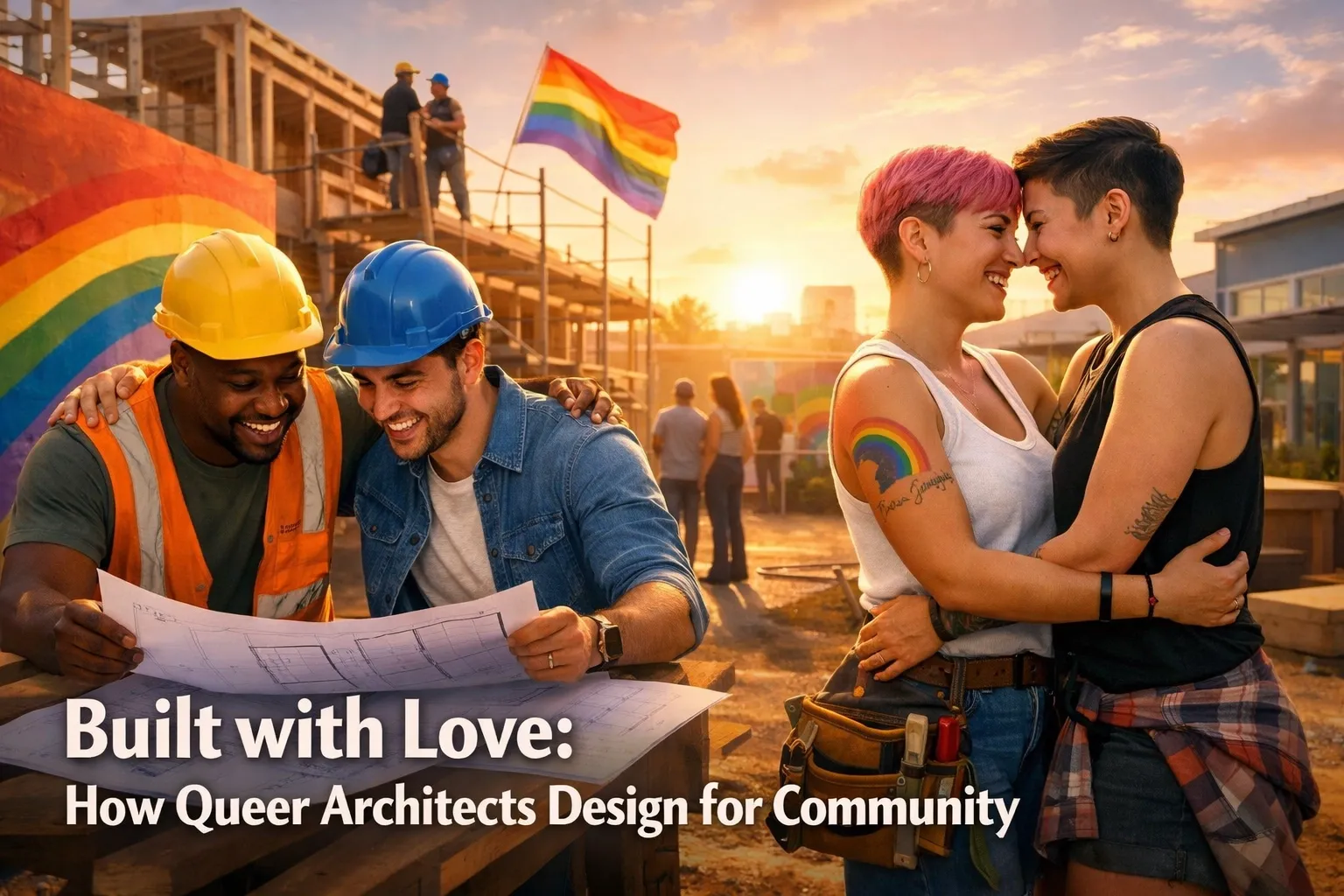
We've all walked into a space that just feels wrong. The bathroom signs that force you to choose. The campus layout that assumes everyone moves through the world the same way. The housing complex that screams "nuclear family or nothing." For too long, architecture has been designed by and for a very narrow slice of humanity, and the rest of us have had to squeeze ourselves into spaces that were never meant for us.
But here's the beautiful thing: queer architects are rewriting the blueprint. They're not just adding rainbow flags to existing structures (though we love a good Pride decoration). They're fundamentally reimagining how we build spaces that foster community, celebrate diversity, and make room for all of us.
Breaking Down the Walls of Convention
When you ask queer architects what it means to work in their field, the most common answer isn't about aesthetics or sustainability metrics. It's about challenging the status quo. According to research from the Association of Collegiate Schools of Architecture, LGBTQIA+ professionals consistently emphasize their role in advocating for atypical space-making and questioning norms that others take for granted.
Think about it: traditional architecture has naturalized so many binaries. Men's room or women's room. Public or private. Family home or single dwelling. These categories seem neutral, but they're not. They're designed around very specific assumptions about bodies, relationships, and ways of living. And for those of us whose lives don't fit those narrow categories? We're left literally and figuratively out in the cold.
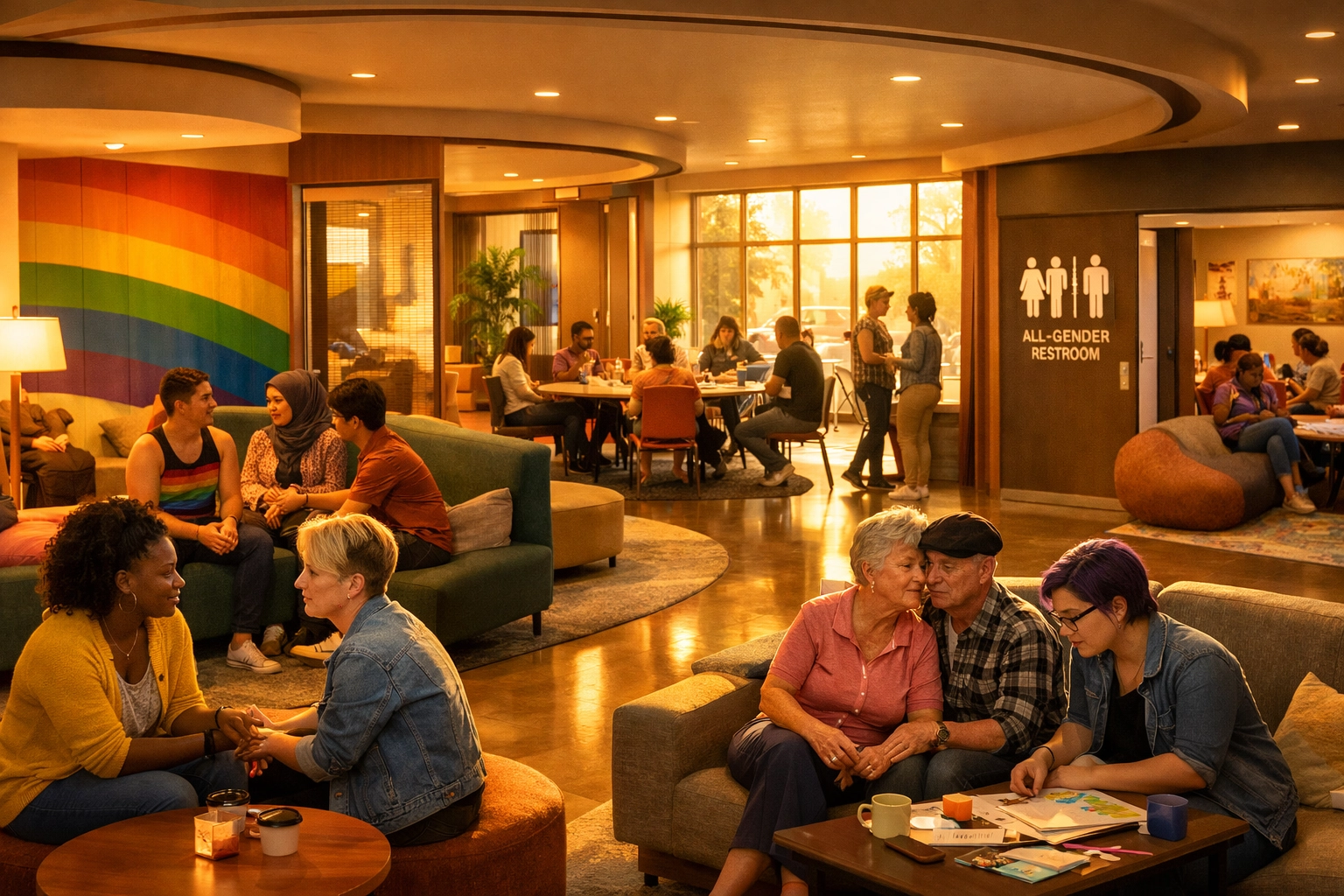
Queer architects approach design differently. They start by asking: Who gets left out when we build this way? They challenge the assumption that there's one "normal" way to use space. And they create environments that are flexible, adaptive, and genuinely inclusive, not just slapping an accessibility ramp on stairs that should never have been the only option in the first place.
Designing for Everyone (Yes, Actually Everyone)
One of the most powerful insights from queer architecture is this: when you design for the margins, you create better spaces for everyone. An all-gender restroom with private stalls? More comfortable for literally anyone who values privacy. A housing complex that accommodates chosen families, multigenerational living, and non-traditional relationships? More flexible for the growing number of people who don't live in nuclear family units.
This isn't about special treatment. It's about recognizing that the "standard" model of architecture has always been special treatment: for one very specific type of person and family structure. Queer architects are simply expanding the definition of who deserves to be comfortable in their environment.
The focus on inclusive design goes beyond just checking boxes. It's about understanding the specific conflicts and challenges faced by LGBTQIA+ communities and addressing them thoughtfully. When a trans person enters a building, are there facilities they can use without anxiety? When a queer family looks for housing, are there options that accommodate their actual household structure? These aren't frivolous questions: they're fundamental to whether someone can move through the world with dignity.
Listening to Community Voices
Here's where it gets really interesting: queer architects don't just design for communities: they design with them. The participatory design process is central to this work, and it produces radically different results than the traditional top-down approach.
Take the Q:DREAM project (Queeries: Designing Reality Equitably and Madly), which asked a beautifully simple but profound question: "What are your definitions of home?" Instead of assuming they knew what queer people needed, the architects listened. They documented queer families, support networks, spaces of privacy, and definitions of security that didn't fit conventional models.
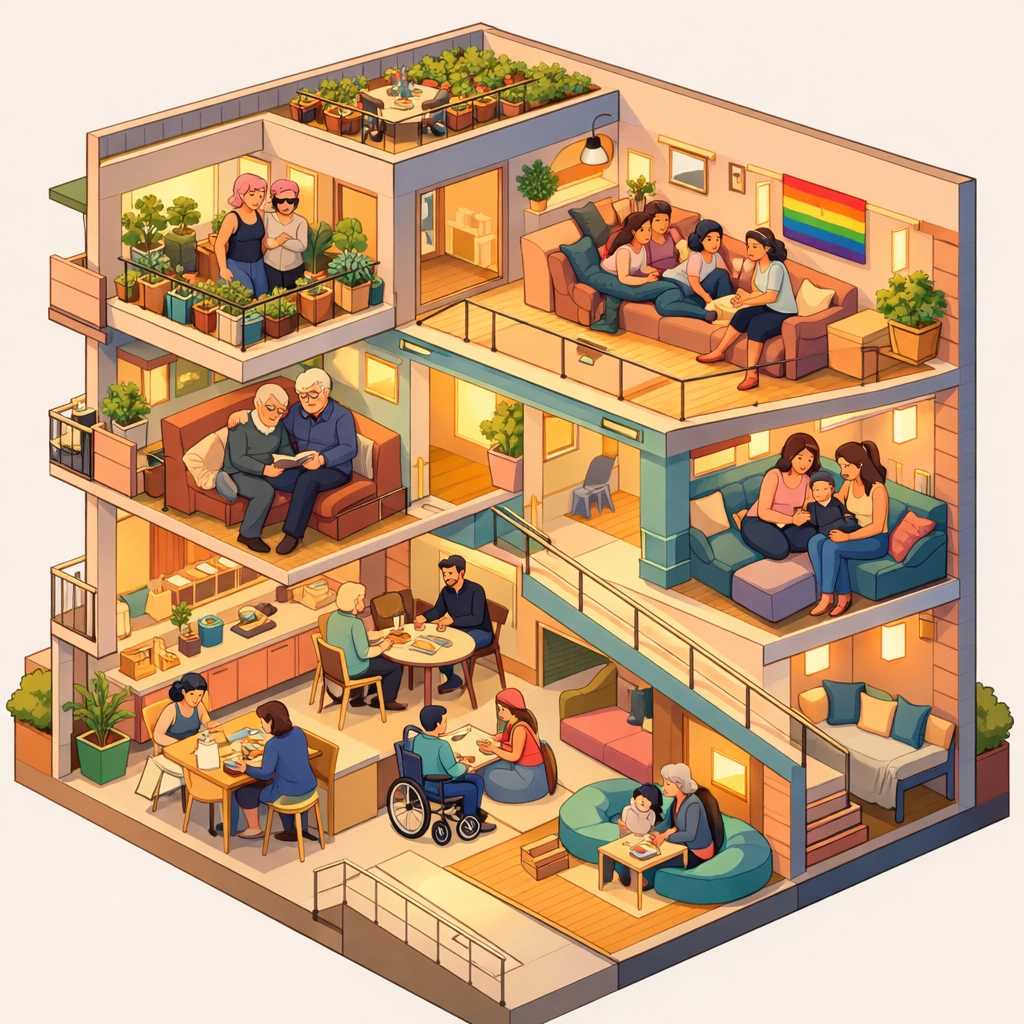
What emerged was a living archive that celebrated queer designers and their visions for community spaces. This kind of research-creation process recognizes that the people who live in spaces are the experts on what those spaces need to be. It's the opposite of the "we know best" mentality that has historically dominated architecture.
This approach is particularly crucial when designing for marginalized communities who have been systematically excluded from planning processes. When you center the voices of trans people, people of color, disabled folks, and low-income communities in the design process, you create spaces that actually serve them: not just approximate what a privileged designer thinks they might need.
Housing: The Front Line of Equity
Let's talk about housing, because this is where the rubber meets the road for queer architects. LGBTQIA+ people: especially youth and trans individuals: face disproportionate rates of homelessness. Queer families encounter discriminatory housing policies. Traditional family-oriented housing developments often exclude chosen families, multigenerational households, and non-traditional living arrangements.
These aren't abstract problems. They're life-and-death issues that require thoughtful architectural solutions. Queer architects are working on specialized shelter designs that provide safety and dignity. They're creating communal living arrangements that accommodate different kinds of families. They're ensuring that sustainable, accessible housing reaches marginalized New York communities and beyond.
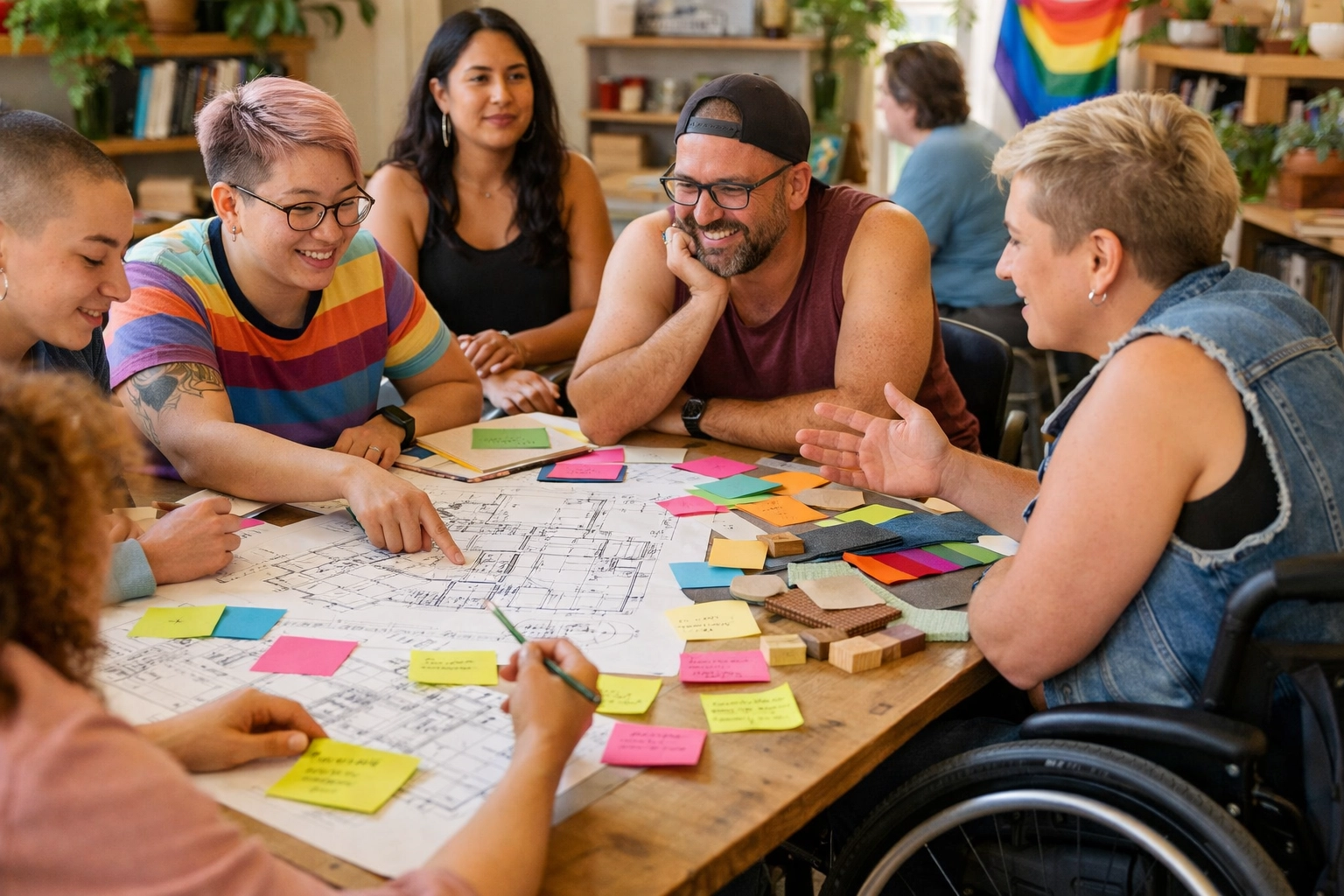
The work challenges the assumption that "home" looks like a single-family house in the suburbs with 2.5 kids and a white picket fence. For many LGBTQIA+ people, home is a chosen family in a shared apartment. Home is a shelter that doesn't force you to choose between safety and living authentically. Home is a community hub where you can be yourself without fear.
When architects design with these realities in mind, they create housing that doesn't just shelter bodies: it supports lives.
Visibility Matters (Even in Architecture)
Here's something you might not think about: the visibility of LGBTQIA+ architects themselves matters enormously. When queer professionals are open about their identities, it signals accessibility to potential clients and colleagues who share those identities or values. It says, "This is a safe space. We understand your needs because we share them."
This visibility has ripple effects. It expands understanding of who "the public" actually is when we talk about public spaces. It creates professional networks where people can connect across shared experiences and challenges. And crucially, it brings diverse perspectives into rooms where architectural decisions get made.
Queer communities cut across race, ethnicity, ability, class, and generation. When we have visible LGBTQIA+ representation in architecture, we're more likely to get designs that reflect this intersectional reality. It's not enough to have one out gay man designing luxury condos. We need trans architects working on public housing. Queer architects of color shaping urban planning. Disabled LGBTQIA+ designers reimagining accessibility.
Building Infrastructure for Change
The good news? Queer architects aren't working in isolation. Organizations like Architecture LGBT+, QSPACE, and the Queer Community of Architects and Designers (QCAD) are creating infrastructure to support this work. They offer programming on gender-inclusive design, LGBTQ+ homelessness, queer histories in architecture, and collective action.
These networks are crucial because they allow architects to share knowledge, support each other, and amplify their impact. They organize exhibitions that showcase queer-designed spaces. They publish research on inclusive design principles. They create mentorship opportunities for the next generation of LGBTQIA+ architects.
This kind of community building within the profession mirrors the community-focused design philosophy itself. Just as queer architects create spaces that foster connection and belonging, these organizations create professional spaces where LGBTQIA+ designers can thrive.
The Blueprint for Tomorrow
At Read with Pride, we celebrate stories that center LGBTQ+ experiences and challenge conventional narratives: whether that's in the pages of MM romance books or in the buildings that shape our communities. The work of queer architects reminds us that representation matters everywhere, including in the physical spaces we inhabit every day.
The future of architecture is queer: not in a superficial rainbow-washing way, but in a fundamental reimagining of who spaces serve and how they're created. It's architecture that starts with listening. That prioritizes equity over tradition. That recognizes diversity as strength, not something to be accommodated as an afterthought.
These architects are building more than structures. They're building community, fostering belonging, and creating environments where all of us: in all our beautiful, complex diversity: can feel at home.
Want to explore more LGBTQ+ stories and perspectives? Check out our collection of gay romance books and MM fiction that celebrate diverse voices and experiences.
Follow us for daily LGBTQ+ content:
- Facebook: Read with Pride
- Instagram: @read.withpride
- X: @Read_With_Pride
#LGBTQArchitecture #QueerDesign #InclusiveSpaces #CommunityDesign #LGBTQCommunity #QueerArchitects #ReadWithPride #LGBTQBooks #MMRomance #GayRomance #QueerFiction #LGBTQReading #InclusiveDesign #QueerSpaces #ArchitectureForAll #LGBTQEquity #PrideInDesign #QueerVisibility

Leave a Reply
You must be logged in to post a comment.