


Let's talk about something that doesn't get nearly enough attention in queer cultural conversations: sculpture. Yeah, I know, when we think about LGBTQ+ art, we usually gravitate toward literature (hello, MM romance books), film, or painting. But sculpture? That three-dimensional art form has been quietly serving looks, challenging norms, and celebrating queer bodies for decades. From marble masterpieces to bronze embraces, sculptors have been carving out space, literally: for gay themes and the male gaze long before it was socially acceptable to do so.
The evolution of gay themes in modern sculpture tells a story that's as complex and textured as the materials artists work with. It's a journey from coded classical beauty to bold contemporary statements about identity, desire, and survival. So grab your metaphorical chisel, because we're about to dig deep into how sculpture has shaped and reflected queer experience.
The Classical Foundation: Beauty With a Wink
Let's rewind to where it all began. Classical sculpture gave us idealized male nudes that were supposedly about "heroism" and "mythology." Sure, Jan. Anyone who's stood in front of a statue of Antinous (Emperor Hadrian's male lover, immortalized in countless sculptures) knows there's more going on than just artistic appreciation. These works established a visual vocabulary for celebrating male beauty that artists have been riffing on ever since.
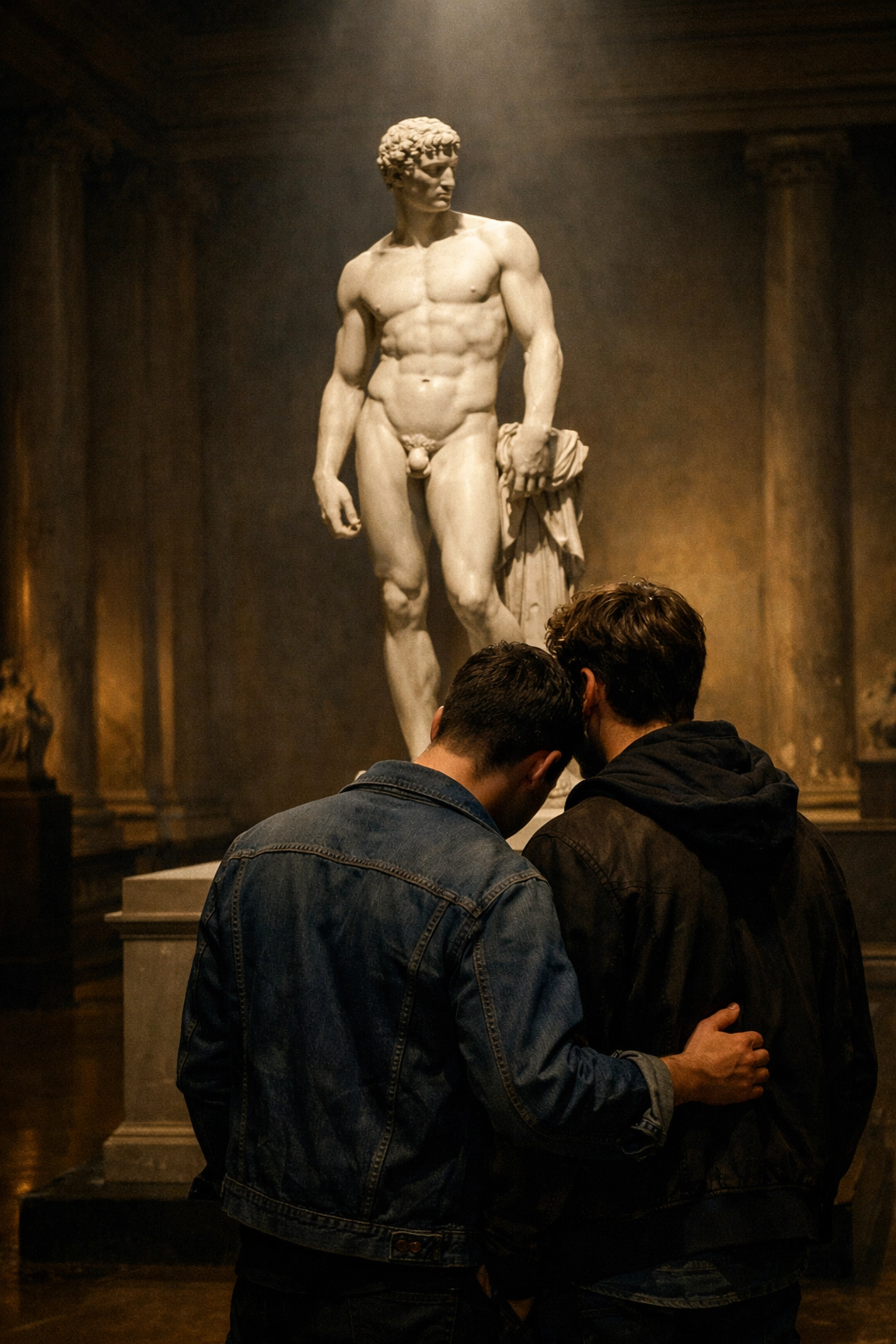
But here's the thing: those classical works were often about unattainable perfection: bodies as smooth as marble, faces eternally youthful, everything carefully idealized and sanitized. Modern sculptors have taken that foundation and asked: what if we made it real? What if we made it vulnerable? What if we made it gay gay, not just Greek-mythology-adjacent gay?
The Western canon essentially created a loophole where you could gaze longingly at beautiful male bodies as long as you called it "art appreciation" or "historical study." Queer artists have been exploiting that loophole ever since, but increasingly, they've been tearing down the pretense entirely.
The AIDS Crisis: Sculpture as Sanctuary
If you want to understand the seismic shift in gay-themed sculpture, you have to talk about the 1980s and 90s. The AIDS crisis didn't just devastate the queer community: it transformed how we created and consumed art. Enter Scott Burton, whose public sculptures emerged directly from queer experiences during this horrific period.
Burton's work was revolutionary precisely because it rejected the "look but don't touch" ethos of traditional sculpture. Instead, his pieces were designed to be used, sat on, leaned against: they solicited touch at a time when touch itself had become terrifying for so many. His sculptures offered "bodily support, care and ongoing solicitations of contact" when queer people were being told they were untouchable, unlovable, dangerous.
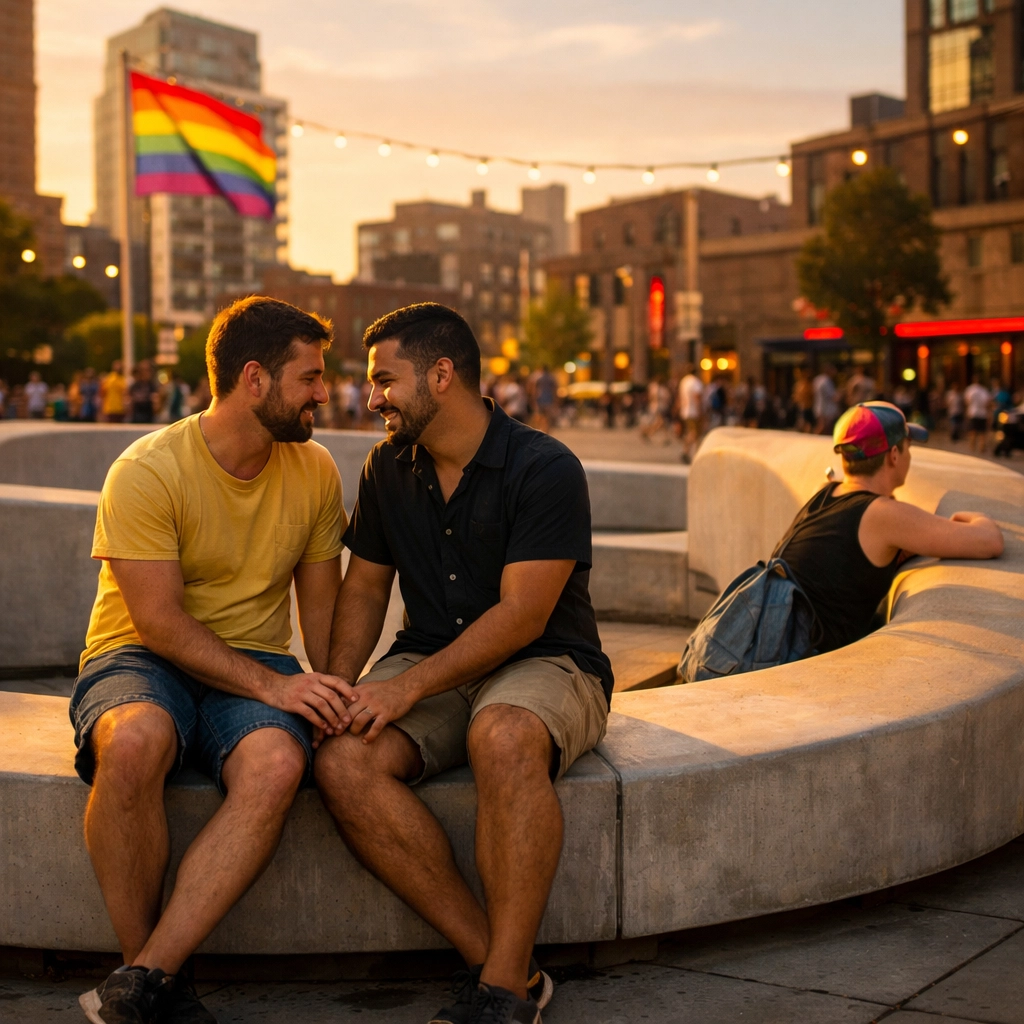
These weren't just pretty objects to admire in a gallery. They were functional, democratic, rooted in "demotic, queer and utopian ambitions." Burton was saying: public space belongs to us too. Our bodies deserve support. Our need for connection is valid. Through performance and sculptural practice, he expanded what sculpture could do and who it could serve.
This era established that sculpture could be political, communal, and healing: not just decorative.
Contemporary Voices: Getting Real About Bodies
Fast forward to today, and modern sculptors are taking even bolder approaches to exploring queer identity and desire. The work has become more diverse in materials, more explicit in content, and more willing to engage with difficult subjects.
Take Mynerva, who incorporates actual bodily materials into sculpture to confront HIV-related stigma head-on. Or Chiffon Thomas, who creates assemblage works using body casts alongside architectural fragments, drawing "parallels between bodies and buildings: both subject to cycles of deconstruction and reconstruction." That metaphor hits different when you think about how queer people have had to constantly rebuild ourselves, our communities, our spaces.
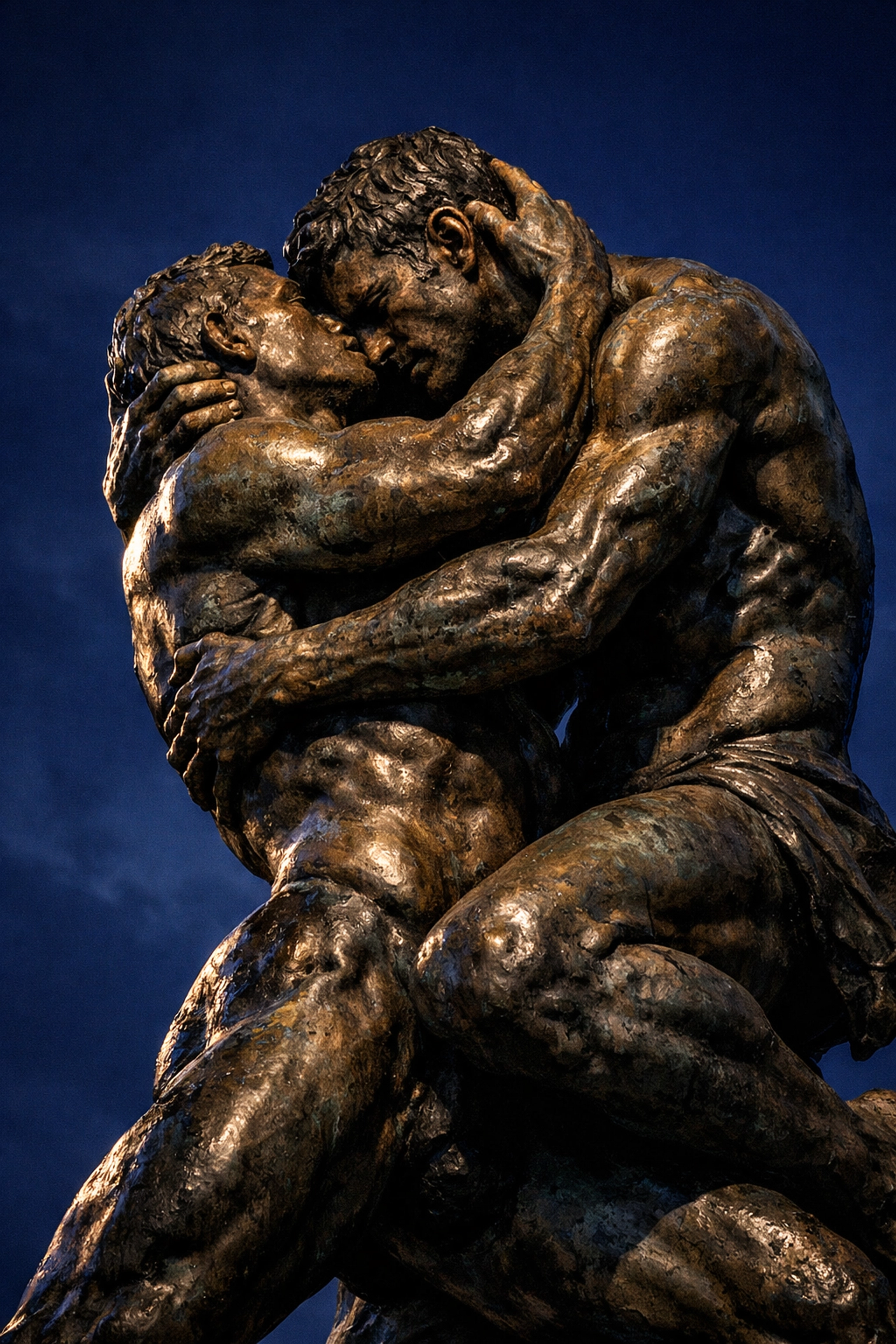
Then there's work like Milo's "Belligerence": a bronze sculpture showing two male figures intertwined in what could be struggle, embrace, or both. It conveys "themes of dominance, resistance and connection" without being explicitly sexual, proving you don't need nudity to create charged, queer work. Sometimes the most powerful sculptures are the ones that capture the emotional complexity of queer relationships: the push-pull, the vulnerability wrapped in strength.
Artists like Zajko are creating works tied directly to queer community history. His permanent sculpture Unwritten (2024) features casts of chewed gum from LGBTQ+ community members, inspired by a secret gay bar that provided sanctuary during the 1960s-70s. It's raw, it's personal, and it's a middle finger to the idea that queer art needs to be palatable or pretty.
The Great Debate: Where Did All the Sexy Go?
Here's where things get spicy (or rather, where some artists argue things aren't spicy enough). There's a growing debate in contemporary sculpture circles about whether modern practice has become "afraid of sexuality": particularly the sexuality of the male body and desire between men.
Some sculptors argue that contemporary work has shifted too far toward abstraction, the grotesque, or the conceptual, leaving behind sensual representation of queer desire. It's a valid point: in trying to be taken seriously as "art" rather than dismissed as "pornographic," have we sanitized ourselves too much? Have we internalized shame about depicting actual desire?
The tension mirrors broader debates in LGBTQ+ fiction and romance. (Speaking of which, if you're craving unapologetically sexy storytelling, Read with Pride has you covered with MM romance novels that don't shy away from passion.) Just as readers sometimes debate whether gay romance should be "respectable" or "steamy," sculptors are asking: can we create work that's both intellectually rigorous AND sexy? Do we have to choose?
Memory, Materiality, and the Male Gaze
What makes contemporary gay-themed sculpture so fascinating is how it grapples with the male gaze: both celebrating it and interrogating it. These aren't just sculptures OF men; they're sculptures made with an awareness of how men look at men, desire men, connect with men.
The materials themselves tell stories. Bronze that ages and patinas. Stone that can be smooth or rough. Found objects that carry histories. Body casts that capture actual human forms. Contemporary sculptors are asking: what does it mean to preserve a queer body in permanent form? What does it mean to make private desire public?
The Future Is Three-Dimensional
So where does sculpture go from here? If the past decades have taught us anything, it's that queer artists will continue pushing boundaries, asking uncomfortable questions, and refusing to stay in their lane.
We're seeing more intersectional work that addresses race, gender identity, and class alongside sexuality. We're seeing more community-collaborative pieces that reject the solo-genius artist model. We're seeing sculptures that incorporate technology, light, sound: pieces that refuse to be static.
And crucially, we're seeing more queer sculptors getting the recognition, funding, and institutional support they deserve. Museums are acquiring work. Public spaces are commissioning pieces. The conversation is expanding.
The evolution of gay themes in modern sculpture mirrors our broader journey as a community: from coded whispers to proud declarations, from idealized fantasies to messy realities, from isolation to connection. Each piece tells a story: sometimes literally, sometimes through form and material: about what it means to be queer, to desire, to exist in bodies that the world hasn't always made space for.
Whether you're into classical beauty or contemporary experimentation, whether you prefer your art subtle or explicit, there's never been a better time to engage with queer sculpture. And if three-dimensional art isn't your thing, don't worry: there are plenty of other ways to celebrate LGBTQ+ creativity, from gay romance novels to theatre to street art.
Want to explore more LGBTQ+ culture and creativity? Follow us on Instagram, Facebook, and Twitter/X for daily doses of queer joy.
#LGBTQArt #GaySculpture #QueerArtists #ModernSculpture #MMRomance #GayBooks #ReadWithPride #QueerFiction #LGBTQCreativity #GayThemes #ContemporaryArt #QueerHistory #LGBTQCulture #GayRomanceBooks #PrideReading

Leave a Reply
You must be logged in to post a comment.