
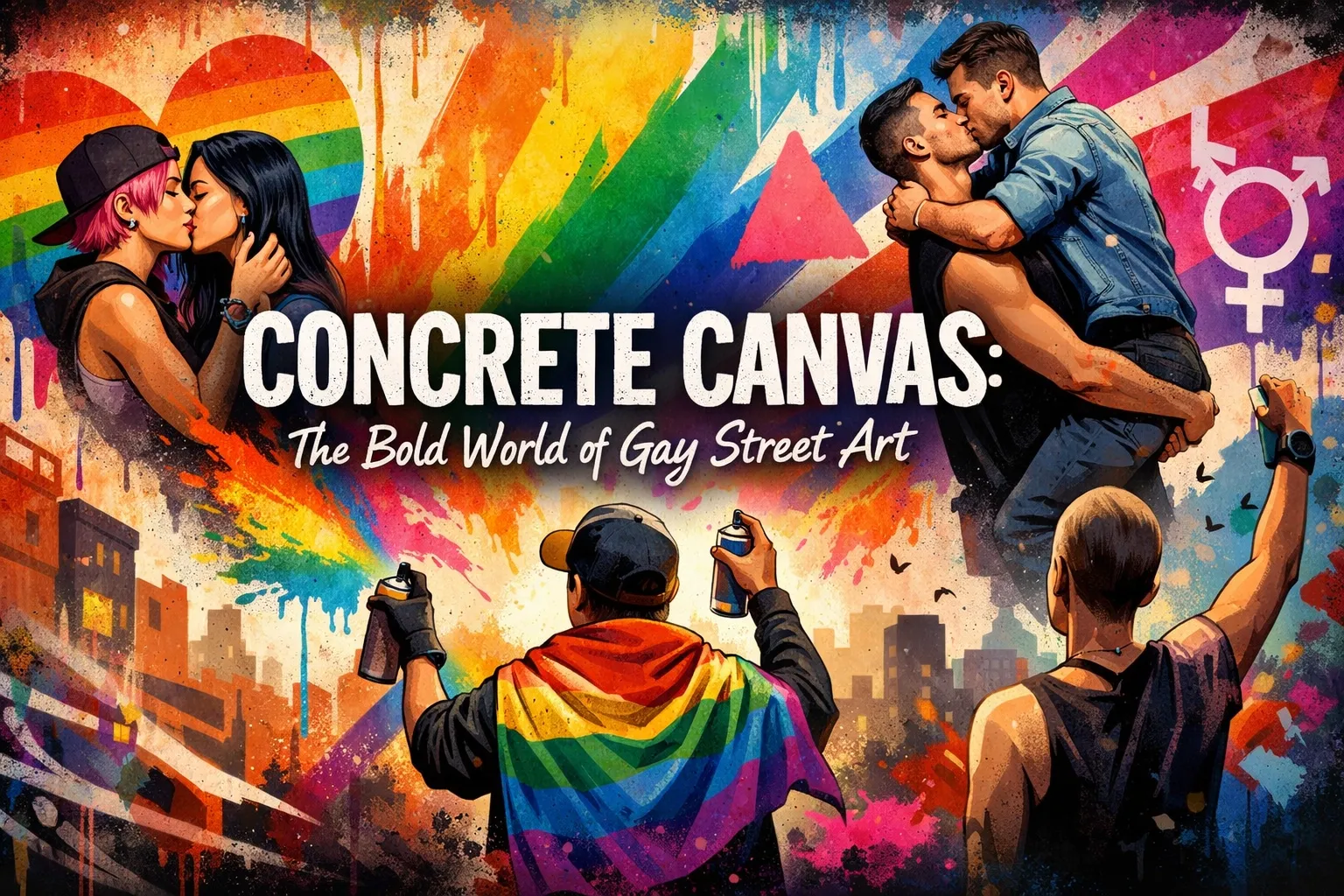
When the museum doors close, the streets keep talking. And in the world of gay street art, they're not just whispering: they're screaming, celebrating, protesting, and reclaiming public space one spray-painted rainbow at a time.
Street art has always been about giving voice to the voiceless, about turning concrete walls into manifestos. For LGBTQ+ artists, that canvas becomes something even more powerful: a declaration of existence in spaces that weren't built for us, a middle finger to heteronormativity, and a love letter to our community: all rolled into one vibrant, unapologetic image.
Why Street Art Matters for Our Community
Let's be real: LGBTQ+ people have been erased from public spaces for centuries. Our stories were hidden, our identities criminalized, our love deemed too controversial for polite society. So what did we do? We took to the streets, literally.
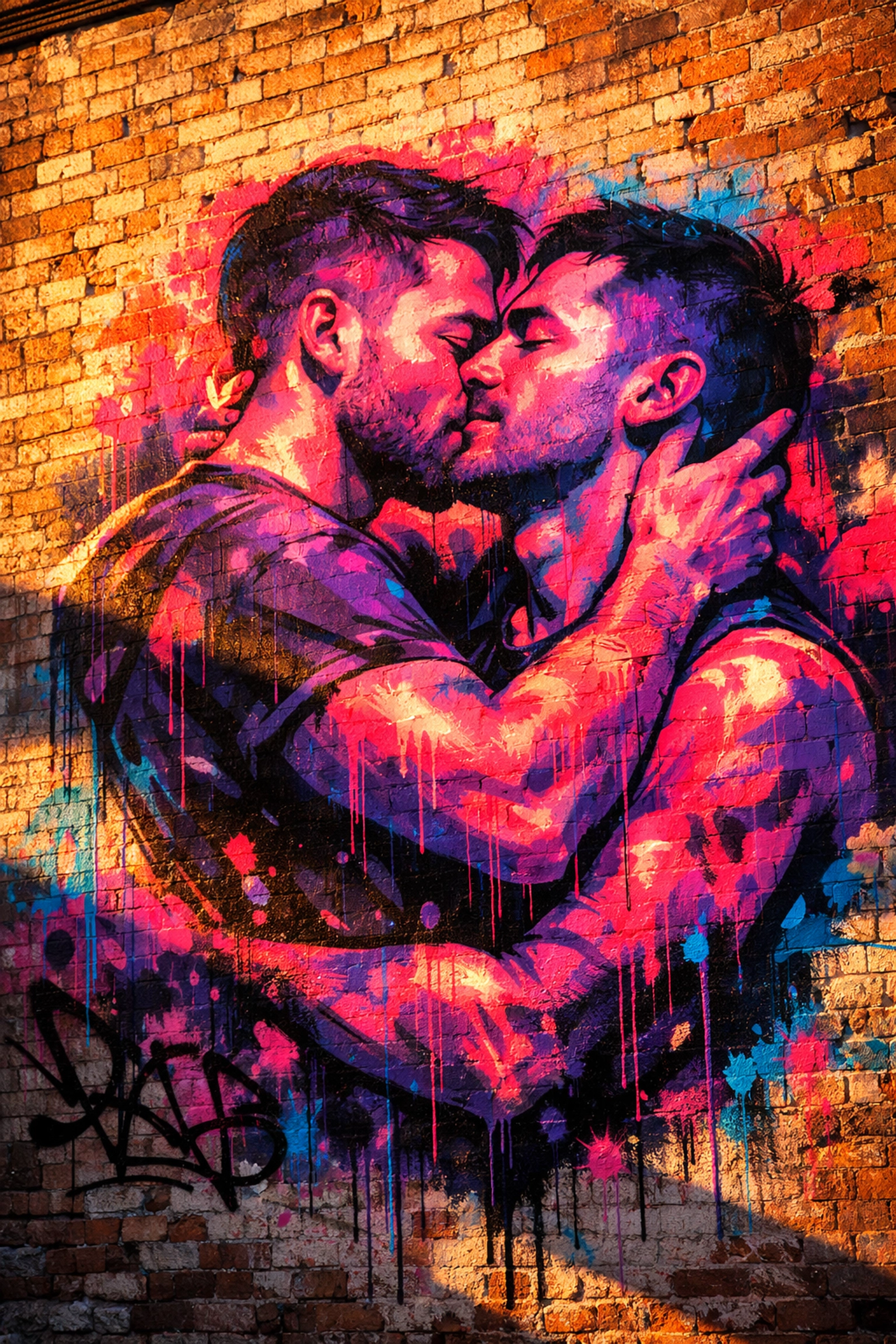
Gay street art isn't just about making things pretty (though, honey, we do that exceptionally well). It's about visibility. It's about marking territory in a world that told us we didn't belong. Every mural of two men kissing, every rainbow stencil, every portrait of a trans icon spray-painted on a building is a radical act of defiance.
Unlike gallery art that requires admission fees and "appropriate attire," street art is democratic. It meets people where they are: on their commute, their neighborhood, their daily walk. You can't look away. You can't pretend we don't exist.
The Political Power of Spray Paint
Street art has always been political, but gay street art? It's politics with glitter and a purpose.
During the AIDS crisis, when governments were silent and communities were dying, activists took to the streets. Stencils declaring "SILENCE = DEATH" appeared overnight. Guerrilla art installations transformed public spaces into memorials. These weren't just artistic expressions: they were emergency flares, screaming for attention when no one would listen.
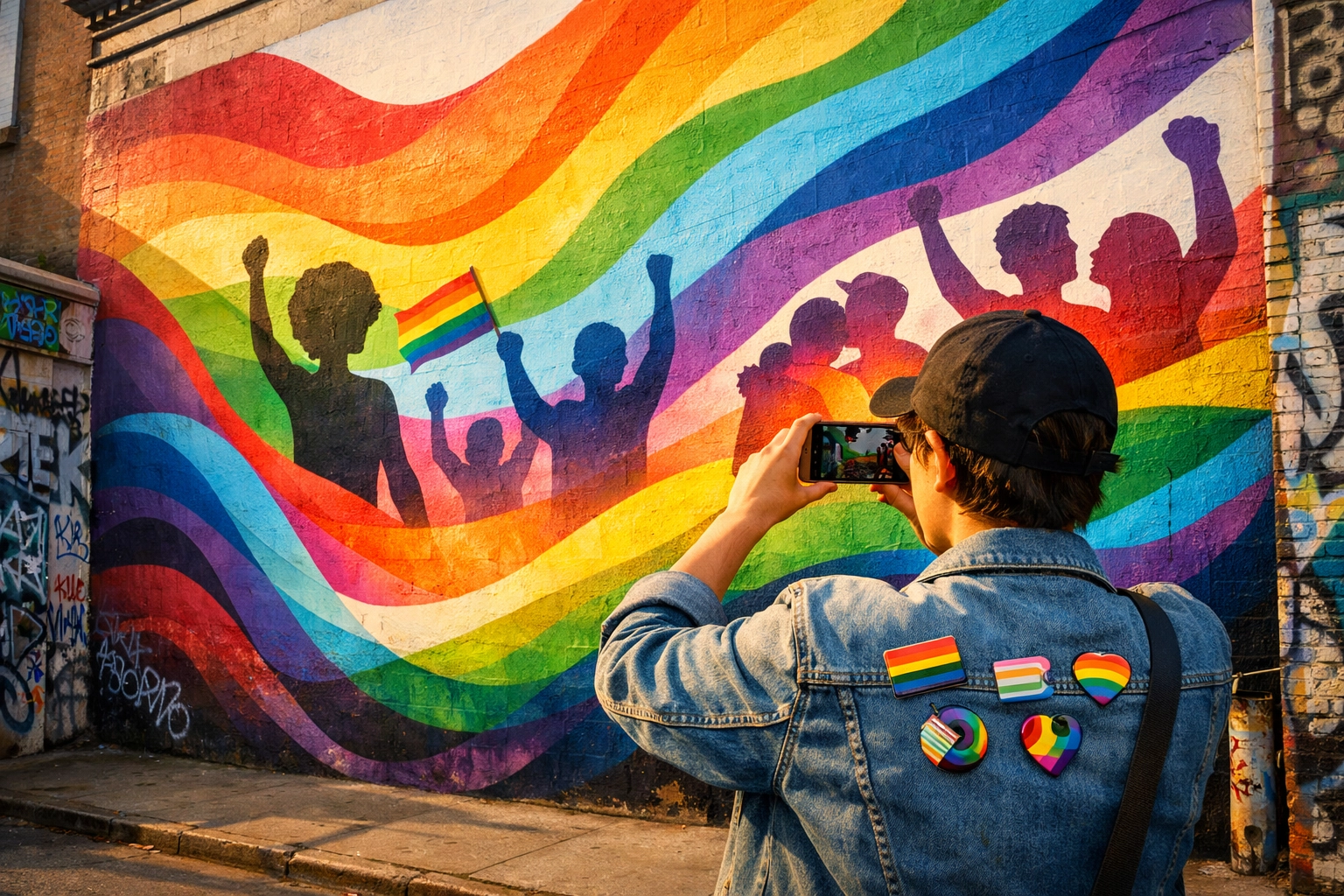
Today's gay street artists continue that tradition of urgent activism. They're tackling hate crimes, celebrating Pride, commemorating Stonewall, and calling out discrimination. They're painting over homophobic graffiti with fabulous murals. They're transforming pedestrian crossings into rainbow zebra stripes. They're making sure that every time someone tries to erase queer existence, we bounce back louder and more colorful than before.
The beauty of street art is its immediacy. A politician says something homophobic? By morning, there's a response on the wall opposite their office. A hate crime occurs in a neighborhood? Artists rally to create a memorial that refuses to let the community forget or accept violence as normal.
Themes That Define Gay Street Art
Walk through any city with a thriving LGBTQ+ street art scene, and you'll notice certain themes emerging like love stories written in spray paint and wheat paste.
Reclaiming Historical Icons: Gay street artists love bringing LGBTQ+ history out of the closet and onto the walls. You'll find portraits of Harvey Milk, Marsha P. Johnson, Sylvia Rivera, and other queer pioneers watching over neighborhoods like guardian angels in vivid color. These aren't just pretty pictures: they're educational tools, introducing new generations to their heritage.
Gender Fluidity and Trans Visibility: Street art has become a powerful medium for exploring and celebrating gender diversity. Murals featuring non-binary figures, trans flags integrated into elaborate designs, and images that deliberately blur gender lines challenge passersby to expand their understanding of identity.
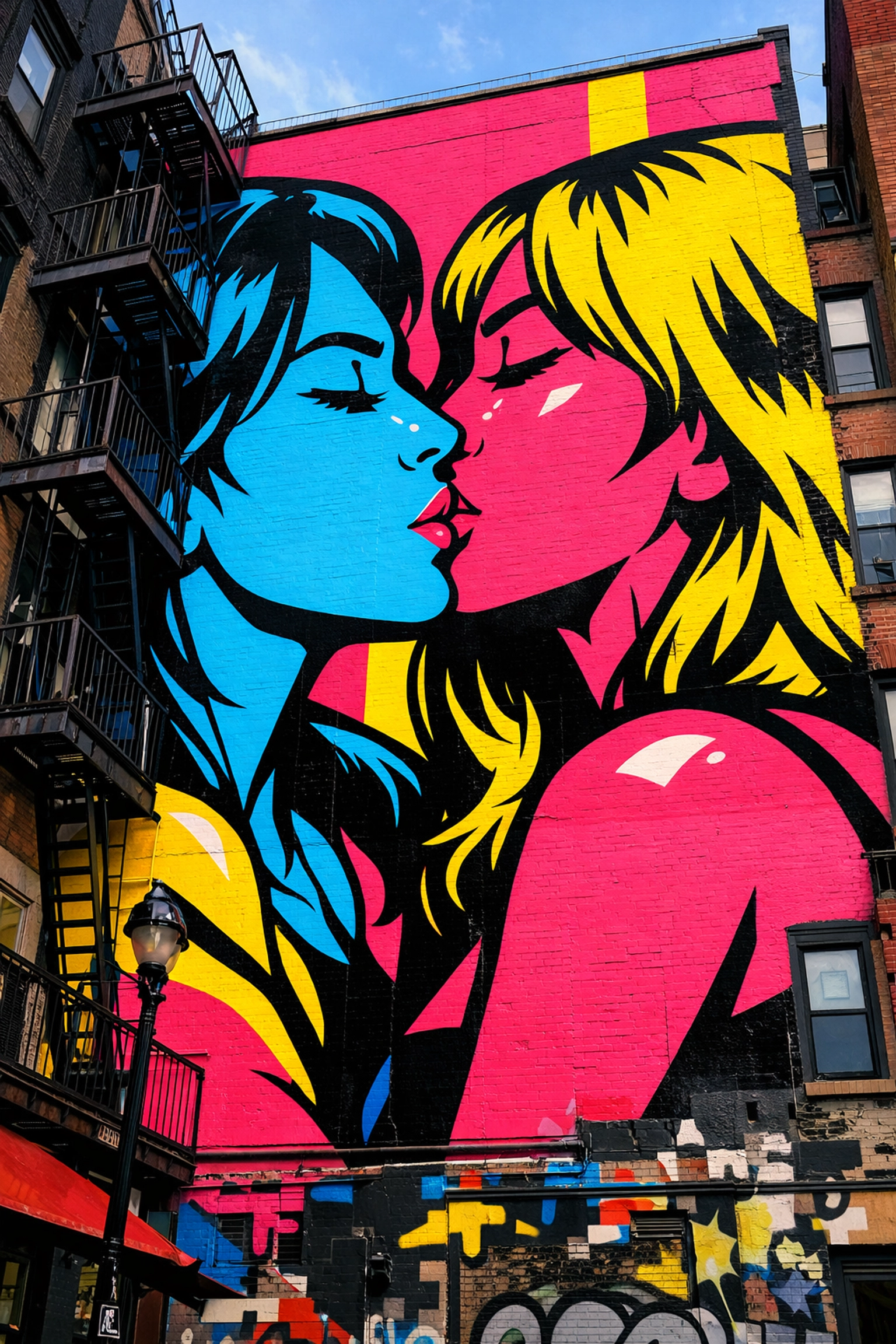
Love Without Apology: Perhaps the most common and powerful theme is simply love itself. Two men holding hands. Two women embracing. Couples of all gender expressions existing in public space without shame or censorship. In a world that still criminalizes same-sex love in over 70 countries, these images are revolutionary acts.
Camp Aesthetics: Let's not forget the sheer fabulousness. Gay street art often embraces camp, drag culture, and over-the-top glamour. Why? Because we've always used humor and style as weapons against oppression. A 20-foot mural of a drag queen in full regalia isn't just art: it's a celebration of everything heteronormative society told us to hide.
The Revolution on Walls
What makes gay street art particularly fascinating is how it documents our evolving fight for rights and recognition. Cities become living archives of queer struggle and triumph.
In San Francisco's Castro District, the walls tell the story of the gay rights movement from Stonewall to marriage equality. In London's Shoreditch, vibrant murals celebrate the UK's LGBTQ+ history while calling out ongoing challenges. Berlin's streets are covered with art that honors the city's legendary queer nightlife while remembering those lost to AIDS and Nazi persecution.
These aren't static museum pieces. Street art evolves, gets painted over, gets replaced. It's a living conversation between artists and their communities. A mural that celebrates a legal victory one year might be joined by a new piece protesting a setback the next. The walls breathe with our collective experience.
And here's the thing about visibility: it saves lives. When a queer kid in a conservative suburb sees a photo of gay street art from a big city, it plants a seed. It says, "There's a place where people like you exist openly. There's a community waiting for you." That message, delivered through art, can literally keep young people alive until they find their people.
Anonymous Heroes and Public Figures
Some gay street artists work under cover of night, their identities as mysterious as Banksy's. They risk arrest for illegal installations, but the message is too important to wait for permits. These anonymous creators understand that sometimes revolution requires a little law-breaking: a tradition as old as Stonewall itself.
Others work openly, commissioned by cities and organizations to transform public spaces legally. They turn building facades into celebrations of Pride, create crosswalks that become Instagram destinations, and design murals that become beloved neighborhood landmarks.
Both approaches matter. The guerrilla artist operating in the shadows proves that our voices won't be silenced by bureaucracy. The commissioned artist working with city approval proves we've earned a place at the table, that our stories deserve official recognition and protection.
The Digital Age Meets Street Art
Today's gay street artists have a secret weapon: social media. A mural in São Paulo can inspire an artist in Seoul. A wheatpaste installation in New York gets photographed, shared, and adapted by activists in Mumbai. Instagram and TikTok have transformed local street art into global movements.
This digital amplification means visibility multiplied. A piece that might be seen by a few hundred people daily in person can reach millions online. Suddenly, street art becomes part of international conversations about LGBTQ+ rights, representation, and resistance.
And let's talk about how Readwithpride.com connects with this artistic rebellion. Just as street artists are telling untold queer stories on concrete canvases, we're committed to sharing authentic LGBTQ+ narratives through literature. Whether it's MM romance books featuring artists finding love, gay fiction exploring creative communities, or stories that capture the bold spirit of queer activism, we celebrate every form of authentic expression.
Creating Change, One Wall at a Time
The ultimate power of gay street art is its refusal to be ignored. You can choose not to attend a gallery opening or skip the LGBTQ+ film festival, but you can't avoid that massive rainbow mural on your daily commute. You can't unsee the loving same-sex couple embracing on the building across from the bus stop.
This forced visibility might make some people uncomfortable: and that's exactly the point. Comfort has never driven social change. Progress happens when we occupy space unapologetically, when we refuse to shrink ourselves, when we paint our truths so large they can't be missed.
For LGBTQ+ youth, these images serve as beacons. For allies, they're educational moments. For homophobes, they're reminders that we're not going anywhere. For our community, they're love notes reminding us we're seen, we're valued, and we're part of something bigger than ourselves.
So next time you spot a rainbow on a building, a pride flag incorporated into graffiti, or a portrait of a queer icon watching over a street corner, take a moment. That's not just art: it's activism. It's history. It's someone saying, "We were here, we are here, we will always be here."
And that's what makes gay street art not just bold, but absolutely essential.
Want more stories celebrating LGBTQ+ creativity and culture? Follow us on Instagram, Facebook, and Twitter/X for daily inspiration. Discover authentic queer fiction and gay romance novels that capture the spirit of artistic rebellion at Readwithpride.com.
#GayStreetArt #QueerArt #LGBTQArtists #StreetArtActivism #PrideArt #ReadWithPride #QueerVisibility #LGBTQCulture #UrbanArt #MMRomance #GayFiction #LGBTQBooks #QueerStories #AuthenticLGBTQ #StreetArtCommunity #ArtIsActivism #RainbowWalls #GayRomanceBooks #LGBTQReading #QueerCreatives

Leave a Reply
You must be logged in to post a comment.