

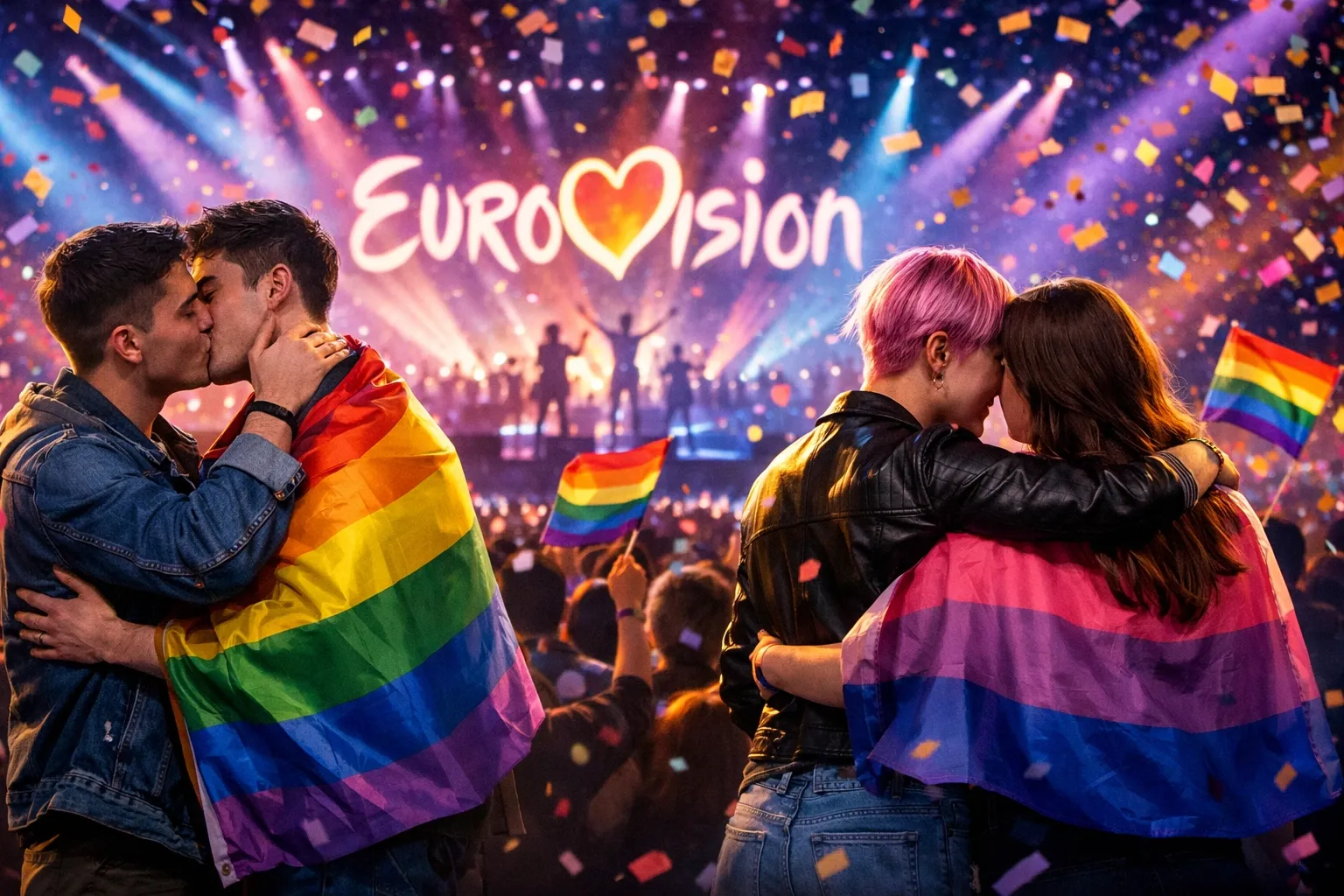
Every May, something extraordinary happens across Europe and beyond. For one glorious week, millions of people tune in to watch sequins, theatrical performances, and occasionally questionable song choices. But Eurovision isn't just about the music: it's about the moment when the entire LGBTQ+ community, regardless of where they live, gets to breathe a little easier.
Eurovision has become more than a singing competition. It's a temporary sanctuary, a shield, a brief moment where being proudly queer isn't just accepted: it's celebrated. And for people living in countries where holding hands with your partner could get you arrested, that week matters more than you might think.
The One Week Wonder
There's something almost magical about Eurovision's timing. It's not a permanent fixture in our lives; it comes once a year, sweeps through with its glitter cannons and key changes, and then vanishes until next May. That temporary nature is precisely what gives it power.
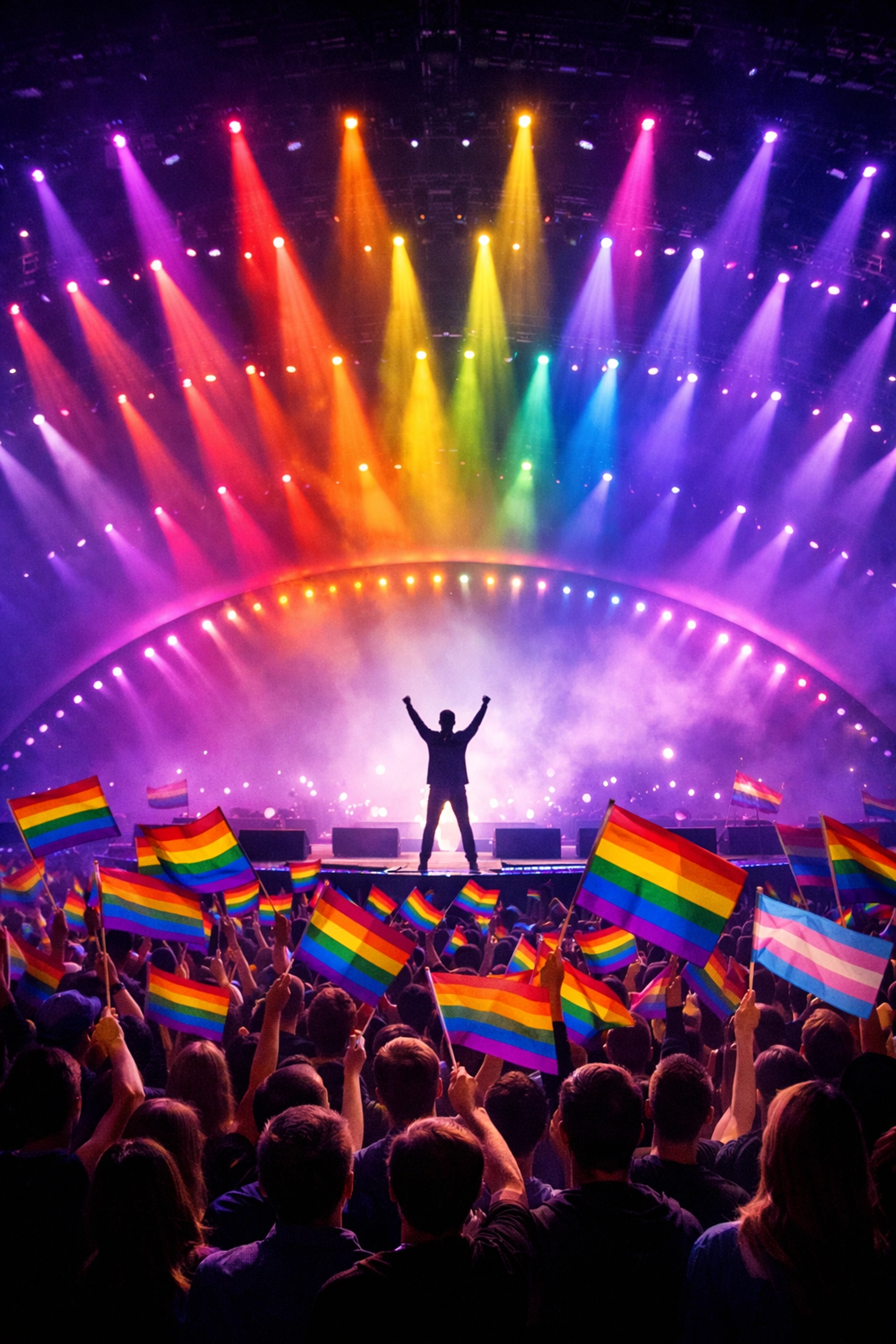
Scholars who study Eurovision have noted that the contest creates a "temporary safe space of competition among a community of nations." For that one week, the rules change. Countries that might otherwise impose strict anti-LGBTQ+ laws send delegations to a contest where drag queens, non-binary performers, and openly gay artists dominate the stage. The cognitive dissonance is real: and it's intentional.
This concentrated timeframe lifts fans "out of everyday sameness and into something else, if only for a week." For LGBTQ+ people in restrictive countries, that week becomes a pressure valve, a chance to see themselves represented on national television, broadcast into homes where such visibility would normally be censored or condemned.
When Home Isn't Safe
Let's be honest about what we're talking about here. In 2026, there are still dozens of countries where being gay is illegal. Some Eurovision participants come from nations where LGBTQ+ rights are, at best, precarious. Yet when Eurovision week arrives, these same countries broadcast performances that would never normally make it past their censors.
A young queer person in a conservative country might spend 51 weeks of the year hiding, code-switching, and wondering if they'll ever find community. Then Eurovision arrives. Suddenly, their national broadcaster is showing Conchita Wurst winning the whole damn thing with a beard and a ball gown. Finland sends a performer surrounded by neon boleros. Iceland's entry includes an on-stage kiss that goes viral.
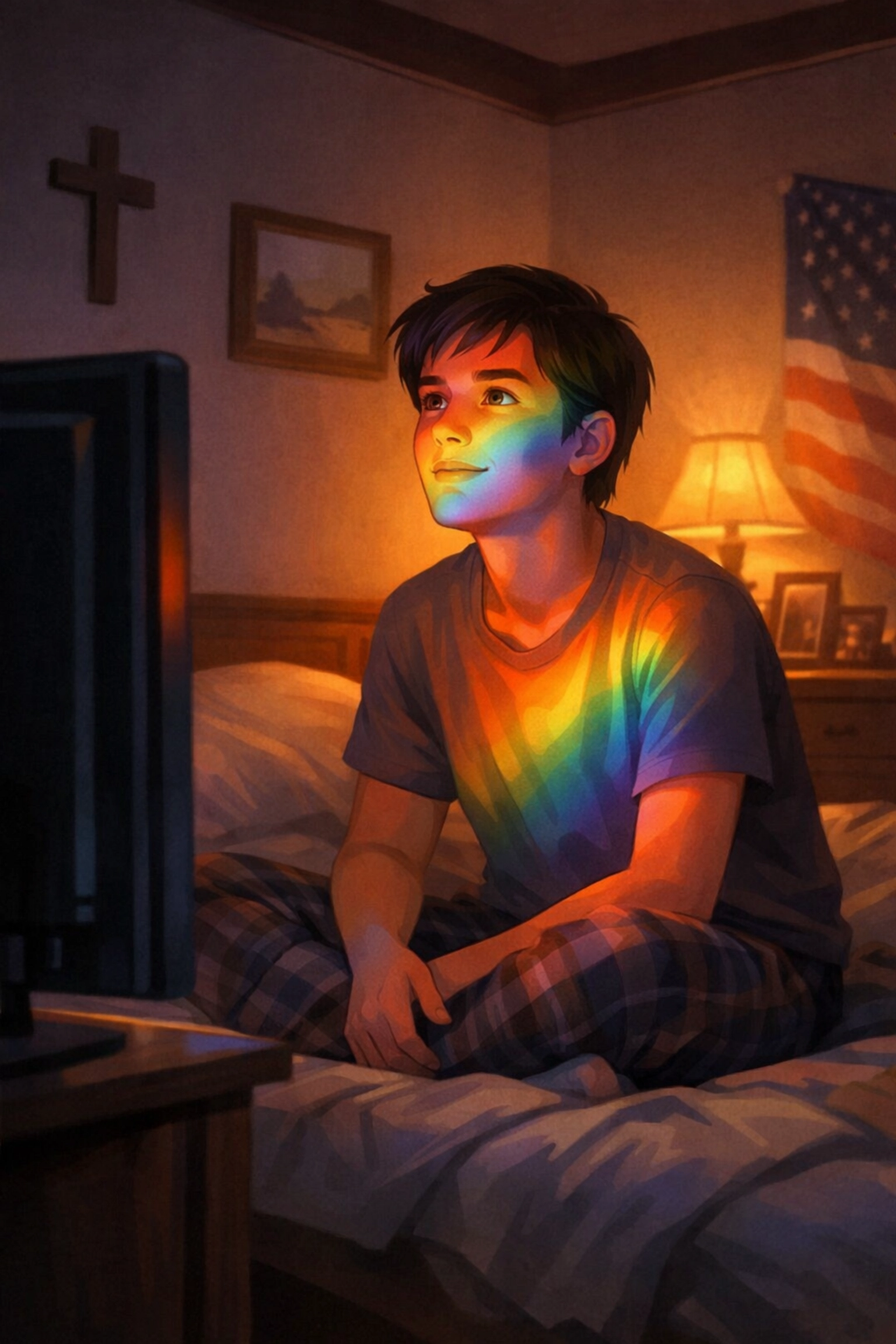
For that week, the television becomes a window to a world where being different isn't just tolerated: it's rewarded with standing ovations and 400 million viewers. The impact of seeing yourself reflected, even temporarily, cannot be overstated. It's not permanent safety, but it's proof that another world exists.
The Shield That Eurovision Provides
Eurovision functions as a cultural shield in fascinating ways. National broadcasters who participate must, by the rules of the European Broadcasting Union, air the contest in full. This means that even in countries with strict LGBTQ+ censorship laws, the performances go out largely unedited during that week.
Governments that might normally ban such content find themselves in a bind. Pulling out of Eurovision comes with social and political costs: the contest is wildly popular, and citizens expect their country to participate. So they grit their teeth and let the rainbow flags wave, just for one week.
This creates a unique phenomenon: temporary LGBTQ+ visibility in places where it's otherwise impossible. Young people in these countries take note. They record the performances, share clips, create fan communities online. Eurovision becomes a rallying point, a shared cultural moment that says, "You're not alone, and you're not wrong."
The Tension Between Fantasy and Reality
Of course, we have to acknowledge the elephant in the arena. Eurovision's status as a safe haven is both real and deeply complicated. The 2023 contest, held in Liverpool on behalf of Ukraine, broadcast while air raid sirens sounded in Kyiv. Israel's 2024 entry faced protests, jeers, and death threats while the competition continued inside the venue.
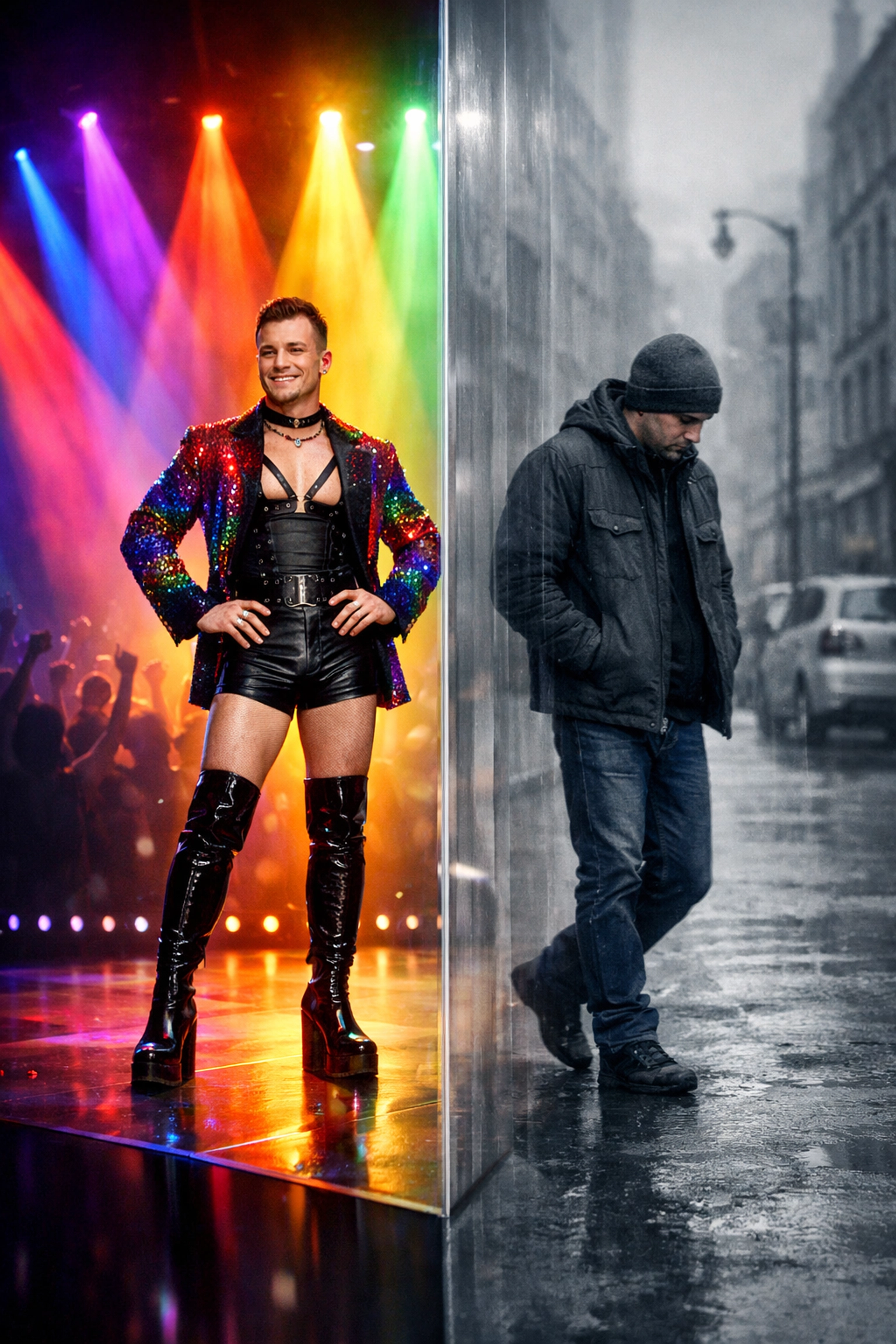
Eurovision Director Martin Green has insisted that "Eurovision is a competition between public broadcasters, not between nations, and it must not be used as a springboard for political sanctions." But that stance itself is political. When you create a space that celebrates diversity and inclusion, you're making a statement: even if you claim neutrality.
The contest walks a tightrope. It wants to be a safe haven unified by music, but the real world keeps crashing the party. And perhaps that tension is part of what makes Eurovision meaningful. It's not a perfect sanctuary removed from all conflict. It's a deliberate choice to create space for joy, visibility, and celebration despite the conflicts that surround it.
Why Temporary Matters
You might wonder: if Eurovision is only a temporary safe space, what's the point? Why celebrate something so fleeting?
Because sometimes temporary is enough to change everything.
That one week of visibility plants seeds. A teenager in a restrictive country sees Dana International win in 1998 and realizes trans people exist. A young gay man in Eastern Europe watches Måns Zelmerlöw's performance and thinks, "Maybe I could be that confident someday." A non-binary kid sees multiple countries sending gender-nonconforming artists and understands they're not alone.
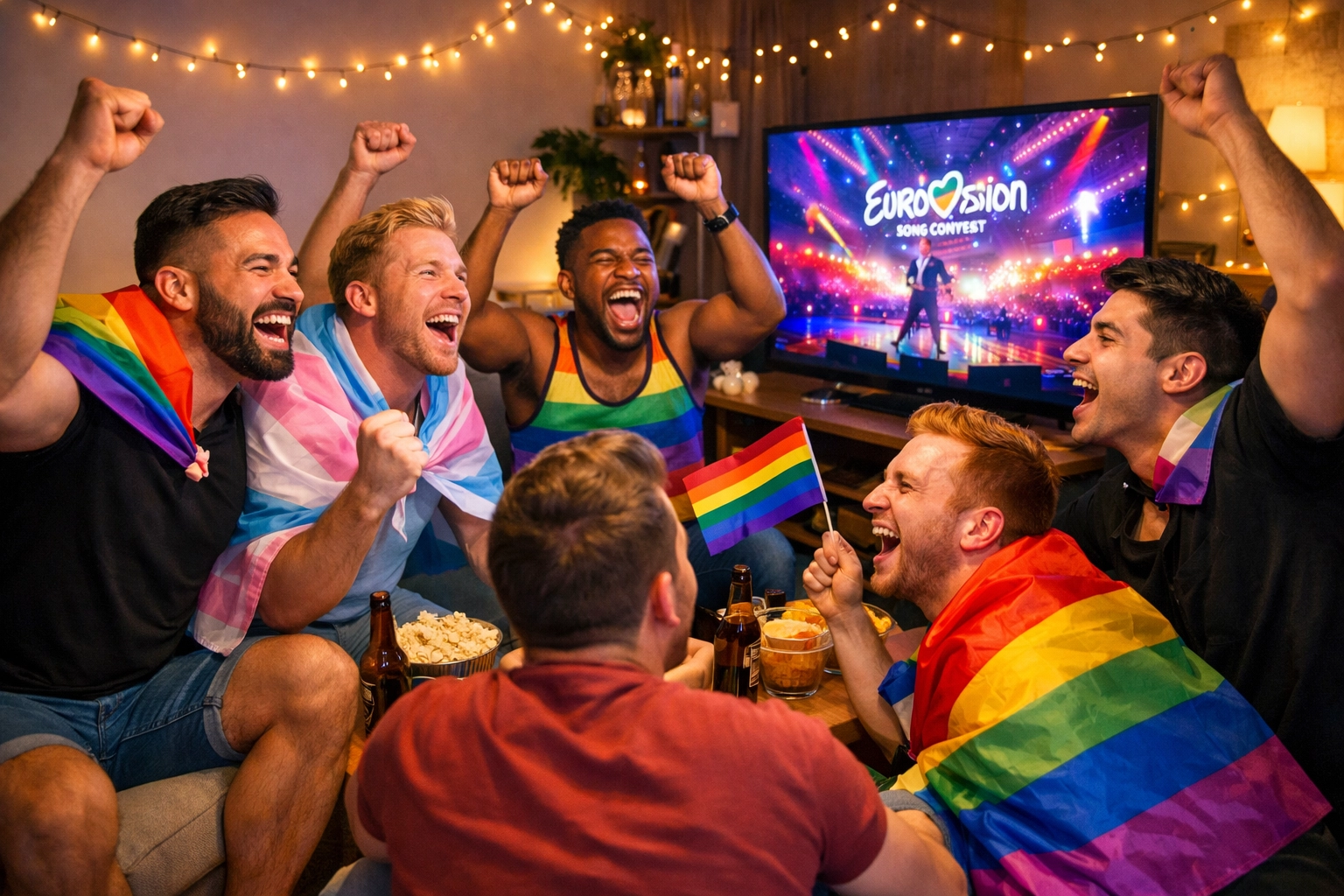
These moments accumulate. Eurovision's temporary sanctuary becomes an annual touchstone, a reminder that the way things are isn't the way things have to be. It's permission to imagine differently, even if just for a week.
And here's the thing about temporary safe spaces: they prove that safety is possible. If it can exist for one week, why not two? Why not all year? Eurovision becomes evidence in an argument for permanent change.
The Ripple Effect
The impact of Eurovision as a shield extends beyond the contest itself. Fan clubs form in countries where LGBTQ+ organizing would normally be dangerous. Watch parties become subtle community gatherings. Online fan forums create international connections between queer people who might never otherwise find each other.
Eurovision gives people something concrete to point to when arguing for LGBTQ+ rights. "If we can broadcast this on national television for Eurovision, why can't we have Pride events?" It's not a perfect argument, but it's a starting point.
The contest also provides international pressure without feeling like foreign intervention. When your country participates in Eurovision, you're voluntarily joining a community with shared values: including respect for diversity. That creates a framework for advocacy that comes from within rather than being imposed from outside.
Finding Your Own Safe Havens
Eurovision teaches us something important about temporary sanctuaries: they matter. You don't need permanent, perfect safety to create meaningful change. Sometimes a week is enough to show people what's possible.
At Read with Pride, we understand the power of temporary escapes that create lasting impact. Every MM romance novel, every gay love story, every piece of LGBTQ+ fiction serves a similar function: it's a sanctuary between pages, a safe space you can carry with you wherever you go.
Until next year's Eurovision, you can find your own shield in the stories we share. Check out our collection of gay romance books and LGBTQ+ fiction that celebrate love in all its forms, no matter where you're reading from.
Follow us for more LGBTQ+ content:
#Eurovision #LGBTQCommunity #ReadWithPride #GayRomance #MMRomance #QueerFiction #LGBTQBooks #GayBooks #EurovisionHistory #PrideReads #LGBTQRepresentation #QueerVisibility #MMRomanceBooks #GayLoveStories #ReadwithPride #LGBTQFiction #GayNovels #QueerCulture #2026Pride

Leave a Reply
You must be logged in to post a comment.