

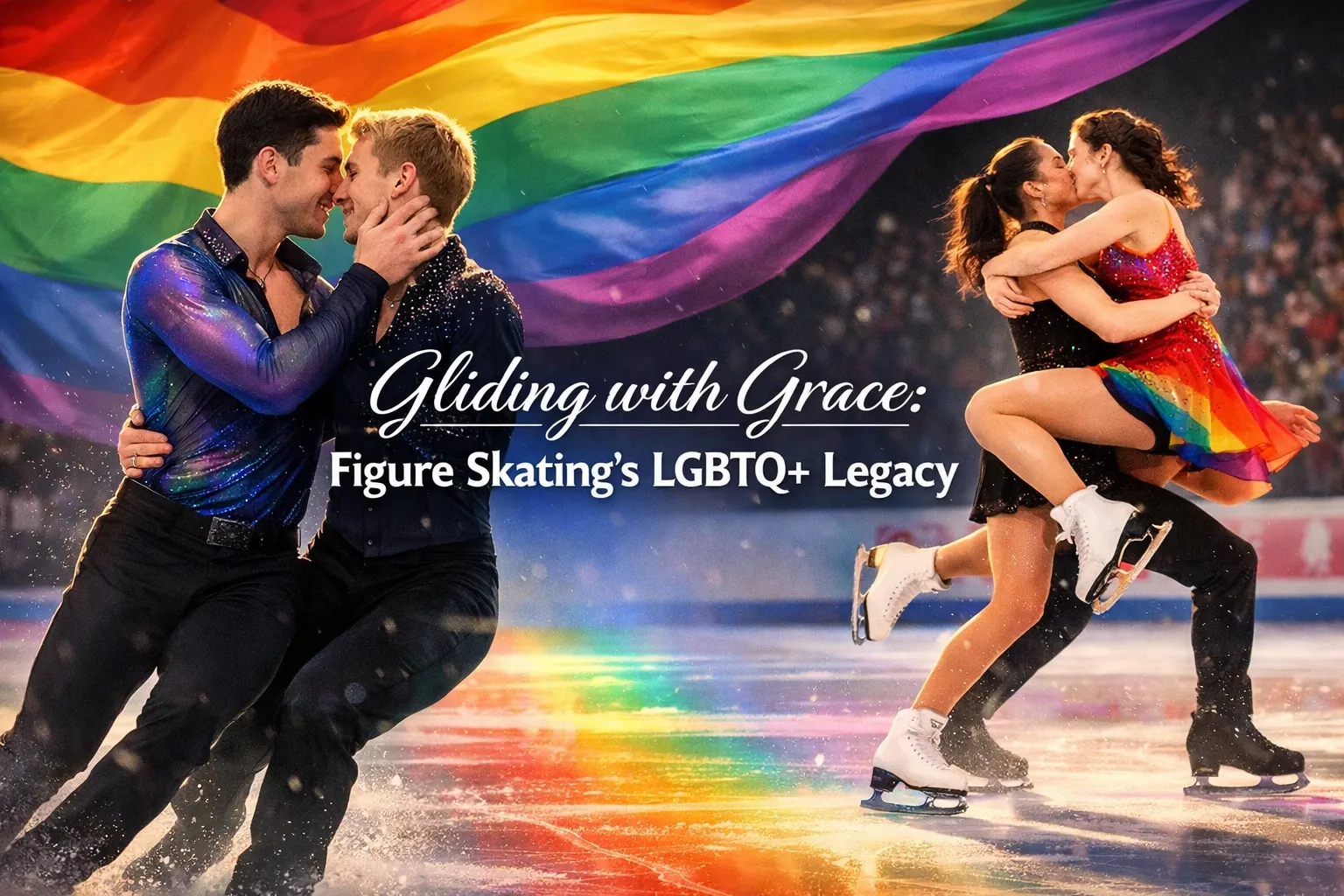
There's something magical about watching a figure skater glide across the ice, the way they transform cold, hard surfaces into canvases for breathtaking artistry. The spins, the jumps, the costumes that shimmer under arena lights. But beneath all that sequined beauty lies a story that's been hiding in plain sight for over a century: figure skating's deep, complicated, and ultimately triumphant LGBTQ+ legacy.
If you've ever found yourself captivated by a skater's performance, you've witnessed more than athletic prowess. You've seen decades of queer resilience, creativity, and courage crystallized into four minutes of pure expression.
The Secret Society on Ice
Picture this: it's 1871 in Prague's Wenceslas Square. Jackson Haines, considered the father of modern figure skating, takes to the ice dressed as a woman in one program, then performs same-sex ice dancing with his Austrian protégé Franz Bellazi. Yeah, figure skating's queer roots go back that far.
Fast forward to the mid-20th century, and the ice was teeming with LGBTQ+ competitors, coaches, and officials. But here's the catch: they were all part of what one World champion called "our own secret little society." Everyone knew, but nobody talked about it. The sport maintained a strict "stay in the closet" culture that kept incredible athletes and artists silent about their true selves.
As late as 1989, figure skating leadership was still trying to "masculinize" the sport, suggesting rule changes to men's costuming and: get this: eliminating flower bouquets on podiums. Because apparently, flowers are too gay? The absurdity would be funny if it wasn't so heartbreaking.
Breaking Through the Ice
The 1990s started chipping away at that closet door. In 1992, Canadian skater Matthew Hall became one of the first elite athletes to publicly come out during active competition. Then came 1996, when Rudy Galindo delivered what's been called "one of the most unforgettable skates in history" at the U.S. National Championships, becoming the first openly gay man and Mexican-American to win a gold medal in the sport.
The 2000s brought us Johnny Weir, who didn't just compete: he performed. With his effeminate costuming and choices to skate to traditionally female music, Weir pushed boundaries without apologizing. He was unapologetically himself on ice, and it changed the game.
But the real watershed moments came in 2015 and 2018. Eric Radford became the first out gay man to win an Olympic medal when he and partner Megan Duhamel took the world pairs title. Then in 2018, Adam Rippon made history as the first openly gay Olympic figure skater from Team USA: and went on to win Dancing with the Stars, because one historic victory apparently wasn't enough for him.
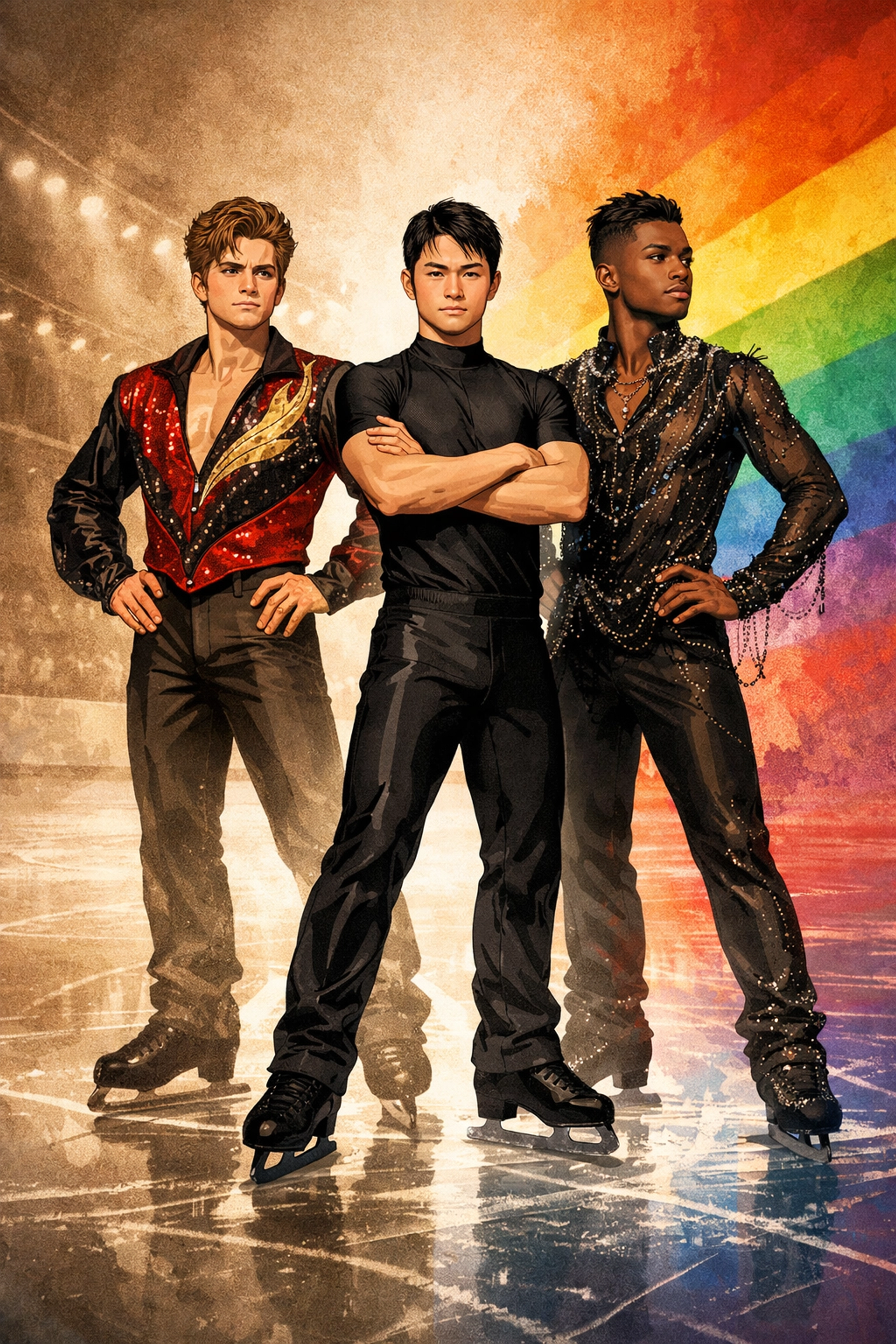
That same year, Timothy LeDuc became the first openly gay pairs U.S. champion, and Karina Manta became the first out female figure skater to compete for Team USA, forming the first openly LGBTQ+ ice dance team with Joe Johnson. Suddenly, the closet door wasn't just cracked: it was wide open.
The Tragedy We Can't Forget
No discussion of LGBTQ+ figure skating history is complete without acknowledging the AIDS crisis. More than twice as many figure skaters died from HIV/AIDS complications than perished in the infamous 1961 Sabena Crash. We lost Olympic medalists and world champions: John Curry, Ondrej Nepela, Brian Pockar, Robert McCall: artists who had so much more to give.
This devastating chapter of the sport's history remains critically important and deserves recognition. These weren't just statistics; they were pioneers who helped shape figure skating into the art form we know today.
Artistry, Expression, and Finding Your Voice
What makes figure skating so inherently queer? Maybe it's the emphasis on beauty over brute strength. The celebration of grace and artistic expression. The sequins. (Definitely the sequins.)
But seriously: figure skating has always been a sport where you could tell a story, embody a character, express emotions that might not fit into neat, heteronormative boxes. It's no coincidence that LGBTQ+ skaters have pushed the sport's artistic boundaries. Timothy Goebel pioneered quadruple jumps, while John Curry brought ballet-style artistry to competition in ways that revolutionized men's skating.
Adam Rippon's bare-shouldered performance in 2016 symbolized more than just a costume choice: it represented the sport's evolving attitudes toward self-expression and gender presentation. These athletes weren't just competing; they were showing young queer kids watching at home that there's power in being authentically yourself.
From Ice to Page: Finding Yourself in Stories
The themes that resonate in figure skating: finding your voice, overcoming adversity, daring to be different, pursuing passion against all odds: sound familiar, right? They're the same themes that make MM romance and gay fiction so compelling.
Whether you're watching a skater nail a triple axel or reading about characters finding love against the backdrop of their own challenges, you're experiencing stories of courage and authenticity. That's why at Read with Pride, we celebrate these narratives: because representation matters, whether it's on ice or on the page.
Looking for stories that capture that same blend of artistry, emotion, and triumph? Check out our collection of MM romance books and gay fiction that explore themes of self-discovery and love. From slow burn romances to athletic-themed contemporaries, these LGBTQ+ ebooks deliver the emotional depth and authentic representation our community deserves.
Building Community, One Glide at a Time
The LGBTQ+ figure skating community didn't just wait for acceptance: they built their own support structures. The International Gay Figure Skating Union was founded in 1991 in New York. In 1998, Lorrie Kim launched Rainbow Ice, the first website dedicated to promoting LGBTQ+ figure skaters.
These efforts created spaces where young queer skaters could see themselves reflected, find mentors, and feel less alone. Initiatives like the It Gets Better Project continue this work today, helping support LGBTQ+ skaters facing bullying and discrimination.
The Future Looks Fabulous
Today's figure skating landscape would be unrecognizable to athletes from just a few decades ago. Out competitors are winning medals, changing rules, and most importantly: being themselves without apology. The sport that once silenced queer voices now celebrates them.
But let's be real: there's still work to do. Not every country has embraced LGBTQ+ athletes equally. Discrimination still exists. Young queer skaters still face challenges. The journey toward full acceptance and celebration continues.
What gives us hope? The trailblazers who refused to stay silent. The community that built support systems when official channels failed them. The athletes competing today who carry forward a legacy of grace, strength, and unapologetic authenticity.
Figure skating's LGBTQ+ legacy reminds us that sometimes the most revolutionary act is simply being yourself: whether that's on ice, in competition, or curled up with a great gay romance novel from Read with Pride. Because every story of authenticity matters, and every voice deserves to be heard.
Want more LGBTQ+ stories that celebrate authentic representation? Explore our curated collection of MM romance books, queer fiction, and gay novels at www.readwithpride.com. From heartfelt contemporaries to steamy romances, find your next favorite read today.
Connect with us:
📘 Facebook
🐦 X/Twitter
📸 Instagram
#LGBTQHistory #FigureSkating #QueerAthletes #MMRomance #ReadWithPride #GayRomanceBooks #LGBTQFiction #QueerStories #GayBooks #MMRomanceBooks #LGBTQPride #AuthenticRepresentation #GayFiction #QueerCommunity #LGBTQEbooks #2026GayBooks #GayLoveStories #MMNovels #PrideReading

Leave a Reply
You must be logged in to post a comment.