


There's something profoundly liberating about standing naked on a windswept beach, with nothing between you and the horizon but salt air and possibility. Welcome to Rooster Beach: or as the locals call it, Plage du Coq: Belgium's not-so-secret sanctuary where the North Sea meets queer freedom in the most beautifully unfiltered way.
This is Story #12 in our Naked Horizons series, where we explore the beaches that have become havens for the LGBTQ+ community. Today, we're heading to the Belgian coast, where wild dunes, biting winds, and a storied history converge to create one of Europe's most authentic gay nudist experiences.
The Beach That Time (Almost) Forgot
Tucked along Belgium's coastline, Rooster Beach isn't the kind of place you stumble upon by accident. There are no flashing signs or boardwalk cafés here. Instead, you'll find a stretch of sand that feels almost forgotten by time: in the best possible way. The dunes rise like natural walls, offering shelter from prying eyes and creating intimate pockets where the queer community has gathered for decades.
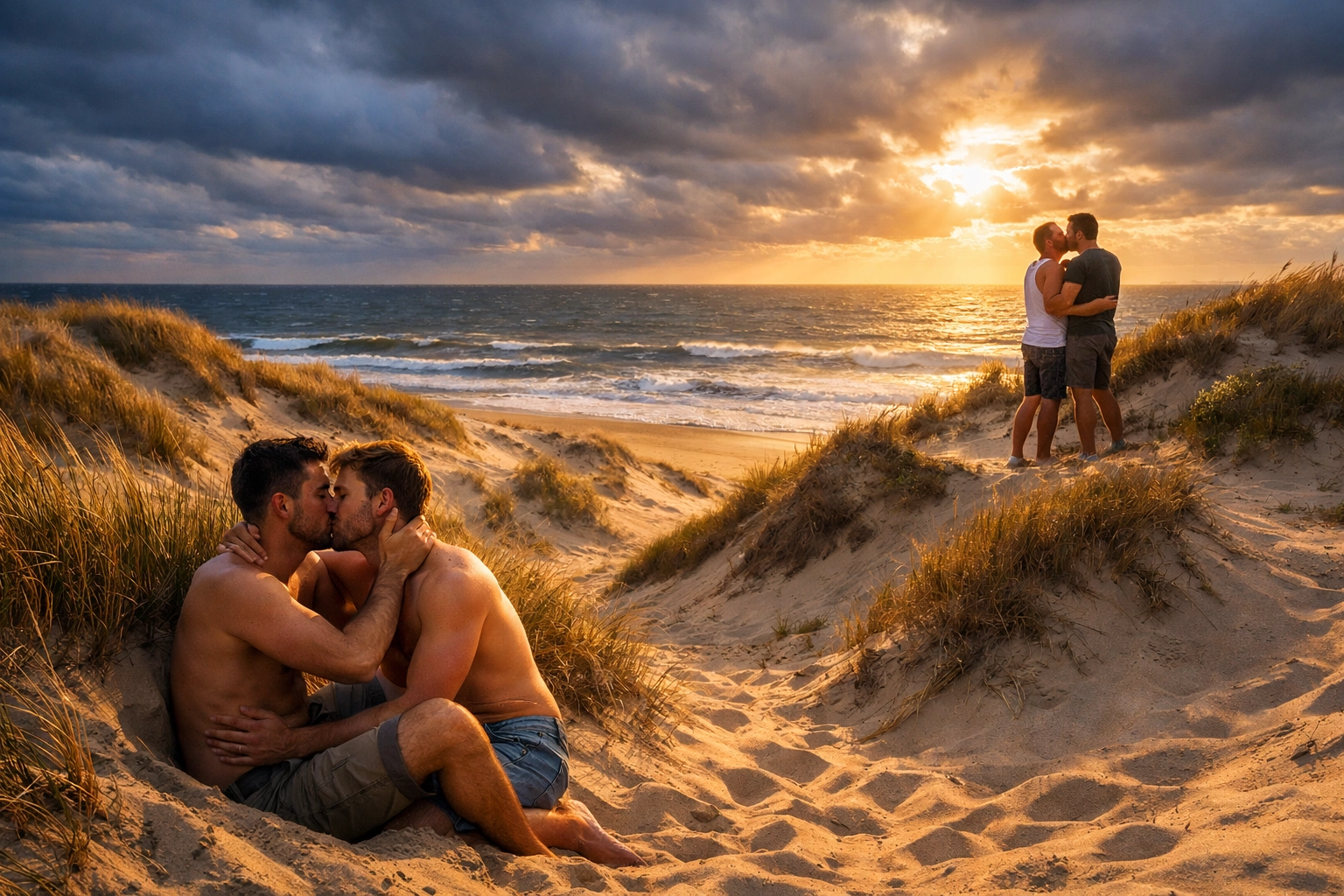
The name itself: Rooster Beach or Plage du Coq: carries a cheeky double meaning that isn't lost on anyone who visits. It's been a winking nod to the gay community since the 1970s, when this remote stretch of coastline quietly became a gathering place for men seeking both sun and connection away from judgmental stares.
Unlike the more famous beaches in France or Spain, Rooster Beach maintains a raw, unpolished character. The North Sea doesn't play nice here: the water is cold, the winds are fierce, and the weather is moody. But that's precisely what makes it special. This isn't about Instagram-perfect beach days. It's about authenticity, community, and the kind of freedom that only comes from being completely yourself in an unforgiving yet beautiful landscape.
A History Written in Sand and Secrets
Every great queer space has an origin story, and Rooster Beach's is rooted in quiet resistance. During the 1970s and 80s, when being openly gay in many European countries still carried significant social risk, places like this beach became vital sanctuaries. Men would make the journey to this remote section of the Belgian coast, knowing they could shed both their clothes and their societal masks.
The dunes became more than just natural formations: they were shields, creating private valleys where people could sunbathe, swim, and simply exist without fear. Over the decades, these gatherings evolved from secretive meetups into a more established, if still discrete, community tradition.
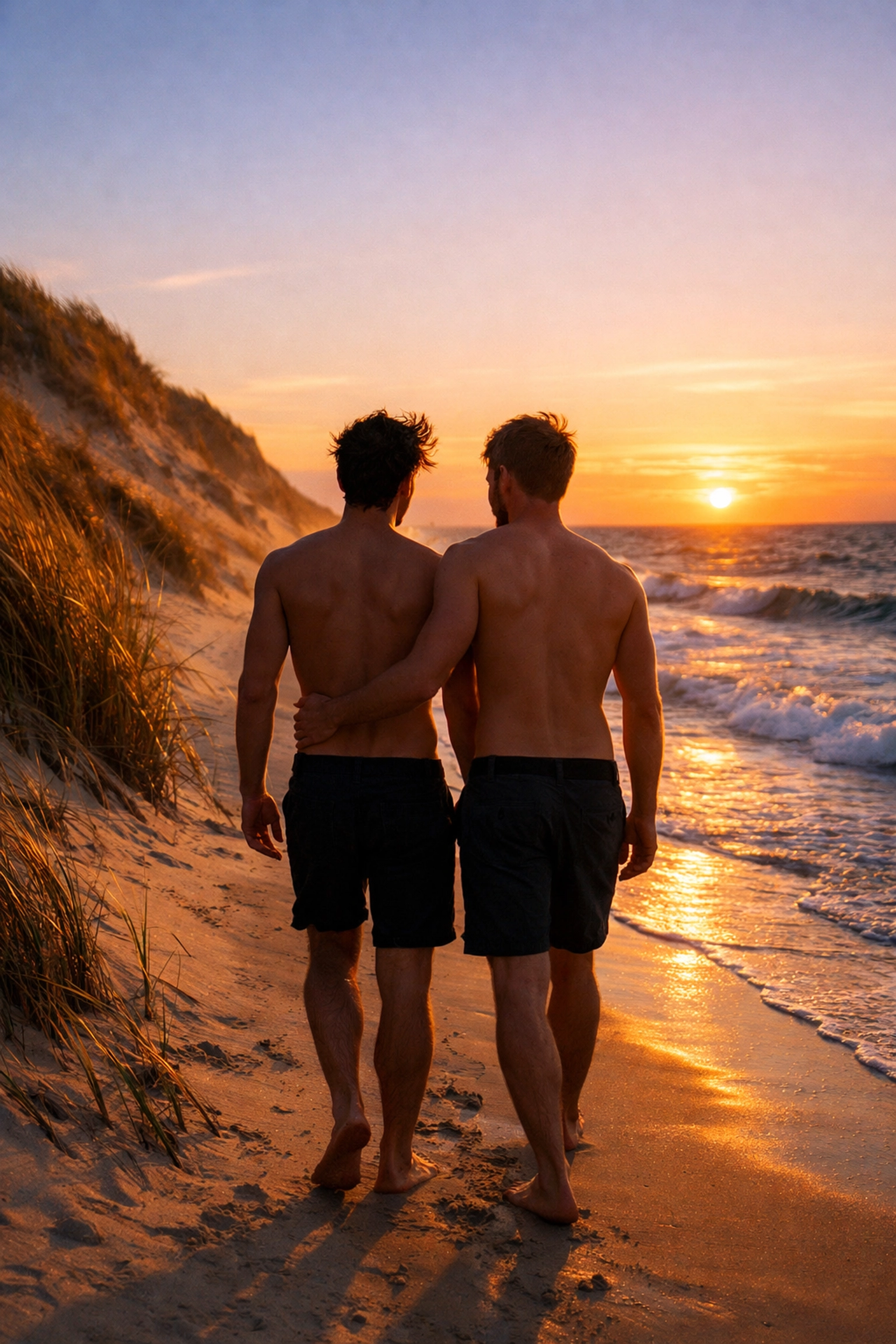
What's remarkable about Rooster Beach is how it has maintained its authenticity even as other gay beaches have become commercialized or lost their edge. There are no beach clubs here, no DJ sets blasting dance music, no overpriced cocktail bars. It's just you, the sand, the sea, and whoever else has made the pilgrimage that day.
The North Sea Experience: Not for the Faint of Heart
Let's be honest: the North Sea isn't the Mediterranean. The water temperature rarely creeps above 18°C (64°F) even in summer, and the waves can be rough. The wind whips across the beach with enough force to remind you that nature is very much in charge here. Some days, the sky is grey and brooding; others, it's brilliantly clear, with sunlight dancing on the water.
But there's something incredibly grounding about this harsh beauty. When you strip down at Rooster Beach, you're not just getting naked: you're stripping away pretense, expectation, and the comfortable facades we wear in everyday life. The cold water shocks you awake. The wind reminds you that you're alive. The sand beneath your feet connects you to something primal and real.
This isn't a beach for passive sunbathing. It demands that you engage with it, that you respect it. And in return, it offers a kind of freedom that's hard to find in our overly curated, Instagram-filtered world.
What Makes It Special for Our Community
Rooster Beach holds a particular significance for the gay community that goes beyond just being clothing-optional. It represents a space where body positivity isn't just a hashtag: it's the lived reality. Here, all bodies are welcome: young, old, fit, not-so-fit, hairy, smooth, tattooed, scarred. The diversity of human forms on display is a powerful reminder that desirability isn't a narrow, marketed ideal.
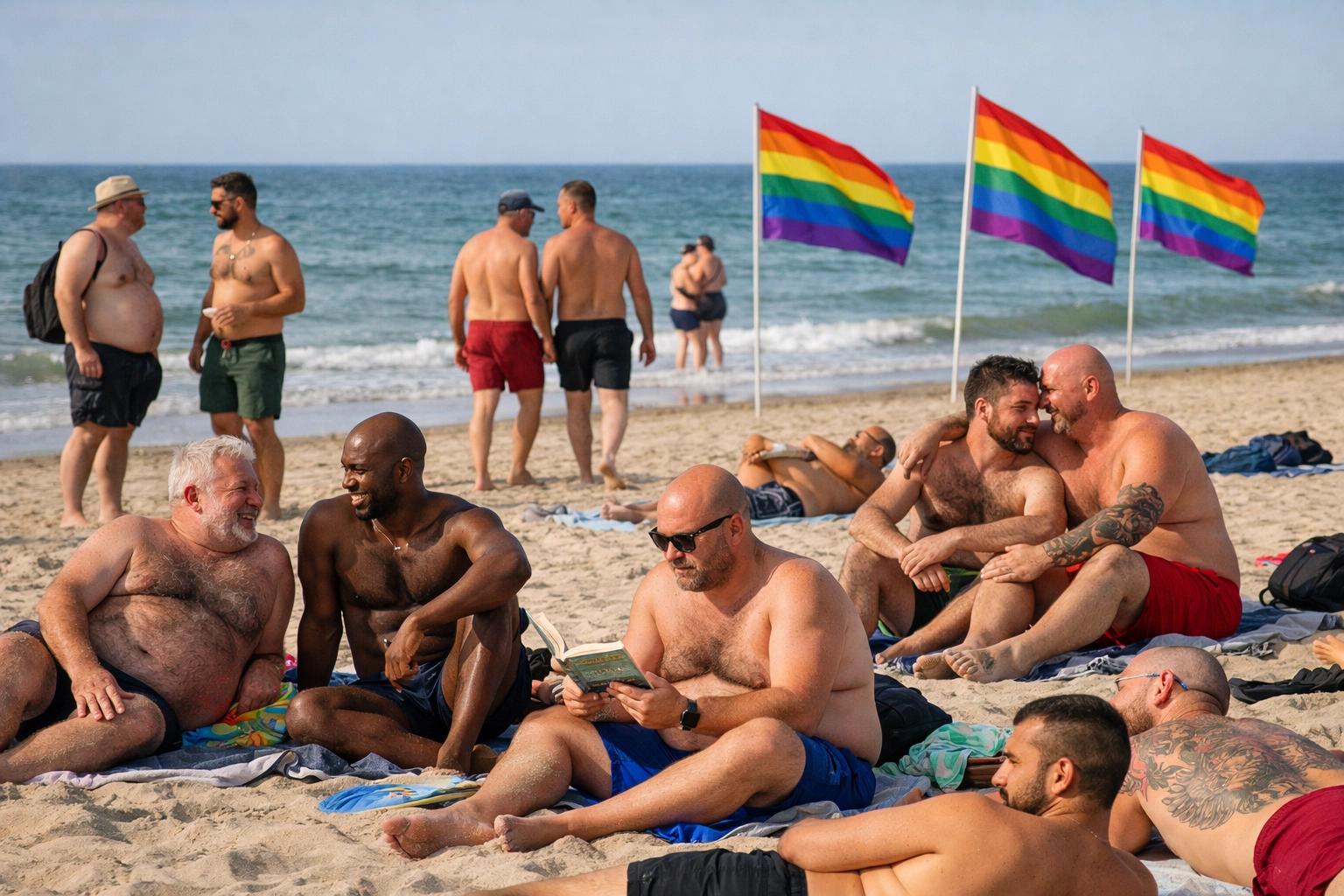
There's also an unspoken code of respect that permeates the beach. While Rooster Beach has historically been known as a cruising spot, there's a balance between sensuality and community that most visitors honor. It's a place where you can be sexual without everything being sexualized, if that makes sense. You can make connections: whether they're fleeting or meaningful: but there's also space for those who just want to read a book, take a solitary walk along the waterline, or chat with fellow beachgoers about life, love, and everything in between.
The beach attracts a mix of locals and international visitors, creating a microcosm of queer Europe. On any given day, you might hear Dutch, French, German, and English floating on the breeze. Despite language barriers, there's a shared understanding: everyone here gets it. This is sacred ground for the community.
Practical Tips for Your Visit
If you're planning to experience Rooster Beach yourself, here are some things to know:
Getting There: The beach is accessible from several coastal towns along the Belgian coast. Most visitors park nearby and walk through the dune paths. Look for the more secluded sections away from family beaches: you'll know you're in the right place when you see the rainbow flags and a predominately male crowd.
What to Bring: Pack layers because the weather is unpredictable. Even on warm days, the wind can be cold. Bring sunscreen (all-over coverage is essential when you're fully exposed), water, snacks, and perhaps a windbreak if you plan to stay for hours. A towel large enough to sit on is crucial: the sand gets everywhere.
Best Time to Visit: Summer months (June through August) offer the warmest weather, though "warm" is relative. Weekends tend to be busier, while weekdays offer more solitude if that's your preference.
Respect the Space: Remember that this is a community beach with decades of history. Practice good beach etiquette, respect others' boundaries, and help keep the area clean. What you take in, take out.
The Naked Truth
At its core, Rooster Beach represents something fundamental about queer spaces: they're not always glamorous or comfortable, but they're ours. In an era where so many LGBTQ+ venues are disappearing or being sanitized for mainstream consumption, places like this remain defiantly authentic.
Standing naked on this beach, with the North Sea wind whipping around you and the dunes stretching endlessly in both directions, you're participating in a decades-long tradition of queer freedom. You're part of a lineage of people who refused to hide, who claimed their space in the world: sometimes quite literally: one beach at a time.
So if you find yourself on Belgium's coast, make the journey to Rooster Beach. Shed your clothes, feel the cold water shock your system, let the wind mess up your hair, and remember what freedom actually feels like. It's raw, it's real, and it's absolutely worth it.
Ready to explore more LGBTQ+ stories and adventures? Head over to ReadWithPride.com for our complete collection of MM romance books, queer fiction, and community stories that celebrate authenticity in all its forms.
Follow us for more:
#NakedHorizons #RoosterBeach #GayBeach #LGBTQTravel #NudistBeach #QueerTravel #GayBelgium #ReadWithPride #MMRomance #QueerFiction #LGBTQCommunity #BodyPositivity #GayEurope #NorthSea #AuthenticLiving #GayNudist #BeachFreedom #QueerSpaces #LGBTQHistory #PrideTravel

Leave a Reply
You must be logged in to post a comment.