
When Nicki Minaj dropped Pink Friday in 2010, she didn't just release an album: she launched a cultural movement that would resonate deeply with LGBTQ+ communities worldwide. The Pink Friday aesthetic, with its unapologetic femininity, candy-colored visuals, and fierce self-expression, became more than just branding. It became a safe space, a rallying cry, and a symbol of acceptance in a genre that hadn't always made room for either.
For those of us who live and breathe queer stories: whether through MM romance books, gay fiction, or real-life icons: Nicki's journey offers a masterclass in authenticity, identity, and the power of showing up for your community.
The Queen Who Said "Yes" to Everyone
Unlike many hip-hop artists who kept the LGBTQ+ community at arm's length, Nicki Minaj opened her arms wide from day one. She didn't just tolerate queer fans: she actively embraced them, celebrated them, and made it clear they were fundamental to her vision. The Pink Friday era established a space where fans of all backgrounds, races, classes, genders, and sexualities could come together and feel seen.
This wasn't performative allyship or Pride Month posturing. This was foundational to who Nicki was as an artist. She understood something that the best gay romance novels and LGBTQ+ fiction understand too: when you create with authenticity and refuse to hide parts of yourself, you give others permission to do the same.
The Barbz: Nicki's devoted fanbase: became a phenomenon partly because they mirrored this inclusive ethos. Within the Barbz community, LGBTQ+ fans found not just acceptance but celebration. They found a space where being extra, being colorful, being too much was actually the whole point.
Feminine Energy as Revolutionary Act
Let's talk about what made Pink Friday so radical. In 2010, hip-hop was still largely dominated by hyper-masculine energy. Female rappers often felt pressured to adopt aggressive, harder personas to be taken seriously. Enter Nicki with her dollhouse aesthetic, her pink wigs, and her Harajuku Barbie alter ego: refusing to apologize for being conspicuously girly in a space that told her femininity was weakness.
Sound familiar? It's the same battle queer people fight every day: being told we're "too much," that we need to tone it down, that we don't fit the conventional mold. Queer fiction and MM romance explore these themes constantly: characters who refuse to hide, who embrace their authentic selves despite societal pressure, who find strength in what the world calls weakness.
Nicki's message was clear: femininity is power. Self-expression is non-negotiable. And anyone who tells you to be less of yourself can step aside.
For LGBTQ+ fans navigating their own journeys of self-acceptance, this resonated like a cathedral bell. Here was someone who looked marginalization in the face and said, "Watch me sparkle anyway."
The Power of Multiple Personas
One of the most fascinating aspects of Pink Friday was Nicki's embrace of multiple alter egos. There was Roman Zolanski, her gay male persona who could be aggressive and confrontational. There was Harajuku Barbie, the colorful, playful fashionista. There was Martha Zolanski, Roman's mother. And beneath it all, there was Onika Tanya Maraj: the real person navigating this complex landscape of identity.
This multiplicity spoke directly to queer experiences. How many of us have different versions of ourselves we present to the world? The work self, the family self, the authentic self we save for safe spaces. How many characters in gay fiction and MM novels struggle with exactly this: the masks we wear, the personas we adopt, the journey toward integration and wholeness?
Roman Zolanski, in particular, became iconic within LGBTQ+ circles. A gay male alter ego created by a female rapper? It was boundary-blurring, gender-bending, and utterly fabulous. It suggested that identity could be fluid, performative, and powerful all at once: concepts that queer theory has explored for decades and that the best LGBTQ+ romance books continue to examine today.
The Barbz: A Chosen Family
If you've spent any time in online LGBTQ+ spaces, you know the concept of chosen family: the people who see you, support you, and celebrate you when your biological family might not. The Barbz community functions remarkably like a chosen family, with LGBTQ+ members forming a significant and vocal portion of the fanbase.
These fans didn't just passively consume Nicki's music. They created art, organized watch parties, defended her fiercely on social media, and built entire communities around the Pink Friday ethos. They found in each other what the best gay book clubs and LGBTQ+ reading communities offer: connection, understanding, and the joy of being authentically yourself without explanation or apology.
The reciprocity matters too. Nicki has consistently shown up for her LGBTQ+ fans, speaking out for equality and making her support known. It's a reminder that allyship is a verb, not a noun: something readers of gay love stories understand well. The best relationships, whether romantic or platonic, require active participation and genuine care.
Pink Friday as Cultural Watershed
Looking back from 2026, we can see Pink Friday as a cultural watershed moment. It arrived at a time when mainstream hip-hop was still deeply homophobic, when feminine presentation was dismissed as frivolous, when female rappers had to fight twice as hard for half the respect.
Nicki refused those rules. She wore pink, embraced her gay fans, created multiple personas, and still became one of the most successful rappers of her generation. She proved that you could be commercially successful without compromising your values or abandoning the communities that supported you from day one.
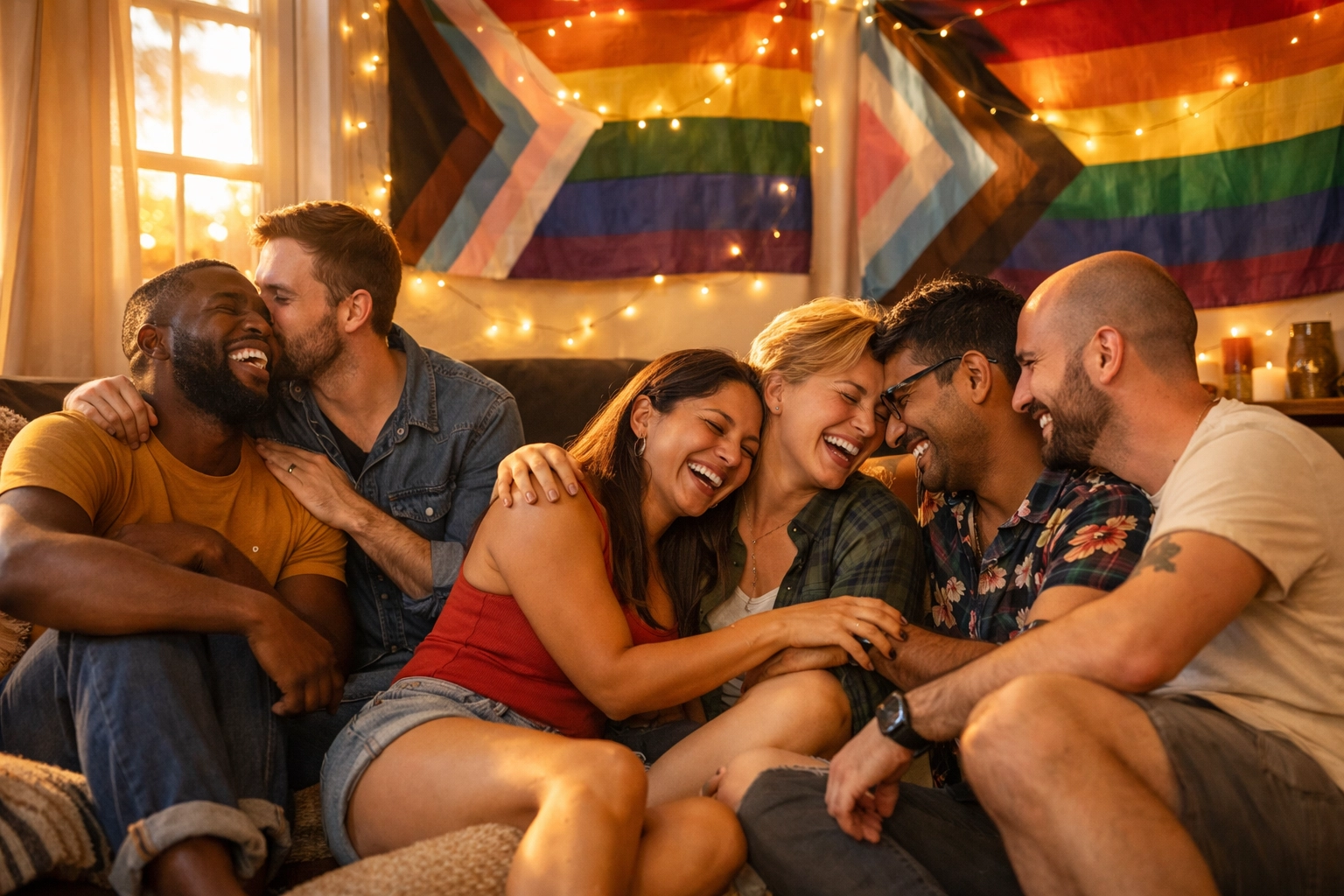
This narrative mirrors the journey of LGBTQ+ fiction itself: from margins to mainstream, from apologetic to unapologetic, from hidden to celebrated. The stories we love at Read with Pride follow similar trajectories: characters who refuse to dim their light, who build chosen families, who find love and acceptance on their own terms.
What Writers Can Learn from the Queen
For those of us who devour MM romance books and gay novels, there's much to learn from Nicki's approach. The best gay romantic fiction shares DNA with the Pink Friday ethos:
Authenticity over acceptability. Characters who feel real, who embrace their complexity rather than smoothing their edges for mainstream comfort.
Celebration of femininity and masculinity as spectrums. The most compelling MM contemporary romance explores how men relate to masculinity in diverse, often contradictory ways: just like Nicki explored femininity in hip-hop.
Community as lifeline. Whether it's the Barbz or the found families in LGBTQ+ romance novels, community matters. These connections sustain us, celebrate us, and remind us we're not alone.
Multiplicity of identity. The most interesting gay fiction characters, like Nicki's alter egos, contain multitudes. They're not one-dimensional representations but full, complex humans navigating identity in all its messy glory.
The Legacy Continues
As we move through 2026, Pink Friday's influence continues to ripple outward. New artists cite Nicki as inspiration. LGBTQ+ fans continue to find refuge and celebration in her music and message. And the Barbz community remains one of the most devoted and diverse fanbases in music.
For readers exploring best MM romance or diving into new gay releases, the connection might not be immediately obvious. But the themes are there: self-expression as resistance, chosen family as salvation, and the radical power of refusing to make yourself smaller for anyone's comfort.
At Read with Pride, we celebrate stories that honor these themes: whether in music, literature, or life. Because whether you're reading an enemies to lovers MM romance or bumping Pink Friday on repeat, the message is the same: be yourself, love fiercely, and never apologize for taking up space.
Connect with us and discover more LGBTQ+ stories:
🌈 Website: www.readwithpride.com
📘 Facebook: Read with Pride
🐦 X/Twitter: @Read_With_Pride
📸 Instagram: @read.withpride
#PinkFridayPride #NickiMinaj #TheBarbz #LGBTQIcons #ReadWithPride #MMRomance #GayRomanceBooks #QueerFiction #LGBTQFiction #GayBooks #MMNovels #LGBTQCommunity #ChosenFamily #QueerIdentity #GayLiterature #2026LGBTQ #AuthenticityMatters #PrideInMusic #BarbieDreams #LGBTQ2026

Leave a Reply
You must be logged in to post a comment.