


Let's be real, there's something undeniably hot about a first responder in uniform. Whether it's the firefighter carrying someone out of a burning building, the paramedic who knows exactly what to do in a crisis, or the search-and-rescue officer who shows up when everything's gone wrong, we've all had that fantasy. The strong arms, the competence, the whole "I've got you" energy. It's romance novel gold, and honestly? There's nothing wrong with appreciating it.
But here's the thing that doesn't make it into most MM romance books: behind that heroic exterior is a person carrying an emotional weight most of us can't even imagine. And if we're going to celebrate these characters in our gay romance novels, if we're going to write them, read them, and swoon over them, we owe it to ourselves to understand what that uniform really represents.
The Fantasy: Strong Arms and Steady Hearts
The first responder romance trope is massive in LGBTQ+ fiction, and for good reason. There's something deeply comforting about the idea of someone who literally saves people for a living. In our stories, they're the steady ones, the protectors, the people who run toward danger while everyone else runs away. They're competent in a crisis and tender in quiet moments, the ultimate combination.
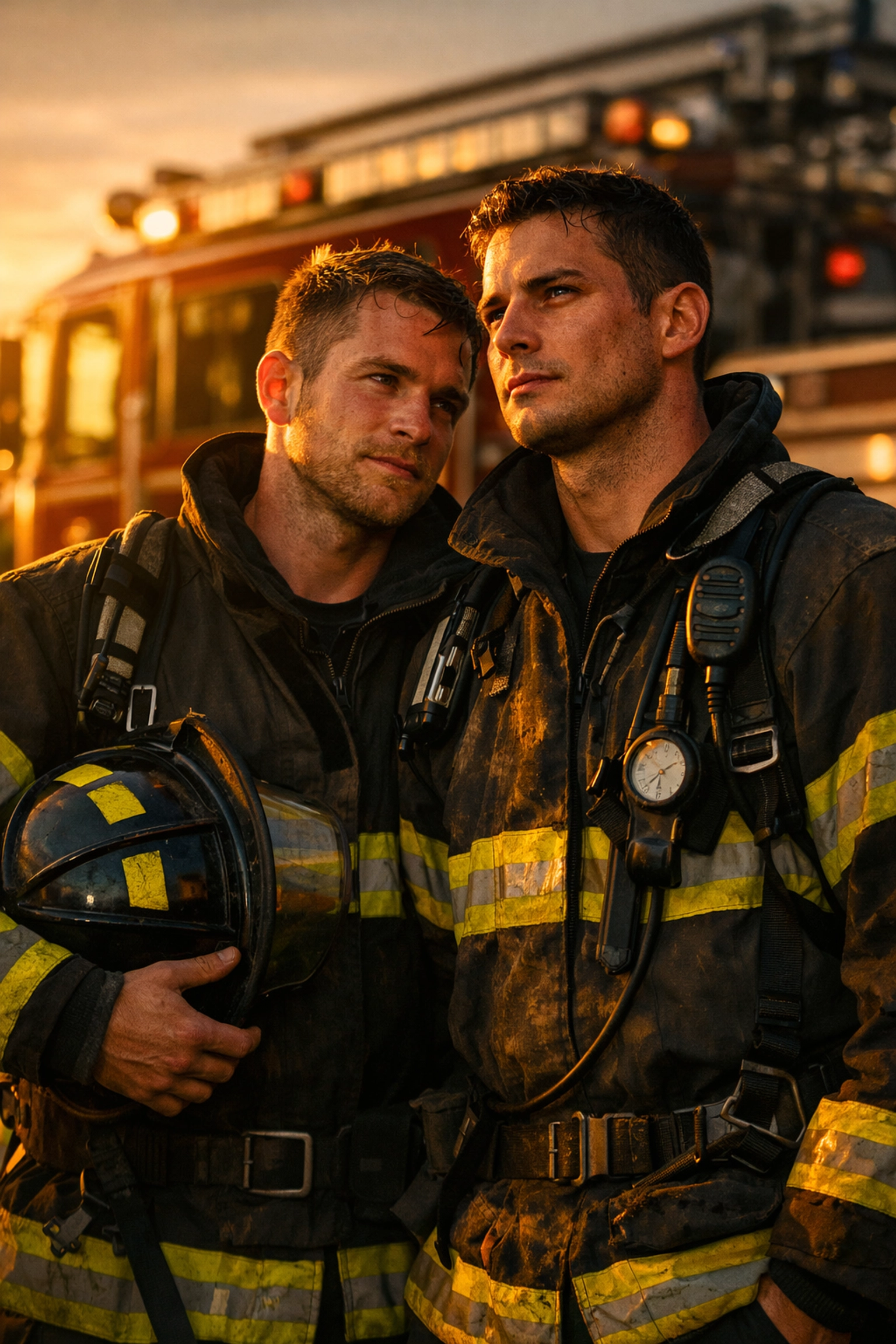
Think about the classic meet-cute: the protagonist's apartment building has a small kitchen fire (nothing serious, just dramatic enough), and in walks this gorgeous firefighter who not only puts out the flames but also checks to make sure everyone's okay. Cue the eye contact, the lingering touch when checking for injuries, maybe a callback visit to make sure everything's really fine. It's slow burn romance at its finest, and we eat it up every single time.
Or the paramedic storyline: one character gets hurt, and the other shows up in the ambulance. There's something about being vulnerable and having someone take care of you with such professional calm that just works. The competence is attractive. The care is attractive. The uniform doesn't hurt either.
These fantasies tap into something primal, the desire to be protected, to be seen as worth saving, to have someone who will show up when things get scary. And in queer fiction, where so many of us have felt unsafe or unseen, that fantasy hits even harder. We want our characters to find someone who will fight for them, literally if necessary.
The Reality: What the Uniform Actually Carries
Here's where the conversation shifts, because first responders aren't just characters in our favorite gay love stories, they're real people doing impossibly difficult work. And the statistics about what they face are genuinely alarming.
Between 5.9% and 22% of first responders are diagnosed with some form of psychological trauma. That's not a small number. We're talking about PTSD rates substantially higher than the general population. Nearly 30% develop behavioral health challenges including depression, anxiety, and substance abuse. These aren't abstract statistics, these are the people who show up when we call 911.
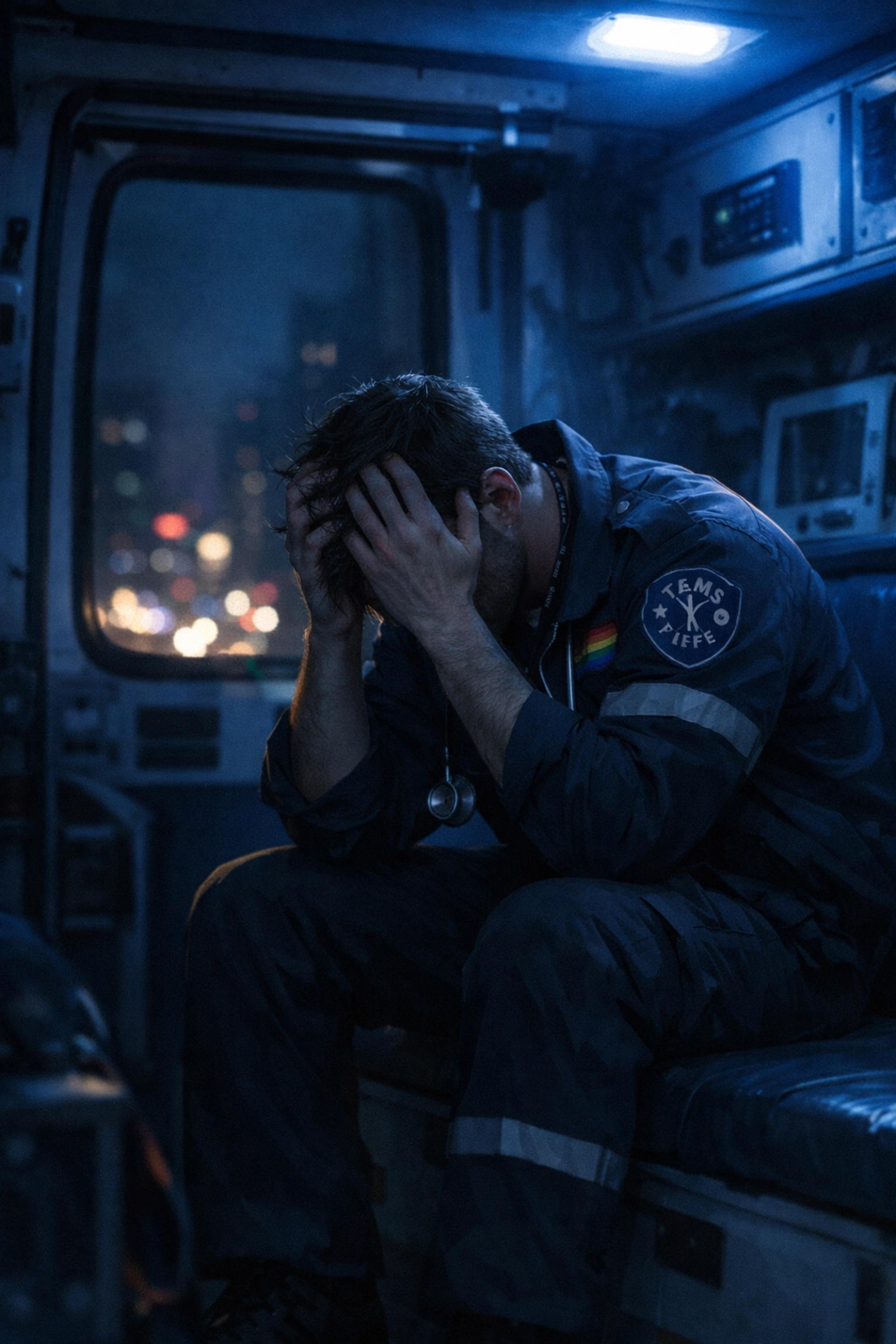
The emotional toll of the job is cumulative. It's not just one bad call; it's call after call, shift after shift, witnessing things that most people will never have to see. Nearly 70% of EMS professionals report never having enough time to recover between traumatic events. Imagine going from one crisis to the next without a moment to process what you just experienced. That's not sustainable, and the data proves it.
Here's the statistic that should stop us all in our tracks: nearly 37% of EMS personnel and firefighters have contemplated suicide, almost ten times the rate in the general population. A 2018 report found that first responders were more likely to die by suicide than in the line of duty. Read that again. The job that's supposed to be about saving lives is taking them in ways we don't talk about enough.
The Gap Between Fiction and Reality
This doesn't mean we should stop writing or reading MM romance books featuring first responders. But maybe it means we should write them differently. Maybe the love interest doesn't just sweep in and save the day without consequences. Maybe he has nightmares. Maybe he struggles to talk about what he saw on shift. Maybe the romance includes moments where he has to work through his own stuff before he can be fully present in the relationship.
The best LGBTQ+ romance doesn't shy away from real challenges, it acknowledges them and shows characters working through them together. A firefighter character dealing with PTSD symptoms, learning to ask for help, going to therapy? That's not less romantic, it's more human. And honestly, showing that kind of vulnerability might be the most attractive thing of all.
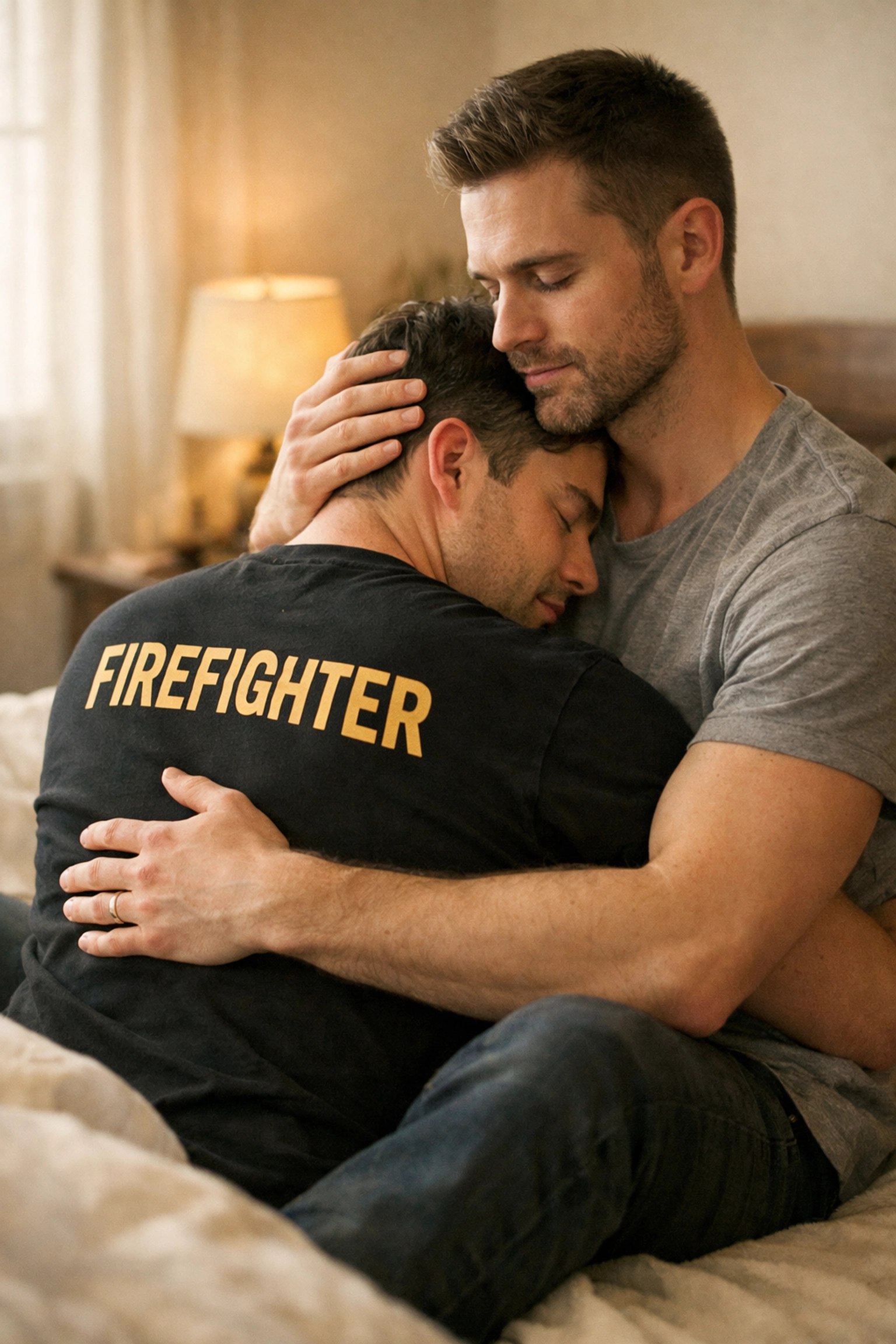
What makes someone heroic isn't that they're invincible. It's that they keep showing up despite knowing how hard it is. The real strength isn't in never being affected by trauma, it's in acknowledging it, seeking support, and working through it.
Why First Responders Don't Always Seek Help
Part of the problem is the culture. First responders are expected to keep their emotions under control, to stay calm in chaos, to be the rock everyone else leans on. That's their job, and they do it extraordinarily well. But that constant emotional suppression takes a toll. You can't just turn feelings off because you're on shift and turn them back on when you get home.
There's also stigma within these professions around mental health. Many first responders fear that seeking help will affect their career, that it'll be seen as weakness, that confidentiality won't be maintained. So they suffer in silence, and things get worse.
Add to that the physical demands, unpredictable schedules, disrupted sleep patterns from shift work, the adrenaline spikes and crashes, and you've got a profession that's incredibly tough on both body and mind.
Writing the Full Story
If you're reading gay romance featuring first responders, or if you're writing it, consider the full picture. The fantasy is fun, and there's absolutely a place for escapist romance where the firefighter is just hot and competent and nothing goes wrong. We all need that sometimes.
But there's also room for stories that go deeper. The MM contemporary romance where one partner is a paramedic dealing with compassion fatigue, and the other partner learns how to be supportive without fixing. The gay fiction where the love interest is a firefighter in therapy, and the romance includes those vulnerable moments. The emotional MM books where strength includes asking for help.
These stories matter because representation matters. If someone reading Read with Pride is a first responder, or loves one, seeing their reality reflected in fiction can be powerful. It normalizes seeking help. It shows that you can be strong and struggle. It demonstrates that needing support doesn't make you less of a hero.
The Most Important Rescue
Maybe the most important rescue story isn't about the dramatic building fire or the high-speed car crash. Maybe it's about the first responder who realizes he needs help and reaches out for it. The one who talks to his partner about the nightmares. The one who goes to therapy and works through the accumulated trauma of years of calls.
That's the story we need more of in LGBTQ+ fiction, not because the fantasy isn't valid, but because the reality deserves recognition too. Our first responders save lives every day. They deserve stories that acknowledge the cost of that heroism and celebrate the courage it takes to save yourself too.
So yes, keep reading and writing those gay love stories with the hot firefighter or the caring paramedic. Enjoy the fantasy: we all should. But maybe also remember that behind every uniform is a person who might be carrying more than we see. And that's a story worth telling too.
Looking for more authentic LGBTQ+ stories? Explore our collection at readwithpride.com 🏳️🌈
Connect with us:
📘 Facebook
🐦 Twitter/X
📸 Instagram
#MMRomance #GayRomance #ReadWithPride #LGBTQFiction #FirstResponderRomance #GayBooks #QueerFiction #MMBooks #GayLoveStories #AuthenticStories #LGBTQReading #2026GayBooks #EmotionalMMBooks #GayContemporaryRomance #QueerAuthors

Leave a Reply
You must be logged in to post a comment.