


When we think about World War II, our minds often jump to European battlefields or Pacific island campaigns. But the Sino-Japanese War: China's eight-year struggle against invasion: was one of the most devastating theaters of the entire conflict. And within that chaos, amid displacement, flooding, and constant uncertainty, love found a way to survive. Even love that had to hide in the shadows.
The River That Changed Everything
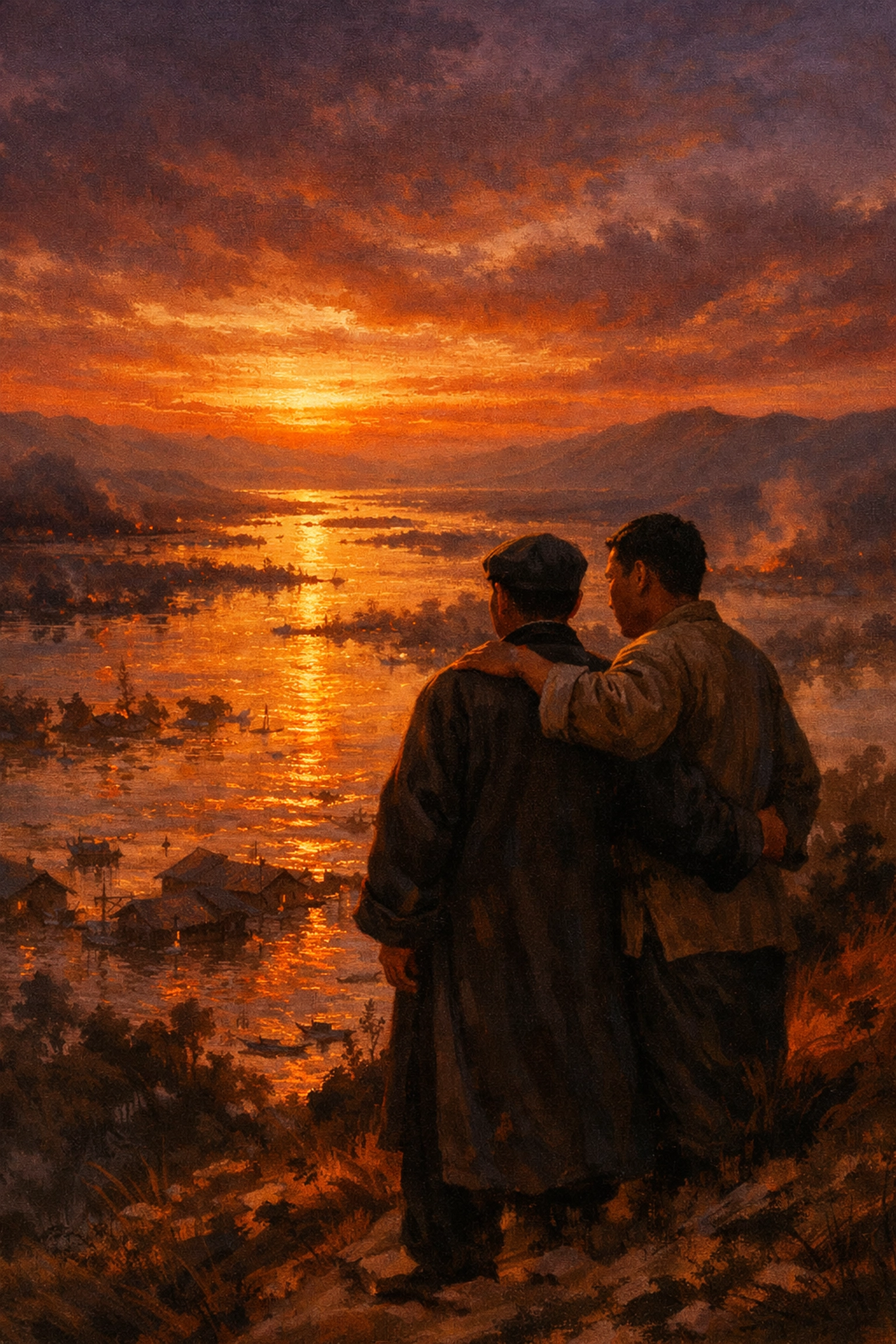
In June 1938, Chinese military leaders made a decision that would alter the course of the war: and countless lives. Facing Japanese forces advancing toward the strategic city of Wuhan, Commander-in-chief Chiang Kai-shek approved a desperate plan: breach the Yellow River's levees near Huayuankou. After two failed attempts with dynamite, Chinese soldiers finally succeeded using pickaxes and shovels on June 5-7, 1938.
The flooding was catastrophic. Nearly half a million civilians perished as the river swallowed 32 percent of the land across 20 counties. But it bought precious time: time for the government to evacuate, time for resistance to regroup, time for people to flee. Among those displaced were countless individuals whose stories remain largely untold, including those who loved in ways society forced them to conceal.
Love in the Time of Displacement
Imagine two men in 1938 China, already navigating the dangerous reality of loving another man in a deeply conservative society. Now add war, flooding, and the complete upheaval of everything they knew. The breach of the Yellow River didn't just destroy homes and infrastructure: it tore apart communities, separated families, and forced millions into refugee status.
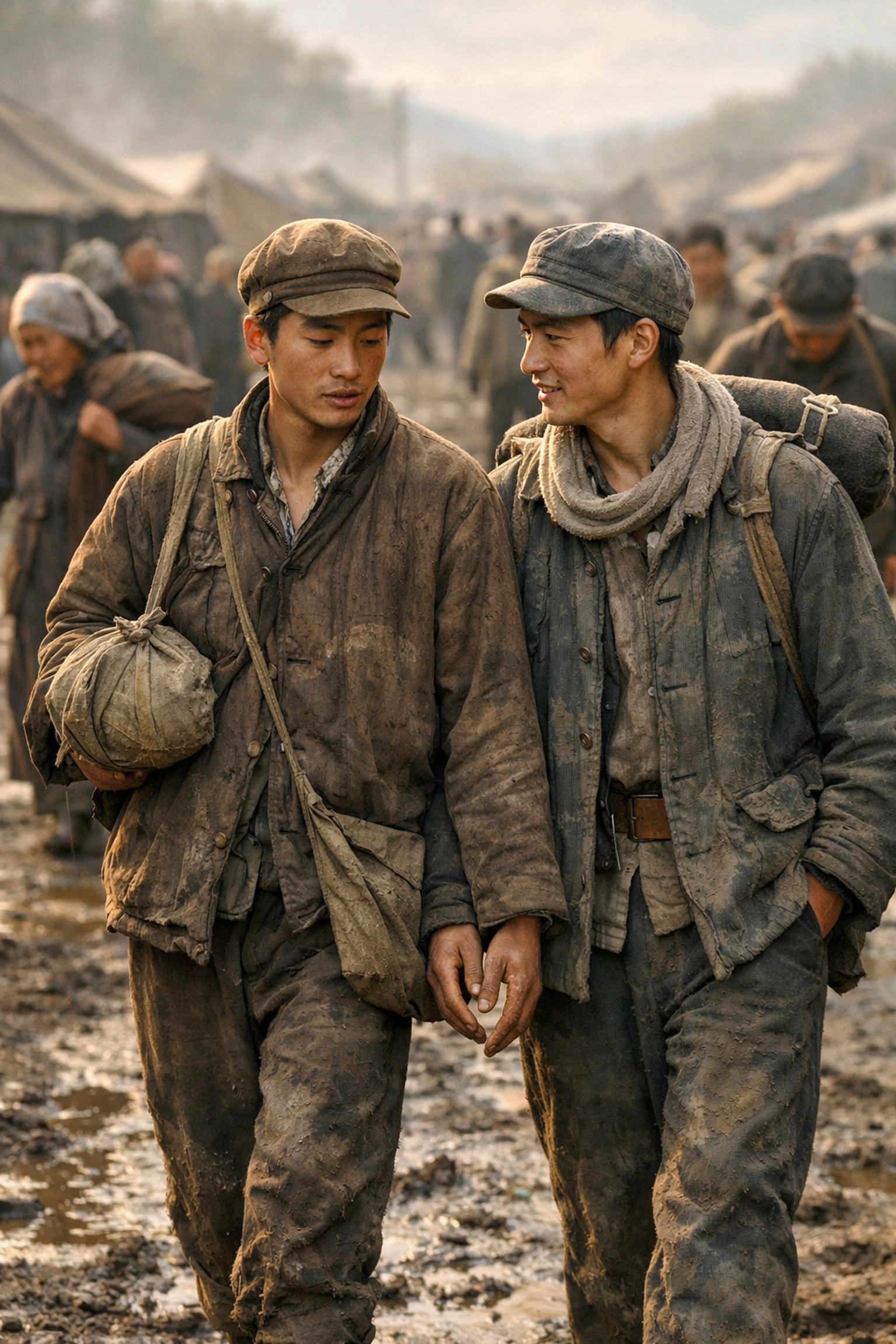
For queer men during this period, the displacement was layered with additional complexity. In traditional Chinese society, expectations around marriage and family lineage were paramount. A young man was expected to marry, produce heirs, and continue the family name. Two men who found solace in each other's arms during wartime might have been fellow soldiers, refugees on the same desperate journey westward, or perhaps a scholar and his devoted companion fleeing the occupied territories.
The chaos of war could provide cover: in a world where everyone was focused on survival, two men traveling together might draw less scrutiny. But it also meant constant uncertainty, no safe haven, and the knowledge that any moment could be your last.
The Long March to Chongqing
The flooding of the Yellow River ultimately bought China the time needed to relocate its wartime capital to Chongqing, over 1,000 miles upriver. This city, protected by mountains and rivers, became what historians call "a fortress of defiance." The mass exodus involved moving not just government officials and military personnel, but entire universities, hospitals, and cultural institutions.
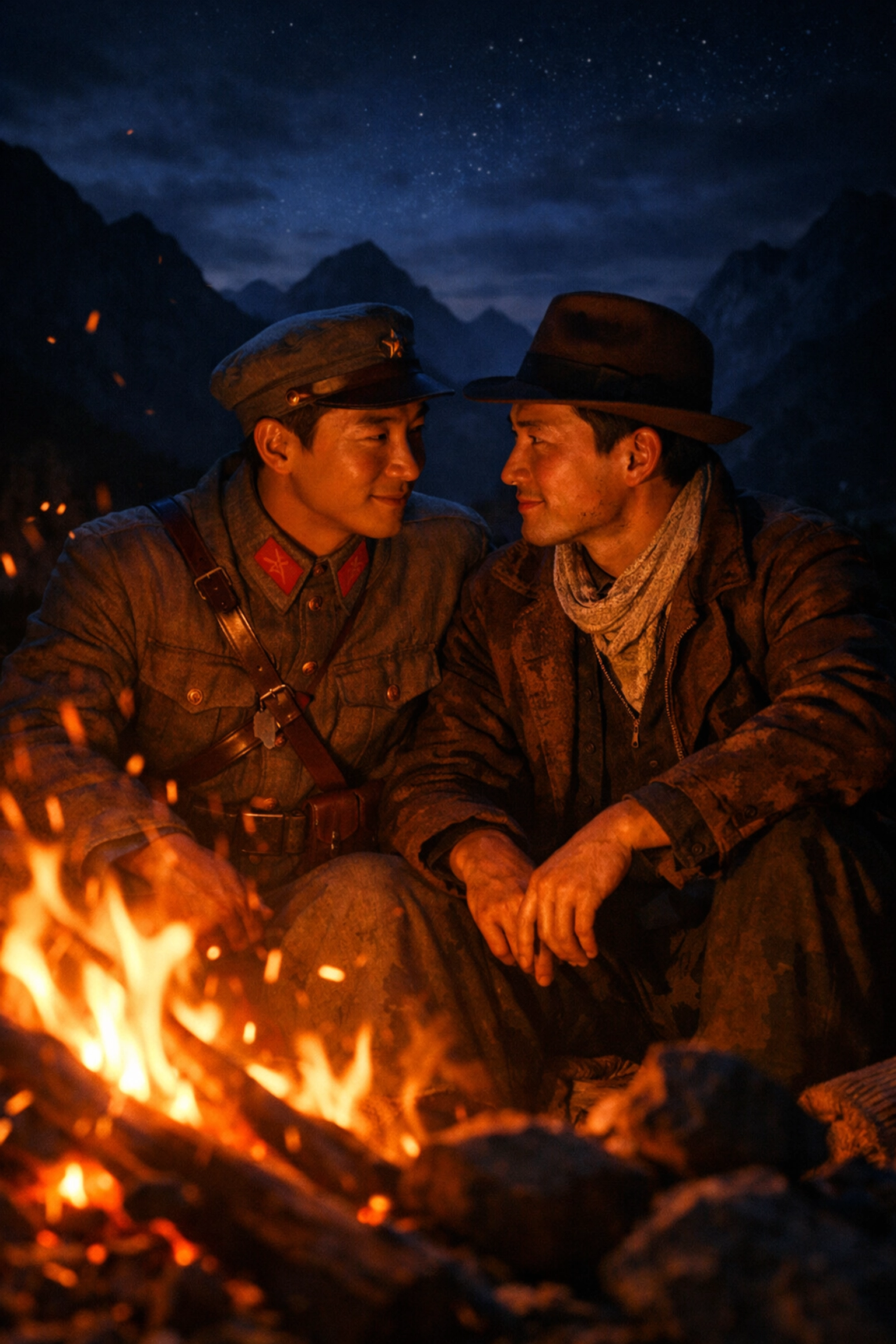
Picture two men on that journey: perhaps one a teacher helping relocate a university, the other a medical officer with the retreating army. The 1,000-mile journey would have taken months, through destroyed infrastructure and guerrilla-controlled territories. Every night camping under the stars, every shared meal of rationed rice, every moment of fear when Japanese planes flew overhead: these would have forged bonds stronger than steel.
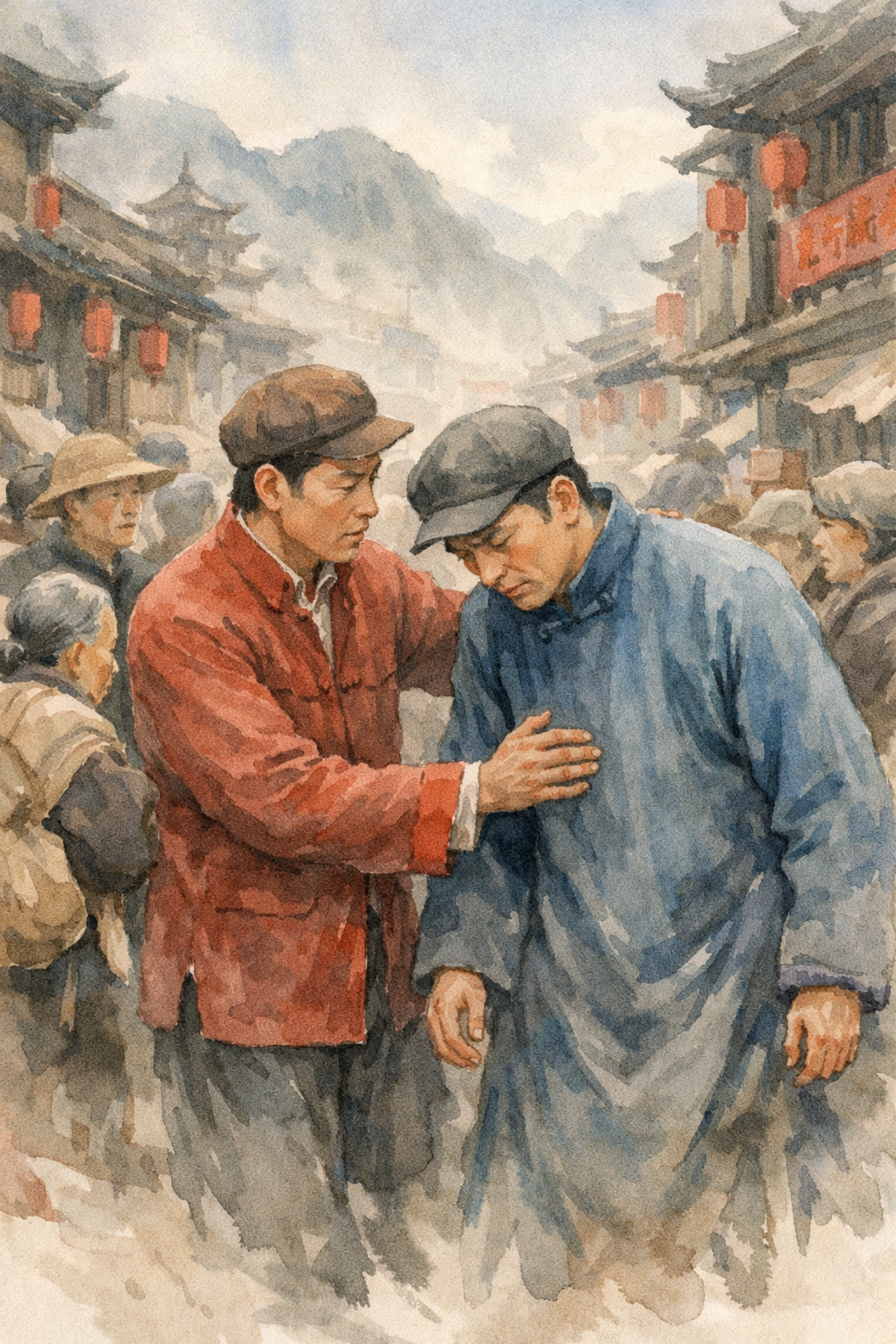
In Chongqing, squeezed into a city bursting with refugees, privacy was a luxury few could afford. Yet love persists even in the most cramped quarters. A glance across a crowded room, a hand briefly touching another while passing a bowl of tea, whispered conversations on a rare evening walk along the Yangtze River: this was how love survived.
The Weight of Necessary Sacrifices
The Chinese commanders who ordered the Yellow River breach were aware of the devastation it would cause. They called it "a necessary sacrifice to save the nation." For queer men living through this period, that phrase might have resonated on a deeply personal level. How many made their own necessary sacrifices: marrying women to appease family expectations while maintaining a hidden relationship with the person they truly loved? How many chose to keep their love secret to protect not just themselves but their families from additional scandal during already desperate times?
These stories rarely made it into official histories. In historical MM romance, we have the opportunity to imagine and honor these hidden narratives: to give voice to the resilience it took to love authentically while navigating both war and societal expectations.
Why These Stories Matter Today
At Read with Pride, we believe historical MM romance serves a vital purpose beyond entertainment. These stories remind us that LGBTQ+ people have always existed, have always loved, and have always shown incredible resilience in the face of adversity. The Sino-Japanese War period offers rich territory for exploring themes of survival, displacement, chosen family, and the triumph of love over impossible odds.
When we read about two men finding each other amid the chaos of 1938 China: whether that's in a refugee camp, a makeshift hospital, or on the long road to Chongqing: we're not just reading a romance. We're bearing witness to the truth that love has always found a way, even when rivers flood, cities fall, and the world seems determined to tear people apart.
Our historical MM romance collection includes stories from various wartime periods, each exploring how queer love persisted against the backdrop of global conflict. These narratives honor the real people who lived, loved, and showed extraordinary courage during humanity's darkest hours.
The Power of Hidden Histories
The Yellow River breach remained open until March 1947: the entire war and beyond. For years, the landscape itself bore the scars of that desperate strategic decision. Similarly, the psychological scars of wartime displacement, loss, and the necessity of hiding one's true self would have lasted generations.
But here's what matters: they survived. Love survived. And in 2026, we get to honor that survival by telling stories that acknowledge the full spectrum of human experience during wartime, including queer love that refused to be drowned by literal and metaphorical floods.
Finding Your Next Historical Read
If stories of resilience, hidden love during wartime, and the triumph of the human spirit resonate with you, explore the gay historical romance and MM romance books available at Readwithpride.com. These tales of courage, sacrifice, and enduring love remind us why we read: to see ourselves reflected across time, to honor those who came before, and to celebrate the fact that love, in all its forms, has always been worth fighting for.
The rivers of history flow on, carrying stories we're only beginning to tell fully. Every gay love story, every MM novel that explores wartime resilience, adds another drop to that river: ensuring these experiences aren't forgotten but celebrated.
Discover more compelling gay romance novels and LGBTQ+ fiction that honors historical queer narratives at Read with Pride. Follow us on Facebook, Instagram, and X/Twitter for daily recommendations and community discussions.
#MMRomance #GayHistoricalRomance #LGBTQFiction #ReadWithPride #GayRomanceBooks #HistoricalMMRomance #QueerFiction #WWIIHistory #LGBTQHistory #GayNovels #MMRomanceBooks #QueerLove #HistoricalFiction #GayLiterature #LGBTQBooks #GayRomance2026

Leave a Reply
You must be logged in to post a comment.