


There's something beautifully defiant about a bunch of gay men choosing to play rugby. For decades, rugby represented everything the LGBTQ+ community supposedly wasn't: rough, aggressive, hypermasculine. But in 1995, six brave men walked into a London pub and said, "Screw that narrative." What started as a small gathering at the Central Station pub near King's Cross became a global movement that's rewriting the rules of what it means to be strong, masculine, and queer.
Welcome to the world of gay rugby, where tackles are fierce, brotherhood is fiercer, and representation matters just as much as the final score.
The Birth of a Movement
On November 1, 1995, the King's Cross Steelers officially registered as the world's first gay rugby club. Six men. One pub. An idea that would eventually spawn over 100 clubs worldwide. The founders chose the name "Steelers" as a nod to American football: because why limit yourself to just one kind of athletic rebellion?
What made the Steelers unique wasn't just that they were gay men playing rugby. South Africa's Jamieson Raiders had been around since 1985, but they operated as an invitation team rather than a registered seasonal club. The Steelers wanted something different: legitimacy, structure, and permanence. They wanted to build something that would last beyond weekend friendships and pickup games.
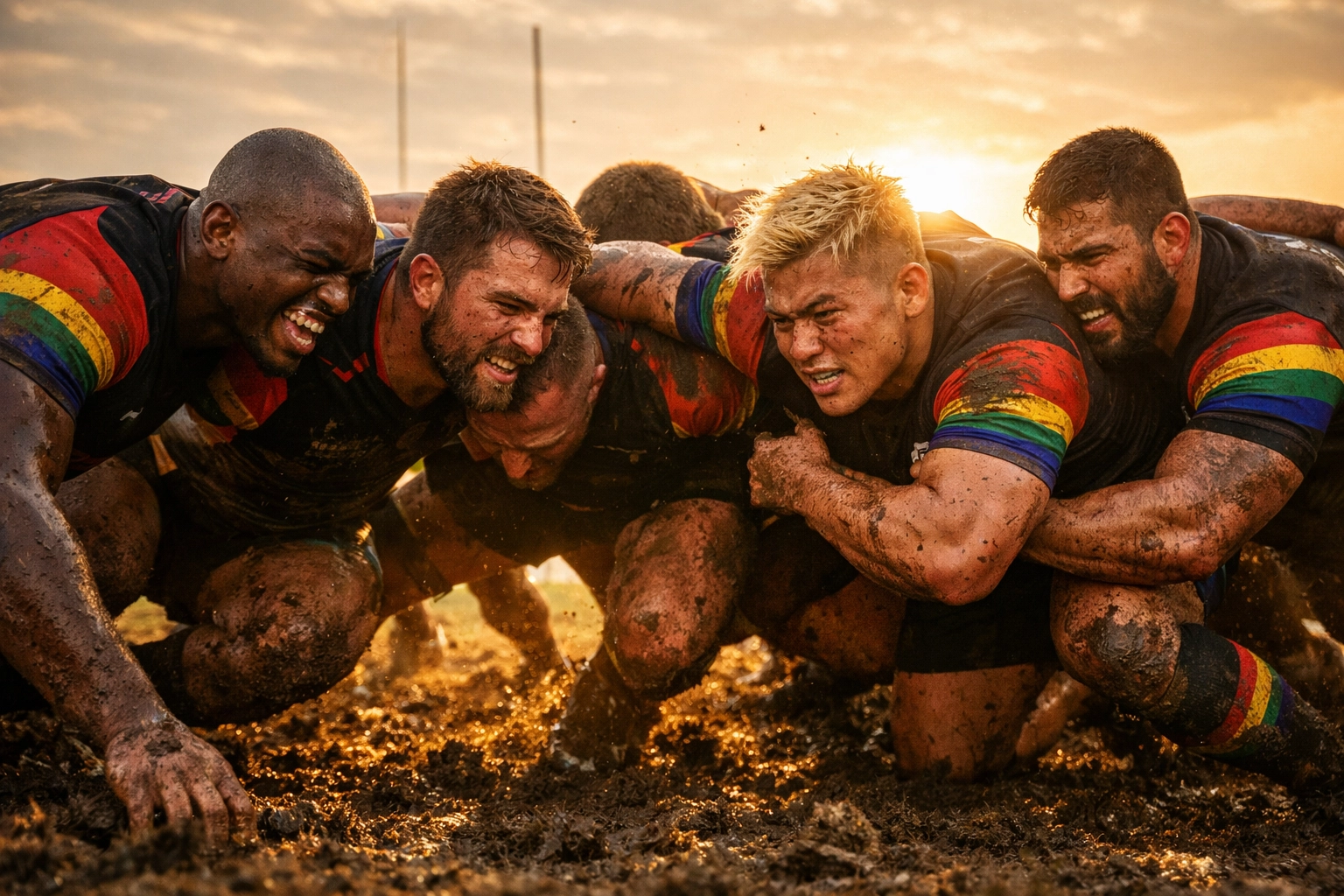
And last it did. By 2000, the movement had expanded enough to warrant its own governing body: the International Gay Rugby Association and Board (now known as International Gay Rugby or IGR). The first official gay rugby tournament brought together King's Cross Steelers, Manchester Village Spartans, and Washington Renegades. From there, clubs sprouted across North America, Europe, Australia, and New Zealand like rainbow-colored mushrooms after rain.
More Than Just a Game
Here's the thing about gay rugby that makes it so much more meaningful than just another sport: it was never really about rugby. Sure, the tackles are real, the scrums are brutal, and the mud gets everywhere. But at its core, gay rugby clubs exist to create safe sporting spaces for LGBTQ+ athletes who felt excluded, ostracized, or simply invisible in mainstream rugby culture.
Research shows that players join gay rugby teams seeking "a safe and friendly sporting environment": a refuge from the subtle (and not-so-subtle) homophobia that still permeates many traditional sports clubs. For years, gay men faced assumptions that they weren't "masculine enough" to compete at higher levels after secondary school. The message was clear: rugby is for real men, and you don't qualify.
Gay rugby clubs flipped that script entirely.
The Physical and Emotional Depth
Let's talk about what actually happens on a gay rugby pitch. Because contrary to outdated stereotypes, these matches are every bit as physical, competitive, and demanding as any traditional game. Players train hard. They sweat. They bleed. They push their bodies to the limit because they've got something to prove: not to the straight world necessarily, but to themselves.
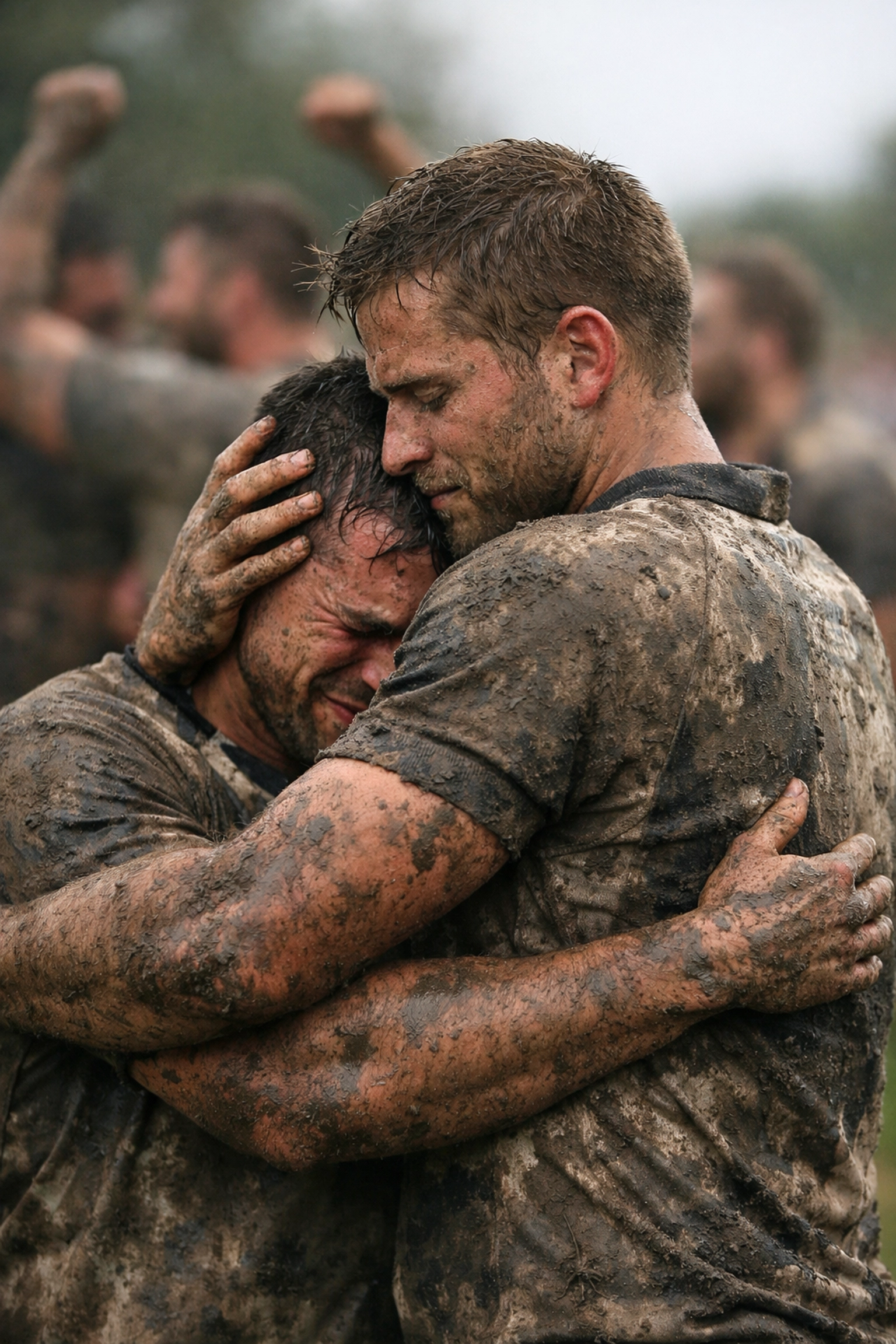
The physicality of rugby creates a unique kind of brotherhood. When you're in the scrum, faces pressed against your teammates' shoulders, working as one unified force against the opposing pack, sexual orientation becomes completely irrelevant. What matters is trust, strength, and synchronicity. Rugby demands vulnerability: you have to trust your teammates to catch you, support you, protect you. That vulnerability builds bonds that extend far beyond the pitch.
But here's where it gets emotional: for many gay men, these teams represent the first time they've experienced unfiltered male camaraderie without having to hide, code-switch, or tone themselves down. The locker room banter, the post-match pints, the tours to tournaments in other cities: all of it happens without the constant low-level anxiety of being "found out" or judged. It's freedom. It's family.
One player from the Nashville Grizzlies put it beautifully: they've been "embraced by our brothers" when competing against straight teams, even in rural Tennessee and Alabama. That acceptance: from both within the gay rugby community and from mainstream rugby: represents a seismic shift in how sports culture views masculinity and sexuality.
From Underground to Mainstream
The growth has been staggering. By 2016, the Coventry Corsairs became the world's 100th gay and inclusive rugby club. Countries like Canada, the United States, France, Germany, and Argentina all have thriving gay rugby scenes. Toronto's Muddy York RFC was founded in 2003. Clubs exist in places you'd expect (San Francisco, Sydney, Amsterdam) and places that might surprise you (Nashville, Buenos Aires, Tokyo).
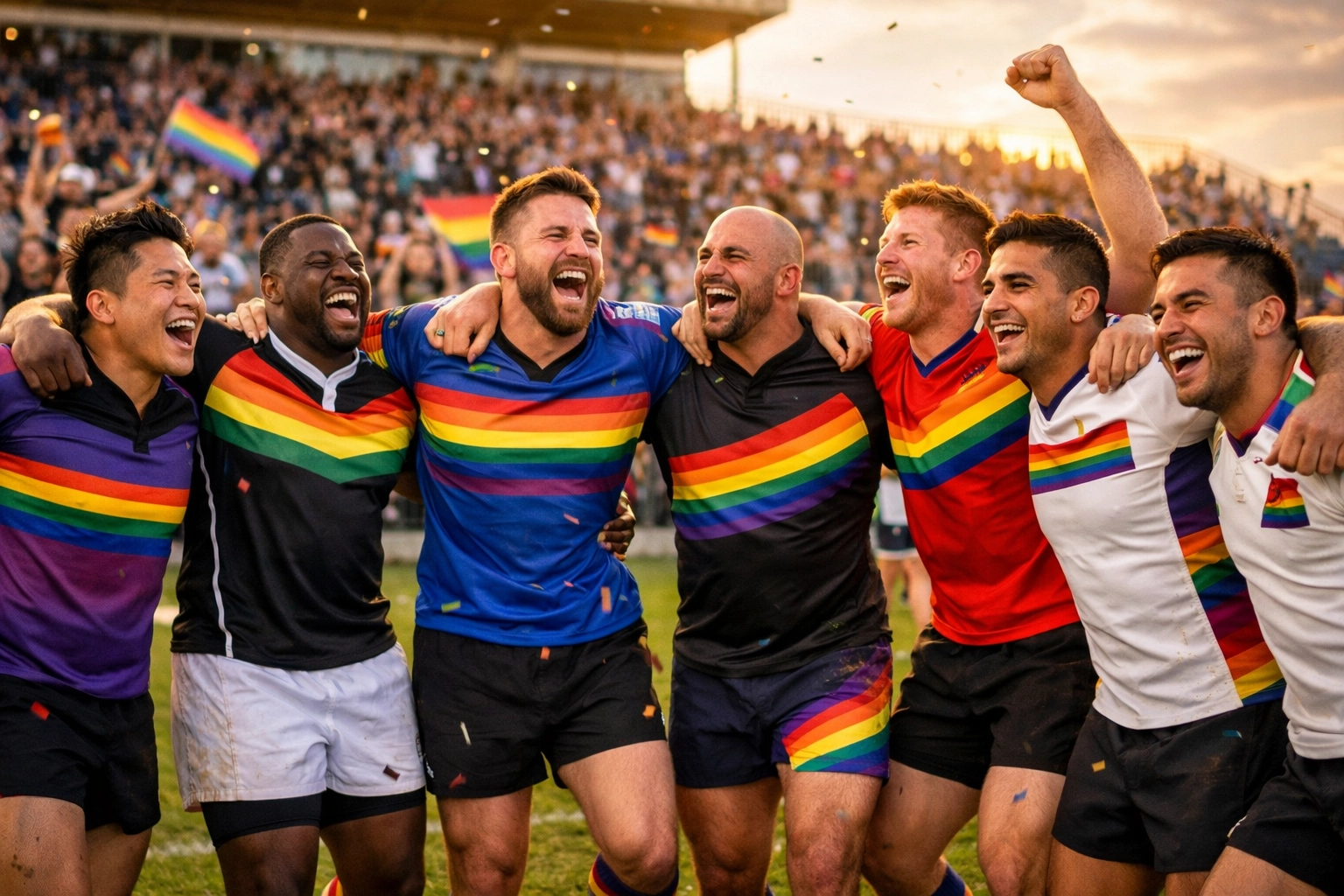
But the real watershed moment came when World Rugby and International Gay Rugby signed a historic agreement to collaborate on promoting equality and inclusivity. World Rugby: the sport's international governing body: officially committed to educating players and eliminating homophobia from the sport. That's not just symbolic; it's a formal partnership that signals rugby's evolution from a hypermasculine boys' club to an inclusive space for all.
The MM Romance Connection
If you're a fan of MM romance books, you already understand why gay rugby makes for such compelling storytelling. The forced proximity of team sports. The slow burn of friendships turning into something more. The enemies-to-lovers potential when rival clubs face off. The protective alpha energy combined with emotional vulnerability. It's all there, ripe for the picking.
Plenty of gay fiction explores athletic settings because they provide natural conflict and chemistry. The "jock falls for jock" trope resonates because it challenges assumptions about what gay men should be interested in. And rugby, with its combination of strength, strategy, and teamwork, offers endless narrative possibilities.
Whether you're into contemporary romance, sports romance, or just love a good underdog story, the world of gay rugby delivers. And when you're not watching matches or following your local team, you can always curl up with one of the many gay romance novels that capture that same energy: the camaraderie, the passion, the triumph of finding your people.
Check out the collection at Readwithpride.com for stories that celebrate queer athleticism, brotherhood, and love in all its messy, beautiful forms.
Why Representation Matters
Every time a gay rugby club takes the field, they're doing more than playing a game. They're challenging stereotypes. They're creating visibility. They're proving that queerness and toughness aren't mutually exclusive: they're complementary. Young LGBTQ+ athletes watching from the sidelines see possibilities they might never have imagined: you can be gay and athletic, feminine and fierce, gentle off the pitch and absolutely ruthless on it.
The rise of gay rugby represents a broader cultural shift in how we think about gender, sexuality, and sports. It's not about carving out a separate-but-equal space; it's about expanding what's possible for everyone. Straight allies play on many gay rugby teams. Bi and trans athletes find community there too. The "gay" label is less about exclusivity and more about creating an intentionally inclusive environment where everyone can show up authentically.
Join the Movement
Whether you're picking up a rugby ball for the first time or you've been playing for years, there's probably a gay or inclusive rugby club near you. The community is welcoming, the sport is exhilarating, and the friendships you'll forge are unlike anything else.
And if physical rugby isn't your thing? That's cool too. You can still support the movement by following clubs on social media, attending matches, or simply spreading the word about how far gay rugby has come. Every bit of visibility helps.
In the meantime, celebrate queer athleticism and strength by exploring the world of LGBTQ+ fiction that captures these same themes. From sports romance to contemporary love stories, there's a whole library waiting for you at Readwithpride.com.
Because whether you're reading about it or living it, the message is the same: we belong here. On the pitch, in the pages, and everywhere in between.
Follow Read with Pride:
- Facebook: facebook.com/ReadWithPride
- Instagram: @read.withpride
- X/Twitter: @Read_With_Pride
- Website: readwithpride.com
#GayRugby #LGBTQSports #MMRomance #ReadWithPride #QueerAthletes #GayRomanceBooks #InclusiveRugby #LGBTQFiction #GayBooks #SportsRomance #QueerRepresentation #MMRomanceBooks #GayFiction #LGBTQEbooks #GayLiterature #KingsCrossSteelers #InternationalGayRugby #QueerCommunity #AuthenticStories #2026Pride

Leave a Reply
You must be logged in to post a comment.