


When you think about World War II romances, your mind probably jumps to classic Hollywood scenes, American GIs in Paris, British pilots during the Blitz, maybe even resistance fighters in occupied territories. But here's a story you probably haven't heard: Brazilian soldiers in the snowy mountains of Italy, fighting alongside Allied forces and forging connections that defied both war and convention.
The Brazilian Expeditionary Force, nicknamed "the Smoking Snakes" (because critics said Brazil would sooner see a snake smoke than send troops to Europe), deployed 25,900 men to the Italian front in 1944. These soldiers brought samba rhythms to snow-covered battlefields, tropical warmth to freezing Apennine winters, and, in the spaces between combat, the possibility of love in the most unexpected places.
Tropical Boys Meet European Winter
Picture this: young men from Rio de Janeiro, São Paulo, and the Amazon rainforest suddenly finding themselves in the freezing mountains of Northern Italy. The cultural shock went both ways. Italian locals had never seen anything quite like these Brazilian soldiers, their music, their energy, their completely different approach to life and camaraderie.
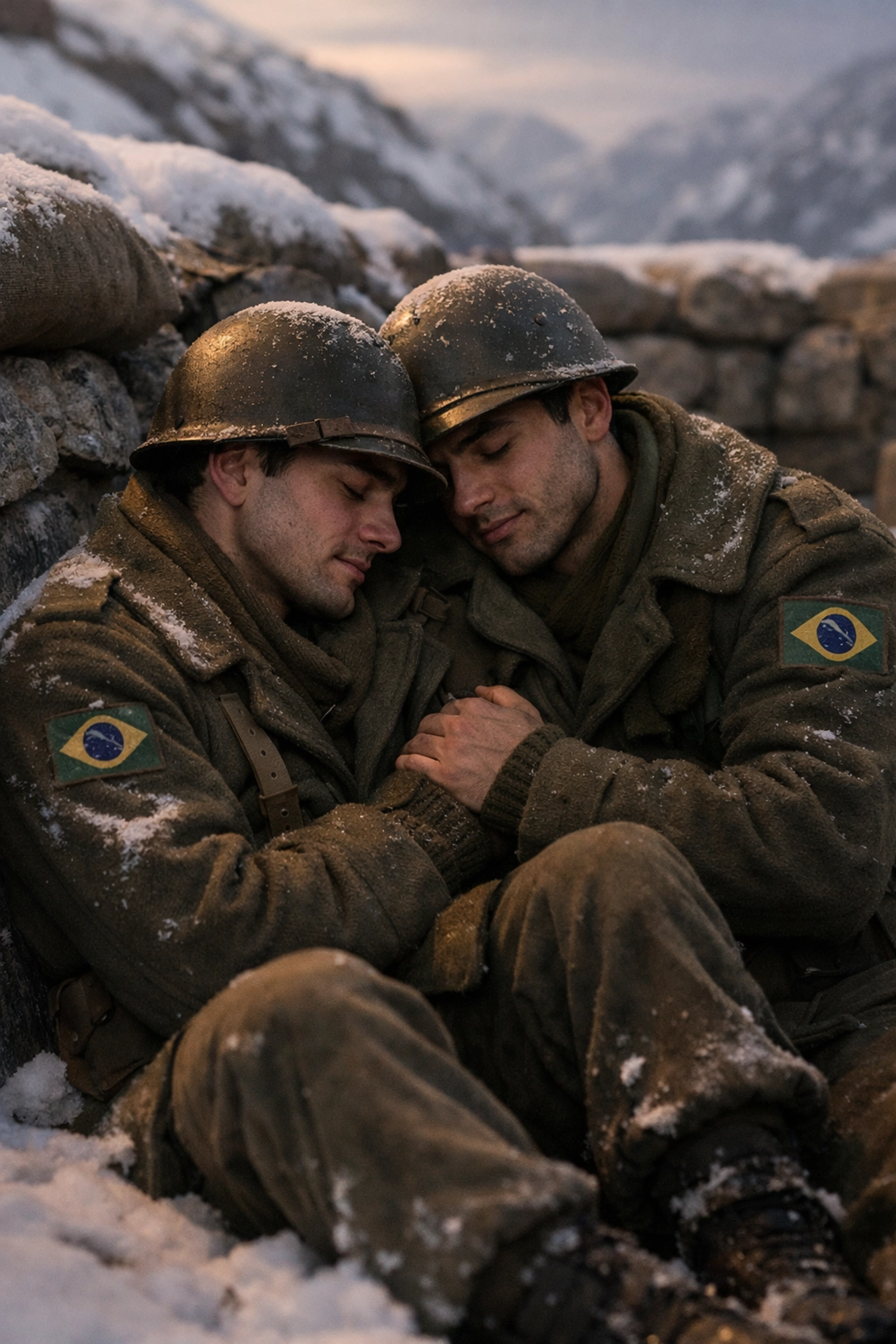
The BEF arrived in Naples on July 18, 1944, under General Mascarenhas de Moraes. While military historians focus on their impressive combat record (capturing over 20,000 Axis soldiers and liberating key strategic positions), there's another story woven between the battles, one of connection, intimacy, and relationships that challenged the rigid structures of both military life and 1940s society.
Brotherhood Beyond the Battlefield
In wartime, the lines between friendship and something deeper often blurred. Soldiers spent months in close quarters, sharing foxholes, body heat in freezing trenches, and the kind of vulnerability that only comes when you're staring down mortality together. The BEF fought for 239 days in Italy, more than double the time their American counterparts spent on the front lines.
That's 239 days of watching each other's backs. 239 nights of whispered conversations in the dark. 239 days where the usual rules of society felt very, very far away.
Historical records from WWII rarely document same-sex relationships explicitly, they were dangerous secrets to keep in an era of severe persecution. But the realities of war created spaces where such connections could bloom, however secretly. Letters home were carefully worded. Photographs showed men with arms draped over each other's shoulders, dismissed as "just camaraderie." Deep friendships that looked like something more were chalked up to the intensity of combat.
The Italian Connection
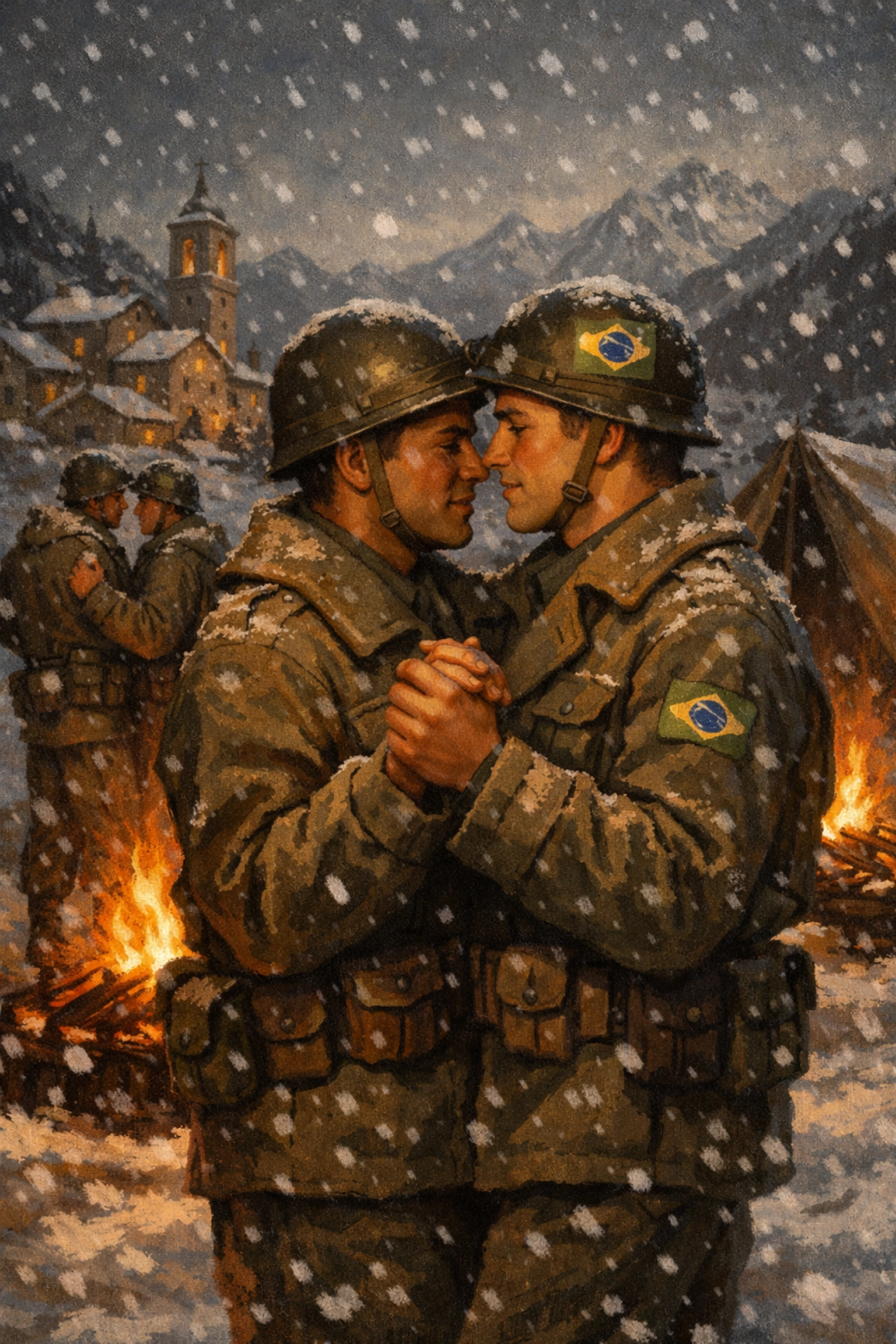
Then there were the locals. Italian men who'd been through years of fascist rule, occupation, and now liberation. Young partisans who fought in the resistance. Translators and guides who worked with the Allied forces. The mixing of cultures created opportunities for connection that peacetime rarely allowed.
Brazil's military was remarkably diverse, soldiers of European, African, Indigenous, and mixed heritage fought side by side. This diversity, combined with Brazilian culture's more relaxed attitudes toward physical affection between men, created a different dynamic than what you'd find in American or British units. A Brazilian soldier might dance with another man without raising eyebrows. Physical touch came naturally. Emotional expressiveness wasn't seen as weakness.
In war-torn Italian villages, where traditional structures had collapsed and survival mattered more than convention, these cultural differences created space for relationships that would have been impossible elsewhere.
The Battle of Monte Castello: Love in the Trenches
The BEF's bloodiest engagement came at Monte Castello, where they suffered over 400 casualties in a four-day assault in February 1945. In those frozen trenches, with death a constant companion, soldiers found comfort where they could. Some found it in letters from sweethearts back home. Others found it in the arms of a fellow soldier who understood exactly what they were going through.
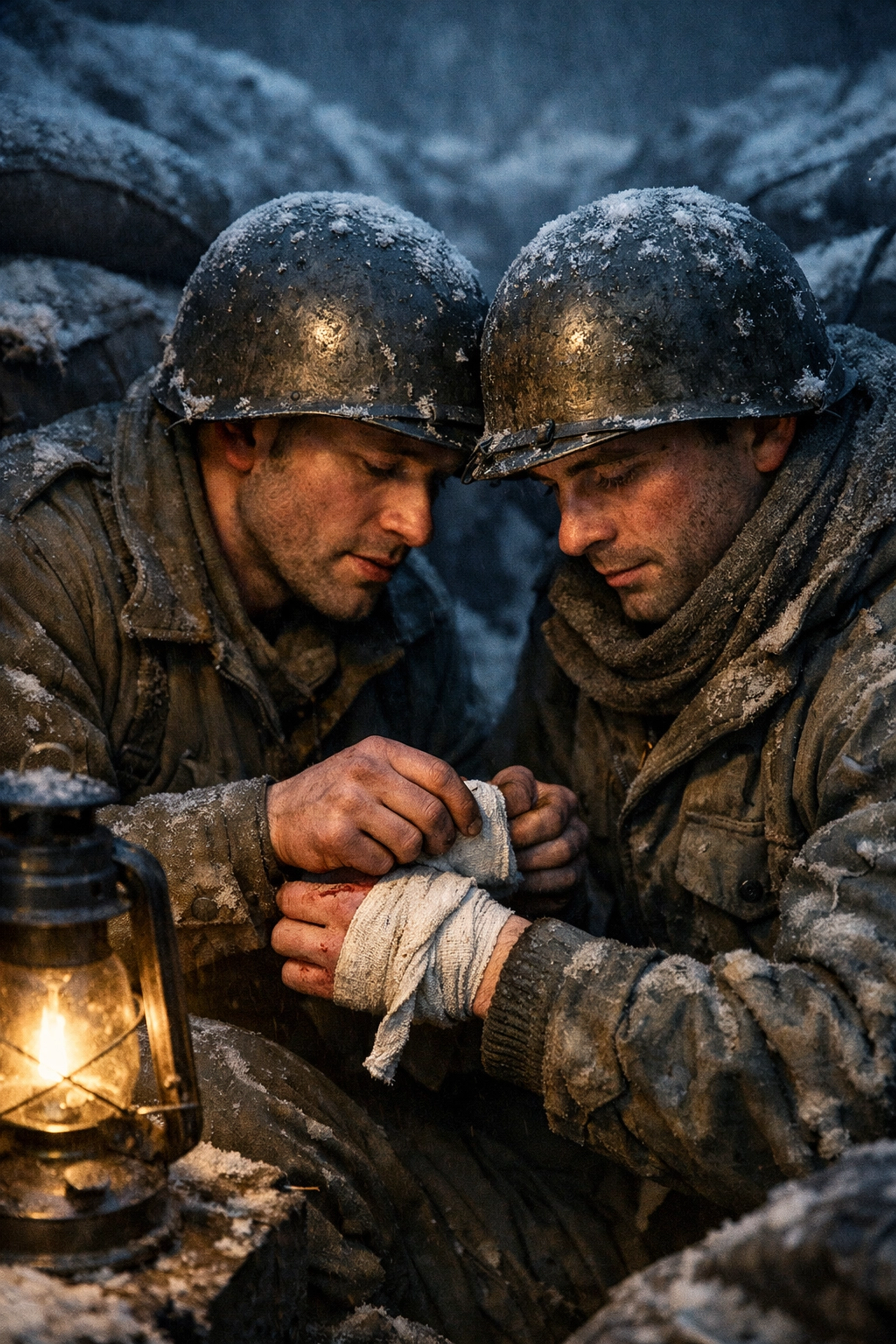
These weren't just flings or wartime convenience, though some certainly were. Many were profound connections forged in extremity, the kind of bond that comes from literally keeping each other alive. Whether those relationships were physical, emotional, or both, they were real and meaningful to the men who experienced them.
After the Guns Fell Silent
By May 1945, the BEF had helped capture the 148th German Infantry Division, the only intact German division to surrender on the Italian front. Victory brought its own complications. Soldiers had to return home, back to societies where their wartime connections couldn't be acknowledged or continued.
Some Brazilian soldiers stayed in Italy, building new lives in the rubble of the old world. Others returned to Brazil carrying secrets they'd never speak aloud. And a few, a very few, found ways to maintain those connections across an ocean, through carefully coded letters and decades of longing.
Why These Stories Matter Today
The story of the Brazilian Expeditionary Force remains largely overlooked in WWII history, and the queer stories within it are buried even deeper. But these narratives matter. They remind us that LGBTQ+ people have always existed, even in the most masculine, heteronormative spaces imaginable. They've always found each other, always created moments of connection and love, even when the world told them it was impossible.
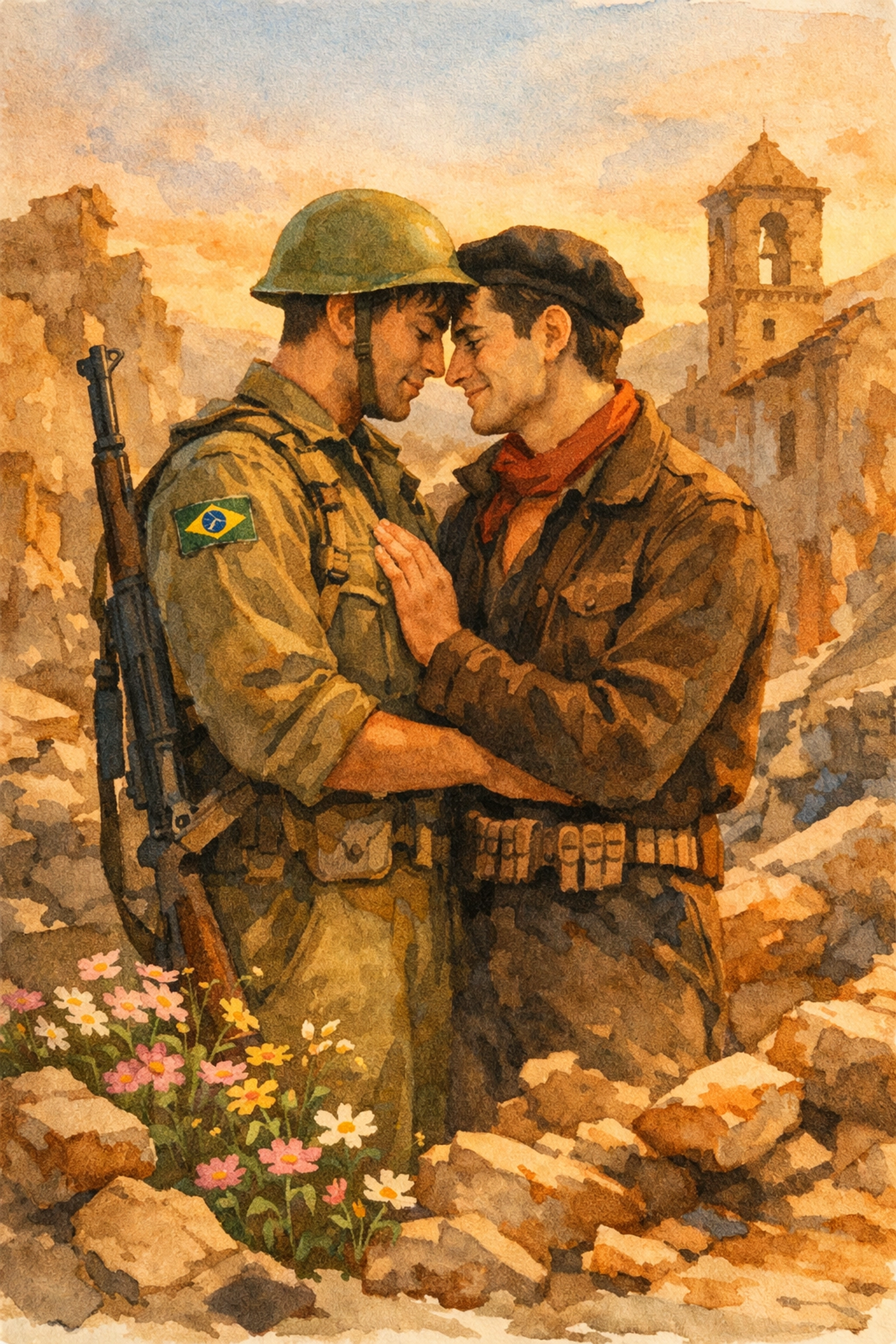
This is exactly why historical MM romance matters. Writers who explore these hidden histories, whether in the mountains of Italy, the trenches of the Somme, or the ships of the Pacific theater, are doing crucial work. They're filling in the gaps that official histories left blank. They're imagining the relationships that existed but couldn't be documented. They're giving voice to love stories that were silenced.
Finding These Stories at Read with Pride
If the untold story of the Brazilian Expeditionary Force has you craving more gay historical romance, you're in luck. At Read with Pride, we've curated an incredible collection of MM romance books that explore queer love throughout history. From WWII fighters to medieval knights, from Victorian gentlemen to Renaissance artists, our LGBTQ+ fiction library brings these hidden histories to life.
Our gay romance novels don't just add a queer relationship to historical settings, they explore how those relationships would have actually functioned within the constraints and opportunities of their time. The secrecy, yes, but also the unexpected freedom that wartime chaos could provide. The coded language. The stolen moments. The profound bonds that official history tried to erase.
Whether you're into slow burn MM historical romance or steamy encounters in unexpected places, our collection has something for every reader. These aren't just love stories: they're acts of historical reclamation, proving that we've always been here, even when history tried to write us out.
The Legacy of the Smoking Snakes
The Brazilian Expeditionary Force proved the skeptics wrong: the snake did smoke, and it fought brilliantly. But beyond their military achievements, these soldiers carried forward something equally important: the proof that connection, intimacy, and love persist even in humanity's darkest hours.
Their story: the official one and the hidden one: deserves to be told. Every soldier who found comfort in a comrade's arms, every Italian partisan who fell for a Brazilian liberator, every relationship that bloomed briefly in the chaos of war before being forced back into silence: they're all part of our history.
And now, through MM fiction and gay romance books, we can finally give these stories the endings they deserved. Maybe not the ones they got in real life, but the ones they should have had: where love wins, where soldiers get to come home to each other, where the war ends and the relationship doesn't have to.
That's the power of queer fiction. It lets us rewrite history, not to change what happened, but to honor what might have been.
Ready to explore more hidden histories? Check out our collection of historical MM romance and discover love stories from every era. Follow us on Facebook, Instagram, and X/Twitter for daily recommendations, author spotlights, and new releases in gay literature.
#MMRomance #GayHistoricalRomance #LGBTQFiction #ReadWithPride #WWIIHistory #BrazilianHistory #GayRomanceBooks #HistoricalMMRomance #QueerHistory #MLMRomance #GayLoveStories #MMBooks #LGBTQHistory #GayFiction #HistoricalRomance #MMNovels #QueerLiterature #GayBooks2026 #BestMMRomance


Leave a Reply
You must be logged in to post a comment.