

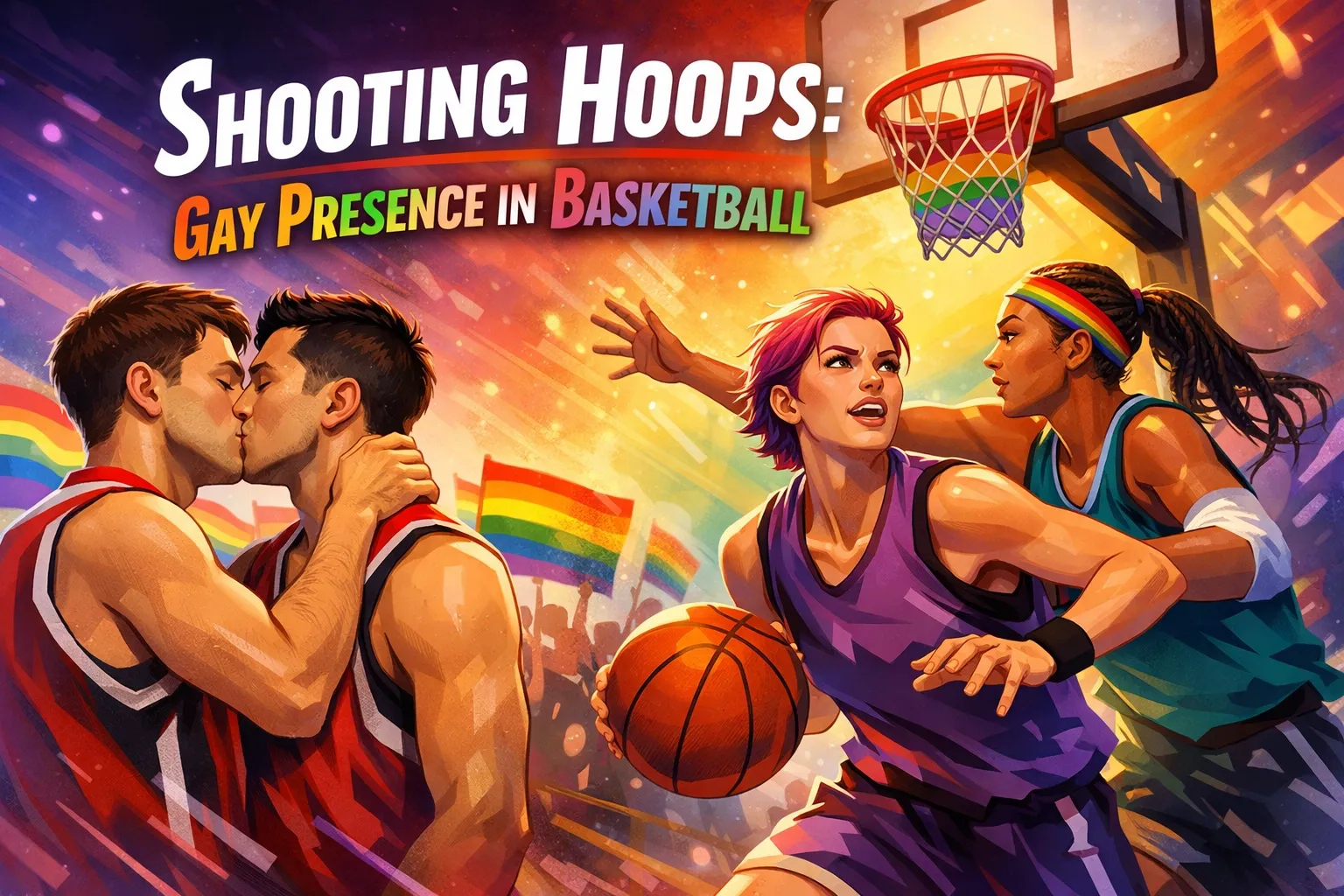
There's something electric about the sound of sneakers squeaking on hardwood, the swish of a net, and the roar of a crowd. Basketball has always been a sport of connection, teammates reading each other's movements, building trust, and creating something bigger than themselves. But for decades, one question hung in the air like a contested three-pointer: where are all the gay players?
The answer, it turns out, depends entirely on which court you're looking at.
A Tale of Two Leagues
The contrast between men's and women's professional basketball is absolutely staggering. In the WNBA's 2025 season, 44 players, that's 28% of the entire league, identify as openly gay. Let that sink in for a second. Nearly one in three players on WNBA rosters are out and proud, playing at the highest level of women's basketball.
The New York Liberty leads the pack with seven gay players, while the Phoenix Mercury follows close behind with six. These aren't just bench warmers either, we're talking about elite athletes who've helped transform the WNBA into one of the most LGBTQ+-inclusive professional sports leagues in the world.
Now flip the channel to the NBA. As of 2022, the number of current openly gay players in the league stood at a resounding… zero. Zilch. Nada. Not a single active NBA player among roughly 450 athletes has publicly come out while playing. And here's the kicker: statistically speaking, with about 5% of the general population identifying as LGBTQ+, the mathematical probability of every single NBA player being straight is less than one in a billion.
Yeah, you read that right. One billion.
Breaking Barriers, One Dribble at a Time
The history of gay representation in basketball has its share of watershed moments. Jason Collins made history in 2014 when he became the first openly gay athlete in any of the four major North American professional sports leagues after signing with the Brooklyn Nets. It was a groundbreaking moment that sent ripples through the sports world: but also highlighted just how far we still had to go.
On the women's side, Brittney Griner blazed her own trail when she became the first openly gay player drafted into the WNBA in 2017. Having previously come out as bisexual during her college years at Baylor University, Griner's visibility helped normalize LGBTQ+ presence in women's basketball and inspired countless young athletes to be themselves.
The growth in the WNBA has been remarkable. From 36 out players in 2024 (25% of rosters) to 44 in 2025, the trend is clearly moving in the right direction. But the NBA? Not so much.
Team Dynamics: The Real MVP
So what's actually happening inside these locker rooms? The team dynamic piece is fascinating and complex. In the WNBA, where gay players are commonplace, teams have had to navigate what it means to create truly inclusive environments. And by most accounts, they've succeeded spectacularly.
When nearly a third of your teammates are part of the LGBTQ+ community, it becomes normalized in the best possible way. Pregame rituals, team bonding, travel arrangements, media appearances: all of these aspects of professional sports have adapted to reflect the diversity of the players. The result? A league where players can show up as their whole selves without compartmentalizing their identity.
The WNBA's team culture demonstrates something powerful: when visibility is high, acceptance follows. Players celebrate Pride nights not as corporate checkbox exercises, but as genuine expressions of who they are. Teammates' partners are welcomed at team events. Pride flags fly alongside team banners. It's just… normal.

In the NBA, however, the absence of openly gay players means team dynamics around LGBTQ+ inclusion remain largely theoretical. Sure, teams participate in NBA Pride Night celebrations and make statements about diversity and inclusion. Organizations post rainbow logos on social media. But without actual representation on the roster, these gestures can feel more performative than transformative.
The question that hangs over NBA locker rooms is this: would a gay player feel safe coming out to his teammates? The silence suggests the answer is complicated at best.
Community Building Beyond the Court
The good news is that the basketball community has created spaces outside the professional leagues where LGBTQ+ players can thrive. The National Gay Basketball Association (NGBA) operates travel tournaments, competitive leagues, and community outreach programs specifically designed to create safe environments for LGBTQ+ athletes.
These grassroots organizations serve a crucial purpose: they prove that gay athletes and basketball absolutely mix. They're incubators for talent, confidence, and community: showing young players that they don't have to choose between their sport and their identity.
Professional leagues have also launched various initiatives. In 2019, basketball organizations rolled out "Pride" campaigns celebrating key moments in LGBTQ+ rights history. These efforts matter, even if they haven't yet translated into more NBA players feeling comfortable coming out during their careers.
Representation On and Off the Page

Here's where it connects to what we do at Read with Pride. The lack of visible gay athletes in men's professional basketball creates a hunger for representation elsewhere. That's where gay fiction and MM romance step up to fill the void.
The sports romance subgenre has absolutely exploded in recent years, with basketball-themed MM novels giving readers the representation they're not seeing on ESPN. These stories explore what it might look like for gay athletes to navigate professional sports, team dynamics, locker room culture, and the media spotlight: all while falling in love.
Whether it's a contemporary MM romance about a closeted NBA player falling for his physical therapist, or a college basketball story featuring enemies-to-lovers tension between rival team captains, these books provide the visibility and authentic queer narratives that professional sports still largely lack.
At Readwithpride.com, we curate gay romance books that tackle these themes head-on, giving readers the happy endings that real-life professional sports haven't quite delivered yet. Because sometimes the best place to find authentic representation isn't courtside: it's between the pages of a great book.
The Path Forward
The disparity between the WNBA and NBA when it comes to LGBTQ+ representation tells us something important: cultural change is possible, but it's neither automatic nor universal. The women's game has created an environment where players feel safe being out, and the league is better for it: more authentic, more diverse, more reflective of the real world.
The men's game? Still waiting for that breakthrough. Experts note that while organizational support for LGBTQ+ issues has grown, without actual openly gay players on NBA rosters, representation remains symbolic rather than substantive.
But there's hope on the horizon. Younger generations of athletes are growing up in a world where LGBTQ+ visibility is increasingly normalized. As Gen Z enters professional sports, they bring different attitudes about sexuality and identity. The wall of silence in men's professional basketball won't stand forever.
Until then, we've got the WNBA showing us what's possible, community leagues creating safe spaces, and LGBTQ+ fiction filling the representation gap with stories that reflect our community's full humanity. Whether you're watching the game or reading about it, representation matters: on the court and on the page.
Looking for MM romance with athletic heroes? Check out our collection of gay romance novels featuring sports, teamwork, and plenty of locker room tension. Because everyone deserves to see themselves in the stories they love.
Follow us for more LGBTQ+ content:
#ReadWithPride #MMRomance #GayRomanceBooks #LGBTQBooks #BasketballRomance #SportsRomance #QueerAthletes #LGBTQRepresentation #GayFiction #MMBooks #PrideInSports #BasketballPride #QueerFiction #GayNovels #LGBTQReading #2026Books #GayLoveStories #MMRomanceBooks #ContemporaryRomance #ReadwithPride

Leave a Reply
You must be logged in to post a comment.