


When the men marched off to war, someone had to keep the home fires burning, and the assembly lines moving. What history books often gloss over is that the factory floor became more than just a place of rivets and rations. For many gay men who remained stateside during World War II, these industrial spaces became unexpected havens where forbidden connections could bloom beneath the clang of machinery and the haze of welding sparks.
Rosie the Riveter Had Company
We've all seen the iconic image of Rosie the Riveter with her flexed bicep and determined expression. But the wartime workforce transformation wasn't just about women stepping into traditionally male roles. The factories, munitions plants, and shipyards that kept the Allied war machine humming became melting pots of humanity, mixing classes, backgrounds, and yes, sexual orientations in ways that peacetime society never would have tolerated.
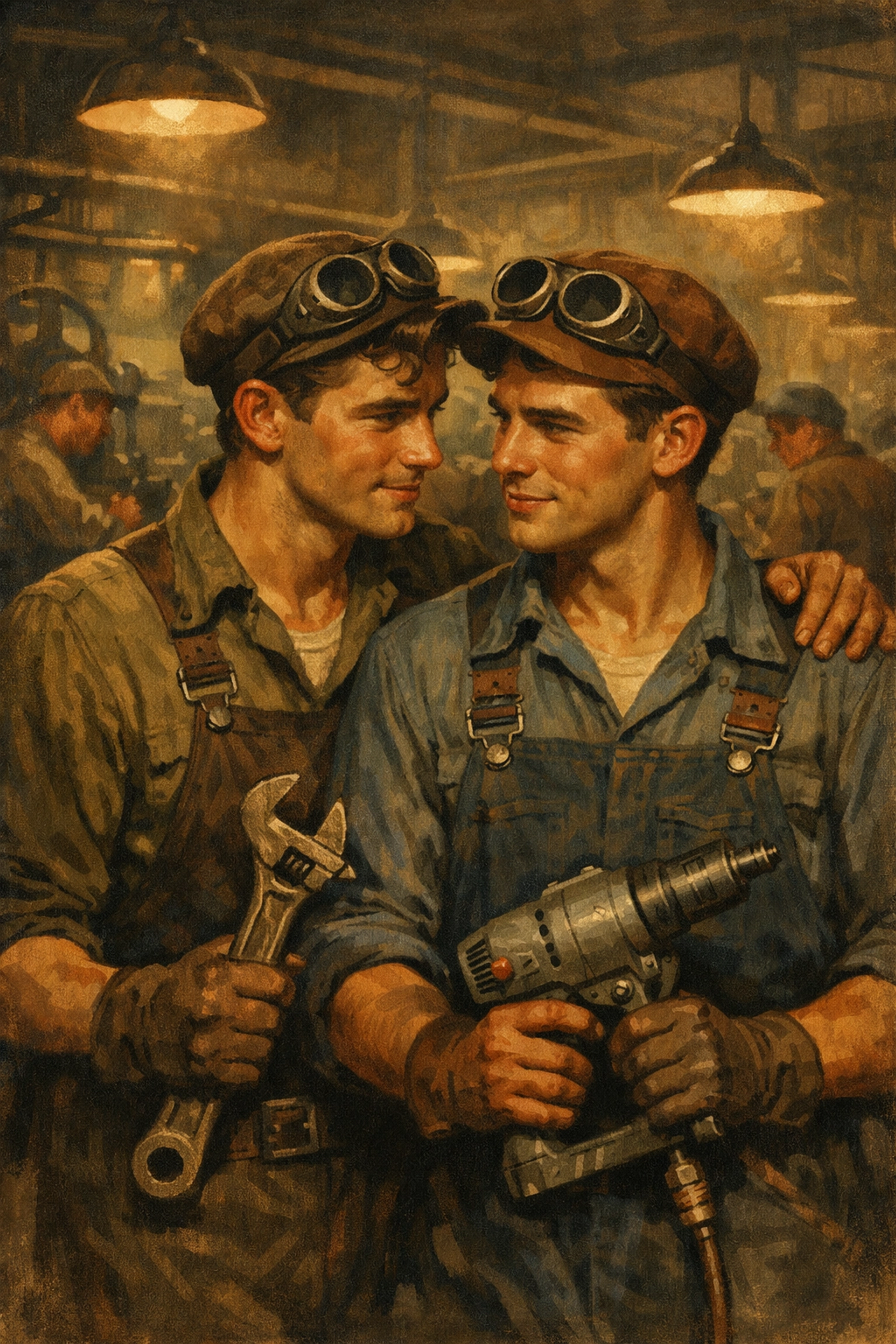
For gay men classified as 4-F (unfit for military service) or working in essential industries, the factory floor offered something precious: a community. Away from the watchful eyes of families and small-town neighbors, these men found themselves shoulder-to-shoulder with others who understood the weight of living a double life.
The Geography of Hidden Glances
Factory work during wartime created unique social dynamics. The sheer scale of these operations, some employing tens of thousands of workers across multiple shifts, meant anonymity was possible in ways it never had been before. In the chaos of round-the-clock production, two men sharing a cigarette during a break or walking home together after the night shift could blend into the background noise of wartime life.
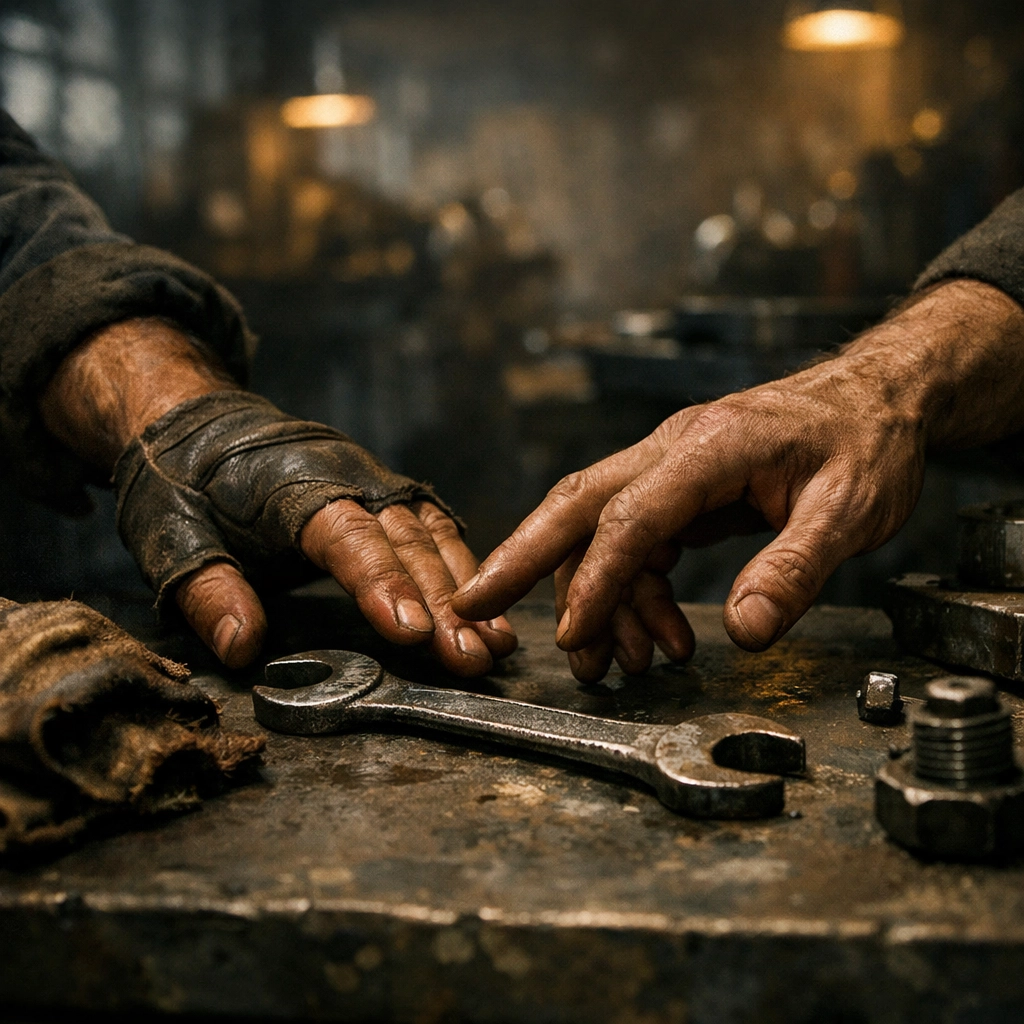
The noise itself became a blessing. Conversations could happen on the factory floor that would have been dangerous in the silence of a boarding house hallway. A meaningful look exchanged over a conveyor belt. A hand lingering a moment too long when passing a wrench. These tiny rebellions against the era's suffocating conformity happened thousands of times a day, mostly unnoticed, mostly unremarked upon.
Barracks, Boarding Houses, and Found Families
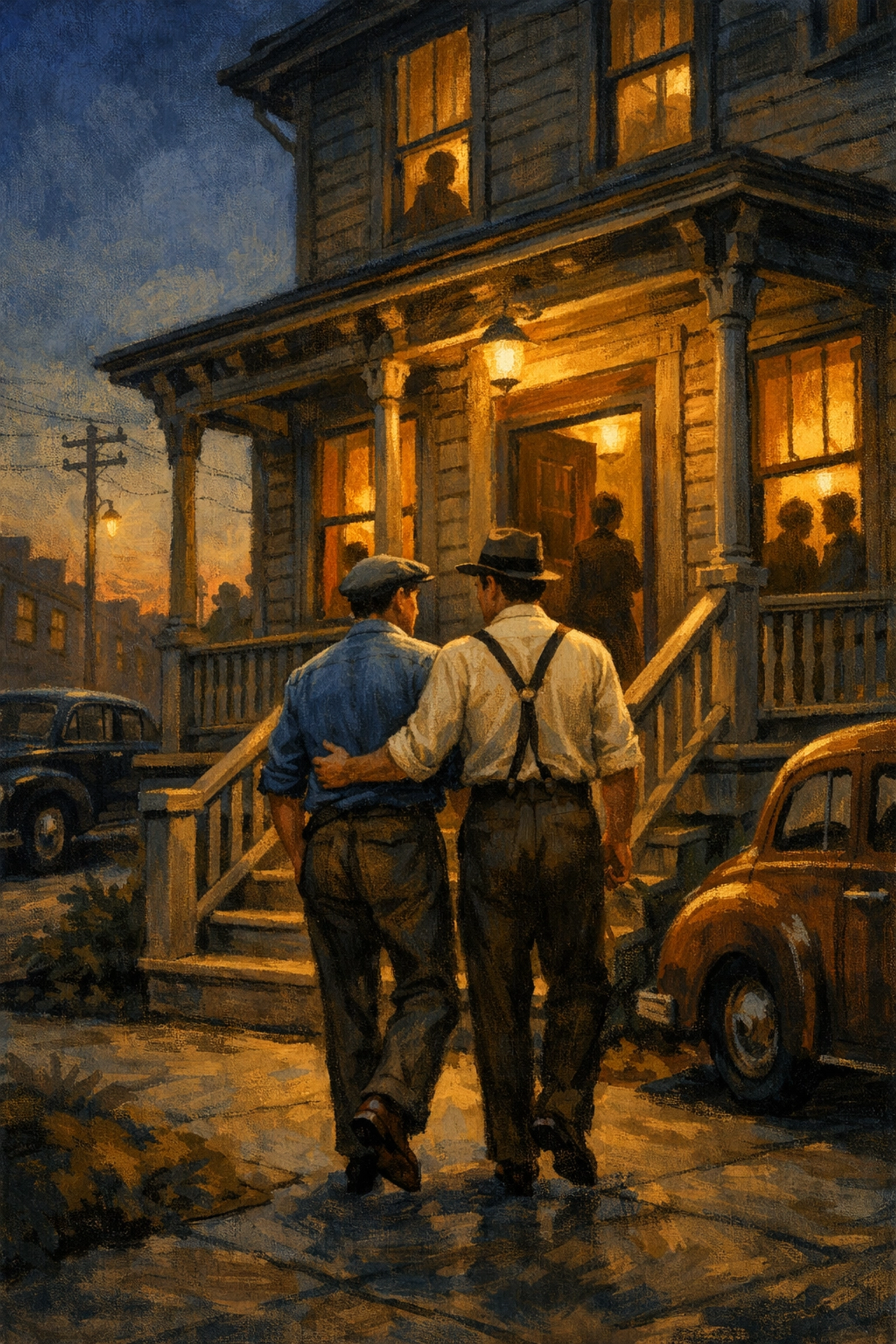
The housing crisis created by the sudden influx of war workers led to cramped quarters and makeshift accommodations. Men who might never have crossed paths in peacetime found themselves sharing rooms in hastily constructed dormitories or crowded boarding houses near the factories. These living arrangements, born of necessity, created opportunities for relationships to develop away from the traditional family structures that typically policed male behavior.
Some boarding house owners, overwhelmed by the demand for beds, asked few questions about the exact nature of roommate arrangements. Others, particularly in port cities and industrial hubs, developed reputations as places where "confirmed bachelors" could find accommodation without judgment. These became known through word-of-mouth networks, information passed along in coded language that the gay community had perfected out of survival.
The Danger Never Disappeared
But let's not romanticize this era. The same wartime paranoia that led to Japanese internment camps and Communist witch hunts also created an atmosphere where any deviation from "normal" behavior was suspect. Men suspected of homosexuality could lose their jobs, face arrest under sodomy laws, or be institutionalized for psychiatric treatment.
The factory floor required constant vigilance. Too much friendliness with the wrong person could spark rumors. Being too private could seem suspicious. Gay men working in these environments had to navigate an exhausting tightrope, being part of the team while never fully revealing themselves. Many developed elaborate cover stories, talking endlessly about fictional girlfriends or wives waiting for them back home.
Some men maintained "lavender marriages", marriages of convenience with lesbian women who needed similar protection. These arrangements allowed both partners to maintain respectability while quietly pursuing their actual romantic lives. The war years, with their social upheaval and geographic mobility, made such arrangements slightly easier to maintain than in the rigid social structures of peacetime.
After the Whistle Blew
When the shift ended and the factory gates closed behind them, these men navigated an urban landscape transformed by war. Cities like Detroit, Los Angeles, and Oakland swelled to bursting with war workers. In the crowded bars, the late-night diners, and the cruising spots in city parks, a temporary gay geography emerged.
These weren't the organized gay communities that would emerge in the 1960s and 70s. They were more fluid, more dangerous, but also more democratic in some ways. Class barriers that might have separated men in peacetime broke down. A college-educated engineer might find love with a high school dropout working the assembly line. The shared experience of wartime production, and the shared secret of their sexuality, created bonds across traditional social divides.
The Legacy in Our Stories
Today's gay historical romance novels set during World War II often focus on soldiers, pilots, and sailors, and rightfully so. Those stories of military men finding love in the chaos of war are compelling and important. But the home front had its own drama, its own passionate encounters, its own heartbreak and triumph.
The MM romance that explores these factory floor relationships taps into something profound about queer resilience. These were men who didn't have the "glory" of military service to cloak their relationships in acceptable male bonding. They had to create their own spaces for love in the gaps between the acceptable and the forbidden.
Writers of gay romance books who set their stories on the home front are doing important work, reminding us that queer love has always found a way, even in the most unlikely places. Whether it's a slow burn romance developing over shared shifts, or an enemies-to-lovers story between a union organizer and a factory supervisor, these narratives honor the hidden history of our community.
Finding These Stories Today
If you're hungry for MM historical romance that explores this era, you're in luck. The Read with Pride collection features numerous titles set during the World War II home front. These aren't your grandmother's romance novels (well, maybe they are, depending on your grandmother). They're authentic, heartfelt stories that don't shy away from the real dangers these men faced while celebrating the connections they forged.
From the riveting intensity of forbidden love blooming between co-workers to the tender domesticity of men building a life together in a boarding house room, these gay fiction titles bring the home front to vivid life. The best ones balance historical accuracy with the emotional truth of queer experience: showing us men who were products of their time but also recognizably human in their desires and dreams.
Why These Stories Matter
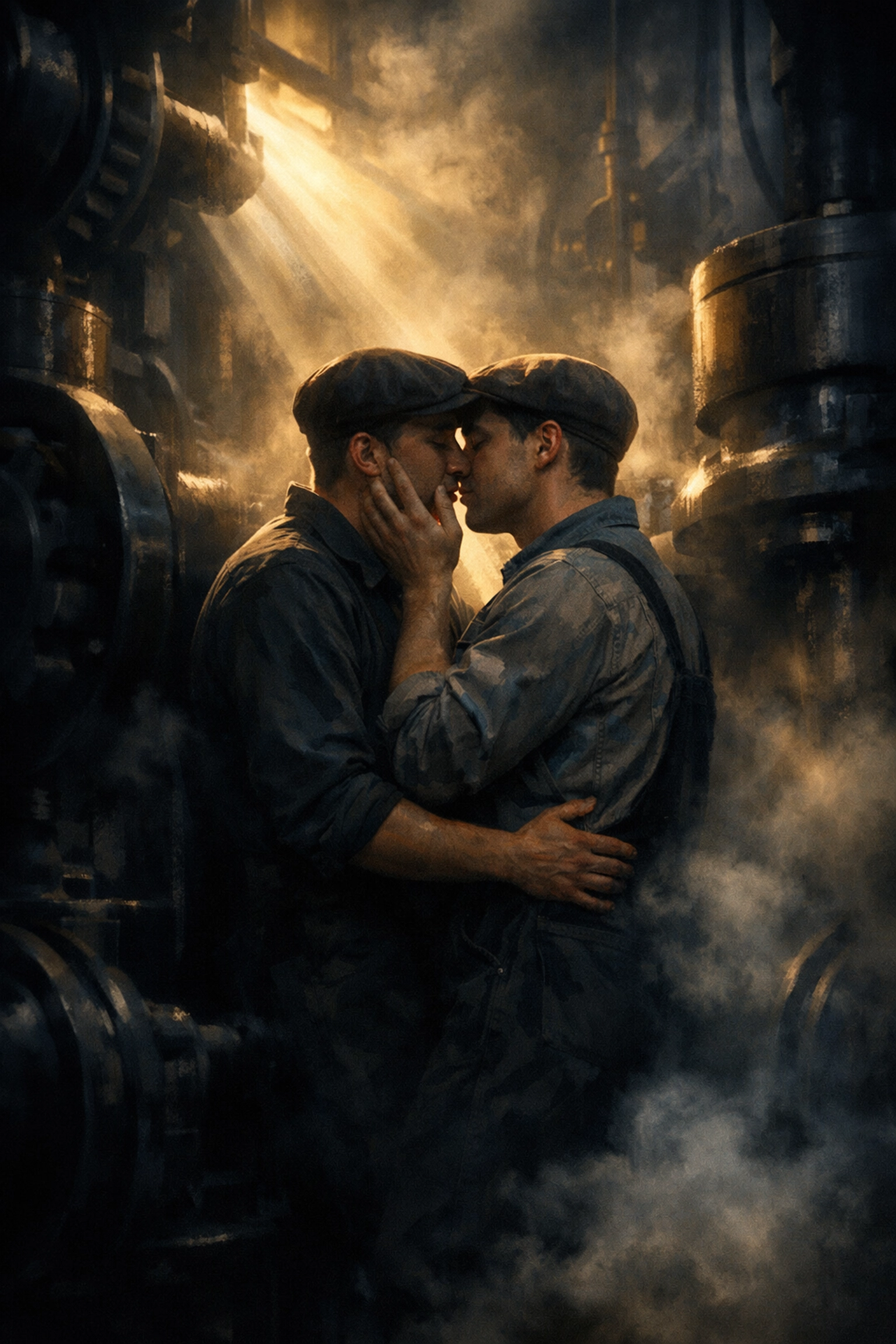
Reading about gay relationships during wartime isn't just an exercise in historical curiosity. These stories remind us that our community has always existed, even when history tried to erase us. The men who fell in love on factory floors, who risked everything for stolen moments together, who built lives in the shadows: they're our ancestors, our history, our family.
When we read LGBTQ+ fiction set in this era, we're reclaiming a past that was deliberately hidden. Every historical MM novel that places gay men at the center of the home front narrative is an act of visibility, a correction to the historical record that pretended we didn't exist.
And honestly? These stories are just plain good. There's something irresistible about the combination of historical detail, forbidden romance, and the unique pressures of wartime that creates perfect conditions for memorable gay love stories. The stakes are high, the obstacles are real, and the emotions are raw: everything you want in a great romance.
Your Next Read Awaits
Ready to explore the hidden history of love on the home front? Head over to Read with Pride to discover our collection of World War II-era MM romance books. From factory floors to munitions plants, from boarding house romances to cross-country adventures, these stories bring the home front's hidden history to vibrant life.
Because love has always found a way: even under the industrial lights of a wartime factory, even in the shadow of disapproval, even when history tried to pretend it never happened.
Follow us for more historical romance recommendations and LGBTQ+ book discussions:
- Facebook: Read With Pride
- Instagram: @read.withpride
- X/Twitter: @Read_With_Pride
#ReadWithPride #MMRomance #GayRomance #LGBTQBooks #HistoricalRomance #GayHistoricalRomance #MMHistoricalRomance #WorldWarII #HomeFront #QueerHistory #GayFiction #LGBTQFiction #MMBooks #GayBooks #QueerRomance #LGBTQRomance #GayLoveStories #MMNovels #HistoricalMMRomance #2026GayBooks #GayRomanceBooks #BestMMRomance #LGBTQEbooks
Discover your next favorite MM romance at Readwithpride.com

Leave a Reply
You must be logged in to post a comment.