

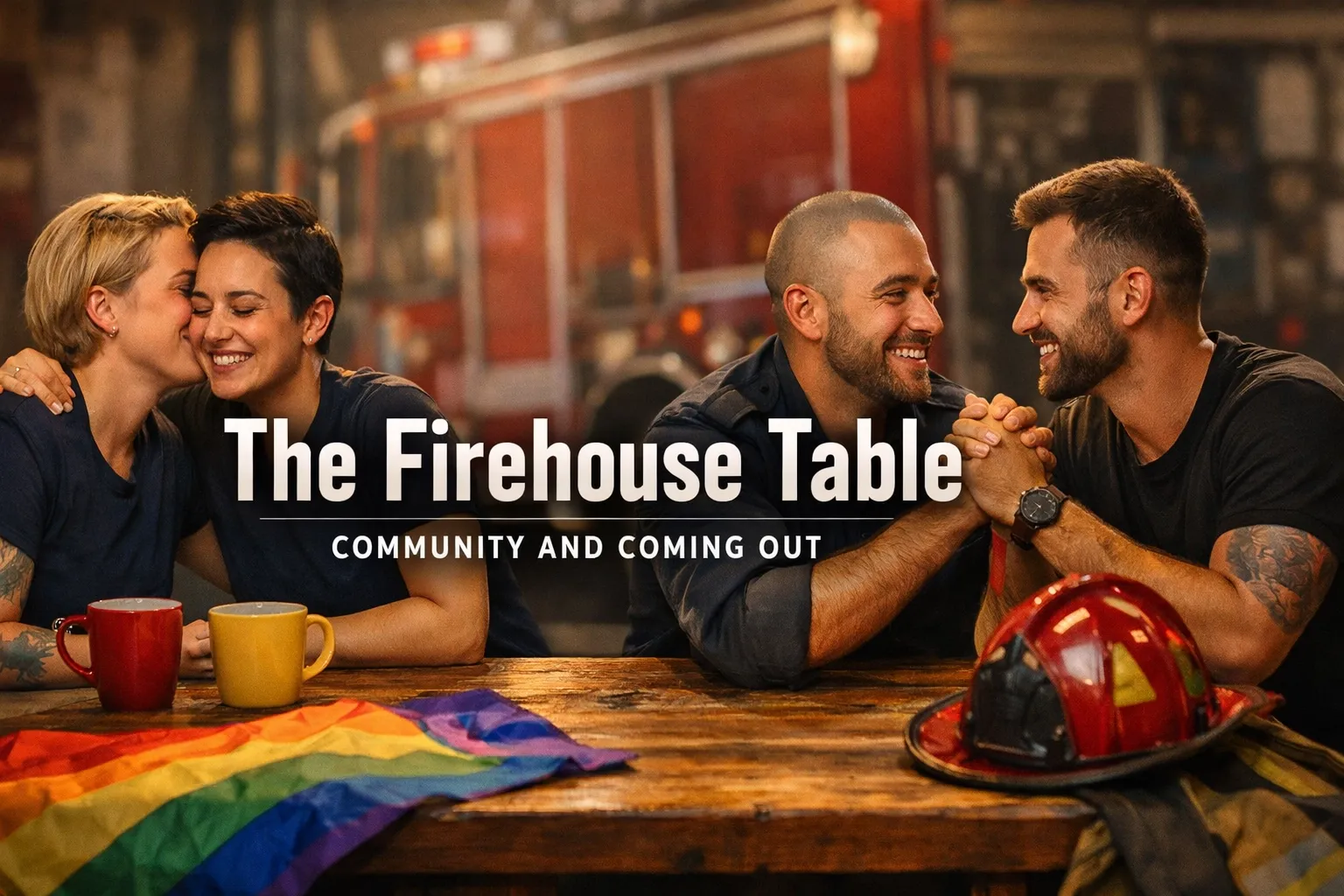
There's something about a firefighter that makes hearts race, and we're not just talking about the emergencies they respond to. The uniform, the bravery, the physical strength. It's a fantasy that's been woven into our collective consciousness through countless romance novels, calendar shoots, and yes, more than a few steamy MM romance books. But behind the fantasy lies a reality that's far more complex and, honestly, far more interesting.
At the heart of every firehouse sits a table. Not just any table, the table. It's where crews gather for morning coffee, where they share meals cooked together, where stories are told and retold, where rookie mistakes become legendary tales. And for LGBTQ+ firefighters, it's often where one of life's most difficult conversations happens: coming out to your brothers and sisters in service.
The Fantasy Meets the Reality
Let's be real for a second. The gay romance books featuring firefighters aren't exactly wrong about the appeal. There's something undeniably attractive about someone who runs toward danger while everyone else runs away. The physical fitness required for the job doesn't hurt either. But what those books sometimes miss is the intense intimacy of firehouse culture, not sexual intimacy, but the kind that comes from living and working in extraordinarily close quarters with the same people for 24-hour shifts.
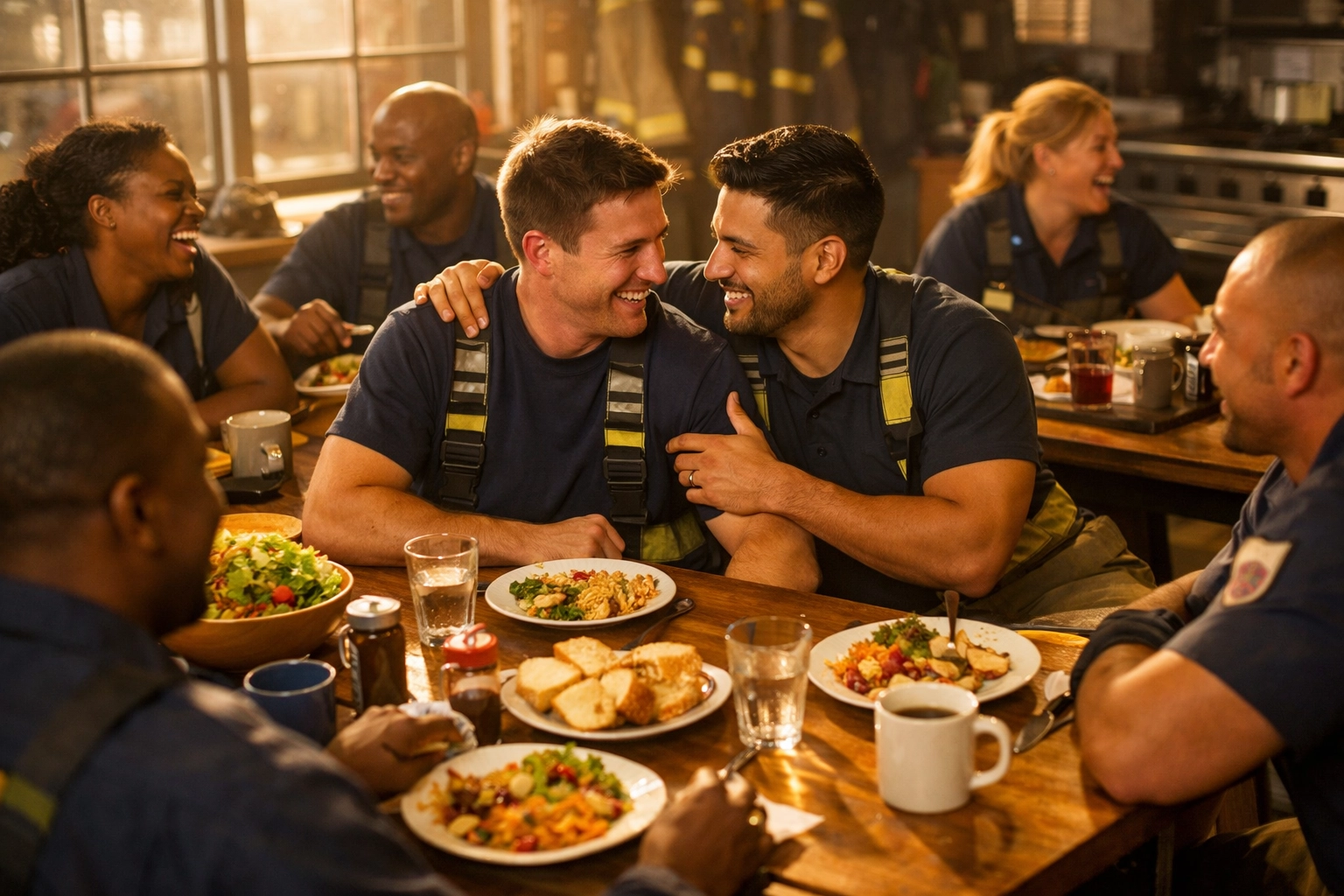
You eat together. You sleep in the same bunk room. You shower in the same facilities. You trust each other with your literal lives. This isn't a 9-to-5 job where you clock out and go home. The firehouse becomes your second home, and your crew becomes your second family. Sometimes your first family, if your birth family didn't accept you.
And that's where things get complicated for queer firefighters.
Living in the Glass Closet
Imagine trying to keep a significant part of your identity private when you're spending a third of your life sleeping twenty feet away from your coworkers. When casual conversations at the firehouse table inevitably drift to relationships, dating, and weekend plans. When your crew wants to meet your partner at the department BBQ.
The fire service has historically been, let's not sugarcoat it, a hyper-masculine, traditional environment. For decades, it was assumed that firefighters were straight, married men with wives at home. The culture prided itself on brotherhood, on being "one of the guys." For LGBTQ+ individuals, this created a painful paradox: how do you fully integrate into a brotherhood when you're hiding a fundamental part of who you are?
Many gay, lesbian, bisexual, and trans firefighters spent years in what's often called a "glass closet", where everyone probably knows or suspects, but nothing is openly acknowledged. It's exhausting. It means carefully editing your stories. Using gender-neutral pronouns. Bringing a "friend" to department events. Living in a constant state of vigilance about what you say and how you say it.
The Firehouse Table as Sacred Space
But here's the thing about that firehouse table: it's not just a piece of furniture. It's a sacred space where vulnerability is actually part of the job description. Firefighters see people on the worst days of their lives. They respond to tragedies, to trauma, to situations that would break most people. And they process that together, at that table, over coffee and meals and late-night conversations when the city is quiet.
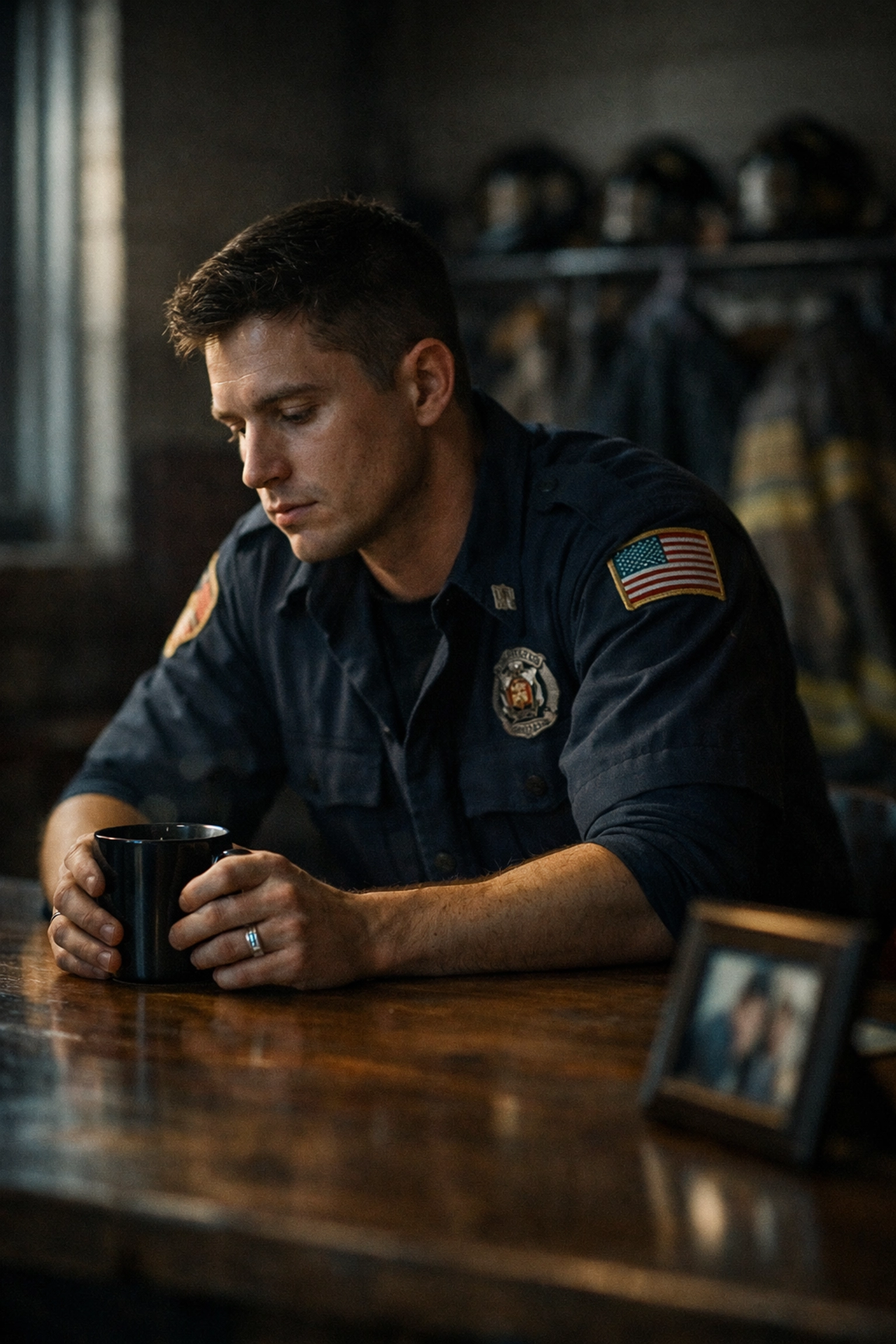
This creates a unique environment that, paradoxically, can be one of the safest places to come out, once you find the courage. Because firefighters already understand the concept of having each other's backs. They already know how to support someone through crisis. They already practice radical acceptance in high-stress situations.
The communal living aspect, which initially seems like a barrier to coming out, can actually become an accelerant (pun intended) for acceptance. When you live together, work together, and survive traumatic calls together, surface-level differences become less important. What matters is: Can I trust you? Will you be there when I need you? Do you have my back?
Brotherhood Redefined
Some of the most powerful coming-out stories from the fire service happen at that table. A rookie finally finding the words during a quiet breakfast shift. A veteran of twenty years deciding it's time to stop hiding. A trans firefighter explaining their transition to a crew that's become family.
The responses vary, of course. Some firehouses are immediately accepting, with crews rallying around their LGBTQ+ members with fierce protectiveness. Others face a learning curve, with well-meaning but awkward questions and adjustments. And yes, some still encounter prejudice and discrimination: progress is uneven, and we'd be naive to pretend otherwise.
But increasingly, fire departments are recognizing that diversity makes them stronger. That having LGBTQ+ firefighters on crews helps them better serve LGBTQ+ communities. That true brotherhood means accepting your brothers and sisters exactly as they are.
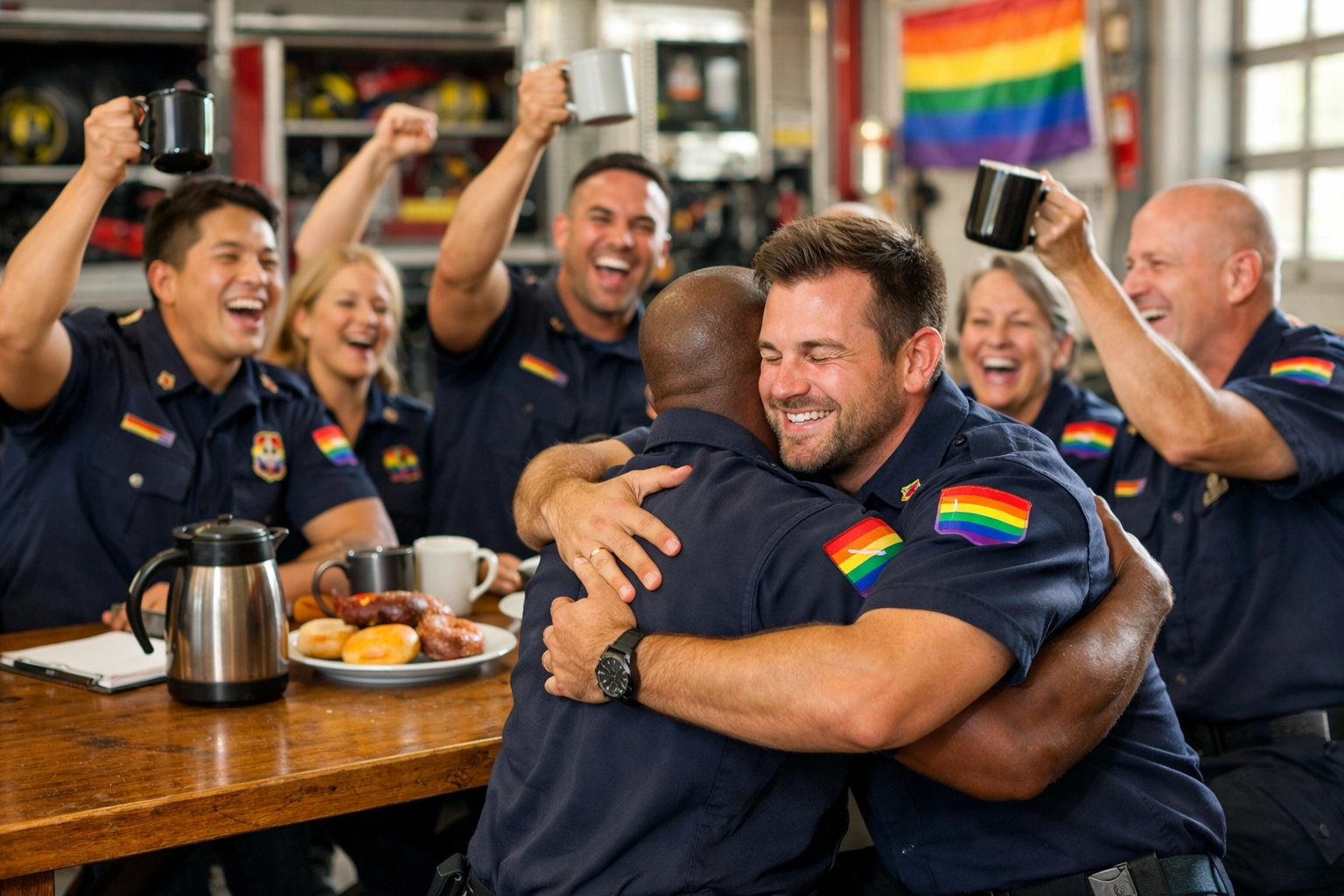
Organizations like the Lesbian and Gay Firefighters Association have been working for decades to create safer, more inclusive environments. Pride patches and rainbow flags are becoming more common in firehouses. And slowly but surely, the culture is shifting.
The Found Family Phenomenon
For many LGBTQ+ firefighters, their crew becomes more than coworkers: they become chosen family. This is especially true for those whose biological families rejected them for being queer. The firehouse table, where meals are shared and life is processed, becomes the family dinner table they might have lost.
There's something powerful about being accepted not despite being gay or trans, but simply as another member of the crew. About having your captain show up to your wedding. About your crew wearing pride patches in solidarity. About being able to bring your partner to the station and have them welcomed with the same warmth as any other spouse.
This mirrors the found family trope that's so popular in MM romance books and LGBTQ+ fiction: but in real life, it's even more meaningful. These are people who will literally run into burning buildings with you. That bond transcends just about everything else.
Why This Matters for Readers
If you're reading gay romance novels or contemporary MM fiction featuring firefighters, understanding this reality adds depth to those stories. The best LGBTQ+ fiction doesn't just use firefighters as eye candy (though that's certainly a bonus). It explores the genuine complexities of being out in a historically conservative profession. It honors the real experiences of queer firefighters who've fought for acceptance while fighting fires.
At Read with Pride, we celebrate stories that capture both the fantasy and the reality: stories where the romance is just as compelling as the authentic representation. Where the heat comes from chemistry and from navigating real challenges together.
The firehouse table represents something deeper than a place to eat. It's where transformation happens. Where acceptance is forged. Where community is built, one shift at a time. And where LGBTQ+ firefighters are increasingly finding the courage to bring their whole selves to work.
Because at the end of the day, that's what true brotherhood looks like: a table with room for everyone.
Discover authentic LGBTQ+ stories and MM romance books at ReadwithPride.com
Follow us for more content celebrating queer stories and experiences:
- Facebook: Read with Pride
- Instagram: @read.withpride
- X/Twitter: @Read_With_Pride
#ReadWithPride #MMRomance #GayRomanceBooks #LGBTQFiction #FirefighterRomance #GayFirefighters #QueerRepresentation #MMRomanceBooks #GayFiction #LGBTQBooks #ContemporaryRomance #FoundFamily #ComingOutStories #QueerCommunity #GayLoveStories #MMContemporary #LGBTQRomance #GayNovels #PrideReads #AuthenticLGBTQ

Leave a Reply
You must be logged in to post a comment.