
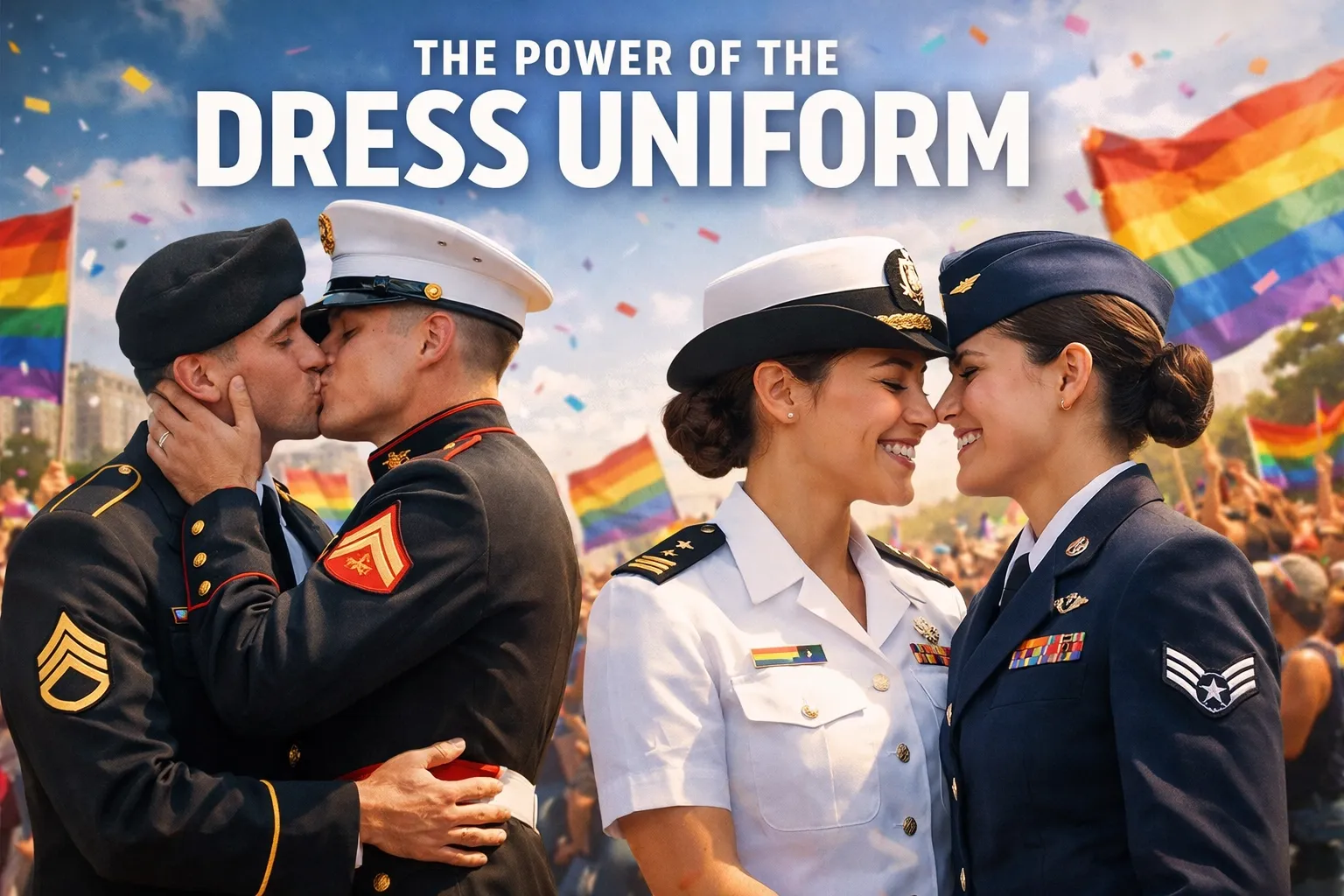
Let's be honest, there's something about a person in dress uniform that just hits different. Whether it's the crisp lines, the gleaming medals, or the way those shoulders look in military blues, dress uniforms occupy a special place in queer fantasy and reality alike.
But here's what makes this conversation so much richer in 2026: we're not just admiring from the sidelines anymore. We're living it. LGBTQ+ service members are walking down the aisle in their dress uniforms, marching in Pride parades, and showing up authentically as themselves in spaces that once forced them to hide.
The Visual Language of Power and Precision
There's a reason dress uniforms appear so frequently in MM romance books and gay fiction. They're not just clothes, they're a complete visual statement. The sharp tailoring, the symbolic insignia, the ribbons that tell stories of courage and commitment, all of it creates an image of authority, discipline, and honor that resonates deeply.
For many in the LGBTQ+ community, the appeal goes beyond aesthetics. Dress uniforms represent qualities we often find attractive: dedication, courage, the willingness to serve something greater than oneself. They're physical manifestations of values that matter. Plus, let's not pretend that seeing someone you're attracted to in formal military attire doesn't trigger some very specific romance novel scenarios we've all read about.
The psychology behind this attraction is real. Uniforms communicate hierarchy, expertise, and accomplishment instantly. Those colored stripes, badges, and medals aren't random decoration, they're a visual resume of someone's journey, training, and experiences. For readers who devour gay romance novels featuring military characters, this visual language adds layers of depth to the attraction.
From Fantasy to Reality: Queer People in Uniform
The fantasy of the dress uniform becomes infinitely more powerful when it's backed by reality. After decades of Don't Ask, Don't Tell and outright bans, LGBTQ+ service members can now serve openly in many countries, including the US military since 2011.
What does this mean for dress uniforms and queer culture? Everything.
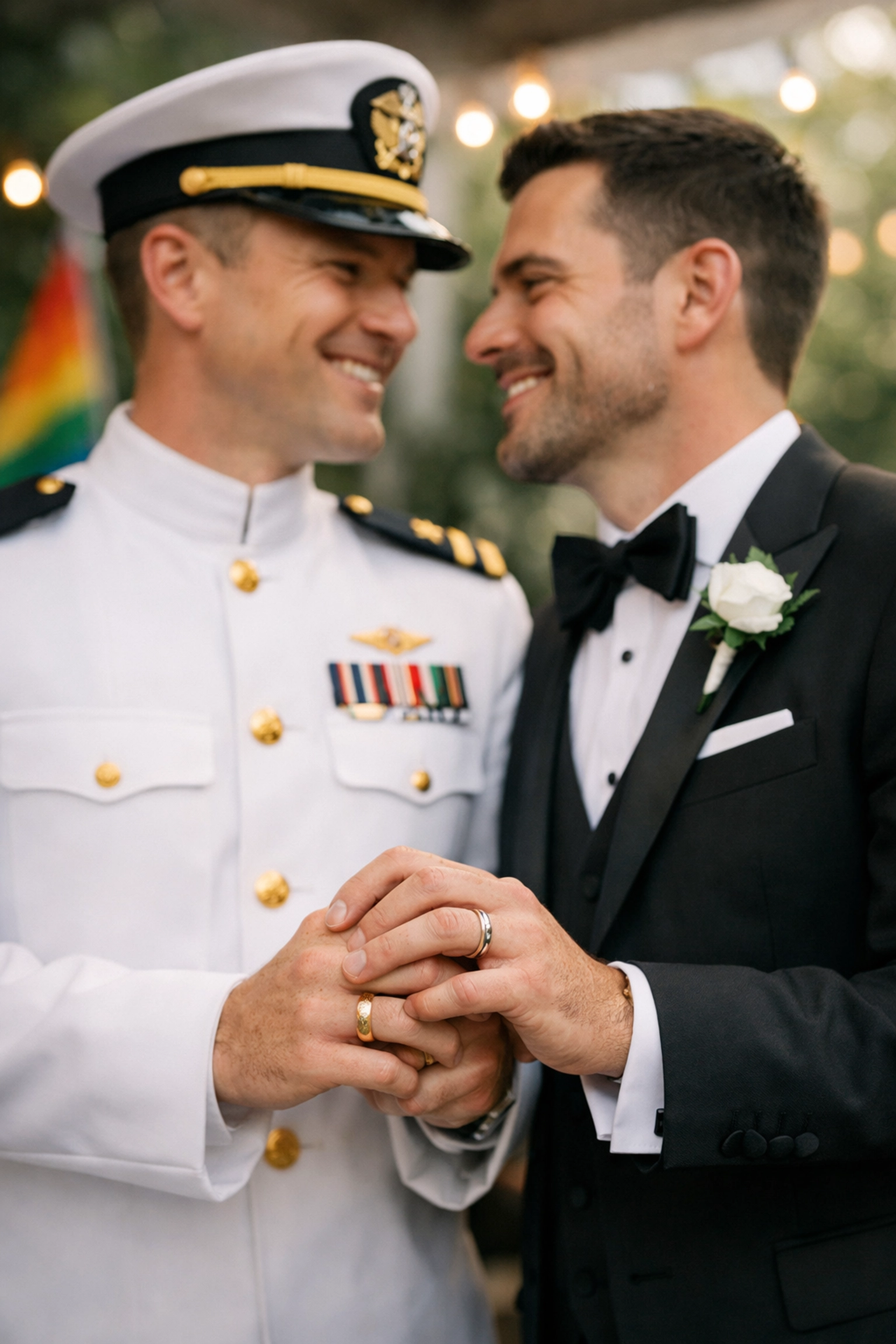
Now, same-sex couples can have military weddings where one or both partners wear their dress blues, whites, or service greens. Pride month sees active-duty LGBTQ+ service members marching in their dress uniforms, transforming an outfit once associated with enforced secrecy into a symbol of authentic pride. The cognitive dissonance that once existed, between the fantasy of the uniform-clad hero and the reality of forced closeting, has been shattered.
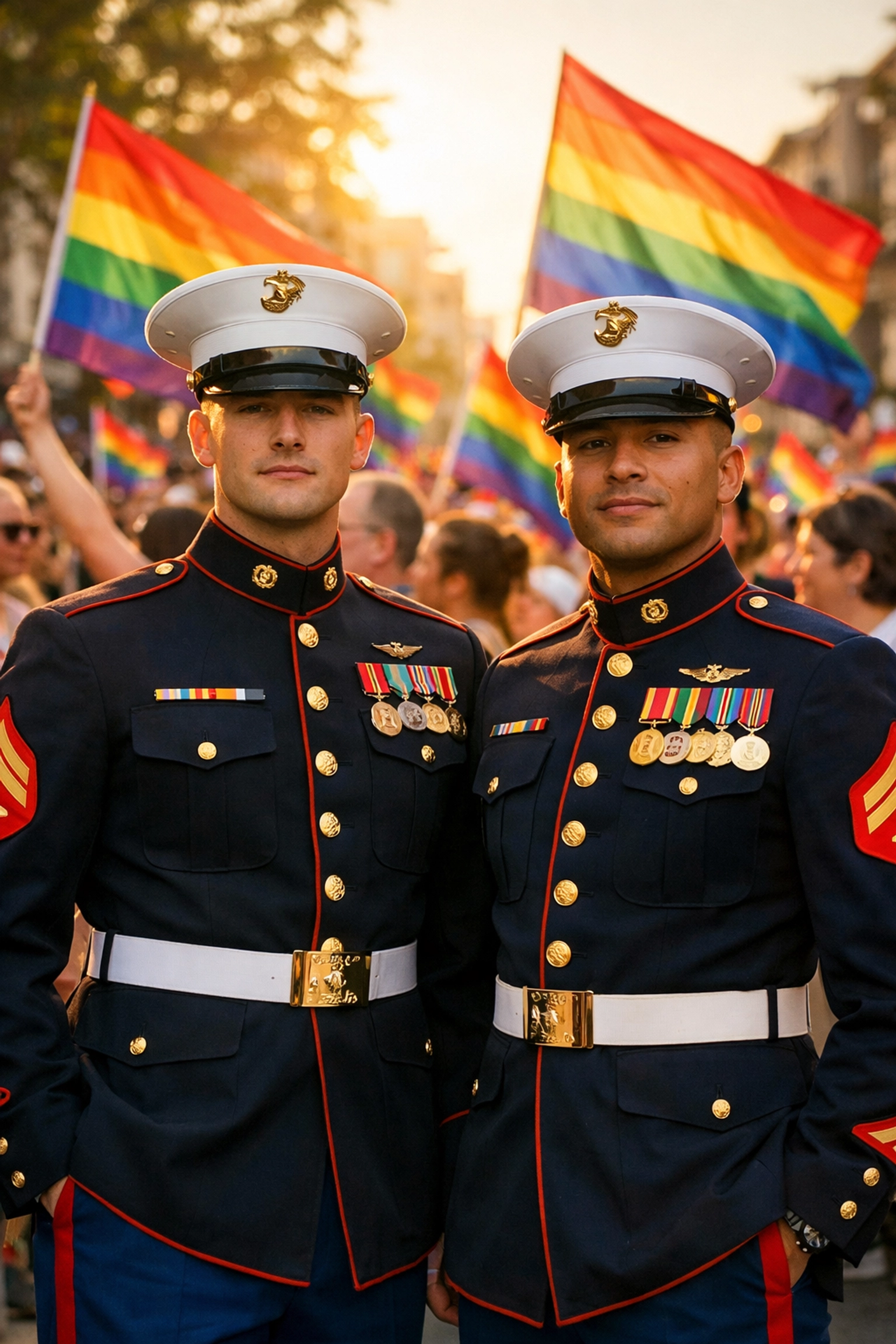
These aren't just symbolic victories. When a gay Marine Corps officer wears his dress blues to marry his husband, or when a lesbian Army captain rocks her dress uniform at a Pride parade, they're rewriting the narrative. They're proving that the courage, honor, and commitment represented by those uniforms include all of us.
The Wedding March: Dress Uniforms and LGBTQ+ Ceremonies
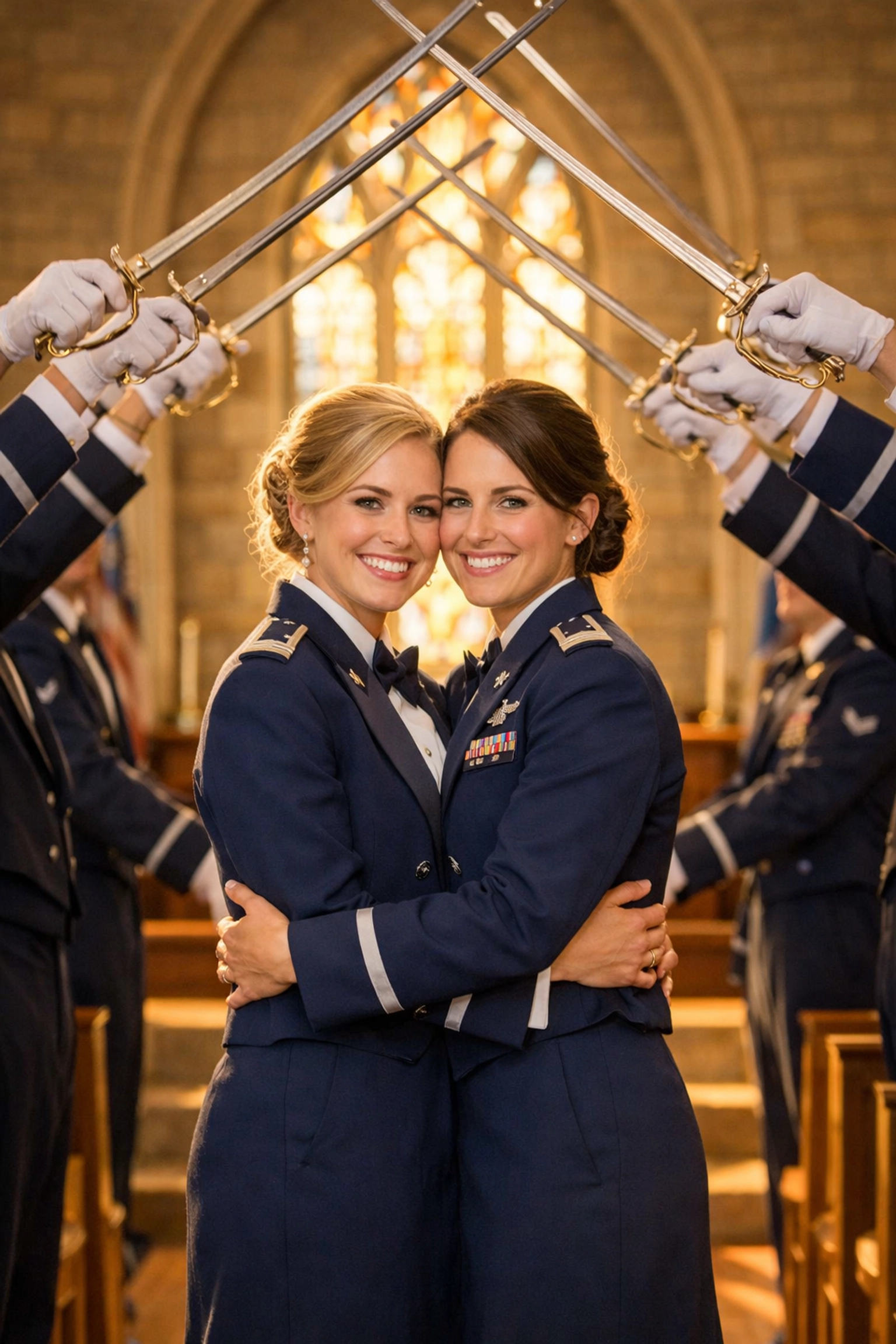
One of the most striking ways dress uniforms have entered queer life is through weddings. Military weddings come with their own traditions, the arch of sabers, the cutting of the cake with a ceremonial sword, the presence of uniformed honor guards. For decades, LGBTQ+ service members could only dream of having these traditions at their own ceremonies.
Not anymore.
Today's gay love stories increasingly include these moments of formal military romance. The groom in his Navy dress whites waiting at the altar. Two brides in their Air Force service dress walking down the aisle together. The officer who served in silence for years finally getting to celebrate their love publicly, in the uniform they earned through sacrifice.
These images matter. They matter to LGBTQ+ youth considering military service. They matter to service members still struggling with acceptance. They matter to anyone who's ever felt like they had to choose between their identity and their calling.
And yes, they absolutely fuel some incredibly compelling MM romance storylines. The difference now? These stories can draw from real experiences, real couples, real victories.
Pride Parades and Public Visibility
When service members march in Pride parades wearing their dress uniforms, they make a statement that transcends personal pride. They represent institutional progress, however incomplete it may still be. They show younger LGBTQ+ people that military service and queer identity aren't mutually exclusive.
The visual impact is undeniable. Against the rainbow flags and celebration, the formal precision of dress uniforms creates a striking contrast that photographs beautifully and symbolizes something deeper, the integration of queer identity into all facets of public life, including institutions once hostile to our existence.
Some of the most shared images from Pride events in recent years feature service members in dress uniform proposing to their partners, kissing their spouses, or simply standing proudly alongside their queer civilian counterparts. Each of these moments writes a new chapter in LGBTQ+ military history.
Beyond Military: Police, Fire, and Medical Dress Uniforms
While military dress uniforms get much of the attention, other service professions have their own formal attire that carries similar weight in queer culture. Police dress blues, firefighter Class A uniforms, and formal medical military uniforms (think Navy medical officers or Air Force nurses) all share that combination of sharp tailoring and symbolic authority.
The appeal operates on similar principles: these uniforms represent service, expertise, and a certain kind of heroism that resonates in gay fiction and real-life attraction alike. And like military service, these professions have their own histories of LGBTQ+ exclusion and gradual, hard-won inclusion.
Today, openly LGBTQ+ police officers, firefighters, and military medical personnel can wear their dress uniforms to Pride events, community gatherings, and their own weddings. They can be visible in ways previous generations couldn't imagine. This visibility transforms the uniform from fantasy object to reality, from symbol of forbidden attraction to emblem of authentic identity.
The Fantasy Endures (And That's Okay)
Here's the thing, none of this reality makes the fantasy less powerful. MM romance books will continue featuring uniformed heroes because the appeal is real and multifaceted. The discipline, the dedication, the visual impact of formal military attire, these elements work in fiction because they work in real life.
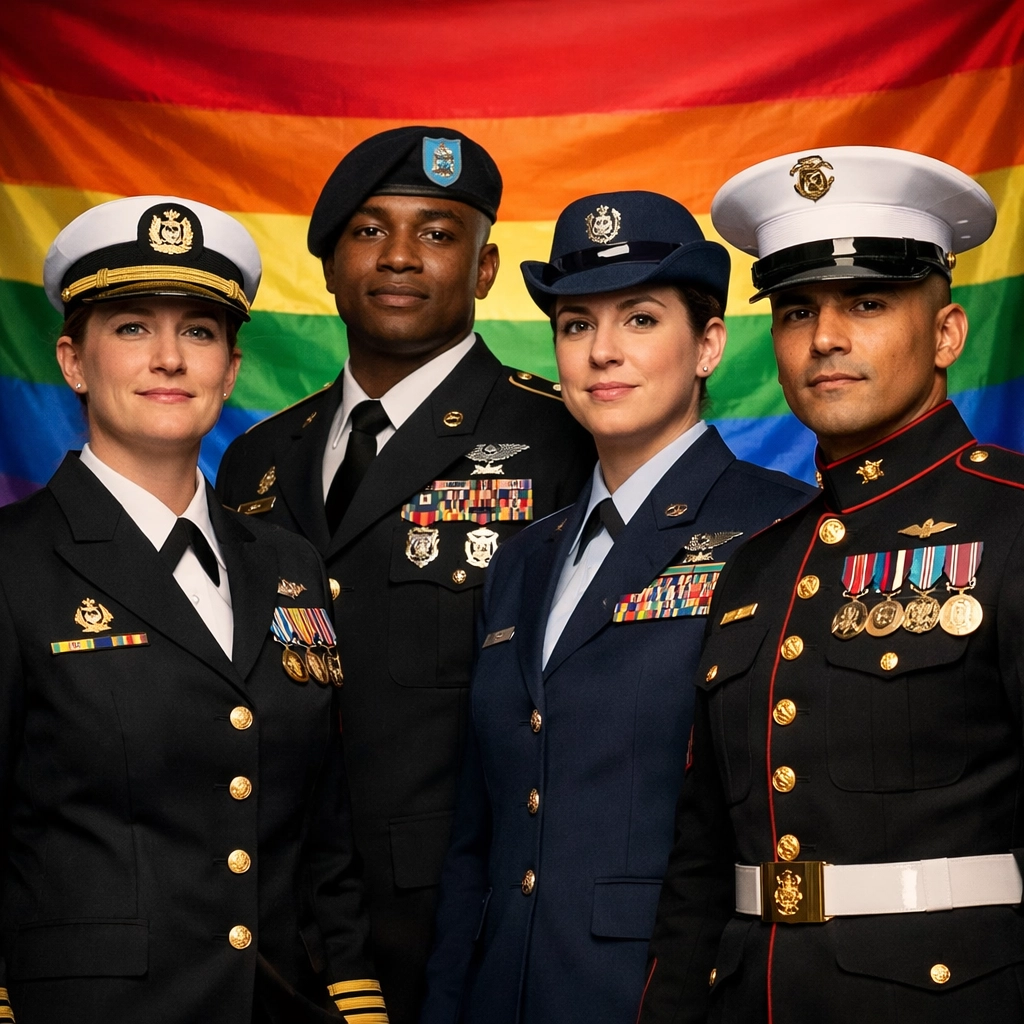
What's changed is that the fantasy now coexists with reality in healthier ways. Readers can enjoy gay romance novels featuring service members while also celebrating actual LGBTQ+ military couples. We can appreciate the aesthetic appeal of dress uniforms while recognizing the real courage of queer people who wear them while serving authentically.
The power of the dress uniform in LGBTQ+ culture comes from this intersection, where fantasy meets reality, where historical exclusion meets modern inclusion, where personal attraction meets collective pride. It's sexy and symbolic, fantastical and real, all at once.
Looking Forward
As we move further into 2026, the presence of LGBTQ+ people in uniform continues evolving. More countries are lifting restrictions. More service members are coming out. More dress uniforms are appearing at Pride events and same-sex weddings.
For those of us at Readwithpride.com, this evolution provides endless inspiration for LGBTQ+ fiction that honors both fantasy and reality. The military romance subgenre of MM romance books keeps growing because these stories matter, they reflect real experiences while providing escapism and hope.
Whether you're here for the fantasy, the reality, or both, there's something undeniably powerful about seeing someone own their identity while wearing a uniform that represents service and sacrifice. That power shows up in our literature, our celebrations, and our lives.
So yes, dress uniforms hold power in queer culture: visual power, symbolic power, and the power that comes from claiming space in institutions that once rejected us. And honestly? That makes them even more attractive.
Explore more stories about LGBTQ+ identity, pride, and authentic representation at Readwithpride.com. Follow us for daily inspiration and community:
- Facebook: Read With Pride
- Instagram: @read.withpride
- Twitter: @Read_With_Pride
#ReadWithPride #MMRomance #GayRomance #LGBTQFiction #MilitaryRomance #GayRomanceBooks #QueerFiction #MMRomanceBooks #LGBTQPride #GayLoveStories #MilitaryMMRomance #UniformRomance #GayMilitary #MMContemporary #LGBTQBooks2026 #GayFiction #AuthenticPride #QueerRepresentation

Leave a Reply
You must be logged in to post a comment.