

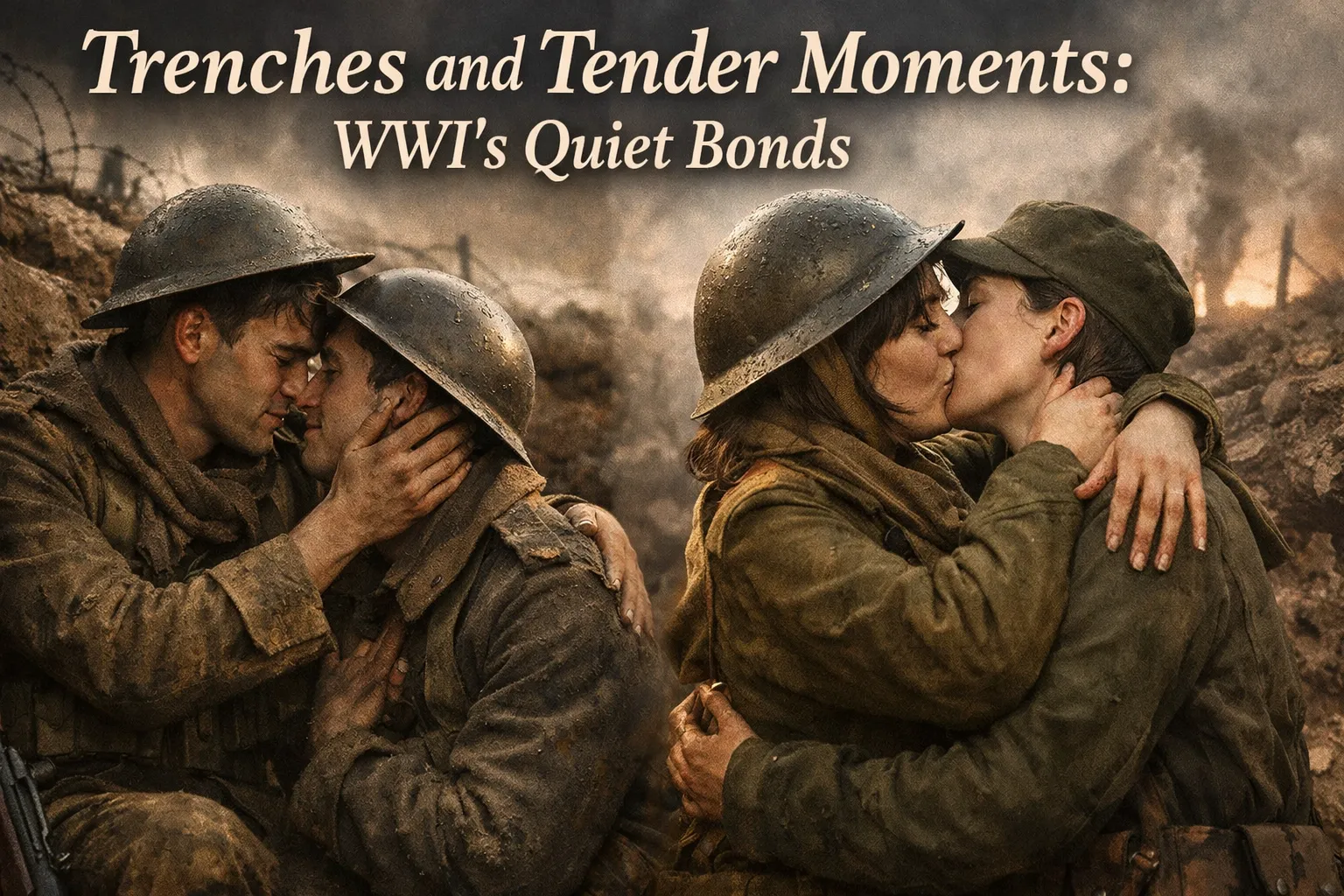
History has a way of hiding its most intimate stories in the margins. Between the official war records and sanitized accounts of battles lies another narrative, one of connection, tenderness, and quiet rebellion against a world determined to keep certain loves invisible.
Welcome to the Western Front, 1916. Where mud, blood, and fear created an unlikely backdrop for bonds that defied not just enemy fire, but societal expectations themselves.
When War Blurred the Lines
The trenches of World War I were hell on earth. We're talking knee-deep mud, the constant threat of artillery shells, rats the size of cats, and the kind of cold that settled into your bones and never left. But here's the thing about trauma and isolation, they strip away pretense. When you're huddled in a dugout, listening to shells scream overhead, wondering if you'll see tomorrow, social conventions matter a whole lot less.
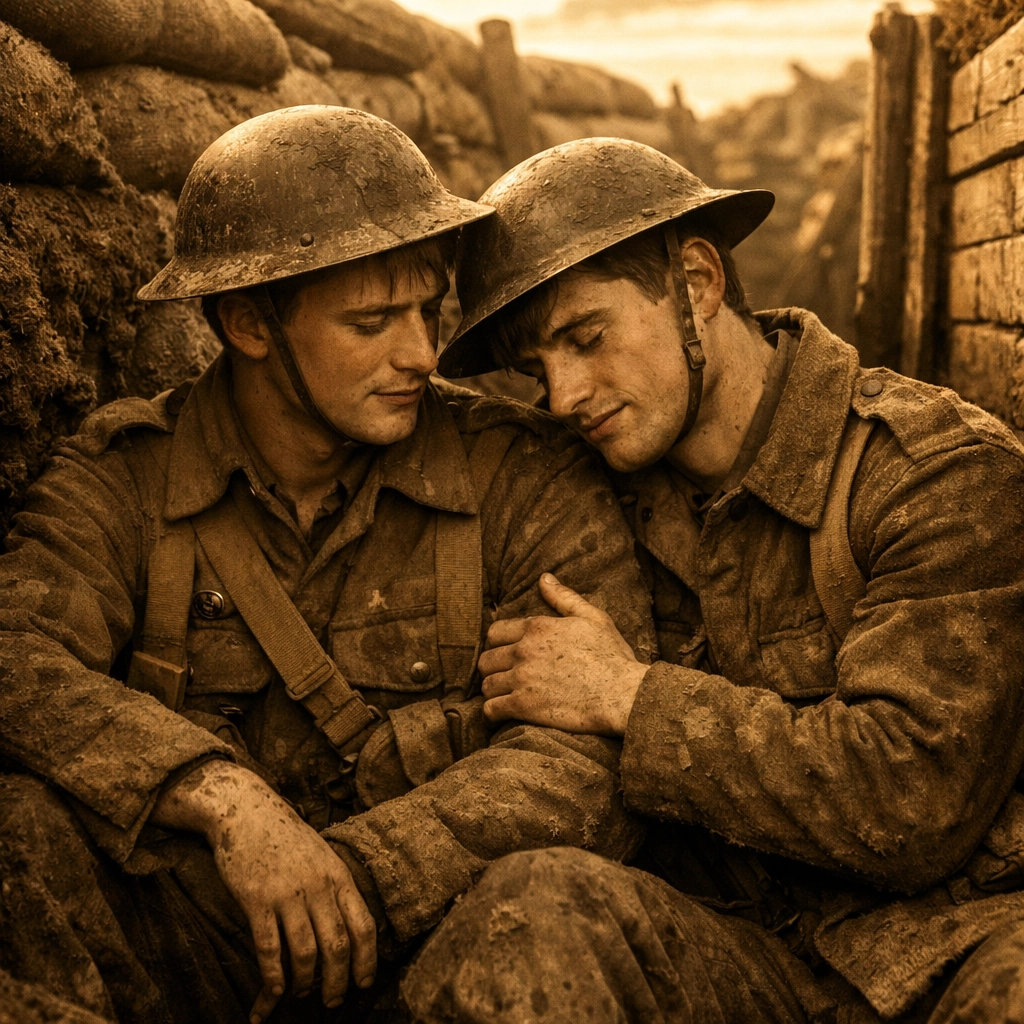
Soldiers formed what historians politely call "intense emotional bonds." Letters home rarely told the full story. They couldn't. But between the lines of correspondence and within the pages of trench journals, there's evidence of connections that went deeper than standard battlefield camaraderie.
Two soldiers, let's call them James and Thomas, because their real names are lost to history or deliberately erased, found themselves in the same unit on the Somme. James was a clerk before the war, soft-spoken with ink-stained fingers. Thomas had worked the docks, all rough edges and quick laughter. On paper, they had nothing in common. In the trenches, they had everything.
The Geography of Forbidden Affection
The Western Front created strange pockets of privacy within communal suffering. During bombardments, soldiers would crowd into dugouts, cramped underground shelters barely big enough to stand in. Bodies pressed together out of necessity. Hands reached for comfort in the darkness. A touch on the shoulder that lingered. Fingers intertwined when the shelling got particularly bad.
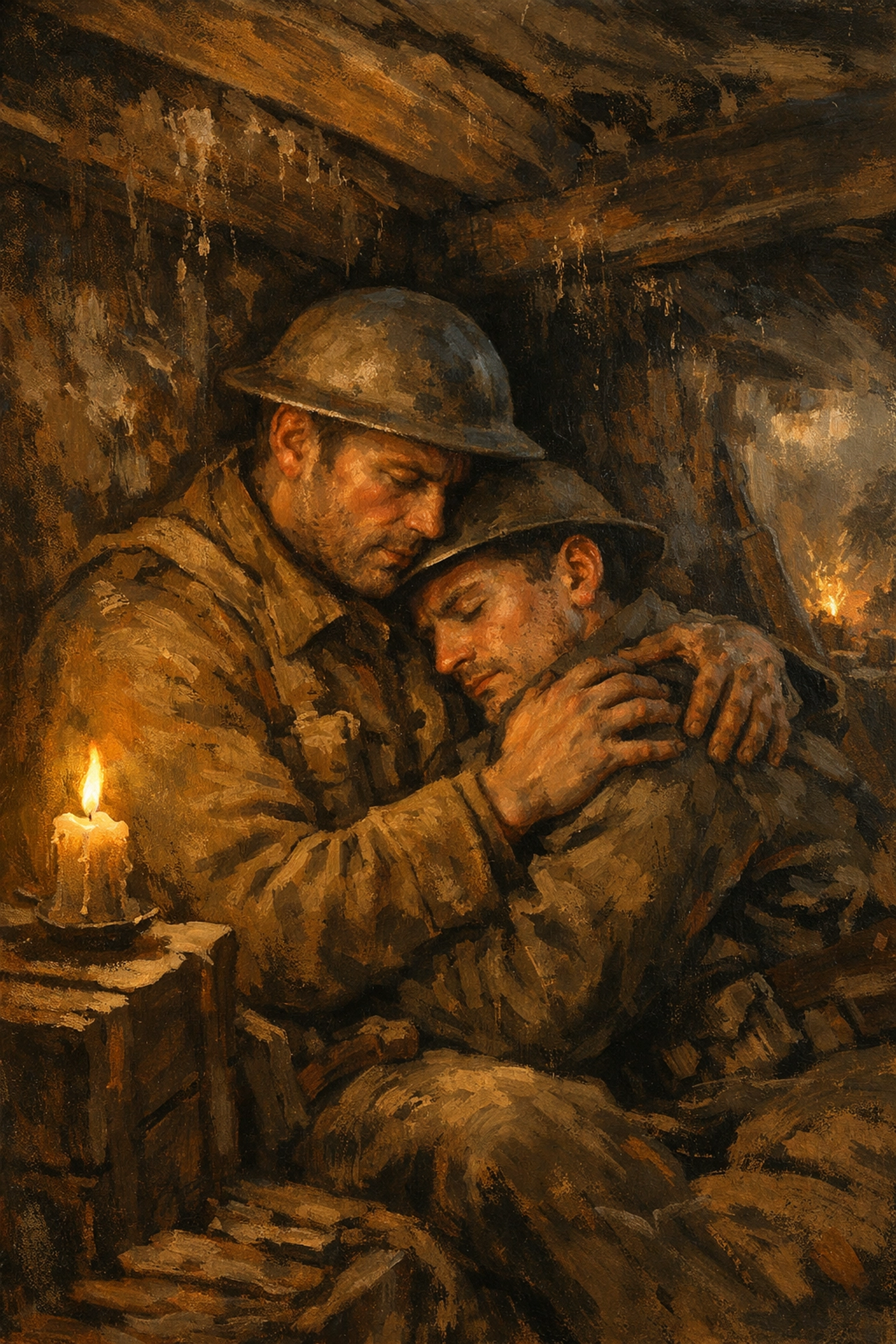
By 1915, French trench journals showed that soldiers increasingly wrote about longing, for home, yes, but also for the specific individuals beside them. The research shows this emotional attachment intensified as the war dragged on. What started as survival companionship deepened into something more profound.
James and Thomas developed a routine. During the quiet hours: those eerie stretches between battles when time seemed to suspend: they'd sit together in a particular section of the trench. Thomas would roll cigarettes with fingers that somehow stayed steady despite everything. James would read aloud from letters, sometimes from home, sometimes from books he'd carried in his pack.
They'd talk about food, that universal soldier obsession. Steak and kidney pie. Fresh bread. Anything but tinned beef. But they'd also talk about after: what came next, assuming there was a next. Thomas spoke carefully about a flat somewhere, maybe by the sea. James never said it outright, but the way he looked at Thomas when he described this imaginary future said everything.
Stolen Moments in Mud and Chaos
The rotation system meant units would spend time at the front, then rotate back to rest areas behind the lines. These breaks offered something precious: the possibility of actual rest, hot baths, clean clothes. For some, it also meant stolen hours away from the watchful eyes of command.
Historical accounts mention soldiers forming rapid romantic attachments during wartime: marriages that happened quickly because tomorrow wasn't guaranteed. But what about the attachments that couldn't be formalized? That had to remain unspoken?
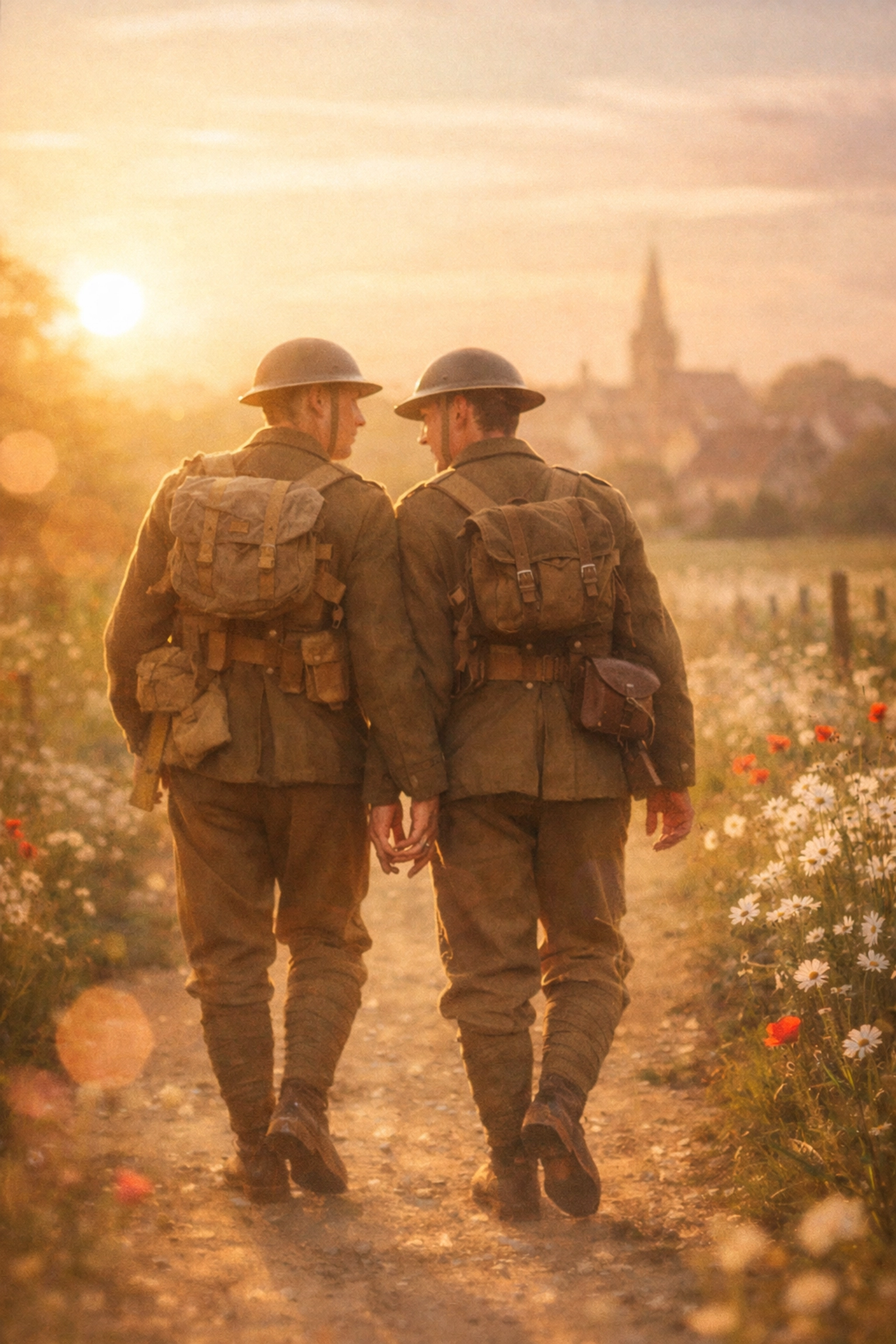
James and Thomas found their moments. A barn behind the lines where they could sit in actual quiet. A walk along a country road, close enough that their hands would brush. Once, during a particularly long rest period, they managed a full afternoon in a village café, drinking weak coffee and pretending they were just two friends discussing nothing in particular.
Thomas kept a photograph of James in his pocket. If anyone asked, he'd have said it was his brother. Nobody asked.
The Weight of Letters Never Sent
One of the most heartbreaking aspects of these hidden relationships was the inability to write openly. Soldiers relied on correspondence: those letters were lifelines to sanity. But what could James write? "Dear Thomas, even though you're three feet away in the same trench, I need you to know…"
Instead, they developed codes. Certain phrases that meant something more. "Thinking of our talks" meant I miss you specifically. "Looking forward to after" meant I'm imagining a future with you in it. Small rebellions against forced silence.
The research shows that as the war progressed, soldiers concentrated intensely on those from whom they were separated. But what about those from whom separation was impossible, and yet complete honesty was equally impossible?
When Tenderness Survived the Brutality
Here's what makes these stories remarkable: tenderness persisted despite everything designed to crush it. The trenches were meant to turn men into fighting machines, to strip away humanity in service of war. But in the cracks, humanity flourished.
A hand steadying another during a bombardment. One soldier covering his companion with his own coat during a freezing night. Small acts that look like basic decency but carried the weight of unspoken devotion.
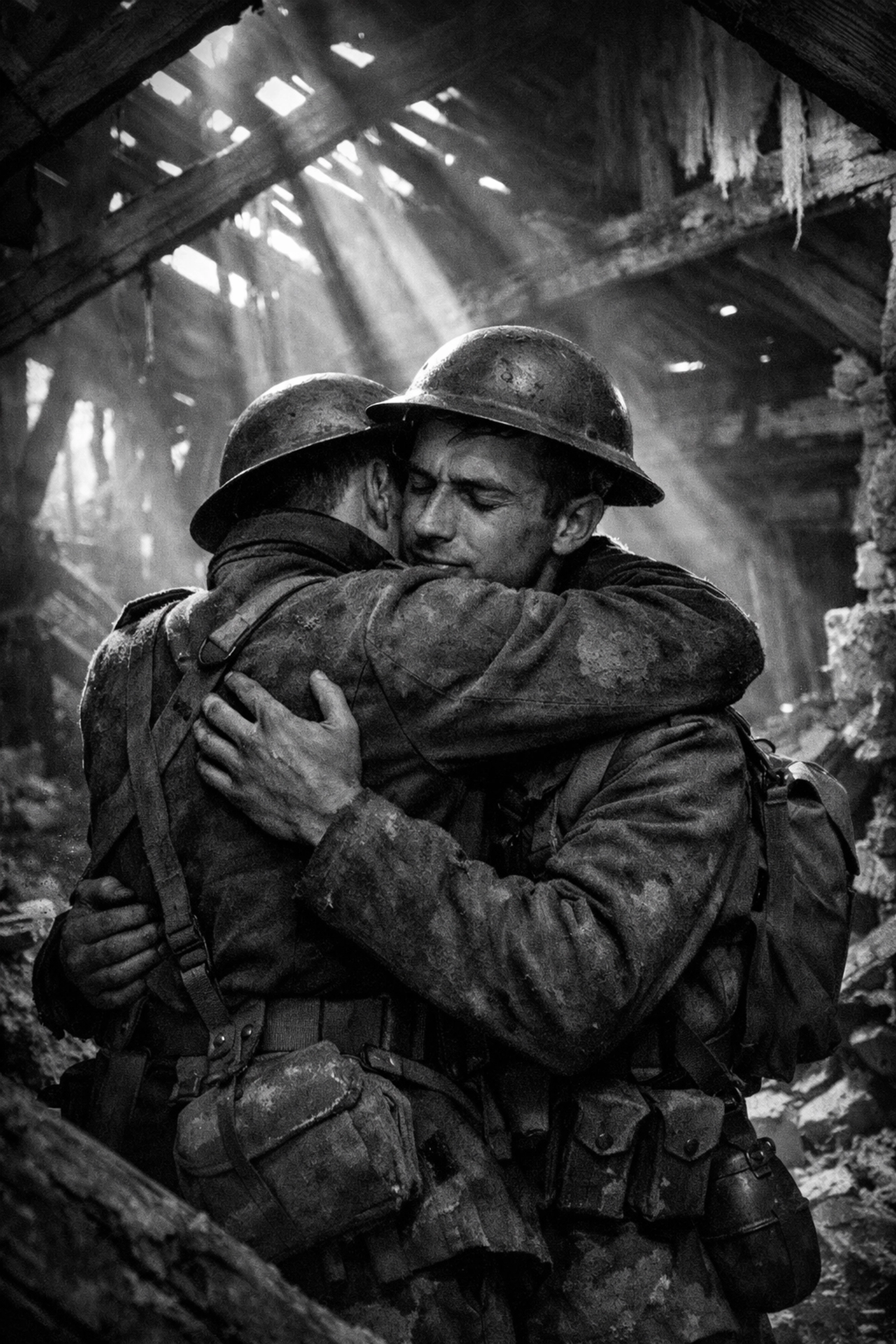
Thomas once pulled James down just before a sniper's bullet passed through the space where his head had been. James never forgot the feeling of Thomas's arms around him, the desperate way Thomas checked him for injuries, the look in his eyes that said everything language couldn't.
The Stories We Can Finally Tell
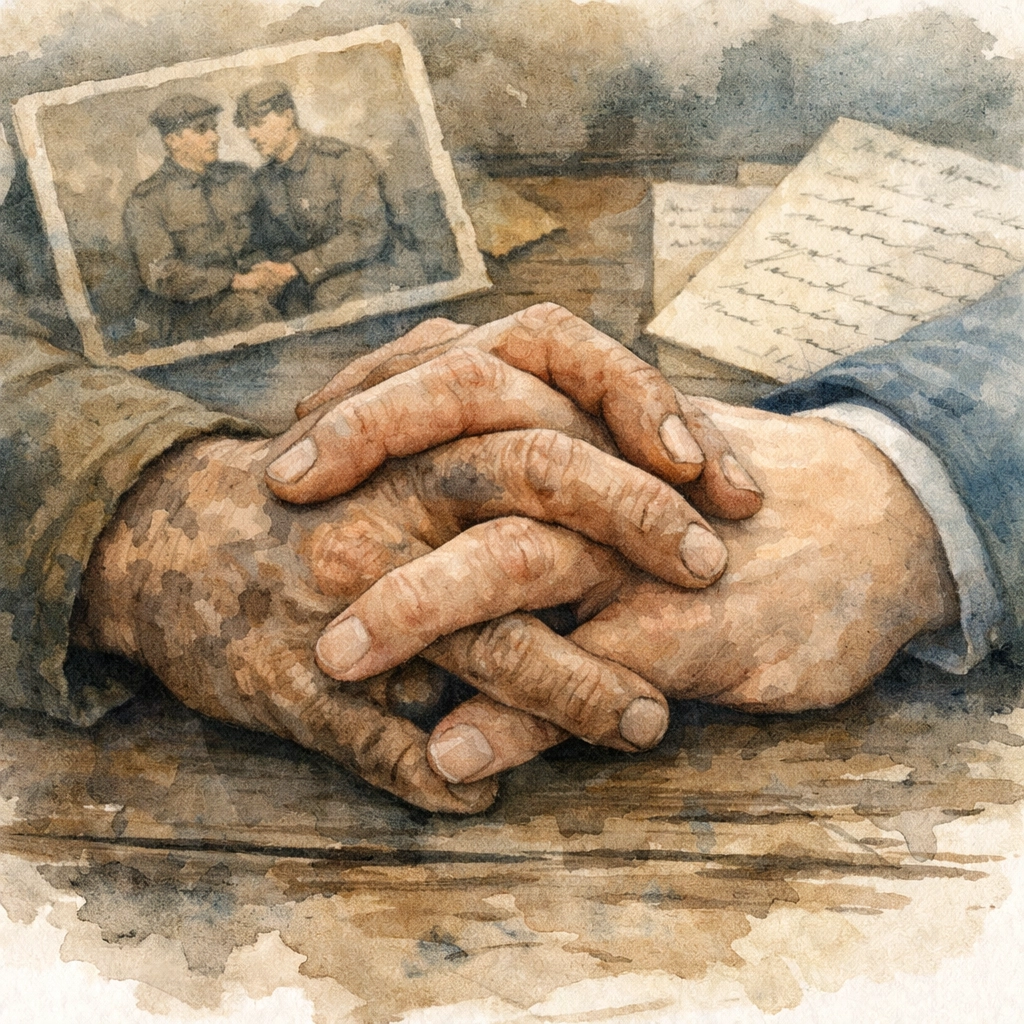
For decades, these narratives remained buried: dismissed as "just" friendship, erased from official histories, or deliberately hidden by families who "protected" reputations by destroying evidence. But the truth has a way of surfacing, even a century later.
Today's MM romance authors are reclaiming these stories. Historical gay romance novels set during WWI don't just add queer characters to history: they acknowledge the queer people who were already there, loving each other despite laws, despite social condemnation, despite war itself.
At Read with Pride, our collection of gay historical romance books includes stories set during both World Wars, exploring the courage it took not just to fight external enemies, but to love authentically in a world determined to deny that love existed.
These aren't just romance novels: they're acts of historical reclamation. They say: we were here. We loved. Our stories matter.
Why These Stories Still Resonate
There's something particularly powerful about MM romance set during wartime. The external conflict mirrors the internal one. The life-or-death stakes aren't metaphorical: they're literal. And the question "is love worth the risk?" carries actual consequences.
Modern readers connect with these historical narratives because the core struggle remains familiar. What do you do when the world tells you your love is impossible? How do you find moments of tenderness in harsh circumstances? How do you hold onto hope when everything seems designed to crush it?
James and Thomas's story: and countless stories like theirs: remind us that queer love has always existed. It survived trenches, survived wars, survived active persecution. It found ways to flourish in the most unlikely places.
Finding These Stories Today
If you're looking for beautifully crafted gay romance novels that honor these historical realities while delivering the emotional payoff we all crave, check out Read with Pride's collection. We curate MM romance books across all genres and time periods, including poignant wartime love stories that acknowledge both the hardship and the hope.
From slow-burn romances set in WWI field hospitals to enemies-to-lovers stories in WWII resistance movements, these books honor the past while providing the happy endings history often denied.
Because James and Thomas? The historical records go silent about what happened to them. We don't know if they survived the Somme. We don't know if they got their flat by the sea. But in the pages of contemporary MM historical romance, we can imagine they did. We can give them: and all the lovers like them: the endings they deserved.
That's the power of gay fiction. It doesn't just entertain: it remembers, honors, and reclaims.
Ready to explore more historical MM romance books? Visit www.readwithpride.com and discover your next favorite love story.
Follow us for more LGBTQ+ book recommendations:
📘 Facebook
🐦 Twitter/X
📸 Instagram
#ReadWithPride #MMRomance #GayRomanceBooks #LGBTQBooks #HistoricalRomance #GayHistoricalRomance #WWIRomance #MMHistoricalRomance #QueerFiction #GayLoveStories #GayBooks #LGBTQFiction #MMNovels #GayRomanceNovels #QueerLiterature #GayFiction #LGBTQRomance #WarTimeRomance #TrenchStories #GayBookClub #2026GayBooks #BestMMRomance #GayRomanticFiction #LGBTQEbooks

Leave a Reply
You must be logged in to post a comment.