

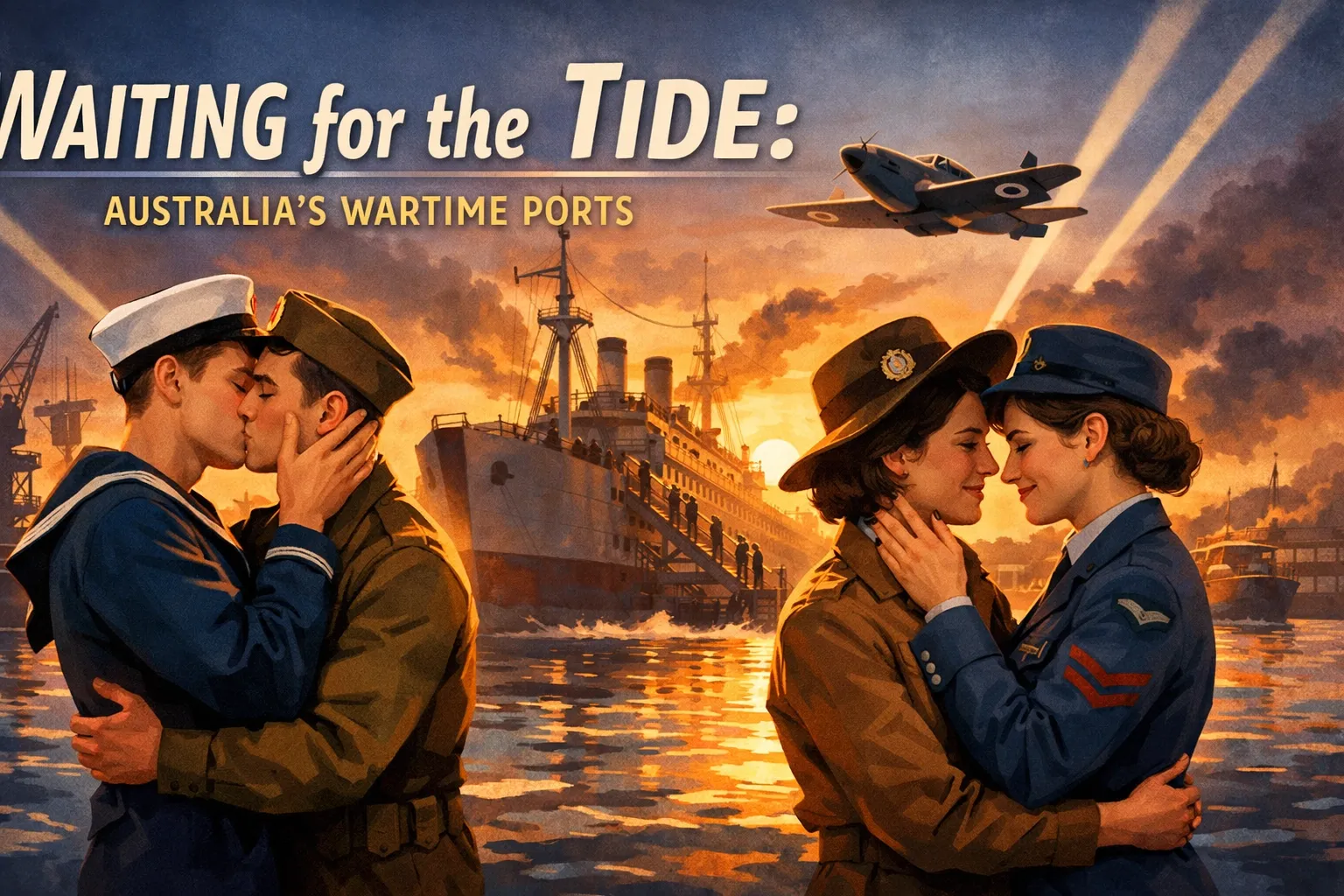
Sydney Harbour during World War II wasn't just a strategic naval base: it was a crucible of connections, fleeting moments, and stolen kisses under the shadow of uncertainty. When American sailors began flooding into Sydney in 1942, the port city transformed into a vibrant, chaotic melting pot where thousands of young men from different corners of the world found themselves thrown together, far from home and acutely aware that tomorrow wasn't guaranteed.
For many gay and bisexual servicemen, these wartime ports offered something unexpected: a rare sense of freedom in the midst of war.
When the Fleet Came In
The Pacific War changed Sydney overnight. By early 1942, Australia had become a crucial staging ground for Allied forces pushing back against Japanese expansion. Sydney's port swelled with ships: American destroyers, Australian corvettes, British cruisers: and with them came hundreds of thousands of servicemen on shore leave.
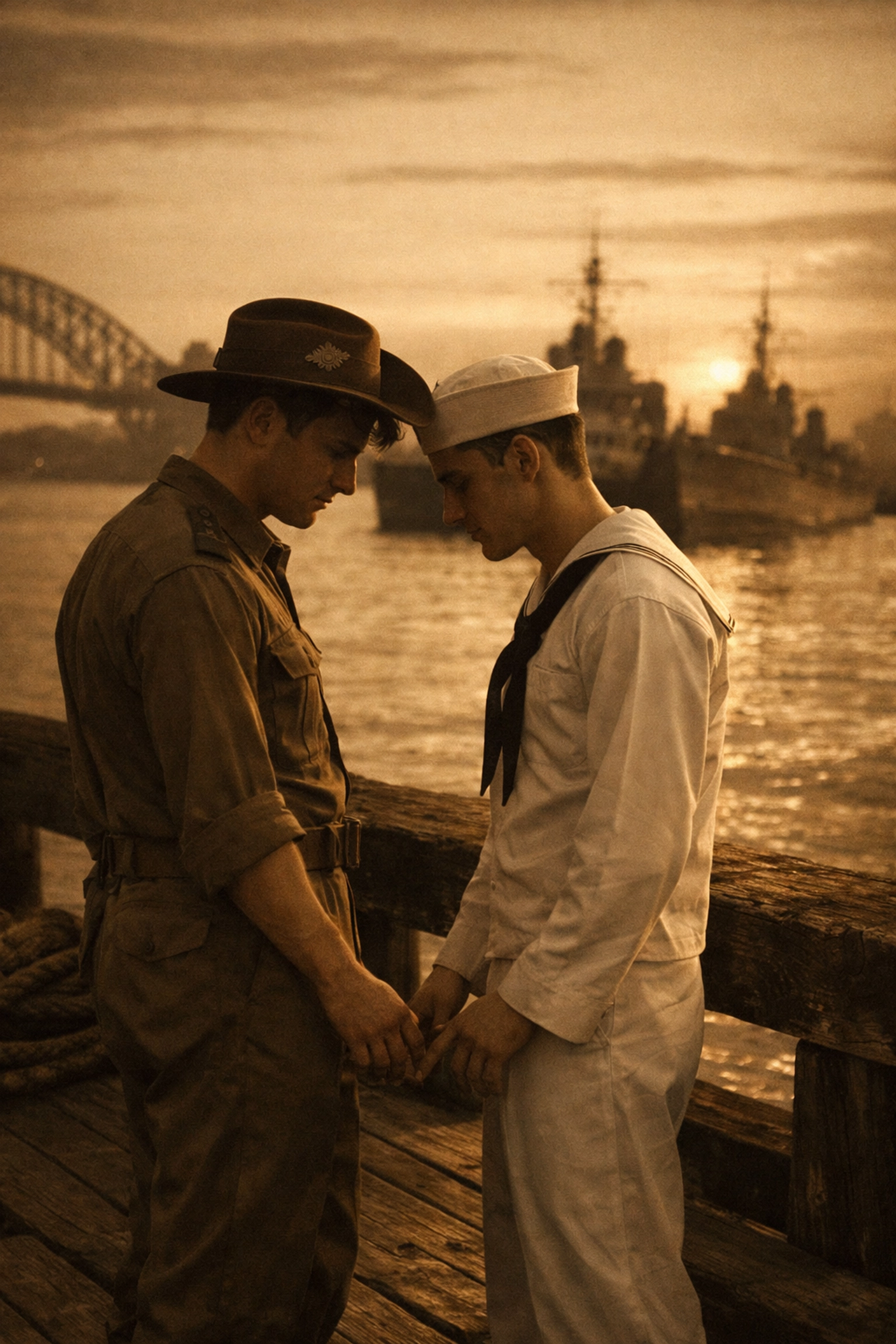
The city's bars, dance halls, and darkened streets became spaces where the rigid rules of peacetime society loosened, if only temporarily. The Kings Cross district, already known for its bohemian atmosphere, became a sanctuary of sorts. Here, Australian soldiers mingled with American sailors, British airmen, and New Zealand troops. The constant rotation of personnel meant anonymity: and anonymity meant possibility.
For men who loved men, wartime Sydney offered something they'd rarely experienced at home: the chance to be themselves, even if just for a few precious hours between deployments. The temporary nature of these encounters: a ship departing at dawn, a regiment shipping out to New Guinea: made every moment count. There was no time for games or gradual courtship. Every conversation, every shared cigarette on the wharf, every whispered confession carried the weight of "maybe this is all we'll ever have."
The Geography of Desire
Sydney's waterfront geography created natural meeting places. The Woolloomooloo wharves, where naval vessels docked, sat just a short walk from the city center. Garden Island, the Royal Australian Navy's main base, became a hub of activity. But it was the spaces in between: the parks along Mrs Macquarie's Road, the quieter corners of the Domain, the boarding houses in Potts Point: where deeper connections formed.
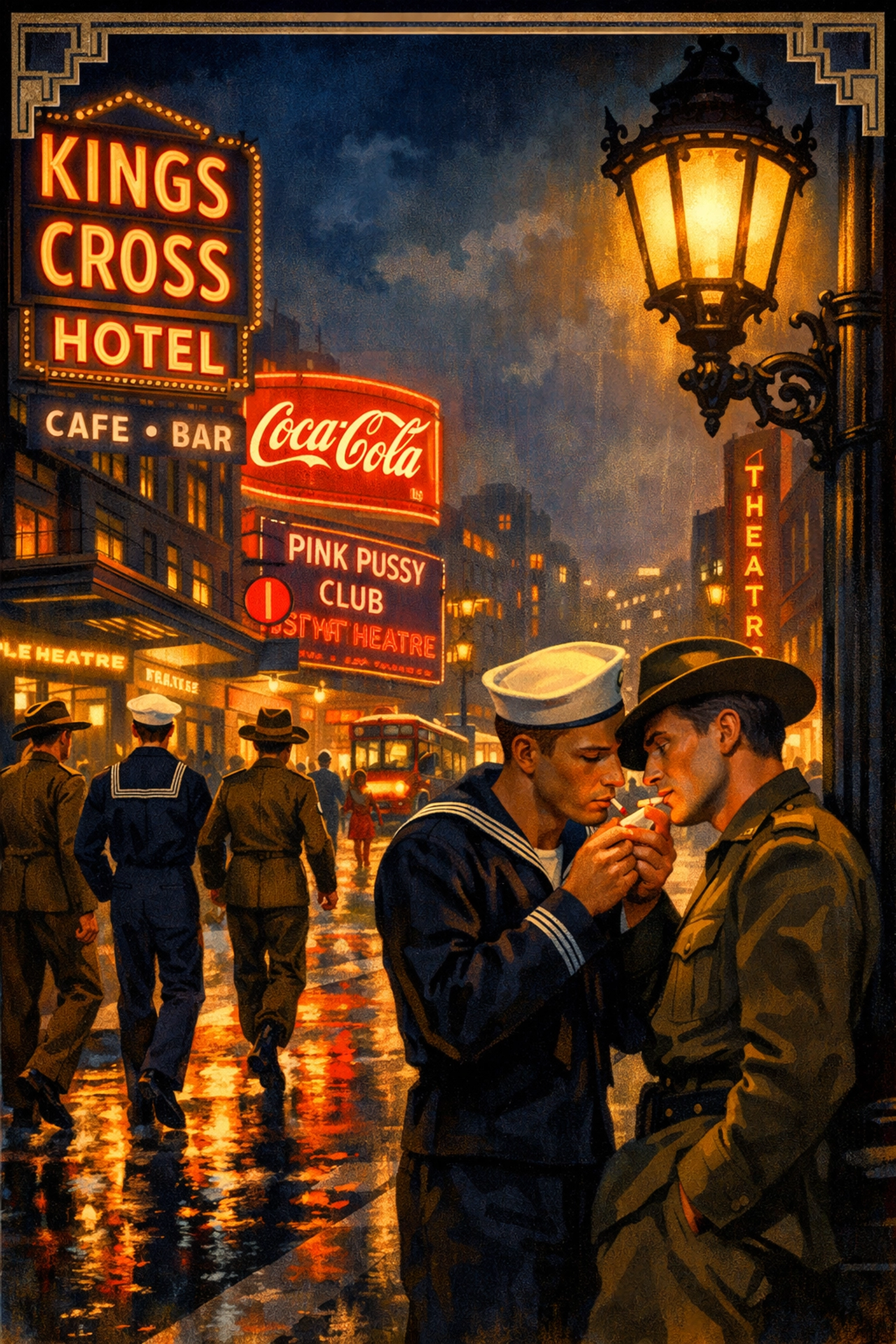
Letters from the era, carefully preserved in archives, hint at relationships that defied easy categorization. Mateship, the Australian ideal of male friendship, provided convenient cover. Two men could share a room, be seen together constantly, exchange gifts and letters, and it was all just "mates looking out for each other." But the intensity of these friendships: the desperate quality of goodbye embraces, the coded language in correspondence: tells a different story.
American sailors brought with them a different culture, one that was simultaneously more open and more dangerous. The US Navy's ports of call: from San Francisco to Hawaii: had their own underground networks, their own coded signals and meeting places. When these men arrived in Sydney, they brought that knowledge with them, sharing it with Australian servicemen who were often navigating these waters for the first time.
Living on Borrowed Time
The threat of death hung over every wartime romance, gay or straight. But for men who loved men, there was an additional layer of risk. Military law explicitly criminalized homosexual acts. The Australian military, like most Allied forces, could court-martial and imprison men for "unnatural offenses." The stakes couldn't have been higher.
Yet knowing this didn't stop connections from forming. If anything, the danger seemed to intensify them. When Japanese submarines entered Sydney Harbour in May 1942 and launched their midget submarine attack, killing 21 sailors, the reality of war hit home. No one was safe. No one knew if they'd see tomorrow. That knowledge changed calculations. What was the point of denying yourself love, comfort, or connection when shells could rain down at any moment?
The boarding houses of Kings Cross and Woolloomooloo became unofficial safe spaces. Landladies: many of them older women who'd seen their own share of heartbreak: learned not to ask questions when two servicemen requested a room. Some became quiet allies, offering warnings when military police patrols were nearby or looking the other way when men slipped in and out at odd hours.
The Rhythm of Port Life
Life in wartime Sydney followed a particular rhythm. Ships would arrive, carrying men who'd been at sea for weeks or months. They'd flood ashore, hungry for solid ground, fresh food, and human contact. For 48 or 72 hours, they'd pack a lifetime of living into their shore leave. Then the whistle would blow, the tide would turn, and they'd be gone: bound for the Solomon Islands, New Guinea, or deeper into the Pacific theater.
For the locals: Australian servicemen stationed in Sydney or waiting for their own deployment: this constant rotation created a bittersweet pattern. You'd meet someone remarkable, someone who made you feel seen in ways you'd never experienced before, and before you could fully explore what was developing between you, they'd vanish. Maybe you'd exchange addresses. Maybe you'd promise to write. But everyone knew the odds of reconnection were slim.
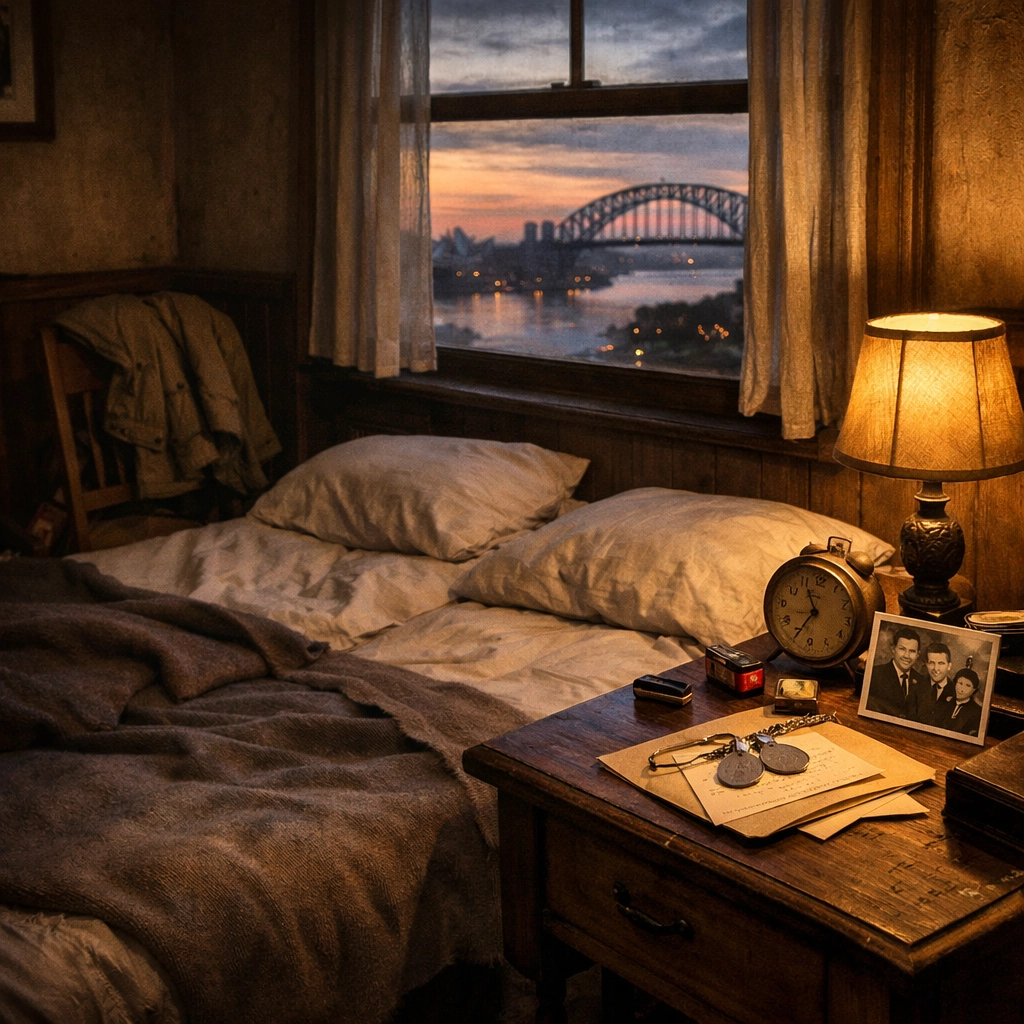
This is the emotional territory that the best gay historical romance novels explore: love that burns bright precisely because time is limited. The genre of MM historical romance has embraced these wartime stories, recognizing that the constraints and dangers of the era created a particular kind of intensity that resonates deeply with readers today.
After the War
When the war ended in 1945, the flood of servicemen receded. Sydney's port quieted. Many of the relationships formed during those frantic years simply ended, severed by distance and the impossibility of maintaining connection in an era before easy international communication. Men returned to their pre-war lives, to wives or girlfriends or the expectation of heterosexual marriage.
But not everyone could go back. Some men, having tasted freedom and authentic connection, found it impossible to return to lives built on denial. Some stayed in Sydney, drawn to a city that had offered them, however briefly, the chance to be themselves. Others carried memories of wartime love stories that shaped the rest of their lives, even if they could never speak of them openly.
Why These Stories Matter Now
Today, these hidden histories of gay romance during wartime are finally being told. Archives are being re-examined with new eyes. Letters are being read not just for military intelligence but for emotional truth. The coded language that protected men during their lifetimes can now be decoded and understood.
At Read with Pride, we believe these stories deserve to be told: and read. Our collection of MM romance books includes powerful historical fiction that brings these forgotten love stories to light. Whether it's the urgency of wartime connection, the courage required to love in dangerous times, or the bittersweet beauty of relationships lived in stolen moments, gay historical romance captures something essential about queer experience across generations.
These aren't just stories about the past. They're stories about resilience, authenticity, and the human need for connection that transcends all barriers: even those of war, prejudice, and time itself.
If you're drawn to stories of love against the odds, of men who risked everything for fleeting moments of truth, explore our gay romance novels collection. From wartime ports to present-day love stories, we celebrate MM romance in all its forms: because every love story, especially those that history tried to erase, deserves to be read with pride.
Discover your next emotional journey at Readwithpride.com.
Connect with us:
- Facebook: Read with Pride
- Twitter: @Read_With_Pride
- Instagram: @read.withpride
#MMRomance #GayHistoricalRomance #LGBTQBooks #WarTimeRomance #GayRomanceBooks #QueerFiction #HistoricalMMRomance #ReadWithPride #GayLiterature #MMRomanceBooks #WWIIHistory #LGBTQHistory #SydneyHistory #GayFiction #QueerHistory #LoveInWartime #2026Books

Leave a Reply
You must be logged in to post a comment.