


There's something deeply powerful about walking down a city street and seeing your existence splashed across a wall in vibrant color. Not tucked away in a gallery where you need a ticket to enter, but right there: bold, unapologetic, and impossible to ignore. Gay murals aren't just pretty pictures. They're battle cries painted in rainbows, historical archives written in spray paint, and political statements that refuse to be silenced.
For decades, LGBTQ+ communities have used street art to claim space in cities that tried to erase us. These murals serve as monuments to our resilience, celebrations of our joy, and reminders that we're not going anywhere. But here's the thing that makes them truly revolutionary: the very act of making queer art visible in public spaces is, in itself, a political act.
When Walls Become Archives
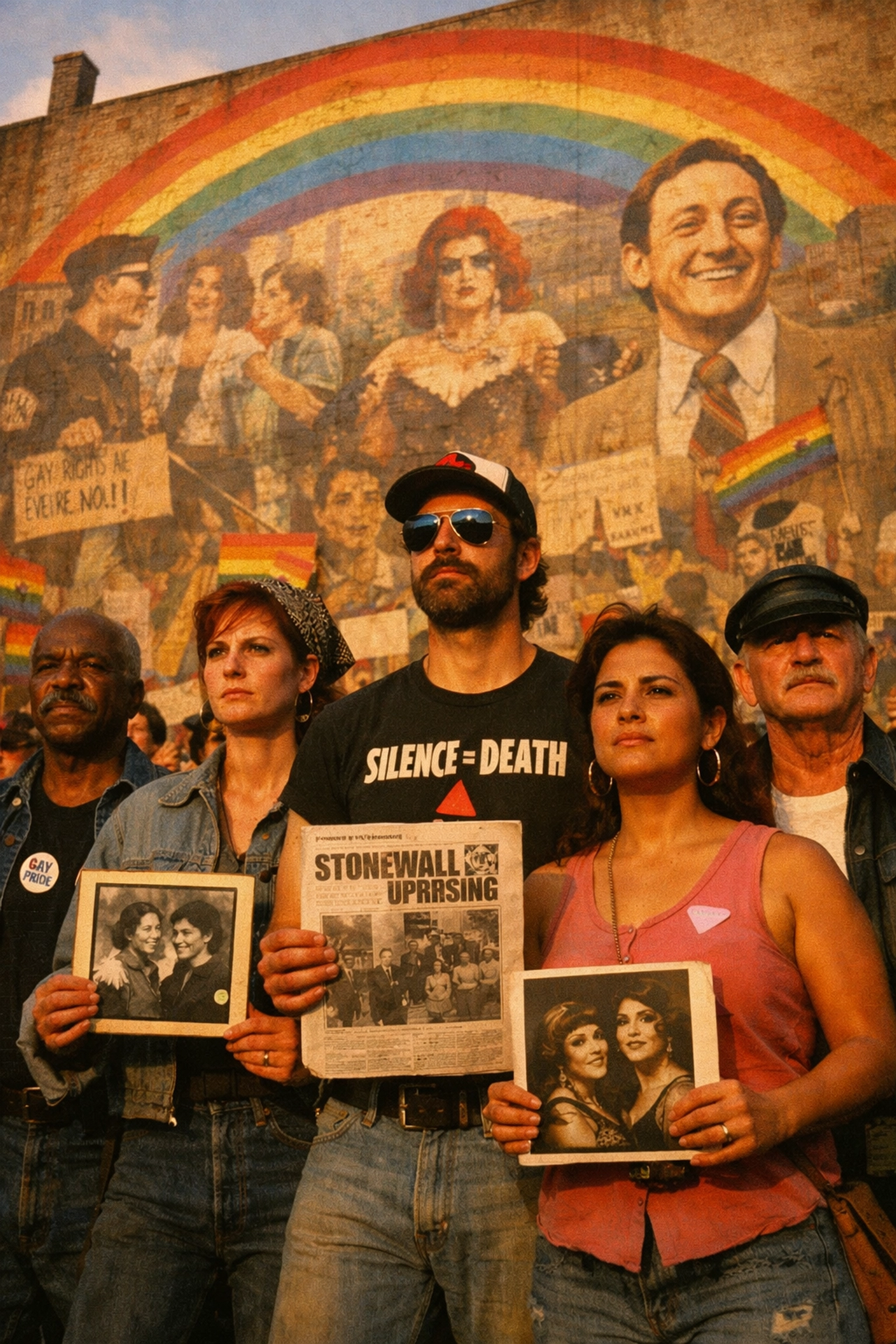
Before Instagram feeds and digital archives, how did we document our existence? How did we prove that we were here, that we fought, that we loved, and that we survived? For many LGBTQ+ people, especially those who lived through the darkest days of marginalization and violence, traditional historical records often failed to capture our stories. Museums didn't collect our photos. Newspapers didn't celebrate our victories. History books conveniently forgot we existed.
Enter the mural: a public archive that can't be ignored.
Artist Rami George understood this when creating the "AND INTO THE STREETS" installation in Philadelphia. By bringing archived LGBTQ+ protest images into public spaces, the project transformed private memories into collective history. "I love photos that were made outside an art context," George explained. "Instead, these kinds of photos are meant to document our existence, as in 'we were here' or 'this happened.'"
These murals become living history lessons for people who might never set foot in an LGBTQ+ center or pick up queer literature. They're educational tools disguised as art, teaching passersby about the Stonewall riots, the AIDS crisis, trans liberation movements, and countless other moments that shaped our community. In cities across the world, walls have become the pages of a book: one that reads with pride and refuses to let our stories disappear.
Reclaiming the Streets
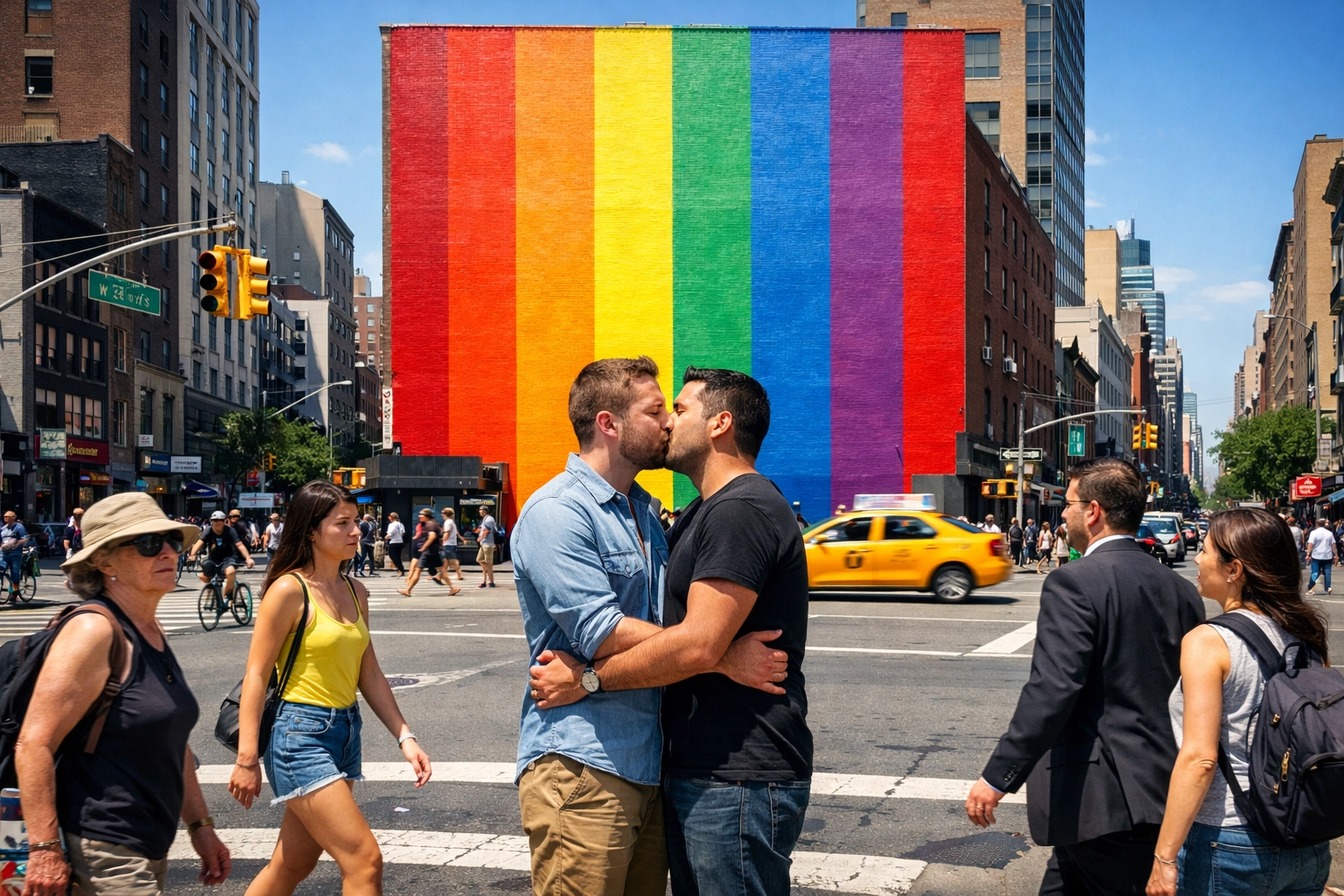
Think about the spaces where gay murals appear. They're not always in designated "gay neighborhoods" (though those exist and matter too). They pop up in city centers, public parks, school walls, and busy intersections. Each location is strategic, whether intentionally or not. These aren't just decorations: they're territorial markers saying, "We belong here too."
For generations, LGBTQ+ people were told to stay hidden. To keep our relationships private. To not "flaunt" who we are. Public displays of queer identity were considered provocative at best, criminal at worst. So when a 50-foot-tall mural of two men kissing goes up in a city square, it's not just art. It's a middle finger to decades of forced invisibility.
This reclamation of public space connects directly to post-Stonewall activism. The queer liberation movement has always understood that visibility equals power. If we're only allowed to exist in the shadows, in underground bars and private homes, then society can pretend we don't exist at all. But you can't ignore a three-story rainbow flag painted on the side of a building.
Street art gives us a foothold in communal spaces that historically excluded us. It says we're not asking for permission anymore: we're taking up space, literally and figuratively. And for young LGBTQ+ people growing up in towns where they feel alone, seeing that representation can be life-changing.
The "Is It Art or Politics?" Debate
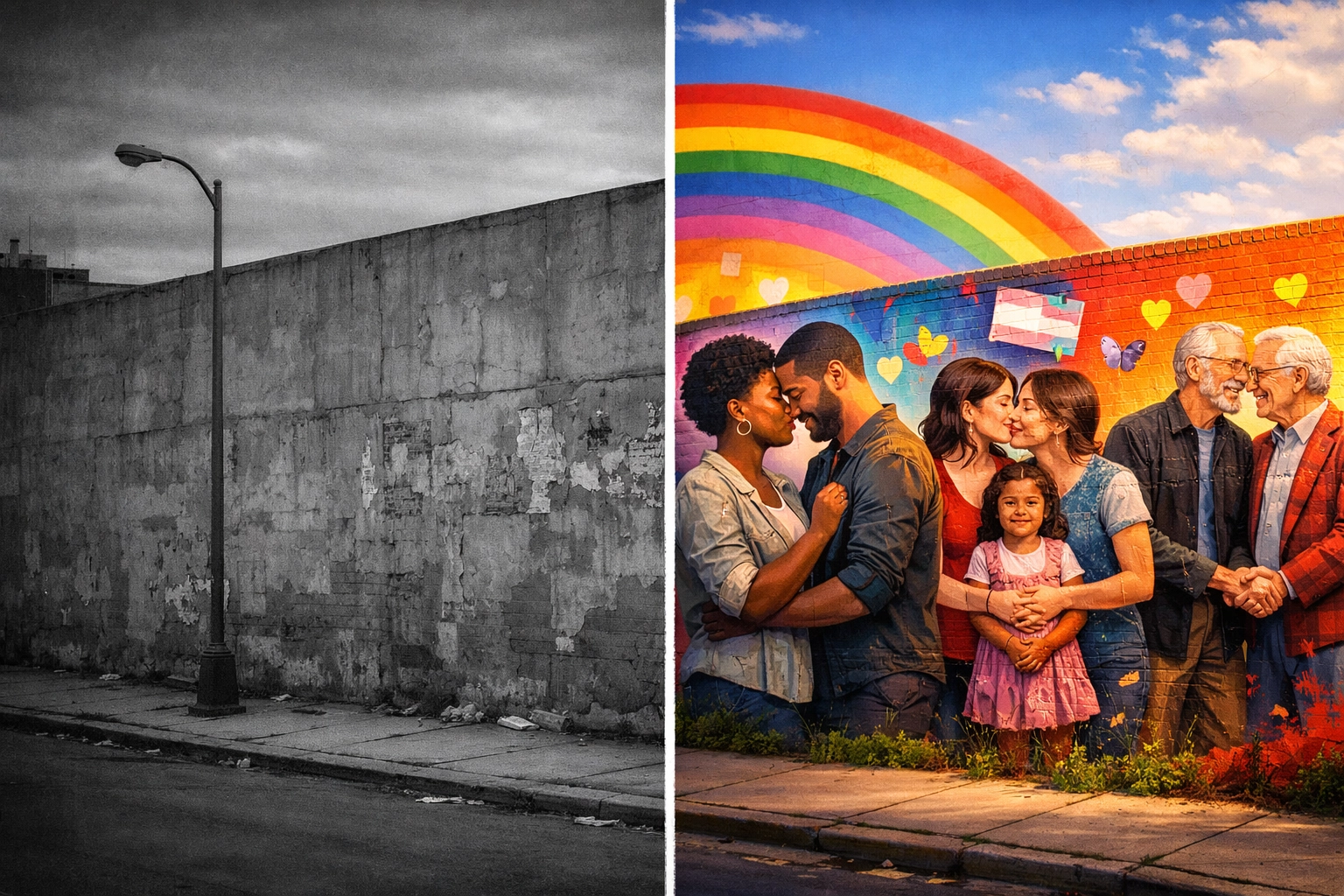
Here's where things get interesting (and controversial). When Georgetown faced criticism over their "Be Your Own Person" mural, city officials called it "divisive" and "a political statement." Supporters argued it was simply inclusive art celebrating diversity. But here's the truth that makes some people uncomfortable: depicting LGBTQ+ identity in public space is inherently political, whether we like it or not.
The very existence of queer people has been politicized by those who oppose us. So when we create art celebrating who we are, we're making a political statement by default: not because we're being provocative, but because our existence has been deemed controversial by others. That's not our choice; that's the reality we navigate.
This tension reveals something crucial: whose presence is considered "neutral" versus "political" in public spaces? Straight couples can hold hands in front of murals depicting heterosexual romance without anyone calling it a political act. But a mural showing same-sex love? Suddenly it's divisive.
Gay murals force communities to confront this double standard. They ask uncomfortable questions: Who gets to be visible? Whose love stories deserve celebration? Whose history matters enough to memorialize on city walls? And perhaps most importantly: Who decides what belongs in "our" shared public spaces?
The controversy itself proves why these murals matter. They create conversations: sometimes heated ones: about inclusion, representation, and what kind of society we want to build. That's activism, whether it's framed as such or not.
More Than Pretty Pictures
What makes gay murals particularly effective tools for change is their accessibility. You don't need to attend a pride parade, join an activist organization, or read LGBTQ+ fiction to encounter them. They meet people where they are, literally. Someone who might never seek out queer content finds themselves face-to-face with our stories during their morning commute.
This passive exposure matters more than we might think. Studies show that visibility and representation reduce prejudice over time. When people repeatedly encounter positive or neutral depictions of LGBTQ+ life, it normalizes our existence in their minds. That bigoted uncle who won't Read with Pride might still change his perspective after walking past a beautiful mural of gay couples every day for months.
These murals also serve the community itself. They create landmarks and gathering spaces. "Meet me at the rainbow wall" becomes more than directions: it's an affirmation that we have places that belong to us. They provide backdrops for pride photos, proposal pictures, and casual selfies that say, "I was here, I exist, I matter."
The Legacy Lives On
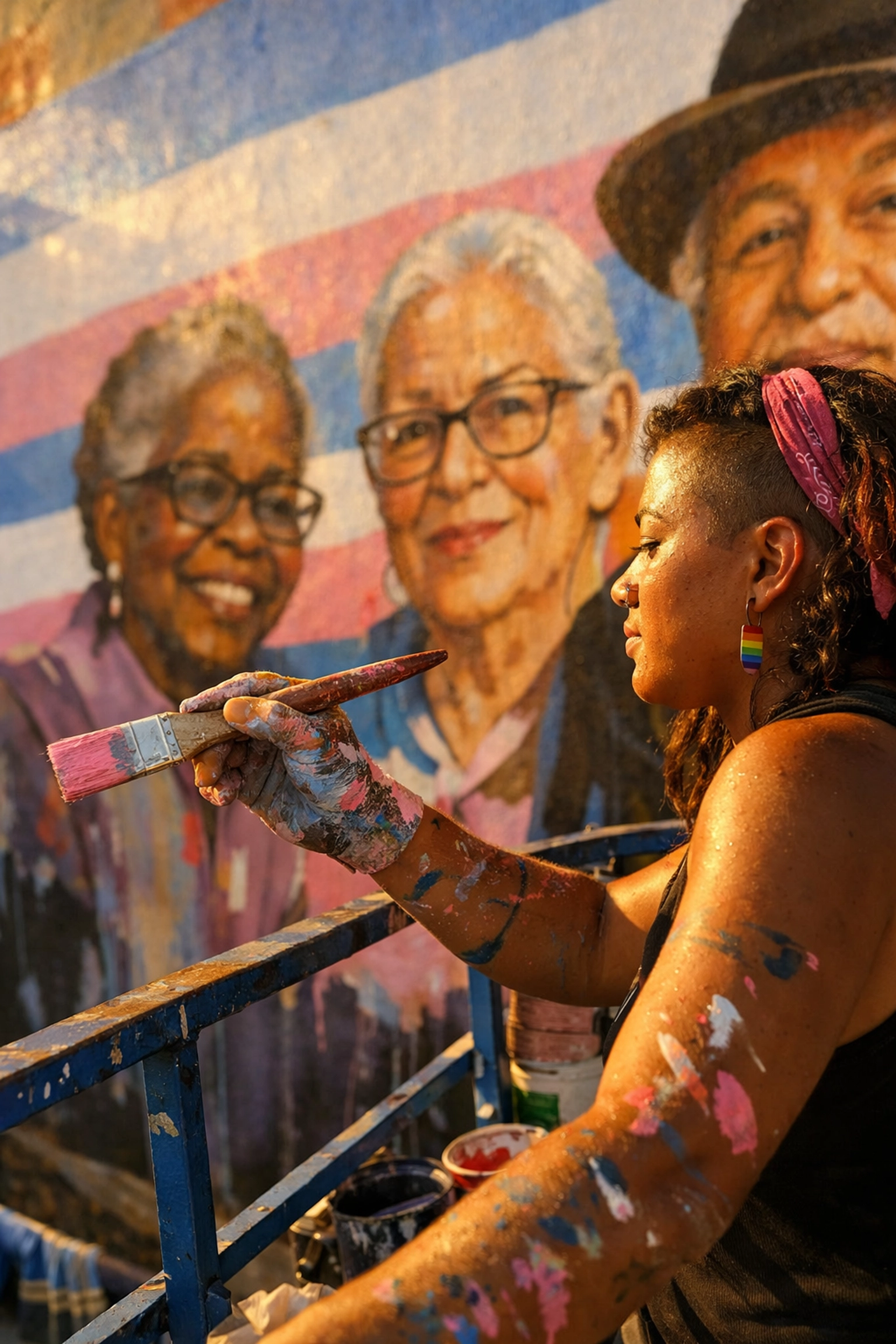
The tradition of using public art for LGBTQ+ activism continues to evolve. Today's murals incorporate intersectionality, highlighting the experiences of queer people of color, transgender individuals, and other marginalized voices within our community. They address contemporary issues like marriage equality, adoption rights, healthcare access, and anti-trans legislation.
Some murals memorialize those we've lost: to AIDS, to violence, to suicide: turning city walls into monuments that official memorials sometimes neglect. Others celebrate joy, showing queer families, love stories, and community gatherings that counter the trauma narrative often associated with LGBTQ+ history.
The digital age has amplified their impact. A mural in San Francisco can inspire someone in Singapore. Photos circulate across social media, spreading messages of hope and resistance far beyond their physical locations. Yet the importance of the physical space remains irreplaceable. Digital images can be scrolled past, deleted, or blocked. But that wall? It's there every single day, forcing the conversation.
Why This Still Matters
We're living in complicated times for LGBTQ+ rights. Progress isn't linear, and backlash remains real. In this context, gay murals become even more critical. They're permanent reminders that we've fought before and we'll fight again. They document not just our struggles but our resilience, creativity, and refusal to disappear.
Every brushstroke is a small act of revolution. Every color choice challenges someone's expectations. Every face depicted says, "We're here, we're queer, and we're not backing down." These aren't just walls: they're declarations of war against erasure, painted in the most beautiful way possible.
So the next time you see a gay mural, take a moment to appreciate what it represents. It's not just art. It's history, activism, resistance, celebration, and hope all rolled into one. It's proof that we were here. And it's a promise that we always will be.
Want more stories celebrating LGBTQ+ creativity, history, and culture? Follow us on Facebook, Instagram, and X, or visit Readwithpride.com for more content.
#GayMurals #LGBTQArt #StreetArt #QueerArtists #PrideArt #LGBTQHistory #QueerActivism #PublicArt #ReadWithPride #LGBTQCommunity #QueerVisibility #GayLiberationMovement #RainbowArt #QueerCulture #LGBTQRights #StreetActivism #MuralArt #QueerHeritage #VisibilityMatters #LGBTQPride2026

Leave a Reply
You must be logged in to post a comment.