
readwithpride.com
There's something magical about hearing "Chak De! Chak De! India!" echo through a bar in San Francisco's Castro district. Or watching a hundred gay men and women, dressed in their finest kurtas and lehengas, lip-sync to "Dola Re Dola" at a Pride event in London. For the Indian LGBTQ+ diaspora scattered across the globe, Bollywood isn't just entertainment, it's the thread that keeps us tethered to home, even when home didn't always want to keep us.
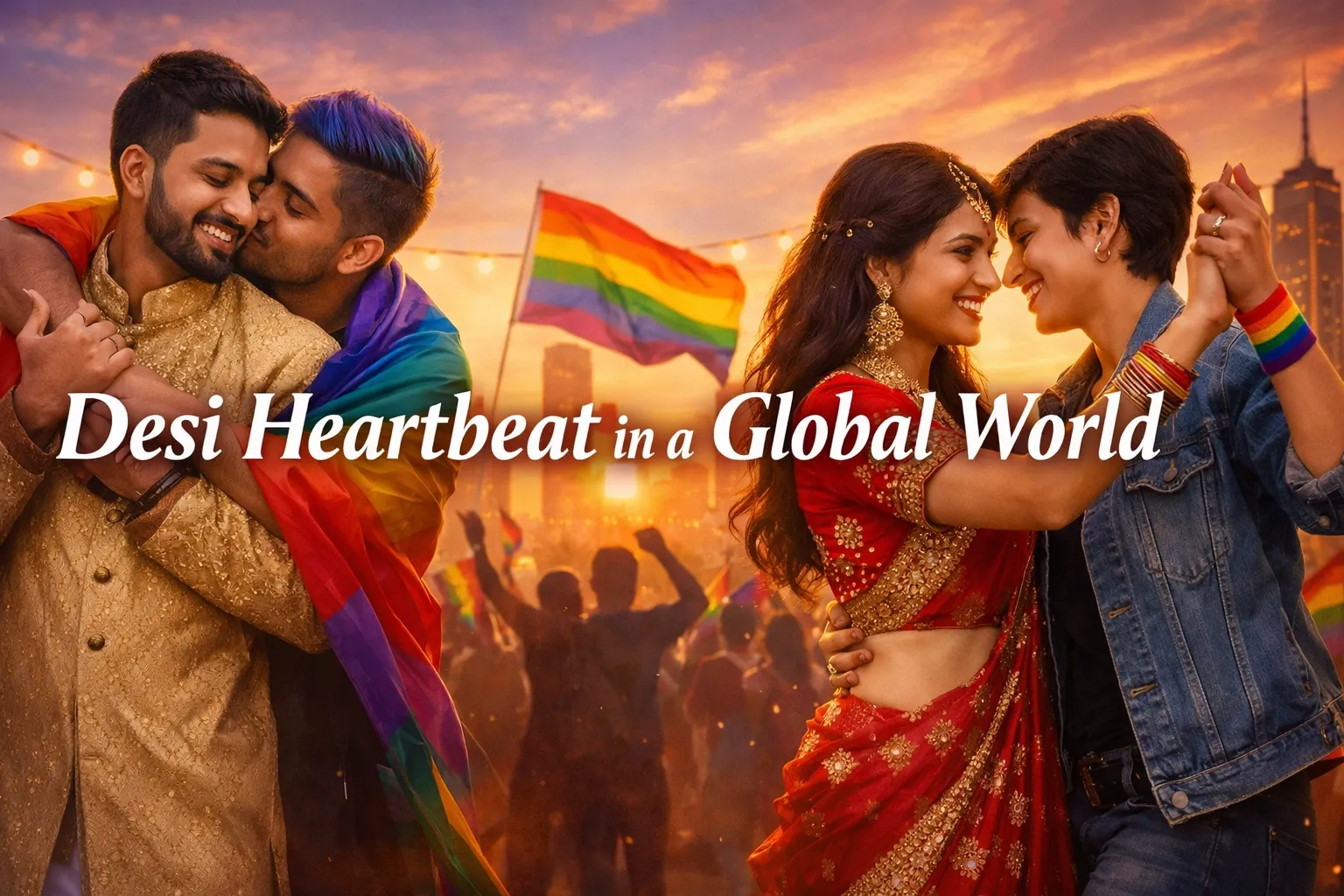
Being queer and desi in 2026 means existing in this beautiful, complicated space where you're fluent in two worlds that don't always speak the same language. You know how to drape a dupatta and rock a leather jacket. You've survived family functions where aunties ask about marriage while secretly planning your next Pride parade outfit. You've danced to "Kajra Re" at a club in Toronto where everyone somehow knows all the lyrics, even the ones who left Mumbai twenty years ago.
The Bollywood Connection We Didn't Know We Needed
When you grow up in a conservative Indian household, Bollywood becomes this strange refuge. Those over-the-top love stories? The dramatic declarations? The defiance against family expectations? They resonated with us in ways we couldn't quite articulate as kids. We weren't just watching Shah Rukh Khan chase Kajol through European landscapes, we were learning that love could be worth fighting for, even when everyone tells you it's wrong.
Fast forward to adulthood, living in New York or Melbourne or Amsterdam, and suddenly those same songs become the soundtrack to finding your people. Bollywood-themed queer events have exploded across major cities, creating spaces where you don't have to choose between your identity and your heritage. You can be unapologetically gay and unapologetically desi, and nobody's asking you to pick a side.
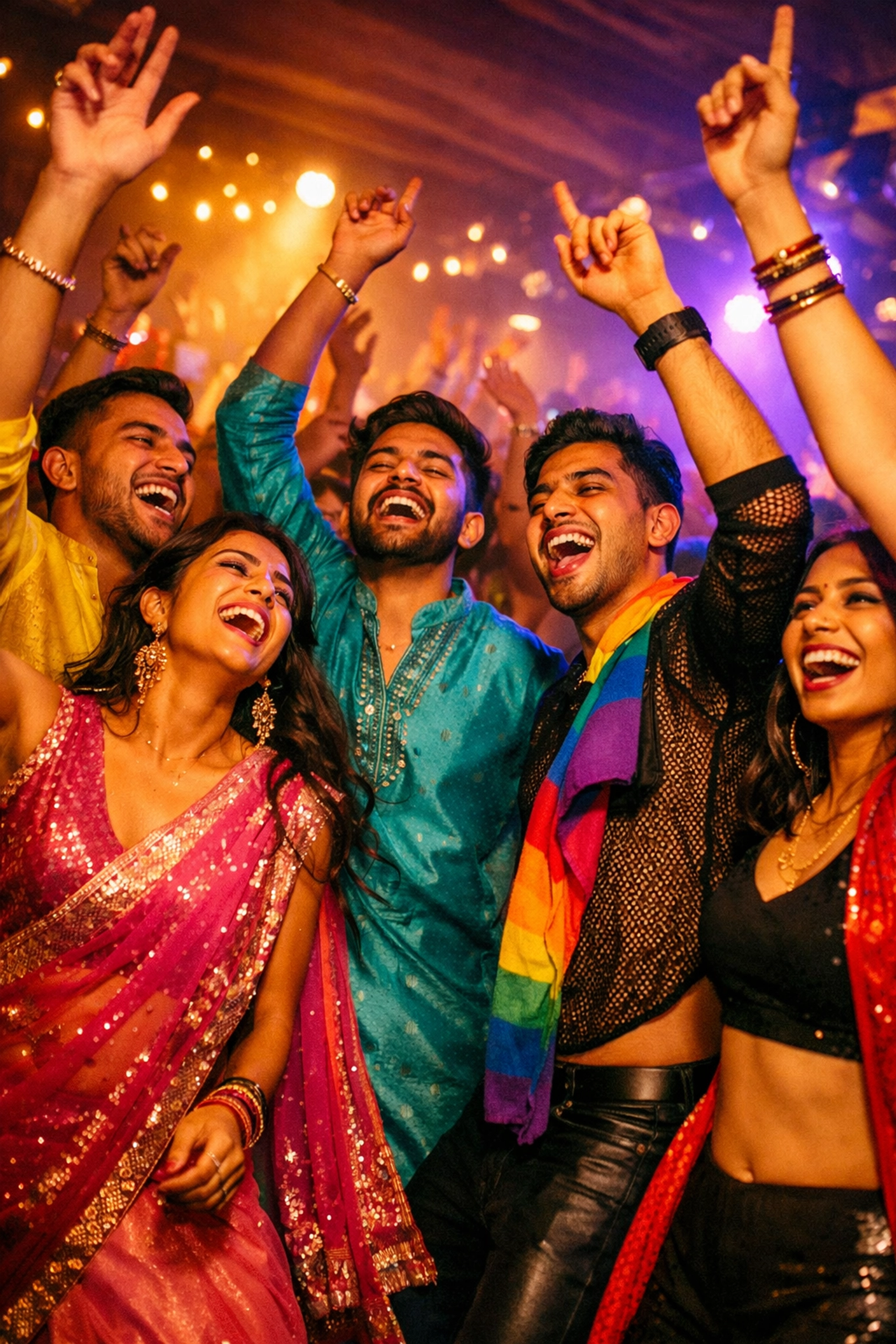
These aren't just parties, they're cultural lifelines. When a DJ drops "Chaiyya Chaiyya" at 2 AM in a Brooklyn warehouse packed with brown queer folks, something shifts. You're surrounded by people who get it: the code-switching, the family drama, the specific anxiety of bringing a same-sex partner to Diwali celebrations. The music connects us to memories of watching these films with grandparents who might never fully accept who we are, and to a future where we're rewriting what it means to be Indian.
From Secrecy to Celebration
The Indian LGBTQ+ experience abroad carries its own particular weight. Many of us came to Western cities not just for opportunity, but for oxygen, the chance to breathe without constantly monitoring who's watching, who's judging, who might tell your parents. Section 377 may have been struck down in India in 2018, but cultural acceptance moves at its own glacial pace.
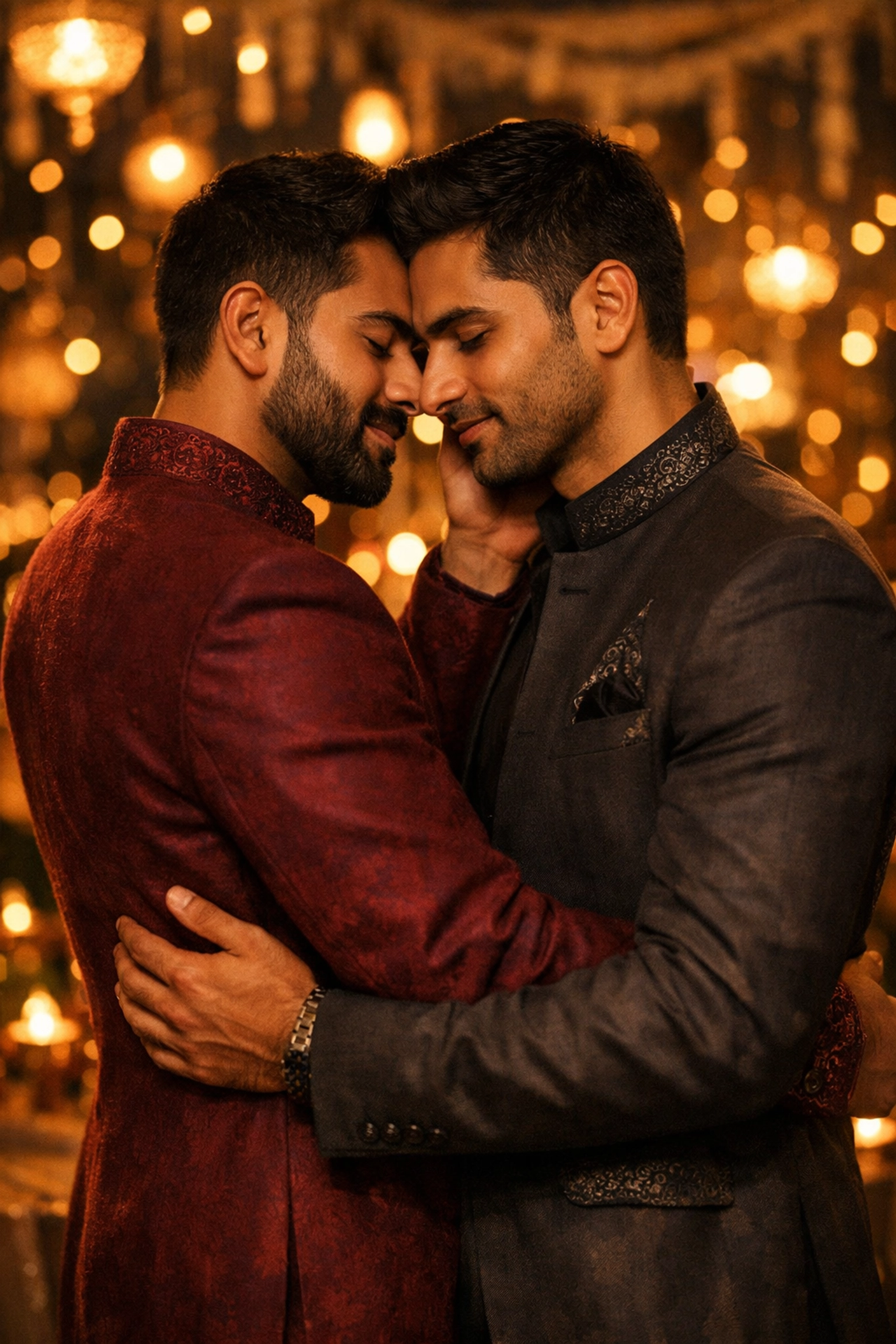
So we built our own spaces. Bollywood Boyz nights in Manchester. Desi Rainbow events in Sydney. Queer South Asian brunches in Chicago where the bottomless mimosas come with a side of samosas. These gatherings became more than social events, they're acts of reclamation. We're taking the culture that sometimes rejected us and reshaping it on our terms.
What's powerful about these spaces is how they've evolved. Early events felt almost apologetic, like we were grateful just to exist. Now? There's swagger. There's pride. There's this understanding that being queer doesn't make us any less authentically Indian. If anything, it makes us experts in navigating complexity, in holding multiple truths at once.
The Maximalist Revolution
The timing couldn't be better. As South Asian culture experiences what's being called the "desi baddie era", this global moment where Indian aesthetics are finally getting their due, queer desis are right at the forefront. We've always known our culture was fire. We've just been waiting for everyone else to catch up.
This movement goes beyond fashion trends. It's about Read with pride in being boldly, visibly South Asian in spaces that used to demand assimilation. It's about bringing our whole selves, the mehendi and the rainbow flags, the mangalsutras and the leather harnesses, into rooms that told us to leave parts of ourselves at the door.
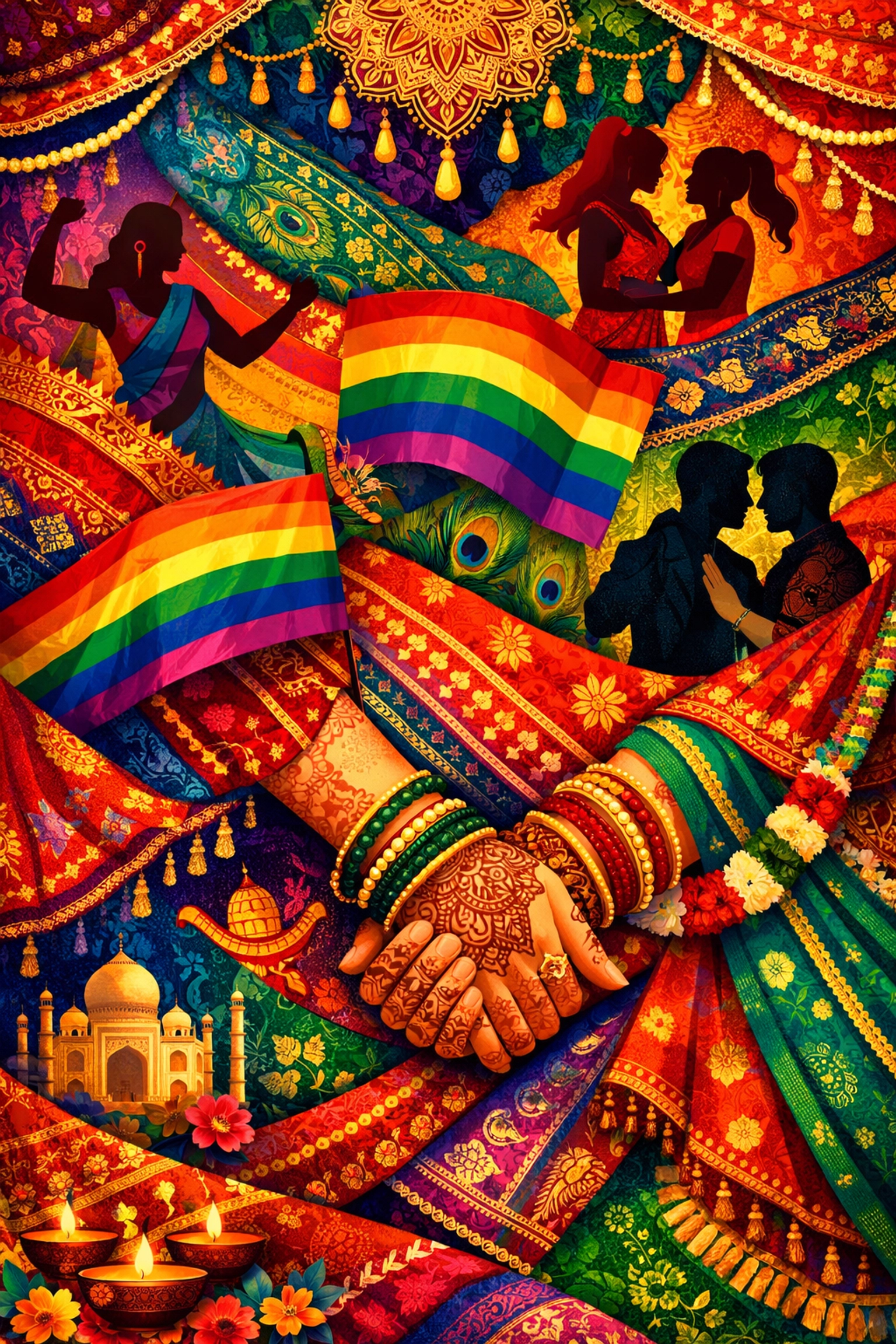
You see it in the MM romance books featuring desi protagonists, in the growing library of gay romance novels that understand that falling in love while navigating immigration status and family expectations adds layers to the story. Publishers like Readwithpride.com are creating space for these narratives, recognizing that LGBTQ+ fiction needs to reflect the beautiful mess of multicultural queer lives.
When Tradition Meets Truth
Here's what nobody tells you about being a queer person from a traditional culture: you become a bridge whether you want to be or not. You're constantly translating, explaining Pride to your parents, explaining arranged marriage to your white boyfriend, explaining why you can't just "come out" to everyone like it's simple.
But there's power in that position, too. We're showing that tradition and queerness aren't opposites. You can honor your ancestors and date women. You can fast during Navratri and march in Pride. You can read gay fiction featuring characters who look like you and recognize yourself in stories that finally get the nuance right.
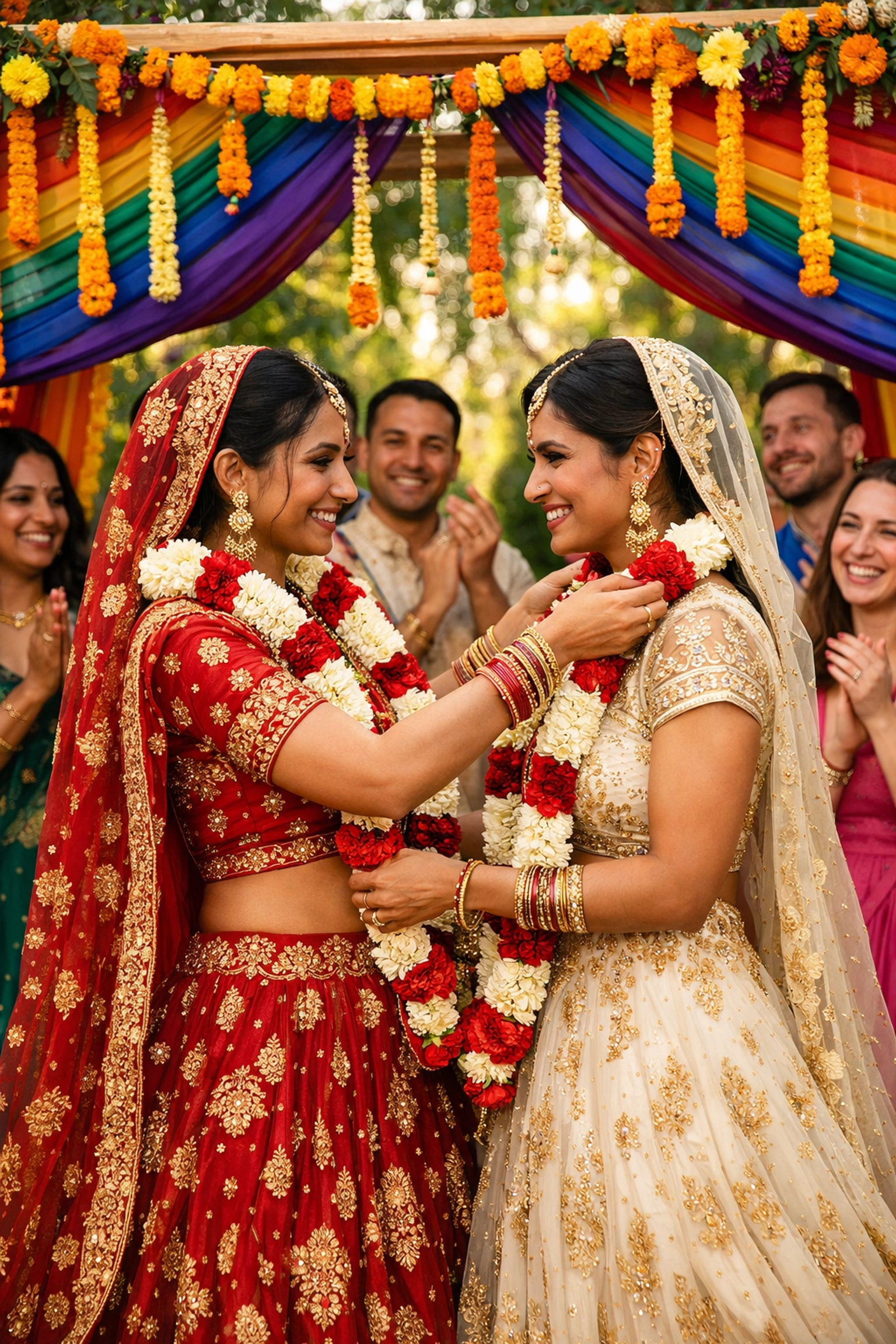
The Bollywood events scattered across global cities have become informal community centers. They're where newly out kids meet elders who've been out for decades. They're where marriages happen (yes, really: complete with both the white wedding and the three-day Hindu ceremony). They're where discussions happen about things like immigration sponsorship for same-sex partners or how to navigate disowning by family.
The Global Desi Queer Family
One of the most beautiful things about these events is how they've created an accidental diaspora within the diaspora. You might be from Gujarat, your partner from Tamil Nadu, and you're both living in Berlin. Without these gatherings, you might never have connected. But put on "Kal Ho Naa Ho" and suddenly everyone's crying together and exchanging numbers for a Holi party in March.
Social media has amplified this connection. Hashtags like #QueerDesi and #GayBollywood create virtual communities where someone in Auckland can share their coming out story and get support from someone in Dubai. LGBTQ+ ebooks and MM romance books featuring South Asian characters are being shared across continents, creating a literary canon that validates our experiences.
The newer generation is bolder than we ever were. They're making TikToks in full garba outfits at Pride. They're writing gay romance books that don't shy away from the specific textures of Indian family dynamics. They're demanding representation in Bollywood itself: and slowly, tentatively, they're starting to get it.
Dancing Forward
As we move through 2026, the Indian queer diaspora is claiming space in ways that would have seemed impossible twenty years ago. Every Bollywood-themed Pride event, every brown queer wedding, every MM romance novel featuring a desi protagonist: they're all part of a larger story we're writing together.
We're not waiting for permission anymore. We're not asking if we can be both Indian and queer. We're showing up in our full glory: whether that's a silk sari, a three-piece suit, or a glittering crop top: and letting the music guide us home. Not to the India that couldn't accept us, but to the community we've built for ourselves, one dance floor at a time.
Because at the end of the night, when everyone's exhausted and happy and "Tujhe Dekha To" starts playing, we're all just looking for the same thing: to be seen, to be loved, to belong. And in these spaces we've created, surrounded by people who share our journey, we finally are.
Find more stories celebrating LGBTQ+ lives and love at Readwithpride.com
Connect with us:
📘 Facebook
🐦 Twitter/X
📸 Instagram
#ReadWithPride #QueerDesi #LGBTQIndia #BollywoodPride #MMRomance #GayRomanceBooks #DesiQueer #SouthAsianPride #LGBTQ2026 #QueerFiction #GayBooksOfTheYear #DiasporaStories #IndianLGBTQ #GayLiterature #MMRomanceBooks #QueerSouthAsian #BrownAndProud

Leave a Reply
You must be logged in to post a comment.