

readwithpride.com
There's something almost sacred about stripping down to your most vulnerable self in a room full of strangers. In Tokyo's traditional sento, public bathhouses that have anchored neighborhoods for centuries, this ritual of communal bathing becomes an unexpected sanctuary for connection, authenticity, and yes, for some of us, desire.
I first stumbled into a gay-friendly sento in Shinjuku Ni-chome on a humid August evening, following a local friend who promised me an experience that would "change how you think about intimacy." He wasn't wrong. What I found wasn't just steam and hot water, it was a space where Japanese tradition and queer culture intertwined in the most beautifully respectful way imaginable.
The Poetry of Vulnerability
Traditional Japanese bathing culture strips away more than just clothing. It removes the barriers we spend our entire lives constructing, the performance of masculinity, the armor of social expectations, the fear of being truly seen. In a sento, everyone enters equal. Naked. Human.
For gay men navigating Tokyo's complex social landscape, where public displays of affection remain rare and coming out can still mean family rejection, these bathhouses offer something precious: a space to exist authentically without explanation or apology.
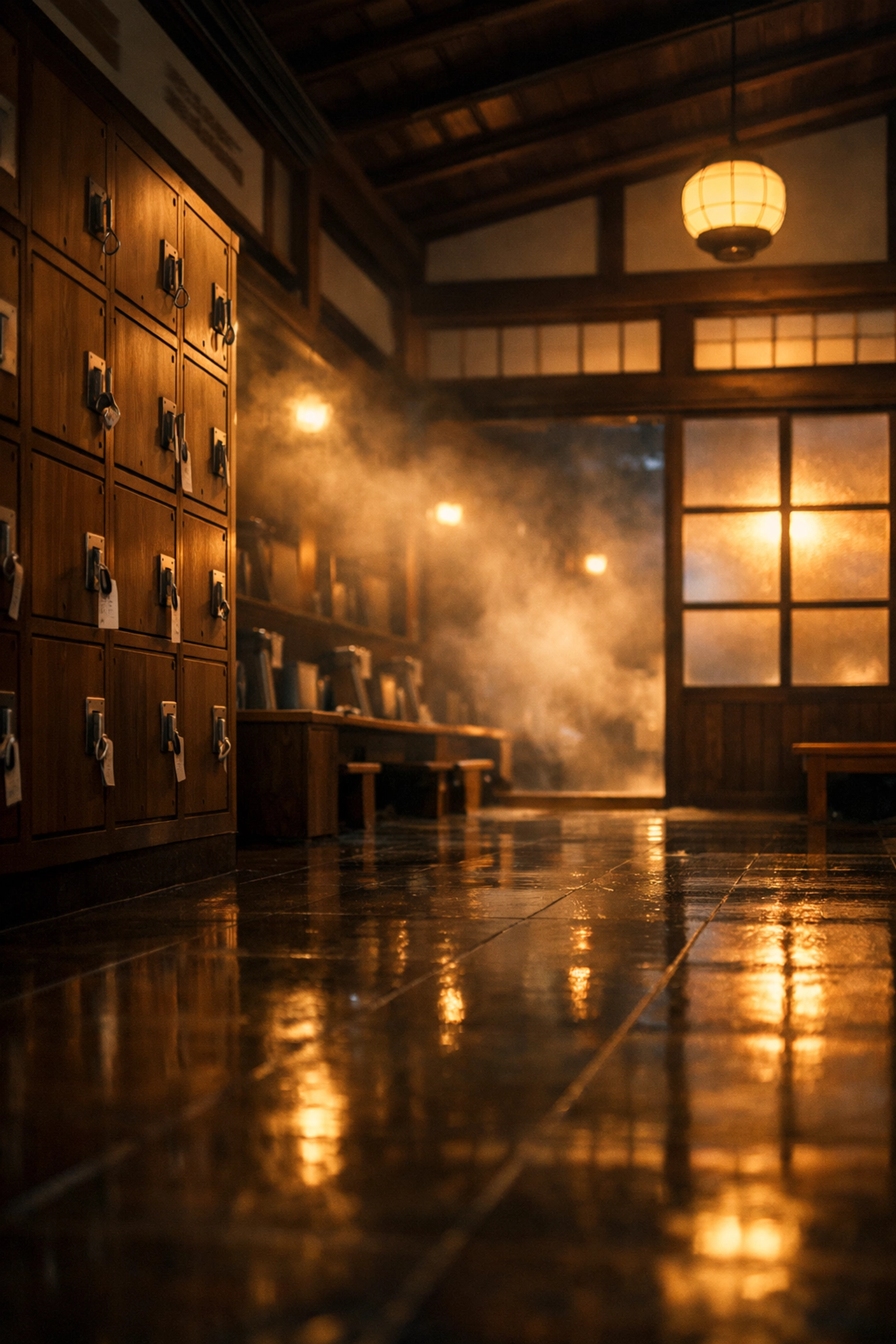
The ritual begins before you even touch water. You remove your shoes at the entrance, a symbolic shedding of the outside world. You purchase your ticket from a vending machine or attendant, then pass through noren curtains into the changing room. Here, wooden lockers line the walls, and the air already carries hints of mineral-rich steam and subtle floral scents from the washing area beyond.
Steam, Silence, and Stolen Glances
The bathing area itself is a masterclass in Japanese aesthetics, function and beauty merged into something transcendent. Rows of low faucets line one wall, each with a small stool and bucket. This is where you sit, naked, and wash thoroughly before entering any bath. It's a meditation in itself, the rhythmic pour of warm water, the lather of soap, the quiet concentration of everyone around you engaged in the same ritual.
Nobody rushes. That's the first thing you notice. Time moves differently here.

In gay-friendly sento, there's an unspoken understanding in the air, a recognition that exists in lingering eye contact, in the way bodies orient toward each other in the hot pools, in subtle smiles exchanged through rising steam. It's desire, yes, but tempered with profound respect for the space and its traditions. Nothing explicit happens in these public baths. That would violate the sacred nature of the ritual. But connection? That flows as freely as the water.
The main bath usually sits at around 40-42°C (104-108°F): hot enough to make your skin flush, to make breathing deepen, to make the boundaries between your body and the water blur. Some sento feature multiple pools: a cold plunge for the brave, an electric bath that tingles through tired muscles, a jet bath for massage. The most traditional have outdoor rotenburo, where you can soak under open sky, steam rising into Tokyo's night.
Where Tradition Meets Truth
What makes these spaces so powerful for the LGBTQ+ community isn't just the physical experience: it's how they honor both Japanese cultural heritage and queer identity without compromise. There's no "gay section" or rainbow flag at the entrance. Instead, these sento maintain their traditional appearance and rituals while cultivating an atmosphere of acceptance through staff training, community word-of-mouth, and careful stewardship.
The best gay romance novels capture this same delicate balance: honoring cultural specificity while celebrating universal experiences of desire and connection. Stories set in places like Tokyo's bathhouses, where tradition and queerness coexist, remind us that LGBTQ+ love stories exist in every culture, every context, every corner of the world.
At Read with Pride, we celebrate these intersections: where cultural heritage meets authentic self-expression, where MM romance authors craft stories that honor both specificity and universality. The steam room encounters, the stolen glances in changing rooms, the tender aftermath of shared vulnerability: these moments translate beautifully into gay fiction that resonates with emotional truth.
The Language of Bodies
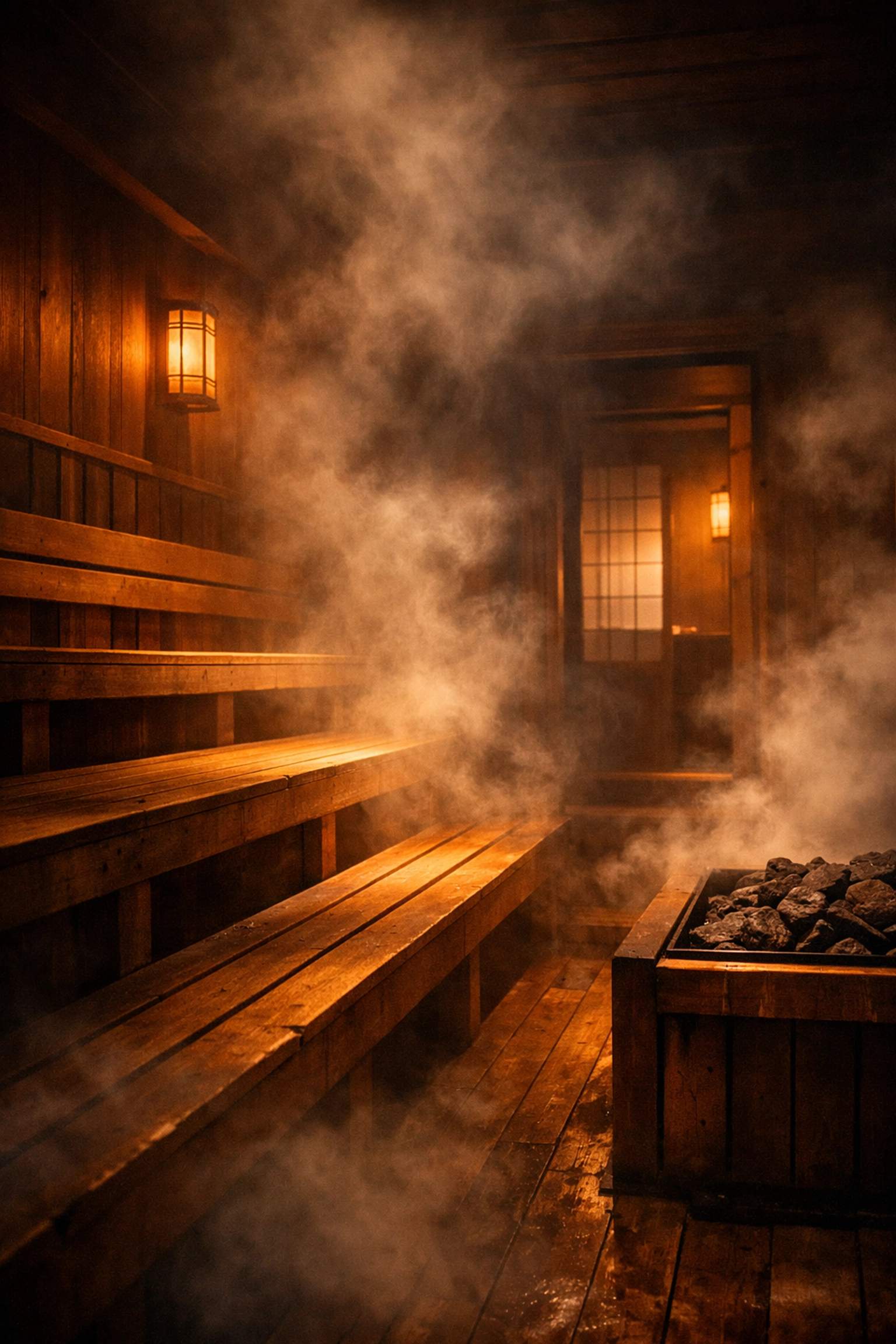
In the sento's steam room: the sauna: the temperature climbs even higher. Some reach 90°C (194°F). You enter and the heat hits like a wall. Finding a spot on the wooden benches, you settle in as sweat begins to bead and stream. Conversation here is sparse, replaced by the more primal language of breath, of presence, of simply being.
This is where the sensual nature of these spaces becomes most apparent. Not sexual: that distinction matters: but sensual in the truest sense. Every sensation heightens: the burn of hot wood against your back, the taste of mineral water from the cooling station, the sight of bodies glistening and relaxed in the dim light, the sound of water droplets hitting tile floors.
For gay men accustomed to cruising culture in Western contexts: the hurried encounters, the app-mediated meetings, the transactional nature of so many queer spaces: the sento offers something radically different. Here, desire can exist without urgency. Attraction can be acknowledged without immediately acting on it. You can appreciate another man's beauty while respecting the sanctity of the space.
It's the difference between a quick hookup and the slow-burn MM romance books that keep you turning pages late into the night. Both have their place, but there's something particularly satisfying about anticipation, about building tension through restraint.
Community in the Mist
Regular visitors to gay-friendly sento often speak of the quiet community that forms. You begin to recognize faces: the businessman who comes every Thursday after work, the young artist with intricate tattoos (once taboo in Japanese bathhouses, now increasingly accepted), the elderly gentleman who's been visiting for forty years. Conversations start slowly, maybe a comment about the water temperature or a recommendation for the best time to visit. Over weeks and months, these small exchanges build into something like friendship, though one that exists entirely within the bathhouse's walls.
This mirrors the way many queer communities form: in liminal spaces, through shared understanding rather than explicit declaration. We find each other not through announcements but through subtle recognition, through showing up consistently to spaces that welcome us.
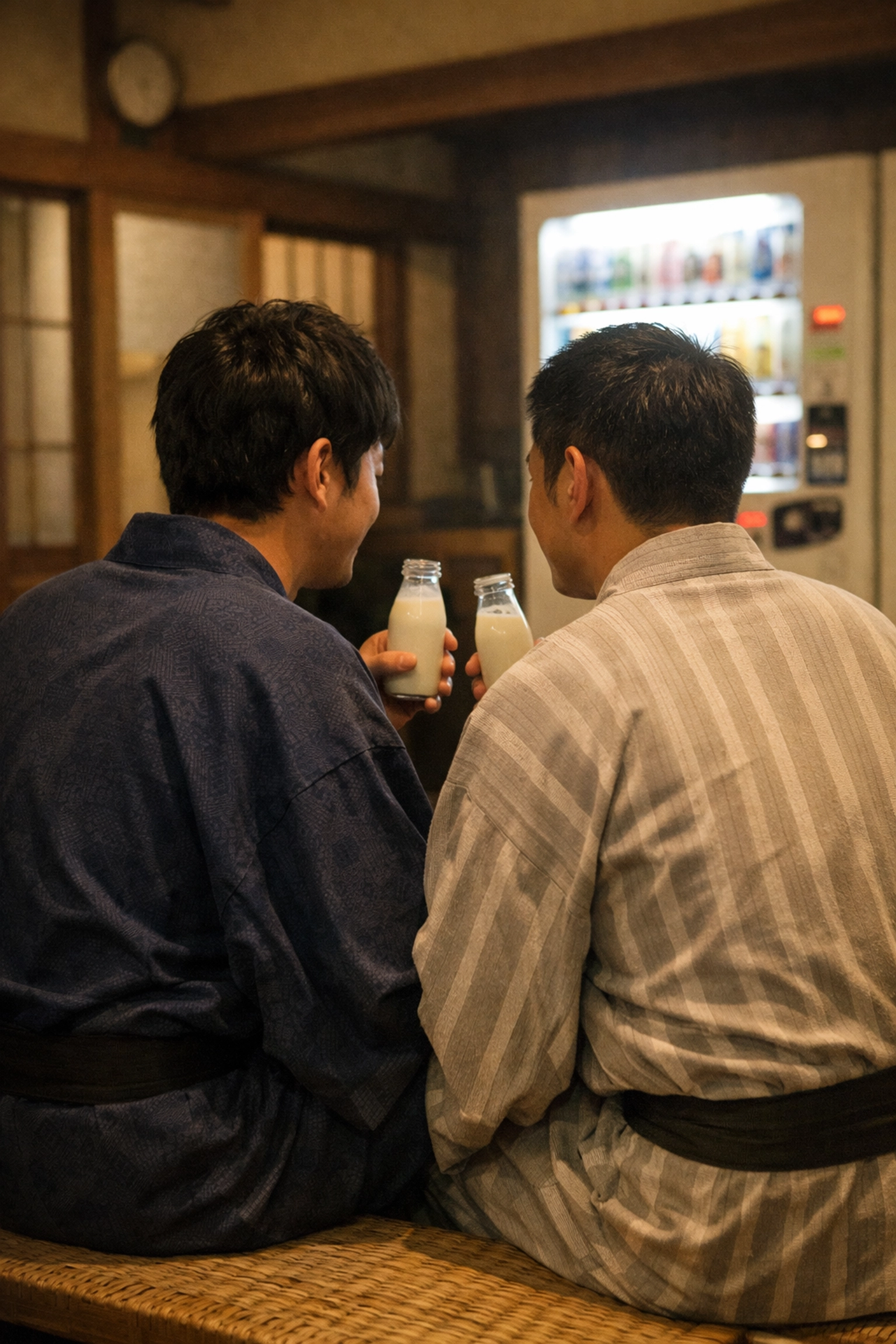
The post-bath ritual is equally important. Wrapping yourself in a yukata (cotton robe), you might visit the cooling area, where you can buy cold milk or coffee from vending machines: a beloved tradition in Japanese bathhouse culture. Sitting with your drink, body deeply relaxed, skin flushed from heat, there's a contentment that's hard to find elsewhere in the city's relentless pace.
Modern Tokyo, Ancient Rituals
Tokyo in 2026 is a city of contradictions: ultra-modern and deeply traditional, internationally connected yet distinctly Japanese. The gay scene in Shinjuku Ni-chome thrives with bars, clubs, and cafes, yet public affection between same-sex couples remains uncommon outside these designated spaces. Japan still lacks comprehensive LGBTQ+ legal protections, though cultural attitudes shift gradually toward greater acceptance.
In this context, gay-friendly sento represent something vital: spaces where queer people can participate fully in Japanese cultural traditions without erasure or compromise. They prove that being gay and being Japanese aren't contradictory identities: they're complementary facets of a complete self.
This resonates deeply with contemporary gay literature and MM romance, which increasingly celebrates characters with complex cultural identities. The best LGBTQ+ fiction recognizes that coming out isn't just about sexuality: it's about integrating all parts of yourself into a coherent, authentic whole.
The Walk Home
Leaving a sento at night, stepping back onto Tokyo's neon-lit streets with your hair still damp and your body utterly relaxed, you carry the experience with you. The city looks different: softer somehow, more forgiving. You've shed something in there beyond dirt and stress. You've touched something ancient and true about human connection, about vulnerability as strength, about the courage it takes to be seen.
For gay men navigating the complexities of identity in any culture, these moments of authentic presence are precious. They remind us that our desires, our connections, our ways of loving are part of humanity's oldest stories, not departures from them.
Whether you find these moments in a Tokyo bathhouse, in the pages of a heartfelt gay novel, or in the everyday courage of living openly, they all point toward the same truth: we belong. Our love stories matter. Our traditions: both inherited and created: deserve respect and celebration.
Explore more stories of authentic LGBTQ+ experiences and discover MM romance books that celebrate love in all its forms at Read with Pride.
Follow us on Instagram, Facebook, and X for daily recommendations and community connection.
#GayRomance #MMRomance #LGBTQBooks #ReadWithPride #GayFiction #QueerLiterature #TokyoGayScene #MLMRomance #GayLoveStories #2026Books #MMRomanceBooks #GayContemporaryRomance #LGBTQReading #GayBookClub #QueerFiction

Leave a Reply
You must be logged in to post a comment.