
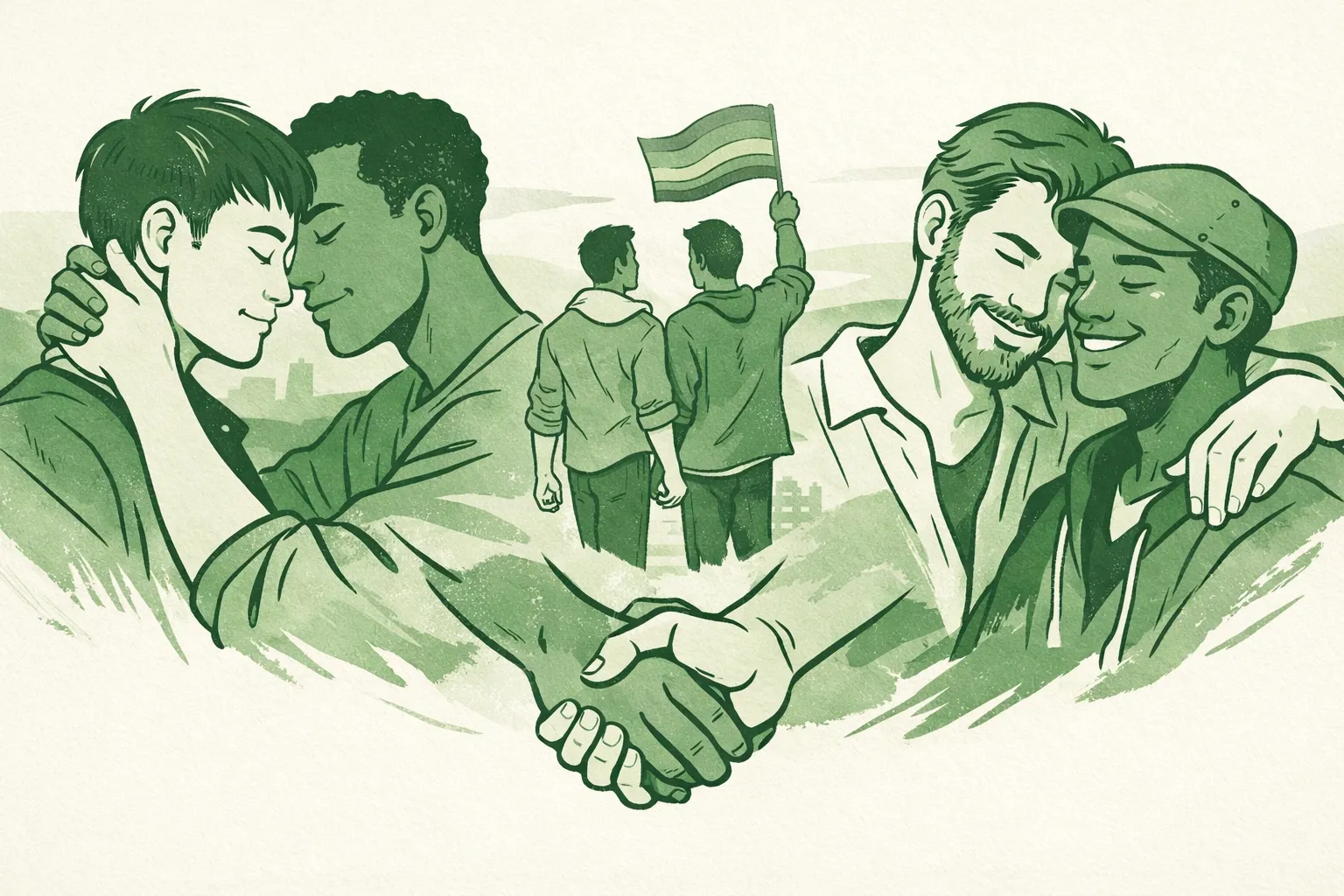
When Mateo first saw Rafiq across the crowded community centre in London, he didn't know their lives would become so intricately woven. Mateo, a graphic designer from Buenos Aires who'd fled political persecution, was nursing a weak coffee and trying to ignore the panic tightening his chest. Rafiq, newly arrived from Tehran via a harrowing journey through Turkey, sat alone in the corner, his hands trembling as he filled out asylum paperwork he could barely read.
The Universal Language of Survival
They spoke different languages: Spanish, Farsi, broken English: but when their eyes met, something passed between them that needed no translation. Recognition. Solidarity. The wordless acknowledgment that they'd both crossed impossible distances to claim their right to exist.
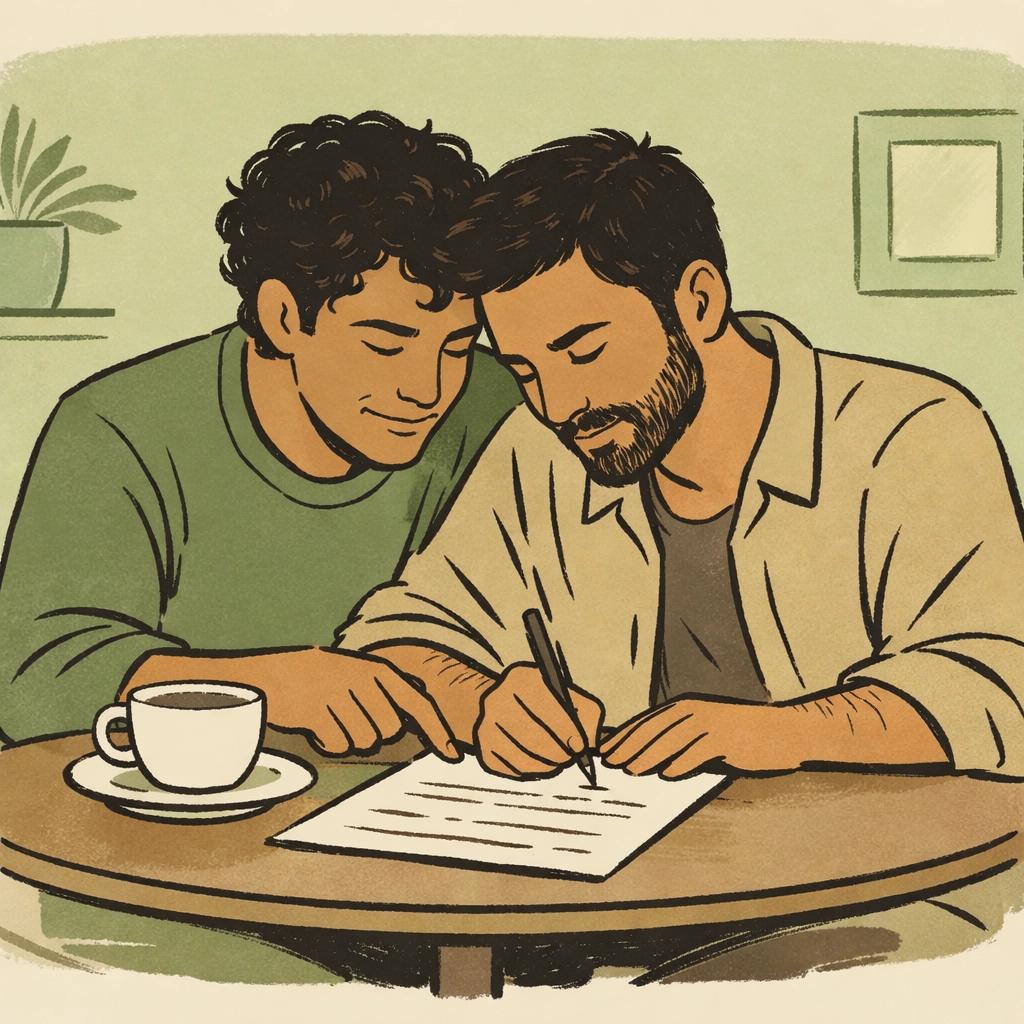
Mateo approached first, offering help with the forms. Rafiq's shoulders relaxed slightly as Mateo's gentle voice stumbled through English explanations, gesturing when words failed. That afternoon stretched into evening, then became weekly coffee meetings that evolved into something neither had expected: a lifeline.
This is the reality of cross-cultural solidarity in the gay community: not an abstract political concept, but the intimate, life-sustaining connections forged between queer people across borders, languages, and traditions. It's the way Mateo learned to prepare tahdig in his cramped Peckham flat while Rafiq discovered Argentine mate rituals. It's how they built a chosen family when biological families had rejected them both, how they held space for each other's grief in languages they were still learning.
Existence as Resistance
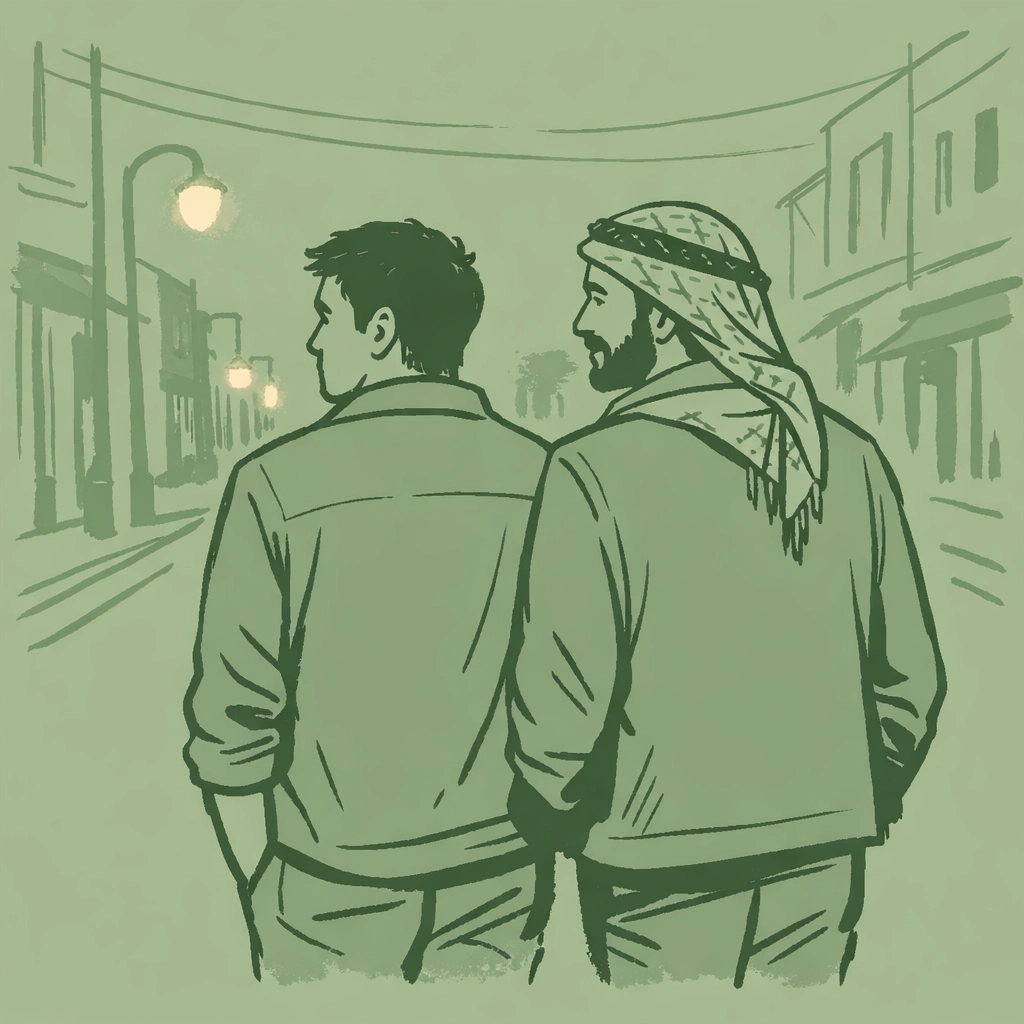
The research confirms what Mateo and Rafiq lived: "existence is resistance" in LGBTQ+ solidarity movements. Every time they walked through Soho together, Rafiq's hand occasionally brushing Mateo's arm in public: a gesture that would have endangered his life in Tehran: they embodied defiance. Every time Mateo spoke about his former partner disappeared by authorities in Buenos Aires, and Rafiq listened without flinching, they practiced the radical act of witnessing each other's truths.
When Mateo's asylum claim faced delays and bureaucratic nightmares, Rafiq accompanied him to every appointment, his presence a silent statement: you are not alone. When Rafiq's depression deepened during the grey London winter, memories of family rejection surfacing in waves, Mateo sat beside him through the worst nights, sometimes in silence, sometimes reading poetry in Spanish that Rafiq couldn't understand but found soothing nonetheless.
Gay romance books exploring cross-cultural connection often depict the beauty of these bonds, but rarely capture the raw necessity of them. For many LGBTQ+ refugees and immigrants, cross-cultural solidarity isn't romantic: it's survival infrastructure. It's knowing someone will show up at the hospital when you're sick. It's sharing legal contacts, translation services, and the locations of safe spaces. It's teaching each other the unspoken rules of a new country while honouring the cultures you've left behind.
Building Bridges Across Borders
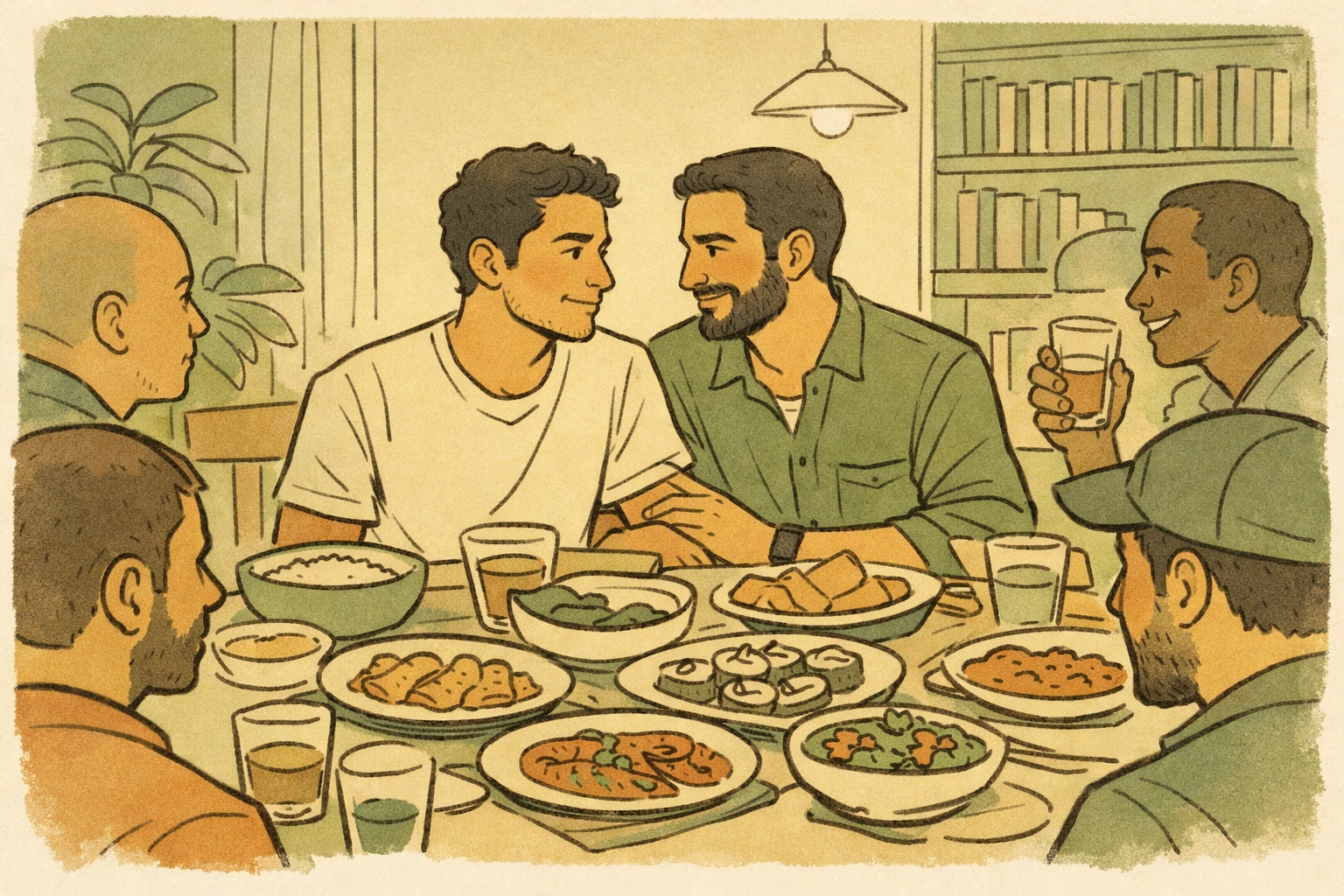
Historical precedents for this solidarity run deep. The gay and lesbian left's involvement in Central American solidarity movements demonstrated how transnational approaches could unite diaspora members, activists, and immigrants across multiple countries. In San Francisco's Mission District, the overlap between gay communities and Central American refugee communities created spaces where people could simultaneously address international issues and build multiracial queer networks locally.
Mateo and Rafiq created their own micro-version of this phenomenon. Their small apartment became a gathering place for other LGBTQ+ immigrants: a Syrian artist, a Nigerian student denied asylum twice, a Brazilian trans woman navigating the NHS. They shared meals, legal resources, and stories. They practiced English together, helped each other navigate hostile Home Office systems, and celebrated festivals from a dozen cultures.
MM romance novels increasingly explore these dynamics, recognizing that queer fiction must reflect the global reality of gay men's lives. Stories like those available at Read with Pride capture the complexity of cross-cultural gay relationships: not just romantic partnerships, but the chosen families that sustain us across borders.
The Personal as Political
When Mateo received his indefinite leave to remain, Rafiq wept with relief as profound as if it were his own victory. When Rafiq finally secured refugee status after eighteen months of uncertainty, Mateo organized a celebration that blended Persian and Argentine traditions, inviting their extended chosen family to mark the moment.
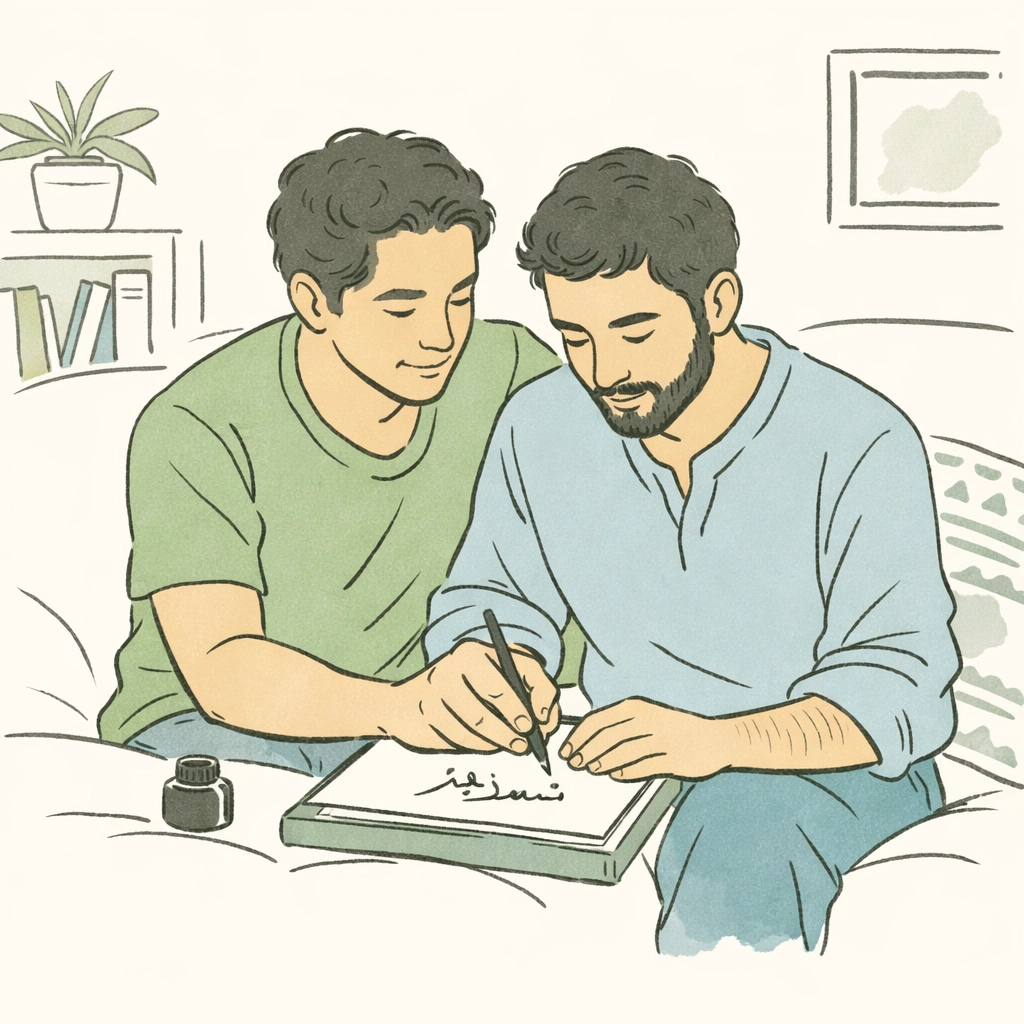
These weren't abstract political solidarities. They were intimate, daily practices of care. Rafiq taught Mateo Persian calligraphy during anxiety-ridden evenings. Mateo helped Rafiq understand British workplace culture before his first job interview. They became fluent in each other's silences, learned to read grief in the set of shoulders, recognized trauma responses, and developed shorthand for comfort.
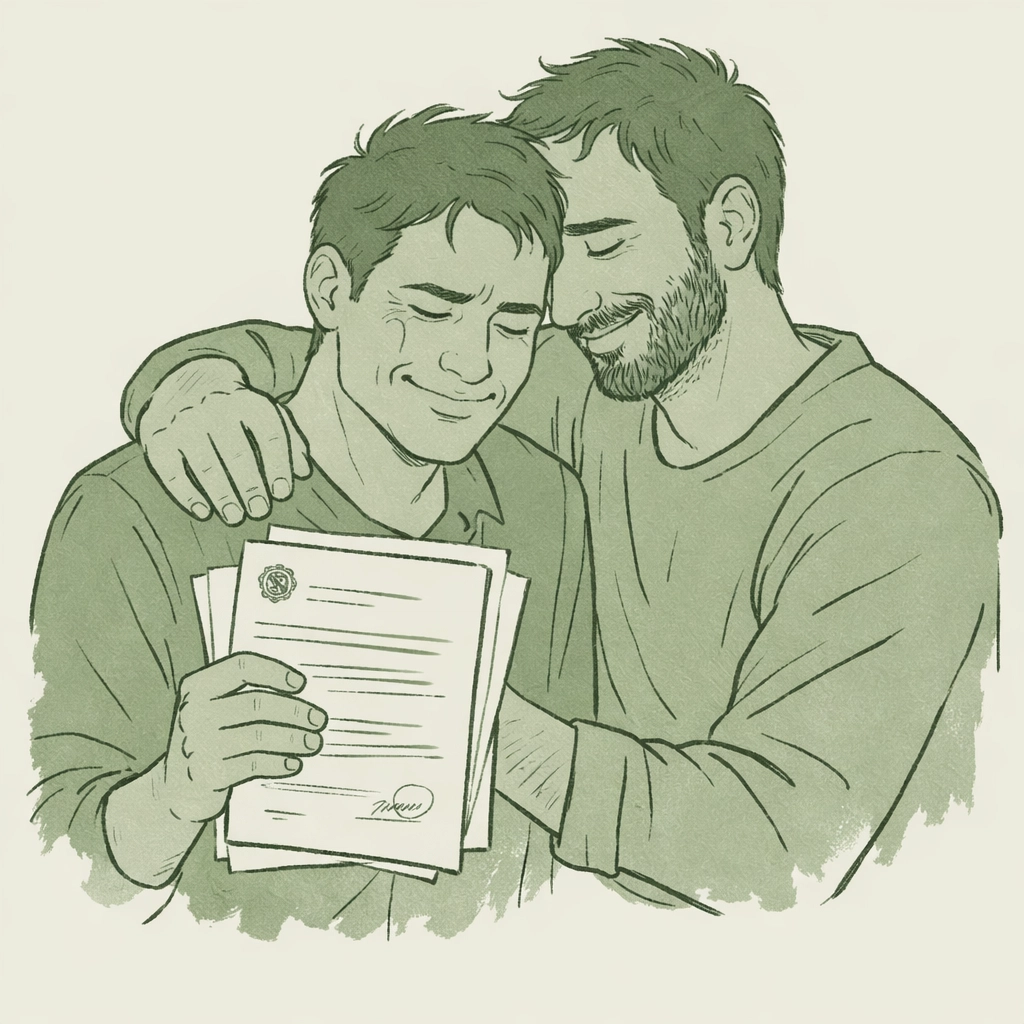
Contemporary LGBTQ+ solidarity emphasizes that social justice is embedded in queer liberation's foundational DNA. But this truth lives most powerfully in moments like Rafiq holding Mateo through a panic attack triggered by news from Argentina, or Mateo accompanying Rafiq to a support group for survivors of conversion therapy, or both of them showing up at a detention centre protest for LGBTQ+ asylum seekers they'd never met.
"No border, no law, no act of hate can erase our truth," activists proclaim. Mateo and Rafiq proved this daily, their existence and mutual support a repudiation of every system that had tried to erase them.
Chosen Family as Revolution
The concept of chosen family: central to gay literature and MM contemporary romance: takes on heightened significance in cross-cultural contexts. For Mateo and Rafiq, building chosen family meant navigating cultural differences around intimacy, communication, and support. Mateo's Argentine expressiveness initially overwhelmed Rafiq's more reserved Iranian communication style. Rafiq's indirect approach to conflict confused Mateo's direct preferences.
But they learned. They adapted. They created a third culture between them: one that honoured both their backgrounds while building something new. When Mateo's ex-boyfriend resurfaced, stirring old trauma, Rafiq's steady presence helped him process complex feelings about a relationship that had ended when Mateo fled. When Rafiq confronted his family's final rejection via a devastating phone call, Mateo held space for grief that had no easy resolution.
This is the heartfelt gay fiction that readers seek: stories reflecting real struggles and profound connections. Explore more authentic LGBTQ+ narratives at dickfergusonwriter.com and discover how MM fiction captures these essential truths.
The Language of Love and Solidarity
Three years after their first meeting, Mateo and Rafiq's relationship had evolved into something neither could fully name: not quite romantic, not simply friendship, but a bond forged through shared crisis and mutual salvation. They'd learned each other's languages, not just linguistically but emotionally, culturally, spiritually.
They'd proven what activists have long known: cross-cultural solidarity requires conscious effort to extend empathy across boundaries. It doesn't emerge naturally but must be cultivated through patient practice, cultural humility, and genuine commitment to each other's liberation.
Their story reflects the best MM romance tradition: showcasing how gay love stories transcend geographical and cultural boundaries. For readers seeking LGBTQ+ books that explore these profound connections, platforms like Read with Pride offer diverse narratives celebrating cross-cultural queer solidarity.
When Mateo and Rafiq walk through their neighbourhood now, they move with the confidence of people who've built something unshakeable: not just between themselves, but within a larger network of LGBTQ+ immigrants who've found sanctuary in each other. They've learned that shared language isn't about words but about recognition, solidarity, and the revolutionary act of choosing each other across every border that tried to separate them.
Discover more powerful LGBTQ+ stories exploring cross-cultural solidarity, chosen family, and gay romance at Read with Pride.
Follow us on social media:
Instagram: @dickfergusonwriter
X/Twitter: @DickFergus94902
Facebook: Dick Ferguson Writer
Website: www.readwithpride.com
#ReadWithPride #MMRomance #GayRomance #LGBTQBooks #GayFiction #QueerFiction #CrossCulturalLove #GayLoveStories #MMNovels #LGBTQRomance #GayLiterature #QueerAuthors #GayBooks #GayContemporaryRomance #MMContemporary #HeartfeltGayFiction #GayBookClub #LGBTQeBooks #GayRomanceBooks #ChosenFamily #LGBTQSolidarity #2026GayBooks #ReadingWithPride #GayNovelRecommendations

Leave a Reply
You must be logged in to post a comment.