

readwithpride.com
There's something achingly romantic about borders: those invisible lines that separate not just countries, but entire ways of being. And nowhere is that tension more palpable than in the stories of Albanian immigrants finding their way in Athens, especially when you add another layer: being queer in two worlds that don't always make space for you.
Let's talk about what it means to build a life between Greece and Albania, between tradition and truth, between who you're supposed to be and who you actually are.
The Weight of Two Closets
Albania and Greece share a border, but the distance between them can feel like an ocean when you're LGBTQ+. For Albanian immigrants in Athens: who make up more than half of Greece's migrant population: there's a unique kind of double invisibility at play. You're already navigating the complexities of being an immigrant in a country that doesn't always welcome you with open arms. Add being gay to the mix, and suddenly you're juggling multiple identities, each with its own set of expectations and dangers.
In Albania, despite decriminalization of homosexuality in 1995, LGBTQ+ visibility remains extremely limited. Rural areas especially hold tight to traditional values where family honor and heteronormative expectations rule everything. Many queer Albanians grow up learning to hide, to compartmentalize, to survive by being invisible. Moving to Athens promises freedom: Greece legalized same-sex civil unions in 2015 and has active LGBTQ+ communities, particularly in neighborhoods like Gazi and Metaxourgeio.
But here's the catch: even in Athens, Albanian immigrants face discrimination. They're dealing with xenophobia, employment struggles, legal status nightmares, and the challenge of being seen as "less than" by some Greeks. So where do you find yourself when you're too Albanian for the Greek gays and too gay for the Albanian community?
Finding Your People in Unexpected Places
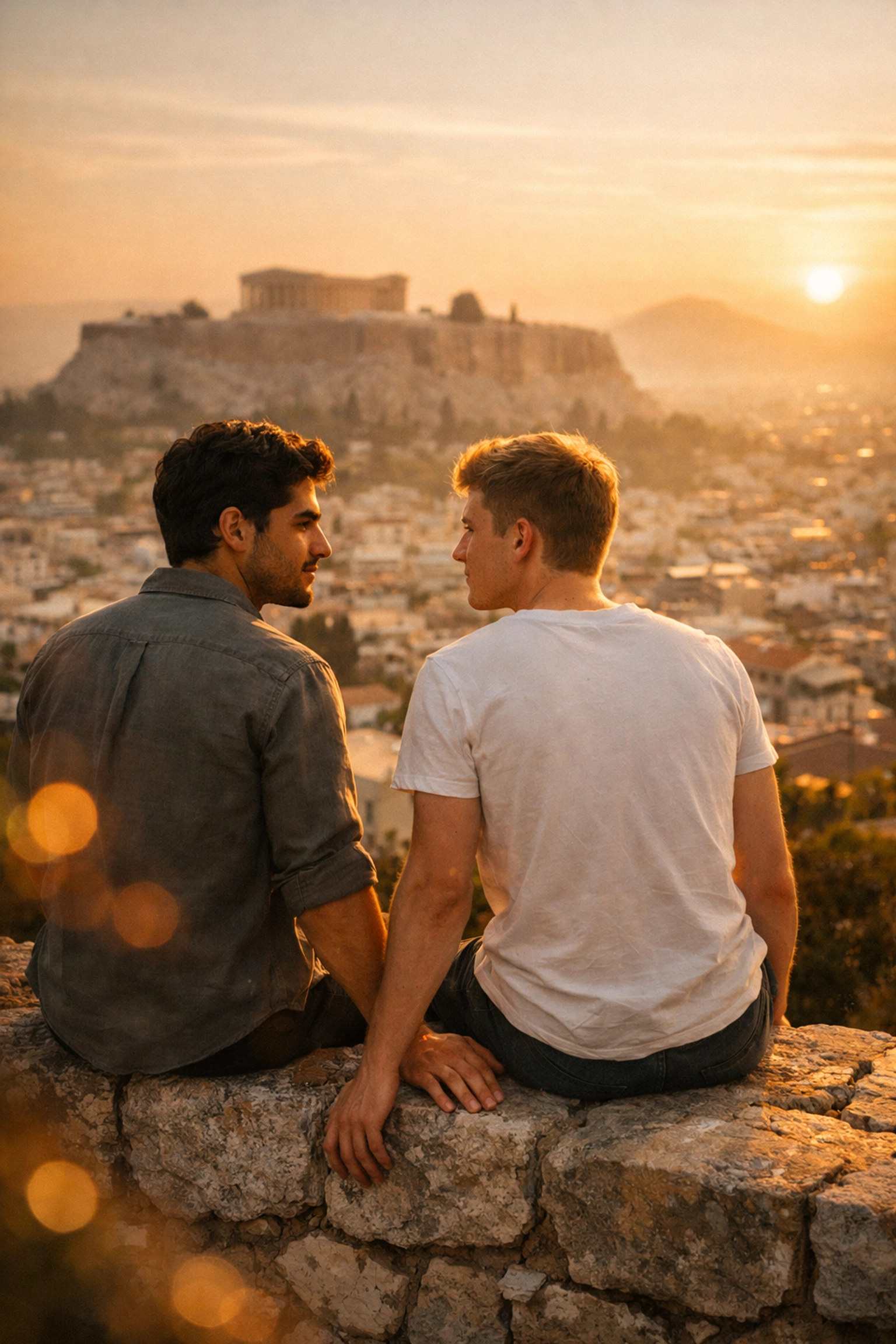
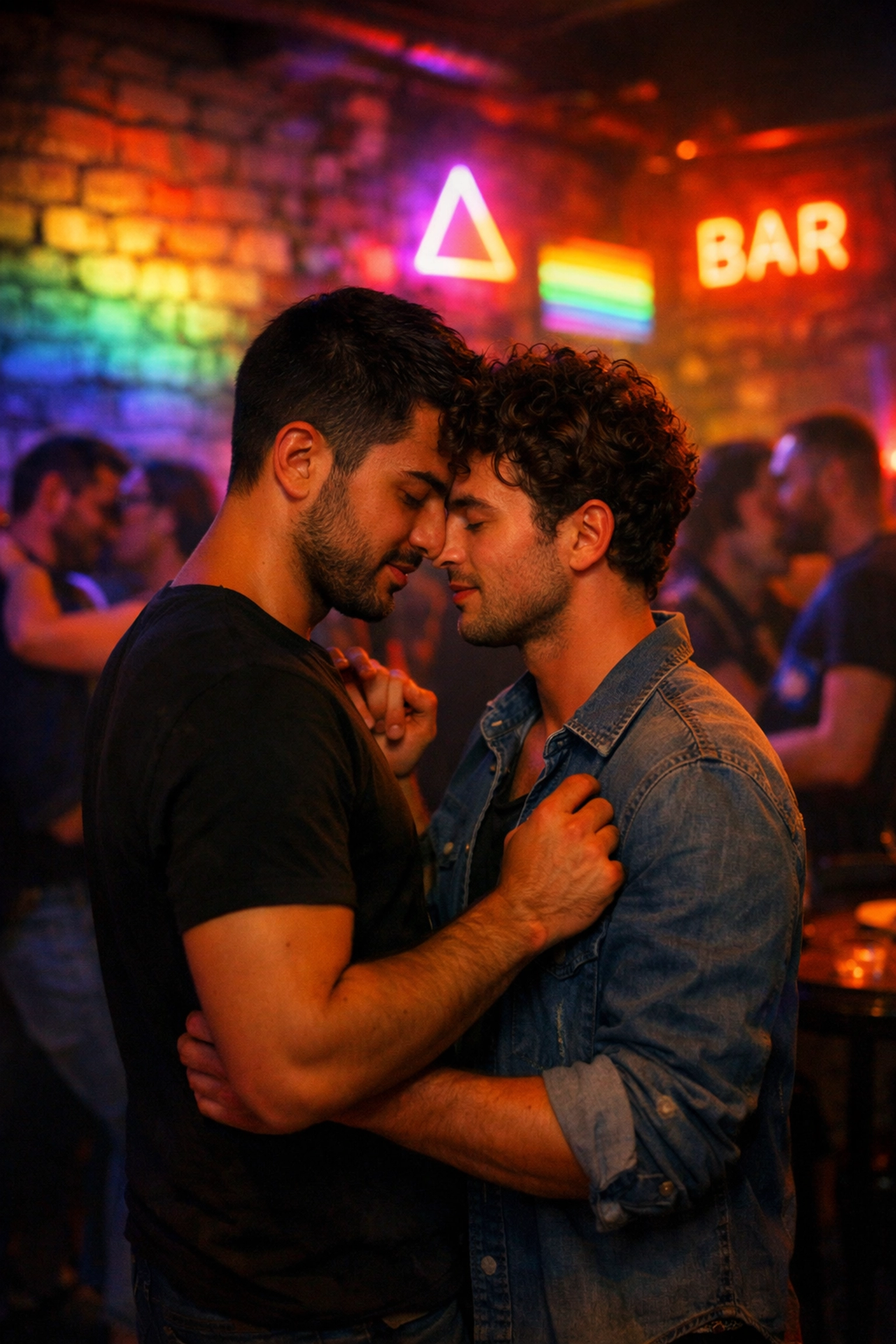
The beauty of Athens' queer scene is that it thrives in the margins. The city has a long history of underground LGBTQ+ spaces: from the bouzouki bars of the 1960s to the modern clubs pumping out Eurovision anthems until dawn. For Albanian immigrants, these spaces become more than just places to dance and drink. They're sanctuaries where nationality matters less than authenticity.
This is where the most compelling MM romance stories emerge. Picture this: A young Albanian man who's been working construction jobs under the table meets a Greek law student volunteering at an immigration support center. Or two Albanian immigrants who find each other at a queer support group, speaking their mother tongue for the first time in months while also being completely honest about who they are. These aren't just meet-cutes: they're acts of radical vulnerability.
The cross-border romance between Greek and Albanian men carries its own particular magic. There's the language barrier that forces you to communicate in other ways: through touch, through gestures, through the universal language of wanting someone who sees you. There's the cultural exchange, the sharing of family recipes and childhood stories, the slow revelation that maybe your cultures aren't as different as you thought. And there's the political dimension too: loving across a historically complicated border becomes its own kind of rebellion.
Urban Athens vs. The Rest
Athens offers something that rural Greece and Albania rarely can: anonymity. In a city of nearly four million people, you can disappear into the crowd, build chosen family, create a life that doesn't revolve around the expectations of your relatives or your village. The neighborhood of Gazi, with its former gasworks turned cultural complex, has become a queer hub. Rooster, Sodade2, and S-Cape are just a few of the bars and clubs where Albanian immigrants can find community without having to explain themselves.
But even within Athens, there are different realities. Living in the city center versus the suburbs can mean the difference between freedom and constant surveillance. Many Albanian immigrants live in neighborhoods like Aghios Panteleimonas or Kypseli: areas with large migrant communities but also conservative social dynamics. Being out and proud in these neighborhoods requires a different kind of courage than dancing shirtless in Gazi on a Saturday night.
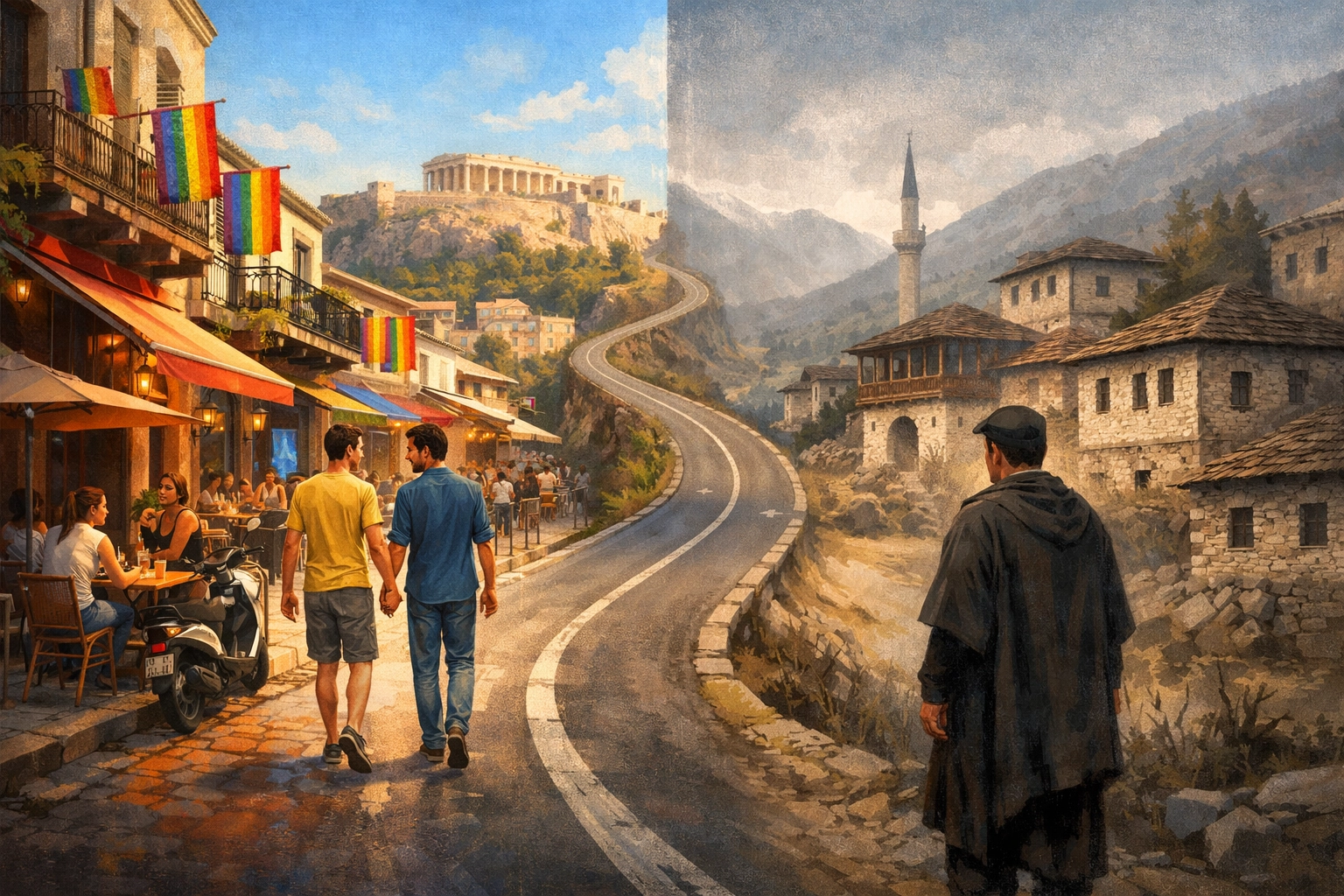
And then there's the pull of home. According to recent data, approximately 180,000 to 200,000 Albanians returned to Albania from Greece since 2010, many due to unemployment during Greece's economic crisis. But for queer Albanians, going back isn't just about economics: it's about returning to a closet you fought hard to escape. The MM romance trope of "forced proximity" takes on new meaning when economic circumstances push you back to a place where loving who you love could cost you everything.
Historical Echoes
The queer history of Greece is ancient and complex. From the celebrated male relationships of ancient Athens to the more hidden queer lives of Byzantine monks, Greece has always had space for same-sex love: even if it was coded, closeted, or confined to specific contexts. Albania's queer history is less documented, in part because of decades under Enver Hoxha's isolationist communist regime, which brutally suppressed any deviation from strict social norms.
This historical difference matters in contemporary relationships. Greek men, even closeted ones, often grow up with at least some cultural awareness that same-sex relationships existed in their country's glorious past. Albanian men, particularly those from rural areas, may have grown up with no representation whatsoever: no stories, no role models, no language for what they were feeling.
When these two histories meet in Athens, there's potential for both education and healing. The Greek partner might introduce Albanian partners to queer Greek literature or take them to the Benaki Museum to see homoerotic pottery. The Albanian partner might share the coded ways queer people found each other back home: the specific café where everyone knew but nobody said, the cousin who "never married" and lived with his "best friend."
The Legal Maze
Let's get real about the practical barriers. Albanian immigrants in Greece face a labyrinth of legal challenges: residence permits, work authorization, pathways to citizenship. The Albanian Community in Greece organization has been advocating for these issues for nearly 35 years, but progress is slow. And being LGBTQ+ adds another layer of complication.
If you're in a same-sex relationship, you can't rely on marriage for citizenship pathways the way opposite-sex couples can. Greece didn't legalize same-sex marriage until recently, and even civil unions don't grant all the same rights. This means many queer Albanian-Greek couples exist in legal limbo: committed to each other but unable to secure their shared future through official channels.
This uncertainty becomes the backbone of incredible slow-burn romance. When you can't guarantee tomorrow, every moment together becomes precious. When society and law conspire to keep you apart, choosing each other becomes an act of defiance. These are the stories that resonate with readers at Read with Pride: MM romance books that acknowledge real-world obstacles while celebrating love's persistence.
The Found Family Imperative
Here's what makes the Albanian immigrant experience in Athens particularly poignant for LGBTQ+ storytelling: the absolute necessity of found family. When you've left your biological family behind: either physically or emotionally: you have to build new support networks from scratch. This is survival.
In Athens, these found families often form in unexpected configurations. You've got the elderly Greek neighbor who brings you lemon potatoes and doesn't ask questions. The Turkish trans woman who's been in Greece for twenty years and knows all the legal loopholes. The other Albanian immigrants who aren't queer but recognize the particular loneliness of living between worlds. The Greek boyfriend's sister who accepts you before his parents do.
These are the relationships that make compelling MM contemporary romance. They're messy, complicated, deeply loyal, and chosen with intention. They're also authentic representations of how queer immigrants actually survive and thrive.
Why These Stories Matter
The Greek and Albanian gay experience: especially at the intersection of immigration: gives us some of the most compelling contemporary LGBTQ+ fiction possibilities. These aren't stories about coming out in accepting liberal cities or finding love at Pride festivals (though those are valid too). These are stories about navigating multiple forms of marginalization, about choosing authenticity when the cost is high, about finding love in places where you're supposed to stay invisible.
For readers of gay romance novels and MM fiction, these narratives offer something beyond escapism. They offer recognition. There are queer people all over the world navigating similar tensions: between cultures, between languages, between the person their family wants them to be and the person they actually are. An Albanian immigrant in Athens might have different specifics, but the emotional core is universal.
At readwithpride.com, we're committed to showcasing diverse LGBTQ+ stories that reflect the real complexity of queer lives. The enemies-to-lovers trope hits different when the "enemies" are two men from historically tense neighboring countries. The forced proximity trope becomes more intense when you're sharing a tiny Athens apartment because it's all you can afford. The slow burn is even slower when you're both too traumatized by past rejections to trust easily.
Looking Forward
The landscape is changing, albeit slowly. Greece continues to evolve its LGBTQ+ rights, and even Albania is seeing increased visibility for its queer communities, particularly in Tirana. Young people on both sides of the border have internet access, they're seeing representation in global media, and they're connecting with international LGBTQ+ communities in ways previous generations never could.
But the in-between generation: those who immigrated in the 1990s and 2000s, who are now in their 30s and 40s: their stories are still being written. They're the ones who lived through the harshest discrimination but are now seeing the earliest glimmers of acceptance. They're the ones who can tell you what it was like before and what it feels like now.
These are the stories we need in MM romance books and gay literature. Not just the happy-ever-afters (though we need those too), but the complicated middles. The relationships that survive despite everything. The love that persists across borders, languages, and legal systems designed to keep people apart.
Because at the end of the day, that's what the best LGBTQ+ fiction does: it shows us that love doesn't need permission from the state or society to be real. It just needs two people brave enough to choose each other, again and again, despite every obstacle.
Discover more compelling LGBTQ+ stories and MM romance books at Read with Pride. Follow us on Facebook, Instagram, and X for the latest in gay fiction and queer literature.
#MMRomance #GayRomance #LGBTQBooks #QueerFiction #ReadWithPride #GayFiction #CrossBorderRomance #ImmigrantStories #GreekGayLife #AlbanianLGBTQ #MMContemporary #GayLoveStories #LGBTQFiction #QueerLiterature #GayNovels #MMRomanceBooks #GayRomanceBooks #LGBTQRomance #AuthenticQueerStories #DiverseLGBTQ #2026GayBooks

Leave a Reply
You must be logged in to post a comment.