
DISCOVER LGBTQ+ HISTORY THROUGH LITERATURE. Explore award-winning gay fiction and MM romance at Read with Pride : your destination for authentic queer stories. Visit readwithpride.com/store/dickfergusonwriter for exclusive titles.
The Parallel: Two Sohos, One Movement
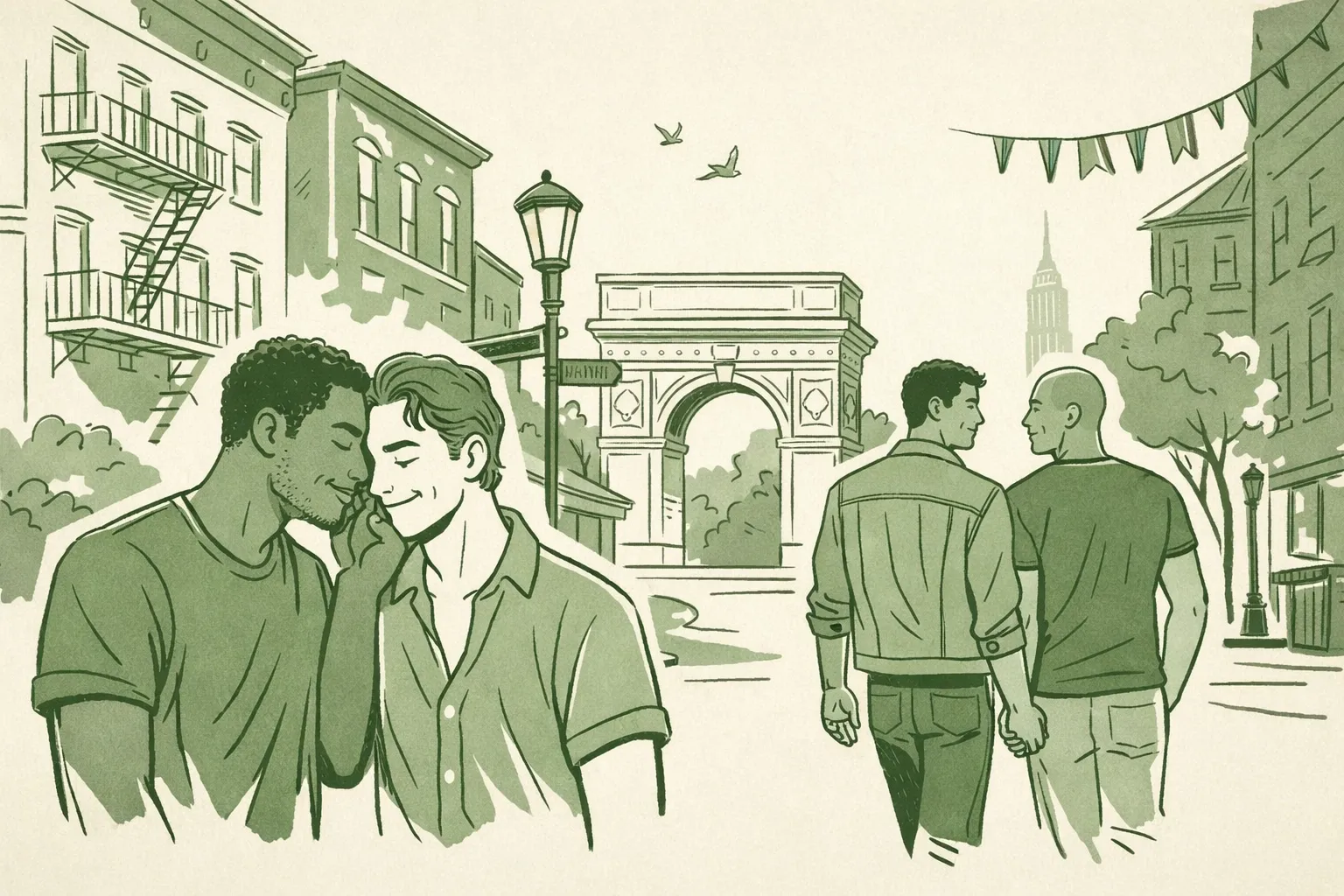
Greenwich Village stands as America's Soho: not in geography, but in cultural significance. Just as London's Soho became the beating heart of Britain's LGBTQ+ community, Greenwich Village served as the epicenter of America's gay liberation movement. Both neighborhoods offered sanctuary when the rest of the world turned hostile. Both became synonymous with resistance, visibility, and pride.
Christopher Street in Greenwich Village mirrored Old Compton Street in Soho. By the 1970s, Christopher Street had evolved into the main thoroughfare of gay America, lined with bars, bookshops, and gathering spaces where LGBTQ+ people could finally exist openly. This wasn't coincidence: it was necessity. When the world refuses to make space for you, you carve it out yourself.
America's First Gayborhood
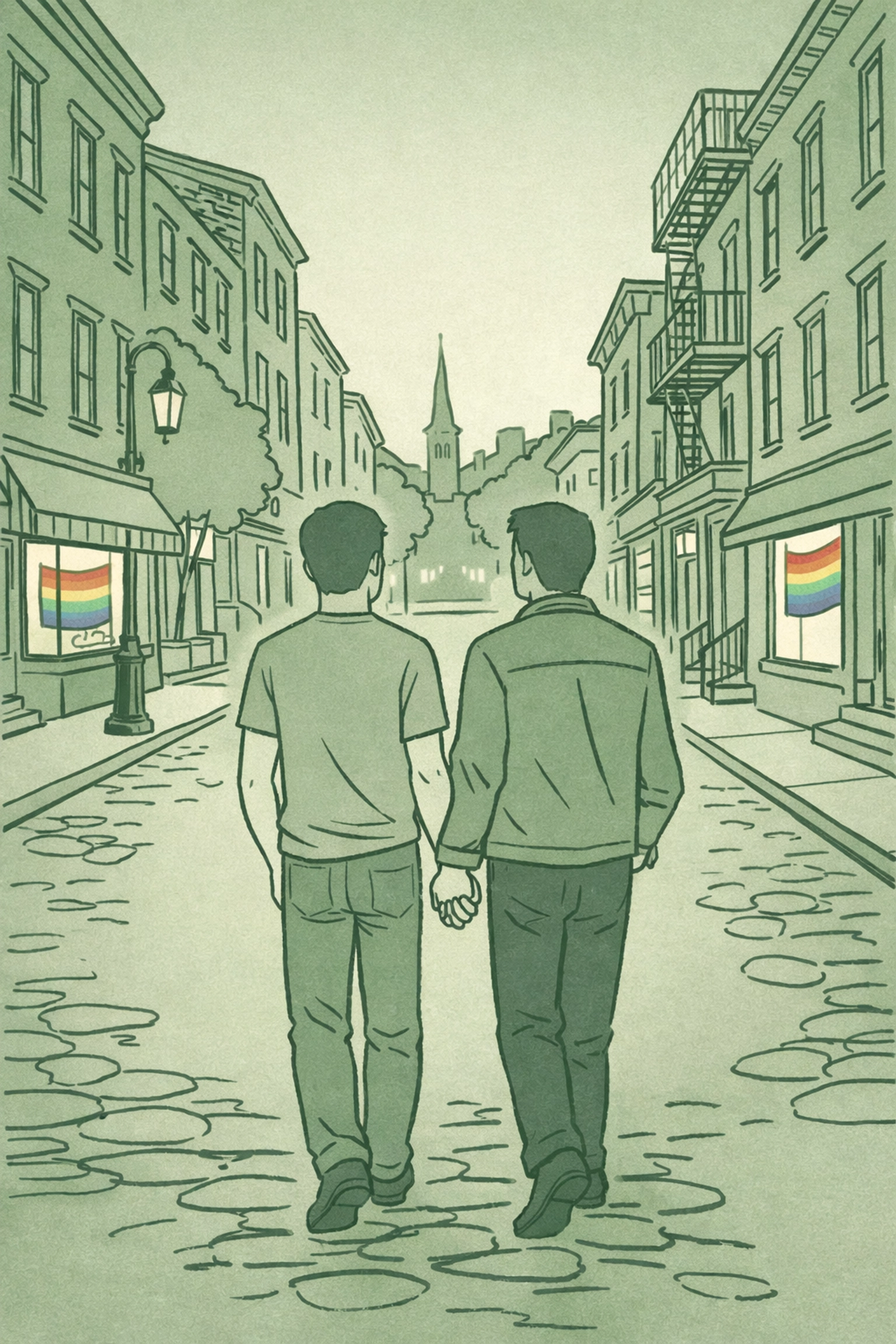
Greenwich Village earned its reputation as America's first gayborhood through decades of defiance and community-building. After World War I, military veterans settled in larger cities and created visible enclaves of gay men and lesbians. The Village became their home: a place where relative freedom existed despite pervasive repression elsewhere in the United States.
Underground culture thrived here. Gay bars operated in shadowy legal territory, constantly threatened by police raids and closure. Yet they persisted. The neighborhood developed a distinct subculture that drew LGBTQ+ people from across the country, all seeking refuge in a few square blocks of lower Manhattan.
This wasn't glamorous sanctuary: it was survival dressed in community. Every gathering space represented risk. Every public acknowledgment of identity invited violence. But Greenwich Village offered something revolutionary: the chance to be yourself, even temporarily, even partially.
The Oscar Wilde Memorial Bookshop: Literary Resistance
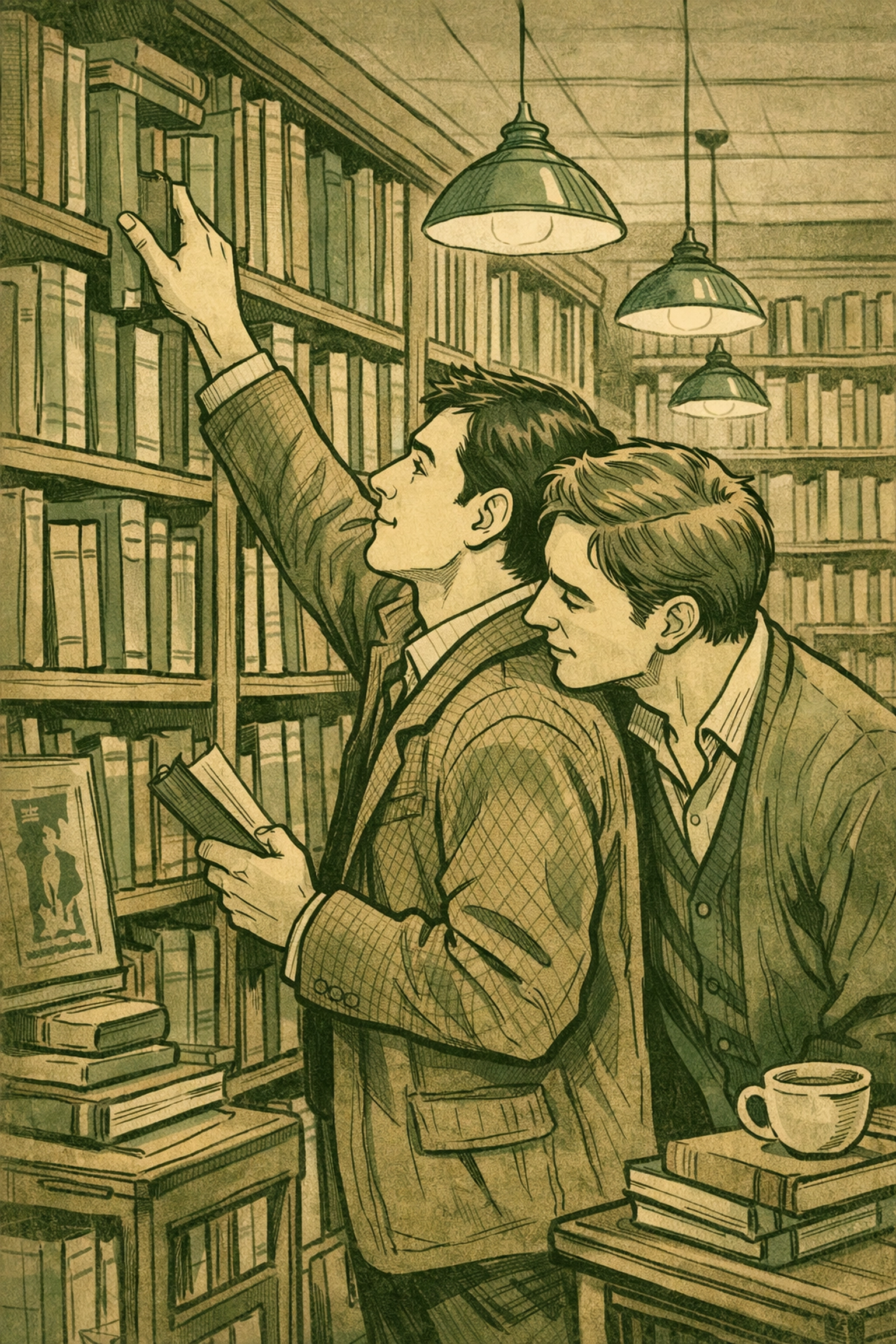
Founded in 1967 at 15 Christopher Street, the Oscar Wilde Memorial Bookshop became the world's first gay bookstore. This wasn't simply a retail space: it was an act of defiance. In an era when LGBTQ+ literature was classified as obscene and gay people faced systematic criminalization, opening a bookshop dedicated to queer writing constituted radical activism.
The bookshop operated until 2009, serving as a community hub for over four decades. Here, gay men discovered literature that reflected their lives. They found validation in words when the world offered only condemnation. They connected with others through shared stories.
Explore contemporary LGBTQ+ fiction at Read with Pride: where today's gay books carry forward the legacy of literary resistance. Browse MM romance, gay thrillers, and queer fiction that honors this history.
Café Society: Integration and Performance
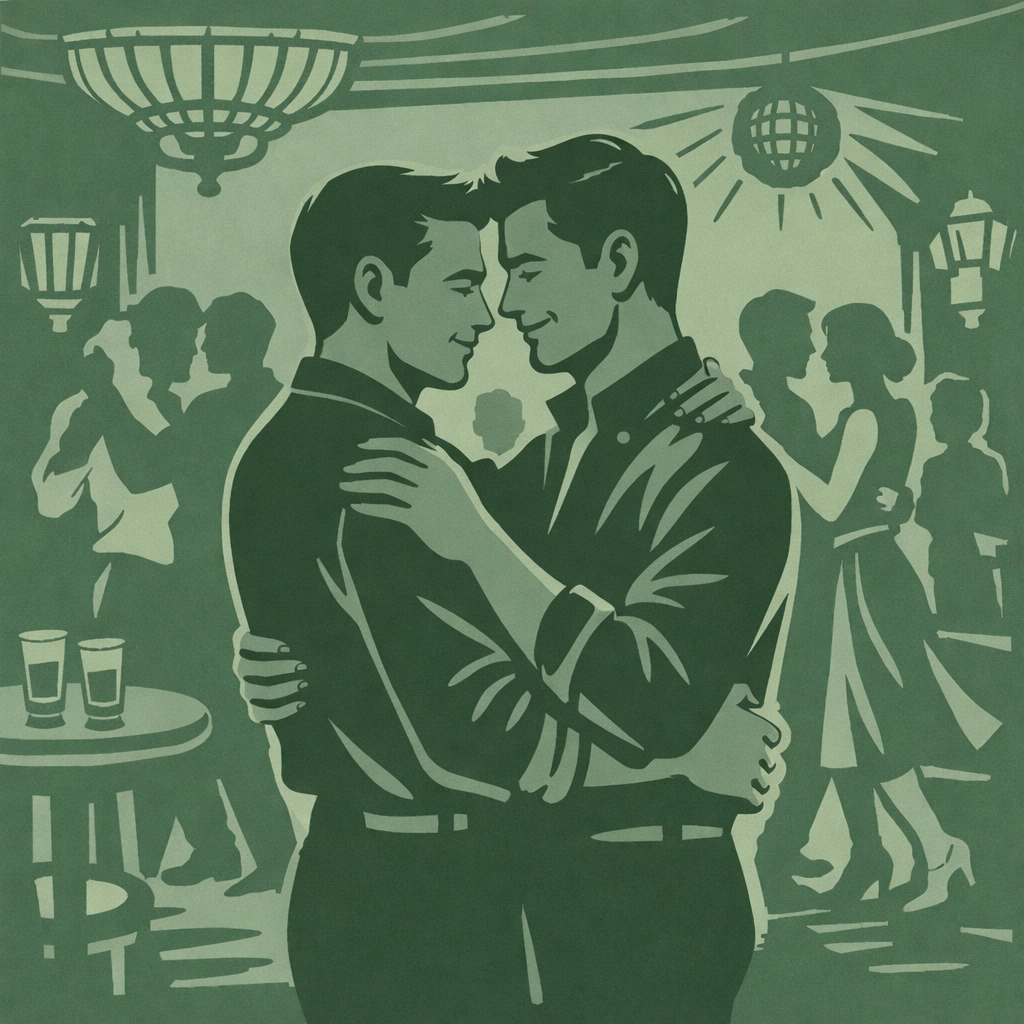
Café Society at 1 Sheridan Square opened in 1938 as New York City's first integrated bar: a space where Black and white patrons mingled freely in defiance of prevailing segregation. It attracted LGBTQ+ clientele and hosted groundbreaking artists including Billie Holiday.
By the 1960s, Café Society had transformed into a gay dance club. In the 1970s and 80s, it housed Charles Ludlam's Ridiculous Theater Company, which helped mainstream drag performance in American theater. This evolution mirrors the broader trajectory of LGBTQ+ spaces: starting in the margins, gradually claiming visibility, ultimately influencing mainstream culture.
These venues weren't just entertainment. They were education. They were chosen family. They were proof that LGBTQ+ people existed, thrived, and created beauty despite systematic attempts to erase them.
Stonewall: The Raid That Changed Everything
On June 28, 1969, police raided the Stonewall Inn: a routine harassment that had occurred countless times before at gay bars across the Village. This time, patrons fought back. The raid sparked six days of protests and violent clashes with law enforcement, marking a turning point in LGBTQ+ history.
Stonewall didn't invent gay activism. Homophile organizations had existed for years, fighting legal battles and advocating for reform. But Stonewall crystallized something different: visible, unapologetic resistance. It demonstrated that LGBTQ+ people would no longer accept second-class citizenship quietly.
The riots transformed collective consciousness. They proved that a sizable group of LGBTQ+ people existed: people willing to demand civil rights, people prepared to fight for liberation, people who refused invisibility.
The Birth of Pride
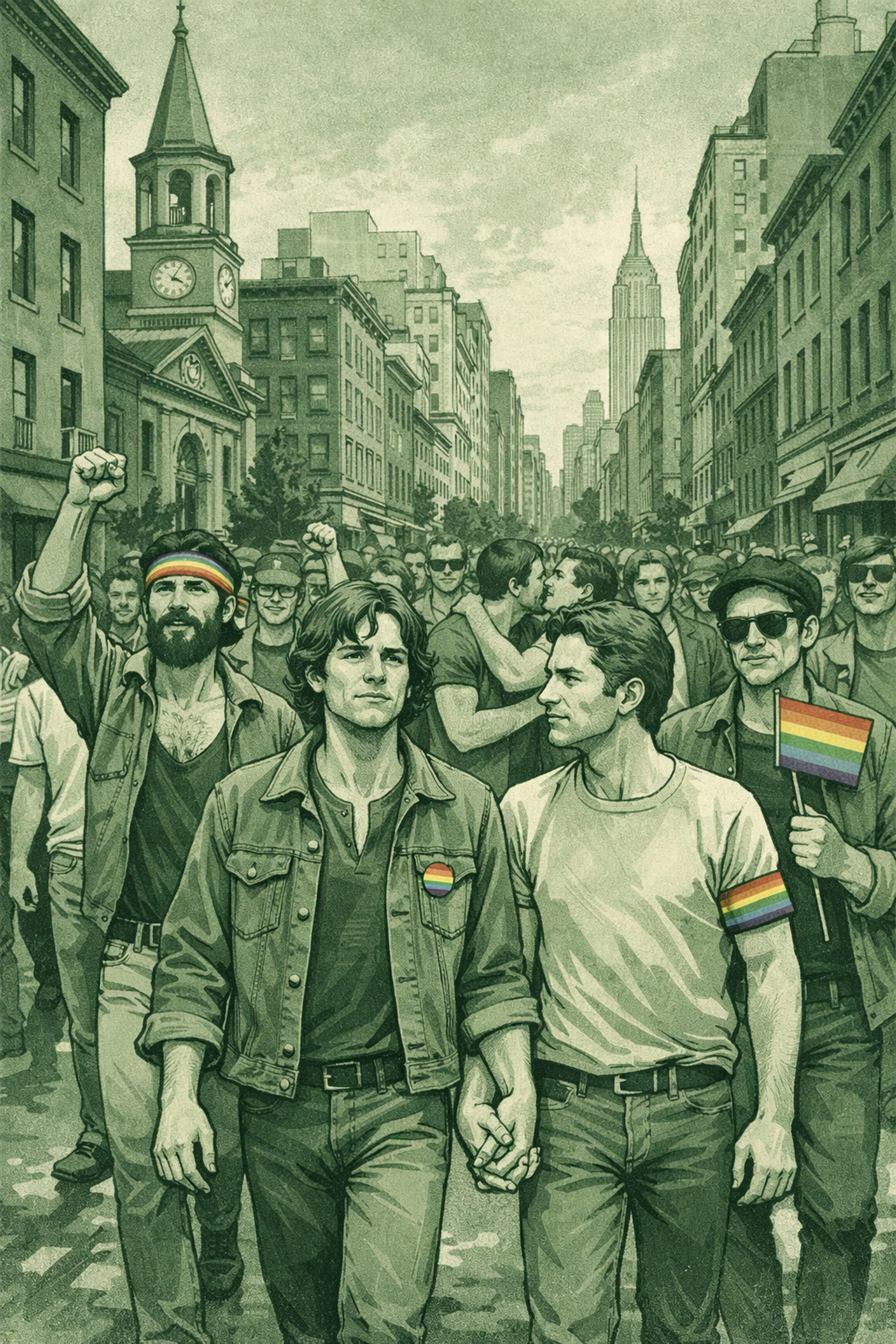
One year after Stonewall, on June 28, 1970, thousands gathered on Christopher Street for New York's first Pride march. This wasn't a parade: it was a demonstration. Marchers walked from Greenwich Village to Central Park, publicly declaring their identities in an era when doing so risked employment, housing, family relationships, and personal safety.
This march represented the birth of the modern LGBTQ+ rights movement. It established Pride as an annual tradition of visibility and protest. It connected the personal act of coming out with the political act of demanding equality. It transformed shame into celebration.
From Greenwich Village, Pride spread globally. Today, Pride events occur in cities worldwide, all tracing their lineage back to those marchers on Christopher Street in 1970: and to the rioters outside the Stonewall Inn in 1969.
Read stories of courage and coming out at dickfergusonwriter.com/products/stepping-into-the-light-a-step-by-step-guide-for-gay-men-coming-out: a guide honoring the legacy of those who fought for our right to live openly.
Christopher Street: The Heart of Gay America
By the 1970s, Christopher Street had become synonymous with gay liberation. The street served as gathering point, marketplace, and symbolic center of LGBTQ+ identity in America. Gay men walked Christopher Street constantly: cruising, socializing, protesting, existing.
This visibility mattered profoundly. In most of America, LGBTQ+ people remained invisible by necessity. But on Christopher Street, they could see each other. They could recognize their community's size and diversity. They could imagine a future where visibility didn't require courage: where it was simply normal.
The street's significance extended beyond New York. It became shorthand for gay liberation nationwide, referenced in literature, music, and activism across the country. To say "Christopher Street" was to invoke the entire movement.
Legacy and Literature
Greenwich Village's history lives on in contemporary LGBTQ+ literature. Gay romance novels, MM fiction, and queer historical works frequently reference the Village, Stonewall, and the early Pride movement. These stories honor the activists who fought for the freedoms today's LGBTQ+ people enjoy.
Explore gay fiction that celebrates this legacy at Read with Pride. Discover MM romance books, gay love stories, and LGBTQ+ novels that carry forward the spirit of Greenwich Village. Browse popular gay books and new releases that honor queer history while imagining queer futures.
From gay historical romance to contemporary MM novels, today's LGBTQ+ literature exists because writers, readers, and activists in places like Greenwich Village refused to stay silent. They demanded representation. They created spaces. They fought for liberation.
Subscribe and Connect
SIGN UP for the Read with Pride newsletter at readwithpride.com for exclusive offers on gay books, MM romance recommendations, and LGBTQ+ fiction updates. Join a community of readers celebrating queer stories.
Visit dickfergusonwriter.com for award-winning gay novels including spy romance, psychological thrillers, and emotional MM contemporary fiction.
Follow Us on Social Media
Stay connected with the latest gay romance releases and LGBTQ+ book news:
Instagram: instagram.com/dickfergusonwriter
X (Twitter): x.com/DickFergus94902
Facebook: facebook.com/profile.php?id=61572869844598
Explore more at Read with Pride: your home for authentic LGBTQ+ ebooks, gay romance, and MM fiction.
#GreenwichVillage #StonewallRiots #PrideHistory #LGBTQHistory #GayLiberation #ChristopherStreet #ReadWithPride #MMRomance #GayBooks #GayFiction #LGBTQBooks #QueerFiction #GayRomance #GayLiterature #MMNovels #LGBTQFiction #GayRomanceBooks #GayLoveStories #QueerHistory #GayNYC #LGBTQReading #GayBookClub #WritingWithPride #ReadingWithPride #MMAuthors #GayNovels #LGBTQEbooks

Leave a Reply
You must be logged in to post a comment.