

readwithpride.com
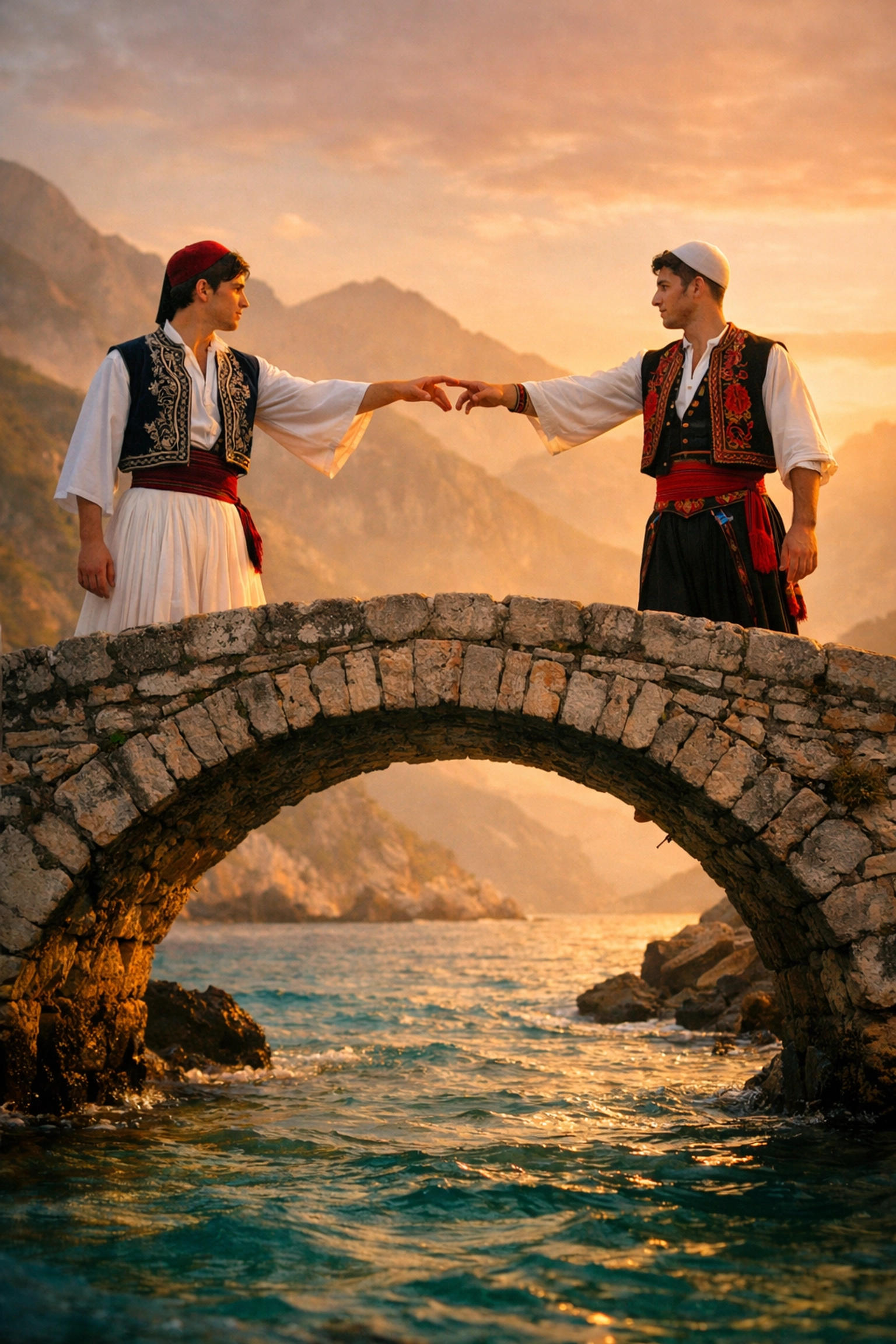
The Adriatic Sea has always been more than water. It's a cultural boundary, a historical divide, and: for those willing to look closer: a bridge between worlds. When we talk about the Greek and Albanian gay experience, we're exploring two nations separated by a narrow strait but divided by vastly different histories, religions, and paths toward LGBTQ+ acceptance. Yet in the spaces between these differences, there's romance, resilience, and stories worth telling.
Cross-border MM romance between Greek and Albanian men offers a unique lens into forbidden proximity, cultural clash, and the slow burn of understanding someone from the "other side." It's enemies-to-lovers on a geopolitical scale, with family expectations, religious traditions, and very real borders standing in the way of love.
Ancient Greece: Where It All Began (Sort Of)
Let's start with the elephant in the room: or rather, the philosopher in the agora. Ancient Greece is often romanticized as some kind of queer utopia, and while there's truth to the acceptance of same-sex relationships, the reality was far more complex. The practice of pederasty: relationships between older men and adolescent boys: was socially acceptable in certain contexts, particularly in Athens and Sparta, but it came with rigid rules about age, social status, and masculine roles.
Fast-forward through Byzantine Christianity, Ottoman occupation, and modern nation-building, and that ancient "tolerance" disappeared almost entirely. Greece became a deeply Orthodox Christian nation where traditional family values and heteronormative expectations dominated. For centuries, Greek gay men lived in shadows, found connection in whispered networks, and built chosen families far from the watchful eyes of church and state.
Albania: Europe's Hidden Closet
If Greece had a complicated relationship with its queer citizens, Albania had virtually none: at least not publicly. Under communist dictator Enver Hoxha (1944-1985), Albania became one of the most isolated and repressive regimes in Europe. Homosexuality was criminalized, punishable by up to ten years in prison, and openly gay people were subjected to forced labor, psychiatric "treatment," and social erasure.
Even after communism fell in 1991, Albania's transition to democracy didn't immediately translate to LGBTQ+ acceptance. The country remained deeply patriarchal, with blood feuds, honor codes (the Kanun), and conservative Islamic and Christian traditions shaping social norms. Being gay in Albania meant invisibility, forced marriages, or exile.
Yet beneath this surface, queer Albanians existed: in coded glances, secret meetings, and quiet acts of defiance. The resilience of Albanian gay men, particularly those who survived both communist oppression and post-communist violence, is a story of survival that deserves more attention in gay fiction and LGBTQ+ literature.
Modern Greece: Mykonos vs. the Mountains
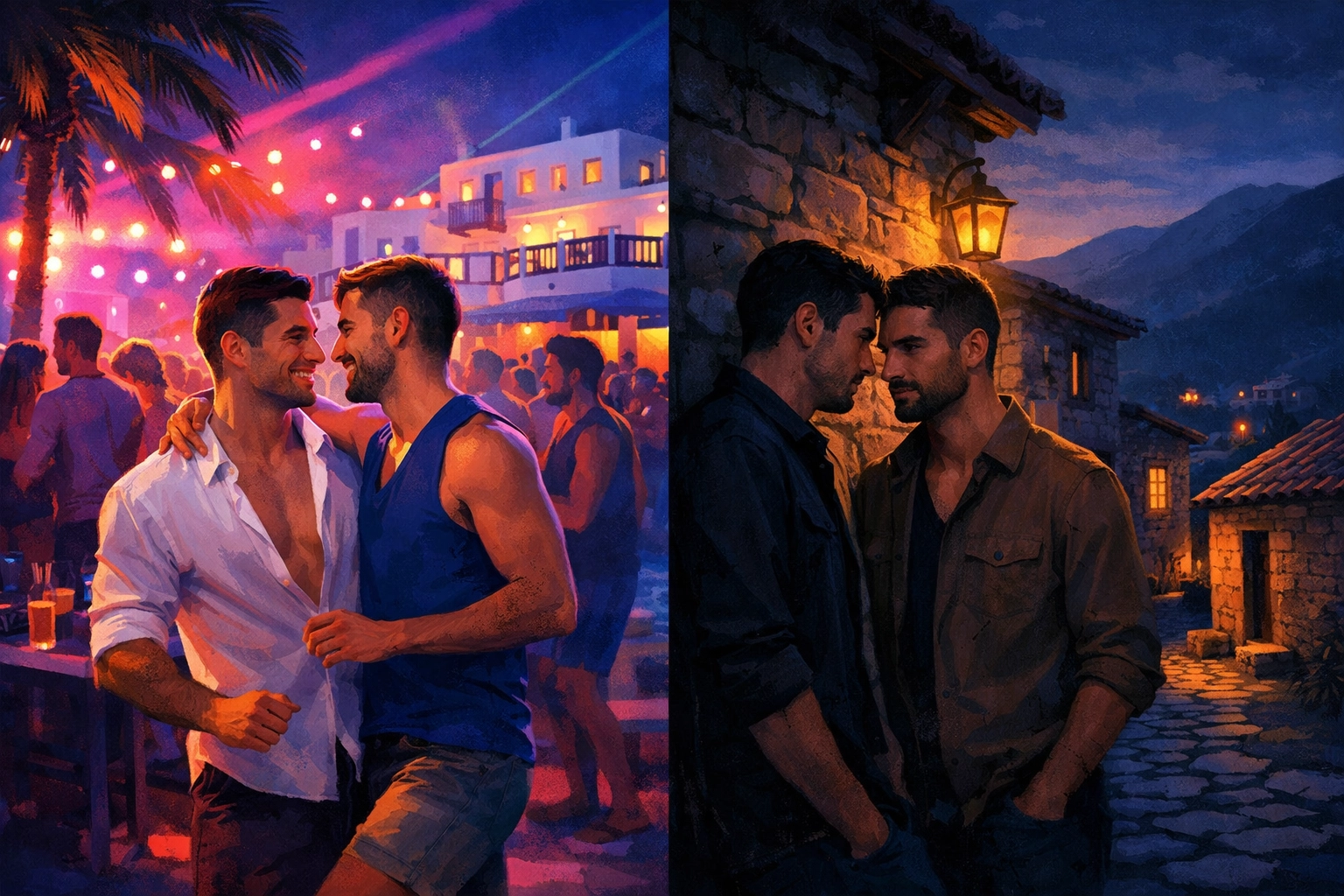
Today's Greece presents two very different realities for gay men. In Athens, Thessaloniki, and especially the islands like Mykonos and Santorini, there's a thriving gay scene. Mykonos has become one of Europe's premier LGBTQ+ destinations, with beach parties, gay-friendly hotels, and a summer culture that celebrates queer life openly and exuberantly.
Greece legalized same-sex civil unions in 2015 and same-sex marriage in early 2024: making it the first Orthodox Christian-majority country to do so. This is huge, not just legally but symbolically. The gay community in Greek cities enjoys visibility, Pride celebrations, and a growing sense of belonging.
But venture into rural Greece: the mountain villages of Epirus, the farms of Thessaly, the conservative islands: and it's a different story. Traditional family structures remain strong, the Orthodox Church still holds significant social influence, and coming out can mean ostracism, loss of inheritance, or being cut off from tight-knit communities. The urban-rural divide in Greek gay life is sharp and makes for compelling forbidden romance narratives in MM romance books.
Modern Albania: The Slow Thaw
Albania has come a long way since 1995 when homosexuality was finally decriminalized, but it's still one of the most challenging places to be openly gay in Europe. Tirana, the capital, has seen the emergence of a small but brave LGBTQ+ community. There are pride events (though heavily guarded), a few LGBTQ+ organizations, and young activists pushing for change.
But Albanian society remains deeply conservative. Surveys consistently show that a majority of Albanians view homosexuality as unacceptable. Violence against LGBTQ+ people, while often unreported, remains a real threat. Many gay Albanian men remain closeted, marry women to maintain family honor, or leave the country entirely: often heading to Greece, Italy, or Germany.
The Albanian diaspora plays a crucial role in gay Albanian life. For many, finding community and acceptance means leaving home: physically and emotionally. This creates a particular kind of longing and exile that's ripe for gay contemporary romance exploring themes of belonging, sacrifice, and the painful choice between authentic love and family duty.
When Worlds Collide: Cross-Border Romance
So what happens when a Greek man falls for an Albanian? Or when an Albanian refugee building a new life in Athens meets someone who makes him want to stay? The Adriatic divide becomes intensely personal.
These relationships carry historical baggage: Greece and Albania have had tense relations, particularly over the Greek minority in southern Albania (Northern Epirus to Greeks) and the large Albanian immigrant population in Greece. Add in economic disparities, language barriers, religious differences (Orthodox vs. Muslim vs. secular), and family expectations, and you've got a recipe for high-stakes MM romance.
But you've also got something beautiful: two people choosing love over borders, culture over convention, and each other over the easy path. It's forced proximity when an Albanian worker and his Greek employer find themselves drawn together. It's enemies-to-lovers when prejudice gives way to understanding. It's the ultimate slow burn as trust builds across a lifetime of learned divisions.
Why These Stories Matter
At Readwithpride.com, we believe the best gay romance novels and MM fiction don't just entertain: they illuminate. Stories set in Greece and Albania, exploring both historical trauma and modern possibility, offer readers:
Representation of Underrepresented Communities: Albanian LGBTQ+ voices are rare in queer fiction. Greek gay stories often default to the sanitized island paradise version. Real, complex narratives matter.
Cultural Richness: The Mediterranean setting, the food, the family dynamics, the religious complexity: these aren't just backdrops but integral to character and conflict.
Universal Themes Through Specific Lens: Border-crossing romance, urban-rural divides, exile and belonging, choosing love over safety: these resonate across cultures but feel particularly urgent in the Greek-Albanian context.
Hope and Resilience: Despite everything, both countries are seeing generational shifts. Young Greeks and Albanians are increasingly supportive of LGBTQ+ rights. Change is slow, but it's happening. Stories can accelerate empathy.
The Stories Waiting to Be Told
Imagine a Greek archaeologist working on a dig in southern Albania who falls for his Albanian guide: a man navigating family expectations and his own closeted identity. Picture two men meeting during Pride in Tirana, one a local activist and the other a Greek journalist covering the event, both discovering that solidarity can turn into something more. Or consider the Albanian man who fled to Mykonos years ago, built a life in Greece's gay scene, and must confront his past when his first love: the one he left behind: arrives seeking refuge.
These aren't just plotlines; they're lived experiences waiting to become gay love stories that honor both struggle and joy.
The Adriatic might divide Greece and Albania geographically, but love: stubborn, inconvenient, transformative love: has always been good at crossing water. And in MM romance books and gay fiction, we get to explore those crossings again and again, building bridges one story at a time.
Discover more LGBTQ+ romance and stories that bridge cultures at Readwithpride.com
Follow us for more MM romance recommendations and gay fiction insights:
- Facebook: Read With Pride
- Instagram: @read.withpride
- X/Twitter: @Read_With_Pride
#MMRomance #GayRomance #LGBTQBooks #GreekRomance #AlbanianStories #CrossBorderLove #ReadWithPride #QueerFiction #GayLoveStories #MMBooks #ContemporaryRomance #ForbiddenRomance #SlowBurn #CulturalRomance #GayFiction2026 #LGBTQFiction #MMRomanceBooks #GayNovels #QueerLiterature #BalkanStories

Leave a Reply
You must be logged in to post a comment.