

readwithpride.com
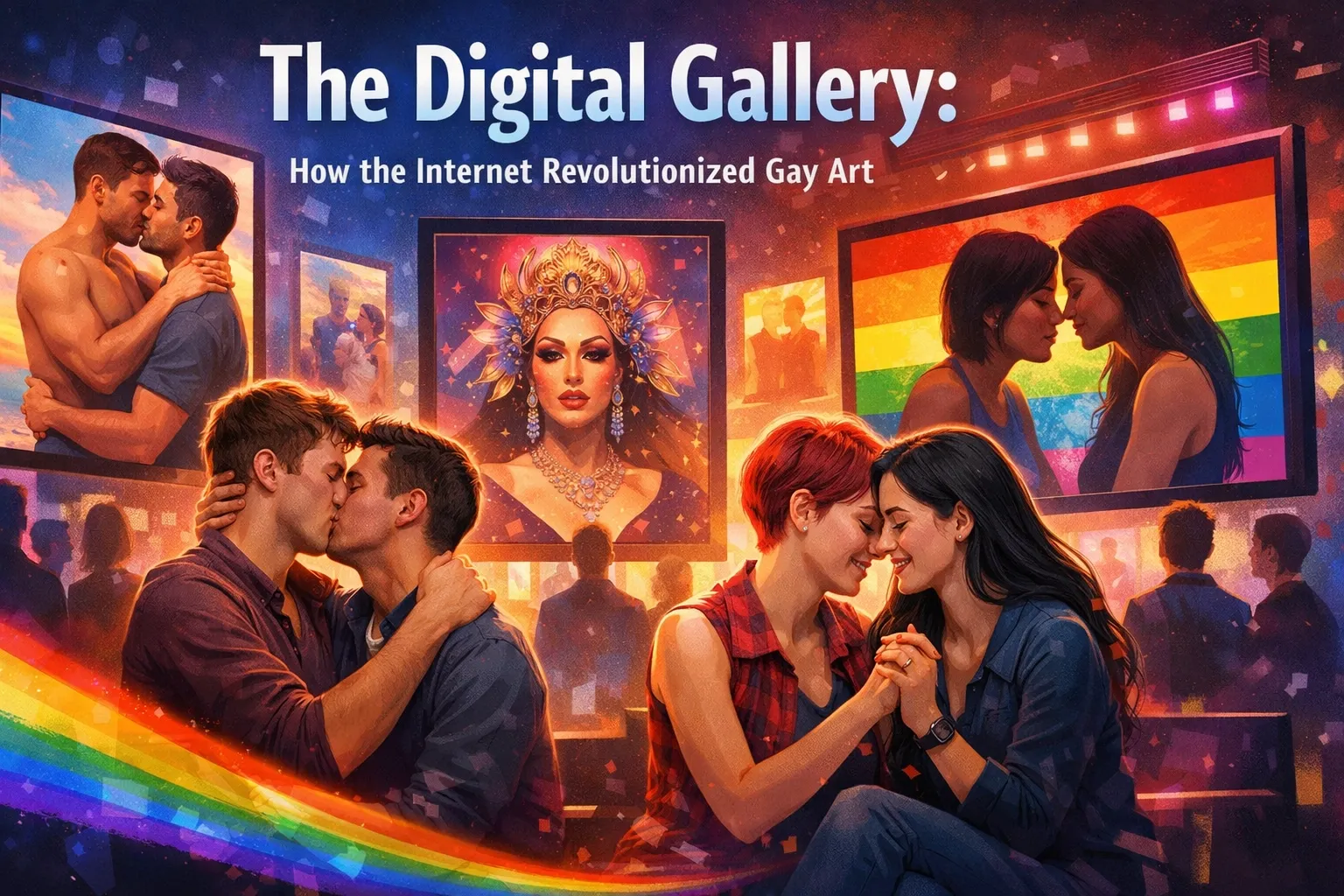
Once upon a time: and by that, I mean not even that long ago: finding naked gay bodies art was like going on a high-stakes scavenger hunt in a basement with a flickering flashlight. You had to know a guy who knew a guy, or you had to spend hours in the "restricted" section of a university library, hoping the librarian didn't give you the side-eye. Fast forward to 2026, and the landscape has completely shifted. The internet hasn’t just given us a window into the world of gay nudism in art and photos; it has kicked the front door down, replaced the hinges with rainbow-plated steel, and invited everyone to the party.
At Read with Pride, we’re all about celebrating our stories, whether they’re told through the written word in our favorite MM romance books or through the lens of a camera capturing the raw beauty of the male form. The digital revolution has changed how we consume art, how we create it, and most importantly, who gets to decide what is "art" in the first place.
The Death of the Traditional Gatekeeper
For decades, the world of "fine art" was a gated community. If you wanted to see naked art in a university setting or a prestigious museum, it was often filtered through a very specific, often sanitized, lens. You might see a Greek statue, but the "homoerotic" context was usually brushed under the rug as "strong friendship." If an exhibition did feature gay themes, it was often relegated to a temporary basement gallery or framed as a "political statement" rather than just a celebration of beauty.
The internet changed the game by removing the middleman. Suddenly, an artist in a small town could share their sketches of naked gay bodies art directly with a global audience. They didn’t need a gallery owner’s permission or a university’s stamp of approval. Platforms like Instagram (even with its annoying nipple-policing), X, and specialized portfolio sites became the new Louvre for the LGBTQ+ community. This democratization means that the "museum" is now in your pocket, accessible 24/7.
From Physique Magazines to the Infinite Scroll
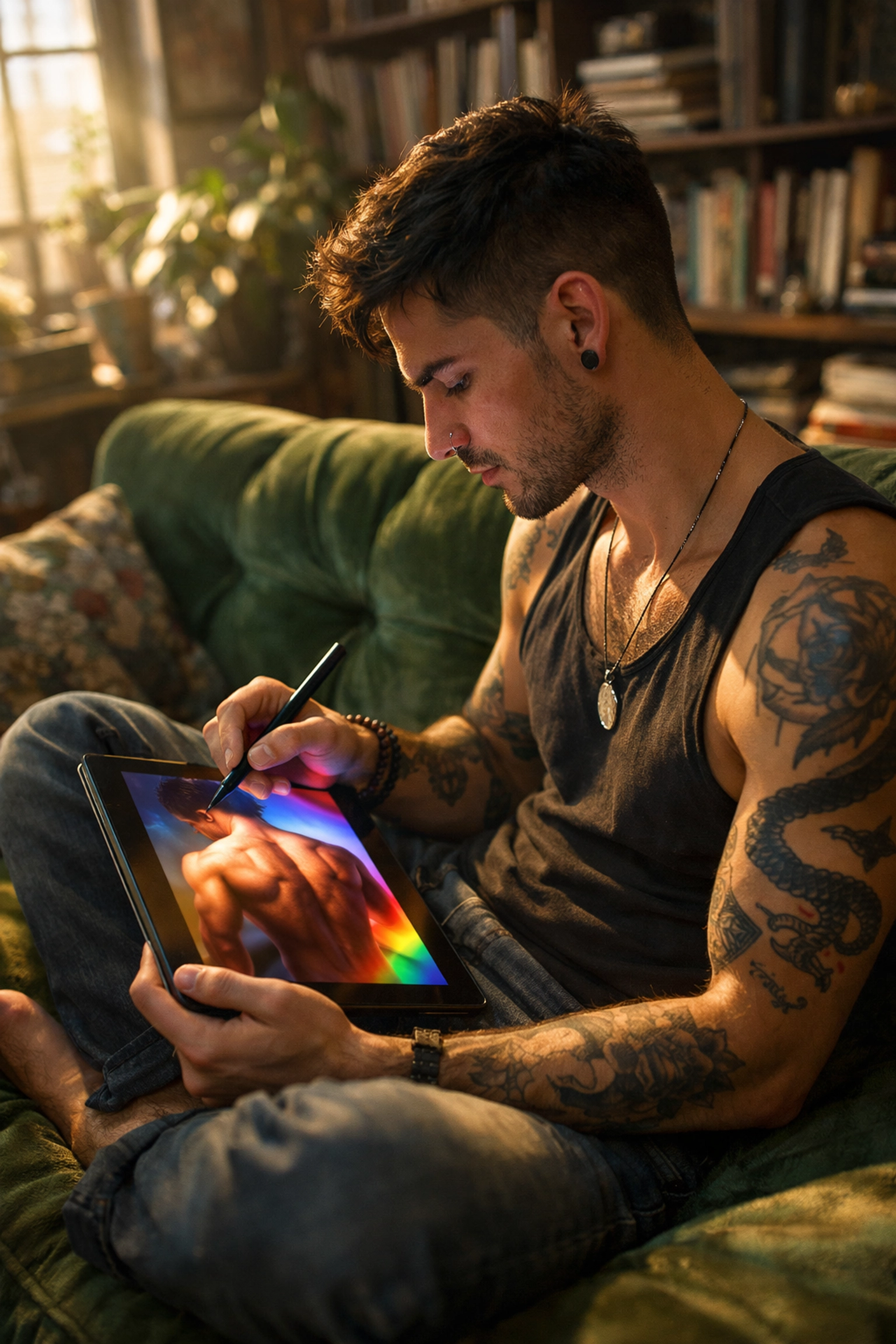
Before the digital age, gay art and photography were often hidden in plain sight. Think of the "physique" magazines of the 50s and 60s: publications that claimed to be about "fitness" but were clearly a lifeline for gay men craving images of the male form. These were precious, physical objects that had to be hidden under mattresses.
Today, the evolution of nudism in art and photos has gone from grainy black-and-white prints to high-definition digital masterpieces. The accessibility of high-quality cameras and digital painting tools means that more people than ever are contributing to our collective visual history. When you browse for gay romance novels or look for cover inspiration for the latest 2026 gay books, you're seeing the influence of this digital art explosion. The aesthetics of the "bookstagram" world and the digital art community have merged, creating a lush, vibrant world where the male body is celebrated in all its glory.
Breaking the "Adonis" Mold: Diversity in Digital Art
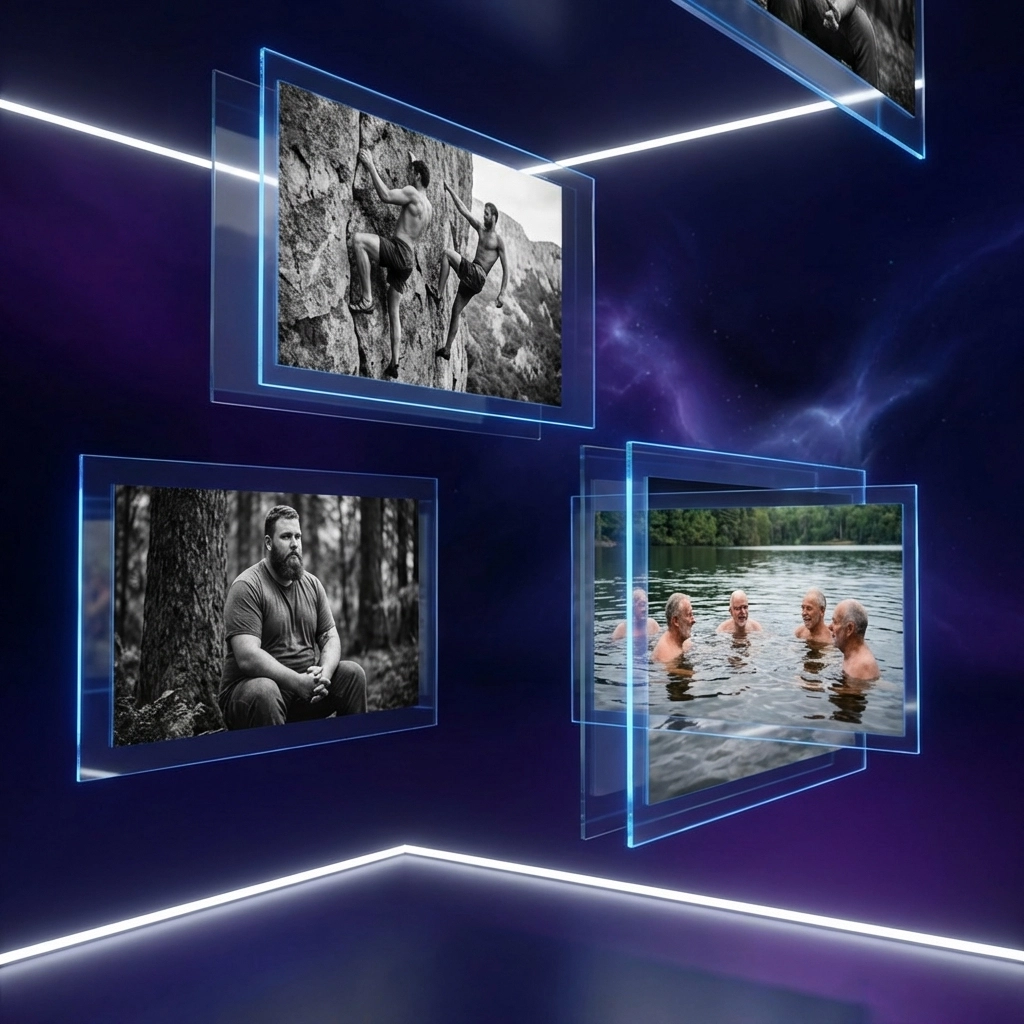
One of the coolest things about the digital "museum" is that it’s not limited by the tastes of a few wealthy donors. Traditional art institutions have historically favored a very specific type of male body: usually white, young, and athletic. But on the internet, the "authentic" vibe reigns supreme.
Our community is diverse, and our art finally reflects that. The digital space has allowed for the rise of art that celebrates bear culture, trans bodies, disabled bodies, and men of all ethnicities. This isn’t just about "nudism"; it’s about visibility. When we see ourselves reflected in art, it changes how we feel about our own bodies. At Readwithpride.com, we see this same shift in queer fiction and MM romance. Readers are looking for characters who look like them, and the digital art world is providing the visual blueprint for those stories.
Censorship and the Rise of Private Platforms
Let’s be real: it’s not all sunshine and rainbows. The "Digital Gallery" faces a lot of pushback. Major social media platforms have notoriously prudish algorithms that often flag gay art as "obscene" while letting other content slide. This "shadowbanning" has forced many artists to find new homes.
This is where the revolution gets spicy. We’ve seen a massive shift toward independent platforms and creator-owned spaces. Artists are now using sites like Patreon, OnlyFans (for the more explicit side of art), and their own dedicated webstores to share their work. By bypassing the corporate censors, they can keep their artistic vision pure.
This mirrors what we are doing in the publishing world. Many authors are moving away from the "Big Five" and choosing to publish with pride on platforms designed for our stories. It’s about taking back control. When you support an artist directly, you’re ensuring that the "digital museum" continues to grow without needing a corporate hall monitor.
The Virtual Exhibition: A New Way to Connect
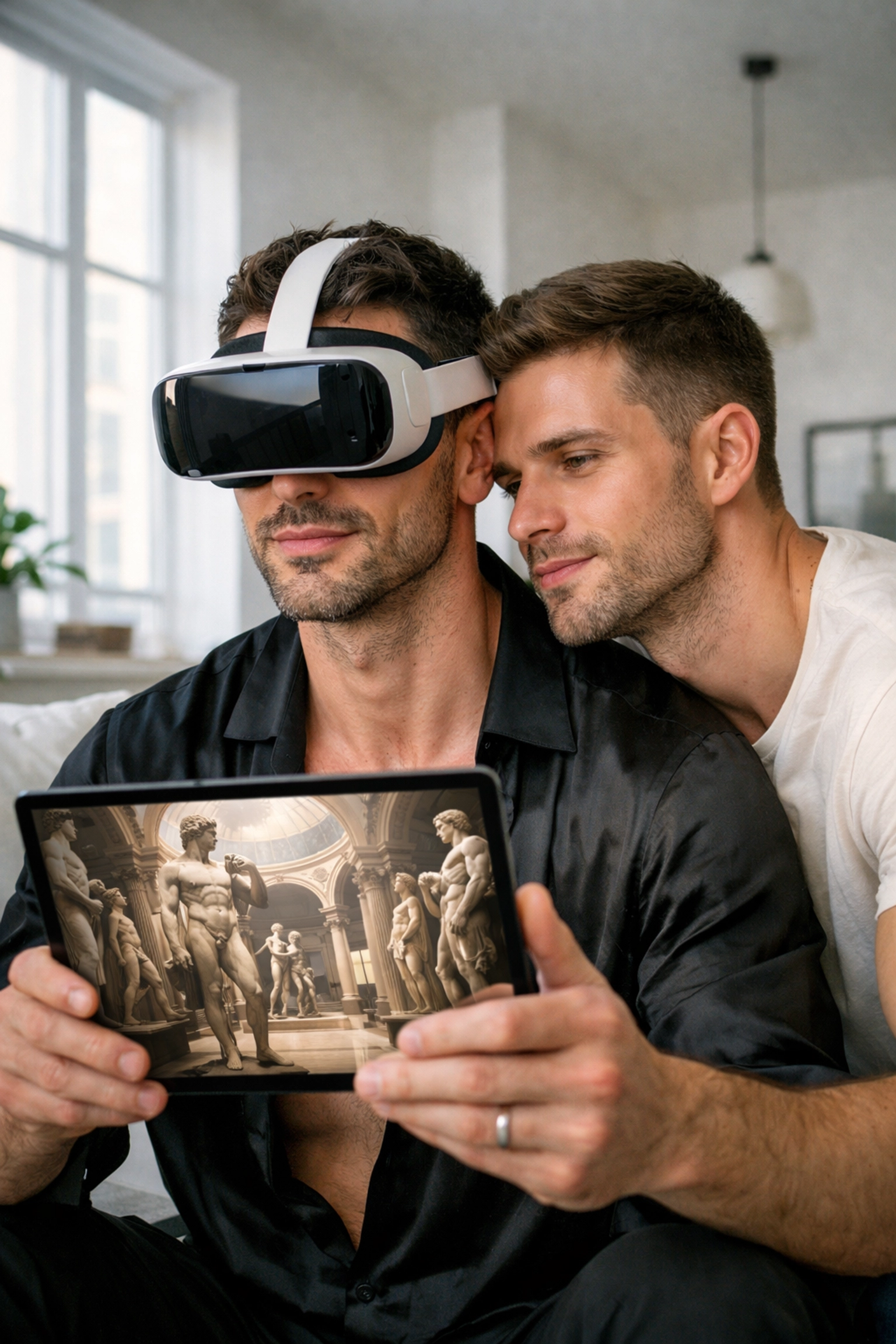
In 2026, we’re seeing "exhibitions" that don't require a plane ticket to Paris or NYC. Virtual reality and high-res digital galleries allow us to walk through a curated space of naked art from our living rooms. These digital spaces often include historical context that universities might have ignored in the past.
For example, organizations like the GLBT Historical Society have used digital archives to showcase how gay art was used in activism. Photography that started as a private moment between lovers in the 70s is now part of a global digital exhibition on human rights. The internet hasn’t just made art accessible; it’s made it educational. It’s given us back our history.
Why This Matters for the Future of Gay Literature
You might be wondering, "Penny, what does a photo of a naked guy have to do with my Kindle library?" The answer is: everything.
Art and literature are two sides of the same coin. The visual revolution of gay art has directly influenced the world of MM romance books and gay novels. The covers of our favorite books are getting bolder, more artistic, and more representative of actual gay life. When an artist creates a stunning piece of digital art, it often inspires a writer to pen a gay love story around it.
Furthermore, the same technology that allows an artist to share a painting allows an author to share a story. We believe in keeping profits for your creative work. Whether it's a brushstroke or a sentence, the creator deserves to be the one in charge. The internet has given us the tools to build our own ecosystem: one where gay art and gay literature thrive side by side.
Curating Your Own Digital Museum
So, how can you participate in this revolution?
- Follow the creators: Seek out artists on X and Instagram, but also look for their personal websites.
- Support direct: If you love a piece of art, see if they have a print shop or a Patreon.
- Read the stories: Dive into MM romance books that celebrate the same themes of beauty and vulnerability. Check out some of our top LGBTQ+ book recommendations.
- Stay connected: Join communities that value authentic queer expression.
The "Digital Gallery" is always open, and the best part is that you’re not just a visitor: you’re part of the movement. By engaging with, sharing, and buying gay art and literature, you’re helping to ensure that our bodies and our stories are never hidden in a basement again.
Let’s keep making it beautiful, let’s keep making it loud, and most importantly, let's always Read with Pride.
Want more queer content? Follow us on our socials!
- Facebook: Read with Pride
- X (Twitter): @Read_With_Pride
- Instagram: @read.withpride
Explore our latest releases and support queer authors:
Visit Readwithpride.com
#ReadWithPride #GayArt #LGBTQBooks #MMRomance #DigitalGallery #QueerHistory #GayLiterature #2026GayBooks #NakedArt #AuthenticVoices

Leave a Reply
You must be logged in to post a comment.